
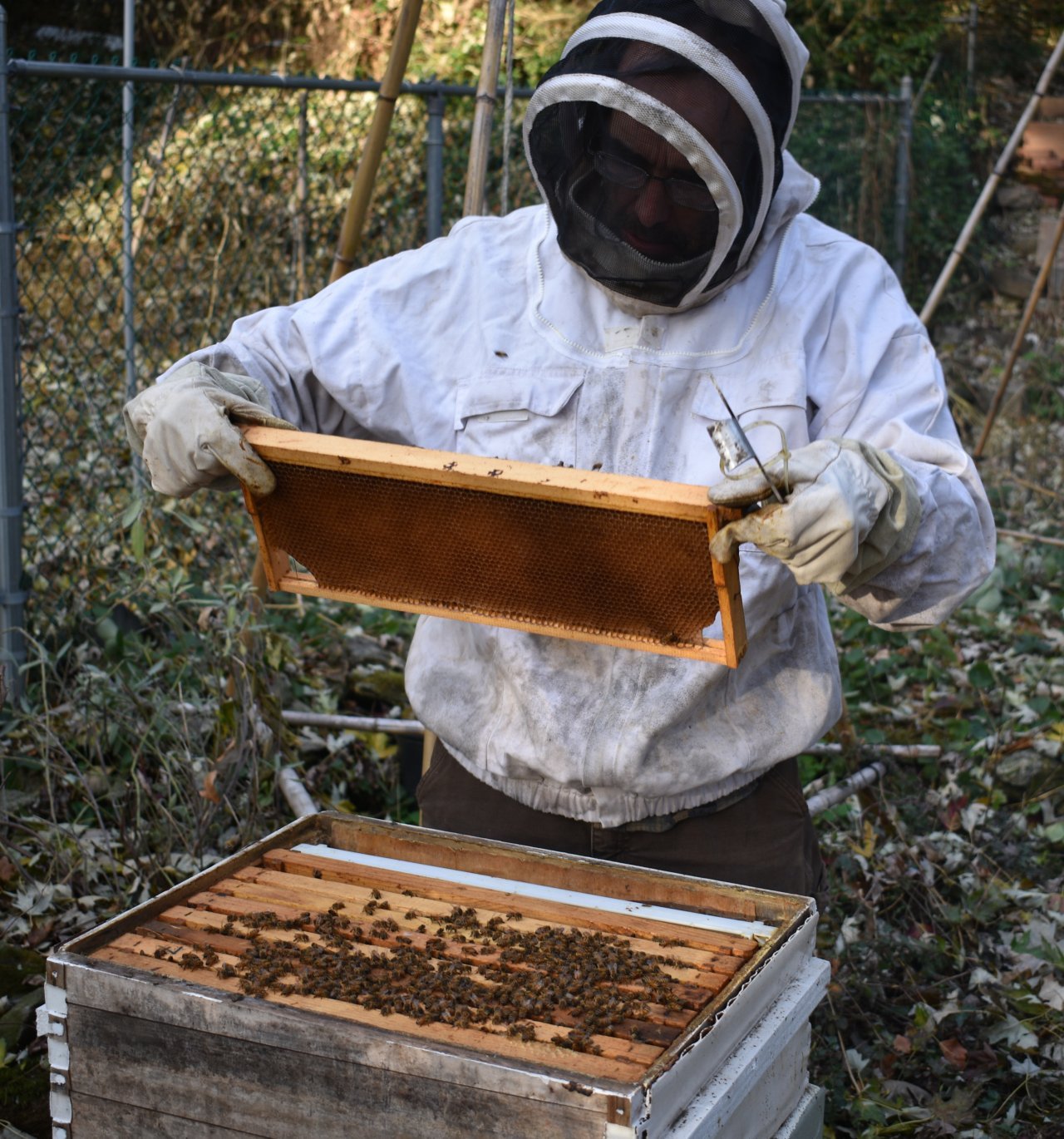
When a professional performs a genuine live removal, the bees are relocated — combs and colony moved into a hive box, with the beekeeper working to retrieve stragglers and merge them back in over the following days — but many “bee removal” calls actually end in extermination rather than relocation, and the two outcomes are genuinely different processes worth understanding before you hire anyone. This is a different question from whether to do it yourself or call a professional — it’s about what actually happens to the colony once someone else has taken over.
Key Takeaways
- “Bee removal” covers two genuinely different outcomes: live relocation to a hive box, or extermination followed by removal of the dead colony and comb — ask which one you’re actually paying for.
- Per University of California IPM guidance, pest control companies commonly kill the colony before removing it, partly because live removal takes more time and skill than extermination.
- Some foragers are reliably away from the hive when a removal happens and won’t be part of the initial relocation — realistic straggler loss is a normal, expected part of the process, not a sign something went wrong.
- Rescued bees are frequently merged into an existing colony using the newspaper-combine method days to weeks later, rather than kept as a permanently separate hive from day one.
- Sealing the original entry point thoroughly afterward matters as much as the removal itself — lingering wax odor can attract a new swarm to the same spot.
Table of Contents
- The Two Real Outcomes: Live Relocation vs. Extermination
- How a Live Cut-Out Actually Works
- What Happens to Stragglers and Late-Returning Foragers
- Merging Rescued Bees: The Newspaper-Combine Method
- What Happens to the Comb, Honey, and Structure Afterward
- Live Relocation vs. Extermination at a Glance
- Realistic Survival Expectations
- Frequently Asked Questions
The Two Real Outcomes: Live Relocation vs. Extermination
“Bee removal” is often used as if it describes one single process, but it actually covers two outcomes that matter enormously to what happens to the colony afterward. In a genuine live removal, a beekeeper opens the structure, removes comb and bees together, and transfers them into a hive box for relocation — the bees survive as a colony, just in a new location. In an extermination, a pest control company kills the colony first (typically with an insecticidal dust or aerosol), then removes the dead bees and comb afterward. Per the University of California Statewide IPM Program, pest control companies generally kill the bees before removing them, largely because live removal genuinely requires more time, skill, and specialized handling than extermination does — it’s the harder, more expensive service to actually deliver.
This distinction is worth confirming directly with whoever you hire, in plain language, before work begins: “will the bees be killed, or relocated alive?” A company advertising “bee removal” isn’t necessarily promising live relocation, and the price difference between the two approaches (covered in more detail in this site’s bee removal cost breakdown) often reflects exactly this distinction.
How a Live Cut-Out Actually Works
A live cut-out — the technique used for an established colony inside a wall, tree, or structure, as opposed to a swarm hanging in the open — involves opening the cavity, carefully cutting comb sections out intact, and rubber-banding or wiring pieces containing brood directly into empty frames so the colony can continue raising the brood already in progress. The queen is located and secured (often in a temporary cage) during this process specifically because colony survival after relocation depends heavily on successfully keeping or recovering her; a colony that loses its queen during a cut-out has a much harder path back to a stable, functioning hive. This site’s full cut-out technique guide covers the hands-on mechanics in detail for anyone performing or evaluating this work directly; this article focuses specifically on what happens to the bees themselves through the process.
Betterbee, a well-established beekeeping supply and education company, walks through a real cut-out from start to finish in the video below.
The video makes visible what’s easy to miss reading about the process secondhand: how much of a cut-out is comb handling and queen-finding under real time pressure, rather than simply vacuuming bees into a container.
What Happens to Stragglers and Late-Returning Foragers
Not every bee ends up inside the box during the actual removal. According to UC IPM, some honey bee foragers spend the night away from the hive during summer, and a cluster of bees will typically still be forming around the original entrance even after the main colony and combs have already been removed. These stragglers face a genuinely mixed set of outcomes: some find and join the relocated colony if it’s placed nearby and left in place for a period afterward, some drift into a different nearby colony, and some don’t survive the disruption — a realistic, expected straggler loss rather than evidence of a botched job. Professional practice to minimize this loss includes timing the main removal during lower-foraging hours, and leaving a temporary bait box or the newly relocated hive itself near the original entrance for a few days specifically to recapture returning foragers.
Remaining stragglers that don’t relocate on their own are typically removed separately — UC IPM notes they can be vacuumed up or, in a pest-control rather than live-removal context, treated directly with an aerosol labeled for bees and wasps.
Merging Rescued Bees: The Newspaper-Combine Method
A freshly relocated colony is often not left as a permanently separate hive indefinitely, especially if it came through the cut-out smaller or weaker than a standard colony. Beekeepers frequently use the newspaper-combine method — placing a sheet of newspaper with a few small slits between the rescued colony and an existing, stronger hive — to merge the two gradually. The paper lets colony odors mix slowly while bees chew through it over roughly two to three days, avoiding the fighting that would happen if two unrelated colonies were combined instantly. Betterbee’s own published instructions for this technique note that seeing shredded newsprint outside the hive is the practical sign the merge has succeeded. This is a normal, well-established part of post-removal bee management, not a sign the rescued colony failed on its own.
“Some honey bee foragers spend the night away from the hive in the summer, so there is likely to be a cluster of bees forming around the entrance after the bees and combs have been removed.” — UC Statewide IPM Program
What Happens to the Comb, Honey, and Structure Afterward
The colony itself isn’t the only thing that has to be dealt with — an established colony inside a wall or structure has usually built comb and stored honey directly against the building material, and what happens to that afterward matters as much for the homeowner as what happens to the bees. In a genuine live removal, comb is removed along with the bees specifically to minimize the risk of leftover honey melting, seeping into wall cavities, and attracting future pest activity or mold. In an extermination-only job, comb and honey are frequently left in place after the bees are killed, which is exactly the scenario that leads to the fermentation, seepage, and odor problems that make a purely chemical approach look cheaper upfront but sometimes costlier in repair terms afterward. This site’s guide to safely removing bees from a building covers the structural and repair side of this in more depth; the point worth understanding here is that comb-and-honey removal, not just bee removal, is part of what a thorough job actually includes, and worth confirming is part of the scope before work begins.
Live Relocation vs. Extermination at a Glance
| Factor | Live Relocation | Extermination |
|---|---|---|
| Outcome for the colony | Survives, moved to a new hive location | Colony is killed, then removed |
| Typical cost | Generally higher — more time and skill required | Generally lower, especially for simple jobs |
| Comb/honey left behind | Removed along with the bees, minimizing seepage risk | Often left in place, risking melting honey and fermentation odor |
| Straggler bees | Some recapture effort typical over following days | Not applicable — remaining bees are also treated/removed |
| Best fit | Accessible, established colonies with time to plan the work | Situations requiring the fastest possible resolution |
Realistic Survival Expectations
Even a well-executed live removal doesn’t guarantee the relocated colony thrives long-term — a colony that’s lost its queen during the process, lost a meaningful share of its foraging workforce as stragglers, or had significant comb and stored honey damaged during extraction faces a genuinely harder rebuilding period than an undisturbed colony would. Reputable live-removal beekeepers monitor a relocated colony for resumed egg-laying over the following week or two as the clearest sign the queen survived and the colony is stabilizing, rather than assuming success immediately after the physical relocation is complete. None of this is a reason to prefer extermination — it’s simply an honest expectation-setting point: “removed alive” and “guaranteed to thrive afterward” are not quite the same promise, even under good professional handling.
Frequently Asked Questions
Do professional bee removers always keep the bees alive?
No — many bee removal calls are actually handled as extermination followed by removal, since live relocation takes more time and skill. Ask directly which service you’re paying for before work begins.
What happens to bees that were out foraging during the removal?
Some find and rejoin the relocated colony if it’s kept nearby for a few days afterward, some drift into other nearby colonies, and some don’t survive — a normal, expected part of the process rather than a sign of a failed job.
Are rescued bees kept as their own separate hive afterward?
Not always — a weaker rescued colony is frequently merged into an existing, stronger hive using the newspaper-combine method over the following days to weeks.
How do I know if a relocated colony actually survived?
Beekeepers typically check for resumed egg-laying over the following one to two weeks as the clearest sign the queen survived and the colony is stabilizing.
Why do beekeepers seal up the entry point after removing bees?
Because bees have an extremely sensitive sense of smell and lingering beeswax odor can attract an entirely new swarm to the same opening if it isn’t sealed thoroughly.
Is it more humane to pay extra for live removal instead of extermination?
If keeping the colony alive matters to you, yes — but it’s worth understanding that live relocation still carries real risk to the colony’s long-term survival, not a guarantee of a fully successful outcome.
What happens to the honeycomb left inside a wall after bees are removed?
In a thorough live removal, comb is removed along with the bees; in an extermination-only job, it’s frequently left behind, which risks melting honey, seepage, and odor problems that can outlast the original bee issue.
Can a beekeeper always successfully find and save the queen during a removal?
Not always — queen loss during a cut-out is a real risk, and it’s the single biggest factor in whether a relocated colony successfully rebuilds afterward.


