Bees are one of the cheapest self-sufficiency systems a homestead can add, but they are also one of the slowest to pay for themselves — a single hive typically costs $400–$800 to start and returns 30–60 pounds of honey a year, which usually takes two to three seasons to offset the initial equipment. That trade-off — low weekly time commitment, real but delayed payback, and value that extends well past honey — is exactly why bees deserve a clear-eyed spot in a homestead’s overall systems plan rather than a “why not, bees are nice” afterthought.
This site already covers the full startup cost breakdown and the cheapest realistic way to start in isolation. This article is different: it puts bees side by side with the other systems a self-sufficiency-minded homestead is actually weighing — chickens, a garden, a goat or two — so you can see where bees genuinely earn their keep and where they don’t, before you commit a corner of the property to them.
Key Takeaways
- A single hive runs $400–$800 to start and roughly $50–$150 a year after that, with a typical honey yield of 30–60 pounds per season in a temperate climate.
- Weekly time investment is low — about 30–60 minutes per hive during the active season — far less than daily chicken or goat chores, but concentrated into inspection windows you can’t skip.
- Break-even on equipment typically lands in year two or three, based on Oklahoma State University Extension’s beekeeping break-even framework, not year one.
- Bees don’t replace a protein or calorie source the way chickens or goats do — their self-sufficiency value is in pollination, wax, and barter/trade goods, not calories.
- The strongest case for bees on a homestead is as a force multiplier for an existing garden or orchard, not as a standalone project.
Table of Contents
- Startup and Ongoing Costs, Realistically
- The Weekly Time Budget, Compared to Other Homestead Animals
- When Bees Actually Pay for Themselves
- What Bees Add That Chickens and Goats Don’t
- Where Bees Fit in a Homestead’s Overall Systems Plan
Startup and Ongoing Costs, Realistically
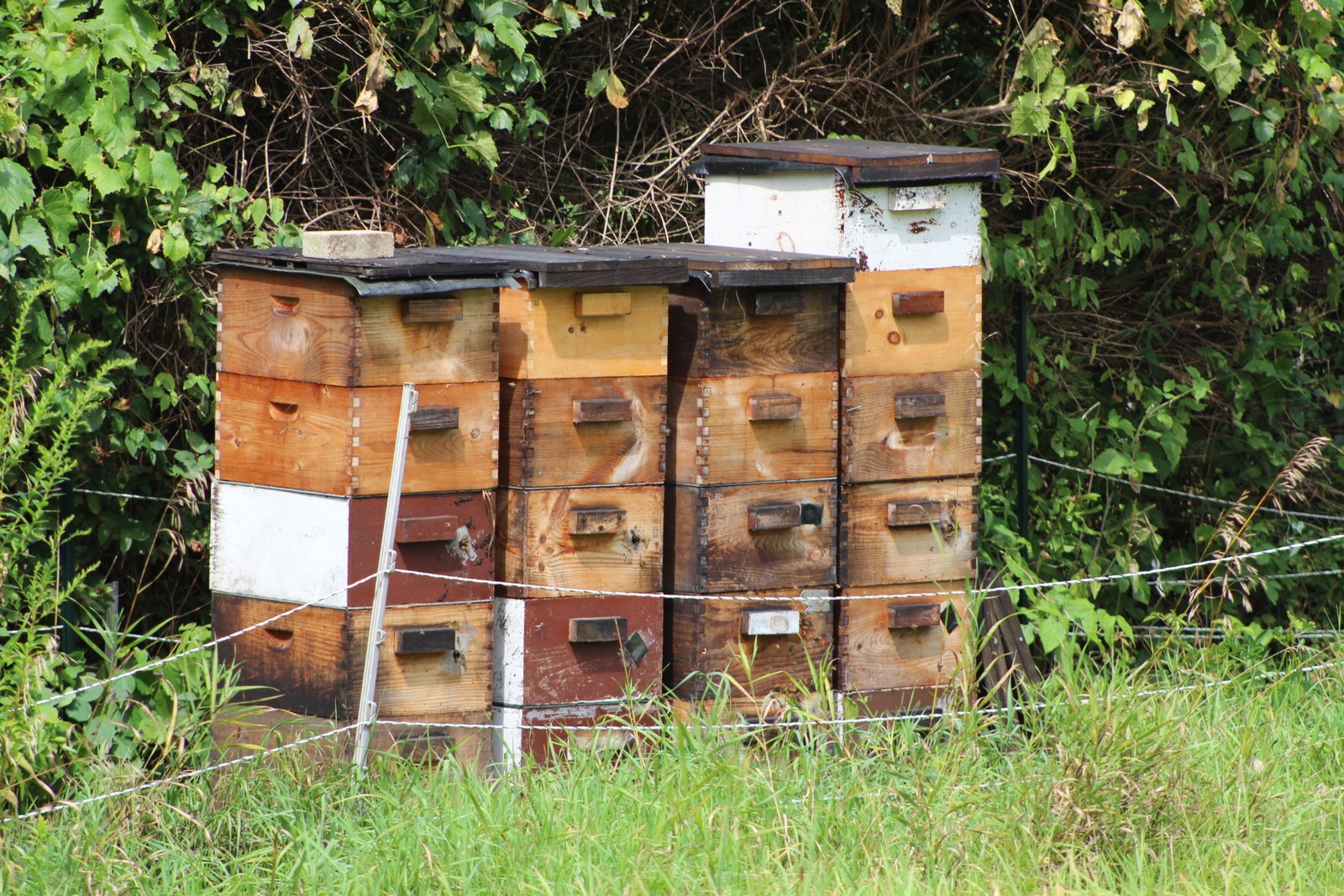
A single hive’s first-year setup — hive boxes, frames, a suit, a smoker, a hive tool, and a package or nuc of bees — runs $400 to $800 depending on whether you buy new or used equipment. A two-hive start (recommended by most extension programs specifically because it lets you compare colonies and borrow resources between them if one struggles) pushes total first-year cost closer to $1,000–$1,300. After that first year, ongoing costs drop sharply: expect $50–$150 per hive annually for occasional feed, mite treatments, and replacement parts, well below what a laying flock or a dairy goat costs to feed year-round.
Yield varies more than cost does. A healthy hive in a temperate climate with decent forage typically produces 30 to 60 pounds of surplus honey a season; a drought year can drop that to 15 pounds, while an exceptional year and strong nectar flow can push past 60. Plan your homestead budget around the low end of that range, not the high end — this is the single most common miscalculation new beekeepers make when penciling out whether bees will “pay for themselves.”
| System | Typical startup cost | Weekly time (active season) | Primary self-sufficiency output |
|---|---|---|---|
| One honeybee hive | $400–$800 | 30–60 minutes | Honey, wax, pollination |
| Small laying flock (6 hens) | $300–$600 | 2–4 hours (daily chores) | Eggs, pest control, manure |
| Dairy goat (one doe) | $800–$1,500+ | 7–10 hours (daily milking) | Milk, dairy products |
| Backyard vegetable garden (1,000 sq ft) | $200–$500 | 3–6 hours | Produce, preserved goods |
A quick worked example makes this concrete: two hives started for $1,100 in year one produce nothing worth selling that first season while the colonies build comb and stores. Year two, with average luck, both hives combine for roughly 80 pounds of surplus honey — worth about $480–$640 at typical local raw-honey retail prices of $6–$8 a pound — plus a few pounds of cappings wax. Year three repeats that yield, and by partway through year three the $1,100 startup cost is fully offset. That’s a genuinely average scenario, not a best case, and it’s the number a homesteader should plan around rather than the more optimistic figures often quoted in beekeeping marketing material.
The Weekly Time Budget, Compared to Other Homestead Animals
Bees are unusual among homestead livestock in that they need almost no daily attention. There’s no feeding schedule, no water to haul twice a day, no pen to lock at dusk against predators. During the active spring-through-fall season, a full hive inspection takes 15 to 30 minutes, and most beekeepers do one every one to two weeks — call it 30 to 60 minutes of hands-on time per hive per week, concentrated rather than spread out. Compare that to a small laying flock, which wants daily attention for feed, water, and egg collection even if each visit is short, or a dairy goat, which requires milking on a fixed twice-daily schedule that doesn’t bend around your calendar.
The catch is that beekeeping’s time demands are seasonal and inflexible in a different way: a swarm-prevention inspection during a strong spring nectar flow, or pulling honey supers before a dearth sets in, has a real window that can’t be pushed back a week without a real cost (a lost swarm, crystallized-in-the-comb honey). A homesteader already juggling milking, canning, and garden harvest in the same June-through-August stretch needs to budget for that overlap honestly, not assume bees will simply slot into whatever time is left over.
When Bees Actually Pay for Themselves
Using Oklahoma State University Extension’s beekeeping break-even framework — which weighs equipment amortization against honey harvested at typical retail value — a two-hive backyard operation with average yields typically breaks even in year two to three, not year one. That’s slower than a laying flock (which often pays back its coop and starter cost within the first year of egg production) but faster than a dairy goat, where breeding, kidding, and milk-production ramp-up can push real payback past year two as well.
Break-even calculations for small-scale beekeeping depend heavily on whether you value your own honey at retail price or at the wholesale price you’d actually get selling in bulk — the same harvest can look like a two-year payback or a five-year payback depending on which number you use.
That distinction matters more for homesteaders than for hobbyists chasing a side income: if the honey is feeding your own household instead of being sold, its real value to your budget is whatever you’d otherwise pay for equivalent local raw honey at the store — usually the higher retail figure — which shortens the realistic payback window.
What Bees Add That Chickens and Goats Don’t
The honest limitation to state up front: bees don’t replace a protein or calorie source the way chickens, goats, or even a modest vegetable garden do. A hive won’t feed your family through a bad season the way a flock of layers or a milking doe will. Where bees earn their place is in three areas that are easy to undervalue when you’re focused on calories:
- Pollination leverage. A hive placed near a homestead garden or young orchard measurably improves fruit set on many crops — squash, cucumbers, berries, and most tree fruit all benefit — effectively raising the yield of systems you’ve already invested in, at no extra land cost.
- A genuinely storable, barterable good. Honey doesn’t spoil under normal storage conditions, wax has real DIY and craft value, and both are easier to trade at a farmers market or homestead swap than a dozen eggs that need to move fast (more on this in this site’s guide to bartering honey and bee products).
- Low land footprint relative to output. A hive occupies roughly the same ground space as a doghouse, yet its foraging range extends miles beyond your property line — see this site’s breakdown of how much land bees actually need for the specifics.
Where Bees Fit in a Homestead’s Overall Systems Plan
The realistic recommendation for most self-sufficiency-focused homesteads: add bees after your calorie-producing systems (a garden, a flock, or both) are already established and running smoothly, not before. Bees are a strong second-phase addition — they compound the value of what you’ve already built rather than standing alone — and their light daily-touch time budget makes them one of the easier additions to layer on top of an already-busy homestead schedule, provided you respect the inflexible seasonal windows described above.
If you’re weighing bees specifically against the constraint of not having reliable grid power — a real consideration for many self-sufficiency-focused properties — see this site’s dedicated guide to running an off-grid apiary’s extraction and processing equipment without mains electricity, which covers the specific gear question this article doesn’t.
Conclusion
Bees are a genuinely good fit for a self-sufficiency homestead, but they’re a compounding investment rather than a fast one: modest cost, light weekly time, a two-to-three-year payback, and a value proposition built on pollination and barter goods rather than calories. Go in with that framing and bees earn their spot; go in expecting them to feed your family like a flock of hens would, and you’ll be disappointed by spring of year one.
Frequently Asked Questions
Is beekeeping cheaper than raising chickens on a homestead?
Startup costs are similar — roughly $400–$800 for one hive versus $300–$600 for a small starter flock — but chickens produce a usable output (eggs) within weeks, while a new hive usually needs its first full season just to build up comb and stores before producing a honey surplus.
How many hours a week does beekeeping actually take?
Plan on 30 to 60 minutes per hive per week during the active spring-through-fall season, concentrated into inspection visits, plus a few hours in early spring and fall for setup and winterizing. Winter requires almost no hands-on time.
Can bees replace a food source the way chickens or a garden can?
Not directly — honey is a sweetener and trade good, not a calorie or protein staple. Their biggest food-system value on a homestead is boosting pollination for an existing garden or orchard, not standing in for it.
How long until a hive pays for its own startup cost?
Most break-even models, including Oklahoma State University Extension’s beekeeping cost fact sheets, put realistic payback at two to three years for a small backyard operation valuing honey at retail price, assuming average 30–60 lb yields and no major colony losses.
Should a new homesteader start with bees or with other animals first?
Most successful self-sufficiency plans add bees after a garden or a small flock is already established, since bees compound the value of existing food-production systems through pollination rather than standing alone as a calorie source.