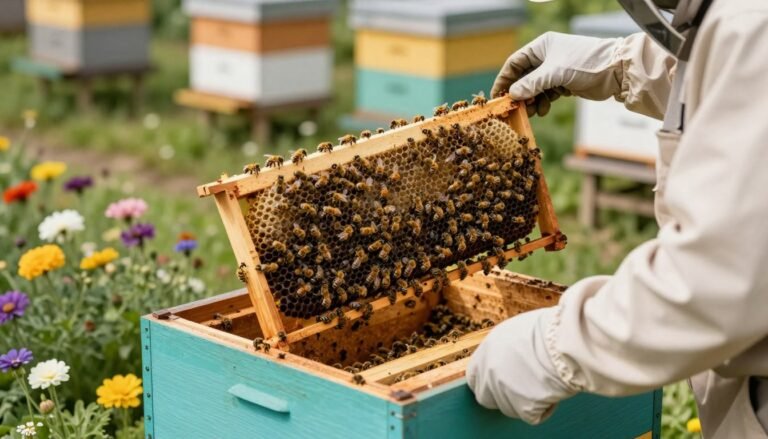
You can pay a professional company to install and manage honey bee hives on your property or rooftop without ever suiting up yourself, and it’s a real, growing service industry — not a niche gimmick — with companies like The Best Bees Company publishing residential pricing that starts at roughly $212 a month for a single hive. The model, often loosely called “hive hosting” or marketed with adoption-style language, sits at the intersection of corporate sustainability programs, backyard convenience, and genuine beekeeping labor, and understanding what you’re actually paying for matters before you sign an annual contract.
Key Takeaways
- Companies including The Best Bees Company (Boston-founded, now multi-city), Alvéole (Montreal-founded, operating in dozens of cities across North America and Europe), and Bee Downtown (Durham, NC) install and professionally maintain hives for residential and corporate clients who never handle the bees themselves.
- Best Bees publishes real residential pricing starting around $212/month (about $2,550/year) for one hive, scaling to $477/month for three, plus a separate one-time installation fee; corporate packages start around $6,900/year for two hives.
- Clients typically keep some or all of the honey their hosted hive produces, and most services bundle in visit reports, honey extraction, and sometimes staff workshops or hive tours as part of the package.
- A distinct, cheaper model exists in the UK: charitable “adopt a hive” schemes, such as The British Bee Charity’s £44.99–£64.99 symbolic adoption tiers, fund bee conservation work rather than installing an actual hive at the donor’s address.
- The real value of hosted hives is convenience and liability transfer, not honey yield or cost savings — a self-managed hive is dramatically cheaper per year for anyone willing to do the actual beekeeping.
Table of Contents
- How Hive-Hosting Services Actually Work
- Who’s Actually Running This Business
- What It Actually Costs
- The Different “Adopt a Hive” Model
- Is It Actually Worth It, Compared to Self-Managed Bees
- Frequently Asked Questions
How Hive-Hosting Services Actually Work
A hive-hosting service sends professional, insured beekeepers to install one or more hives at a client’s home, office, hotel, or corporate campus, then returns on a set schedule — typically monthly for residential clients, sometimes more often for corporate sites — to inspect, treat, and manage the colony through the season. The client does no hands-on beekeeping at all; the company handles site assessment before installation, ongoing colony health management, seasonal preparation, and usually the honey harvest itself, delivering bottled honey back to the client rather than leaving them to extract it. It’s a genuinely different value proposition from traditional backyard beekeeping — you’re buying a managed outcome (bees on your property, honey at the end of the season, a sustainability story to tell) rather than a hobby.
Who’s Actually Running This Business
This isn’t one company’s niche offering; it’s become a small but real sector. The Best Bees Company, founded in Boston, now operates residential and corporate beekeeping services across multiple U.S. cities and reports that clients keep 100% of the raw honey their hives produce. Alvéole, founded in Montreal, has grown into one of the larger players, overseeing roughly 2,000 hives across 73 cities across North America and Europe, with beekeepers visiting installed hives roughly every three weeks and running add-on workshops like honey extractions and guided hive visits for corporate clients. Bee Downtown, based in Durham, North Carolina, focuses specifically on corporate campuses, pairing hive installation and maintenance with employee engagement and leadership-development programming built around the hives — a noticeably different pitch than a purely residential service, aimed at HR and sustainability budgets rather than individual homeowners.

What It Actually Costs
Pricing varies by company and region, and not every provider publishes exact numbers, but Best Bees is transparent about its own rates: residential hosting starts at roughly $212 per month (about $2,550 annualized) for one hive, $345/month for two hives, and $477/month for three, with a separate one-time installation fee not included in those figures and no monthly payment plan available for the annual contract. Corporate pricing is structured differently and scales with hive count — Best Bees lists roughly $6,900/year for two hives and $11,450/year for four, with custom quotes for six or more. Other companies in the sector generally fall in a comparable band once installation, maintenance visits, and honey processing are all bundled together, though exact figures vary enough by city and provider that a direct quote from the specific company you’re considering is the only reliable number.
The Different “Adopt a Hive” Model
A separate and considerably cheaper model uses similar “adopt a hive” language but works nothing like the hosting services above: it’s a charitable donation, not a hive installation. The British Bee Charity, a UK nonprofit founded in 2017, runs an Adopt a Hive scheme with two symbolic tiers — Silver at £44.99 and Gold at £64.99 — marketed explicitly as a gift, with the funds going toward the charity’s bee-welfare and conservation work rather than putting an actual hive on the donor’s property. It’s worth being clear-eyed about which model a given “adopt a hive” offer actually is before assuming either that you’re getting a real hive on your land for under $70, or that a $2,500-a-year hosting contract is a charitable donation with a tax benefit — they are two genuinely different products that happen to share similar marketing language.
Is It Actually Worth It, Compared to Self-Managed Bees
On pure economics, a hosted hive is expensive relative to keeping bees yourself: a self-managed hive typically costs a few hundred dollars to establish and modest annual upkeep after that, dramatically less than $2,550 a year for one professionally hosted hive, even accounting for the time cost of doing your own inspections. What a hosting service actually sells is convenience, liability transfer (the company, not the property owner, carries the insurance and handles any sting-related incident), and, for corporate clients specifically, a packaged sustainability and employee-engagement story that a homeowner isn’t buying for themselves. Someone who genuinely wants to learn beekeeping is better served starting their own hive using this site’s own guide to the cheapest realistic way to start; someone who wants bees on their property purely for the honey, the pollination benefit, and the story — with zero hands-on involvement — is the actual target customer for a hosting service, and for that specific use case, the pricing is at least transparent and the value proposition genuinely different from DIY beekeeping rather than a worse version of it.
Frequently Asked Questions
Do I get to keep the honey from a hosted hive?
Most residential hosting services, including The Best Bees Company, state that clients keep some or all of the honey their hive produces, typically delivered bottled after the company handles extraction.
How much does professional beehive hosting actually cost?
Based on Best Bees’ published rates, residential pricing starts around $212/month for one hive plus a separate installation fee; corporate pricing starts around $6,900/year for two hives. Other providers’ exact rates vary by city.
Is “adopt a hive” the same as paying for a hosted hive on my property?
No. Charitable schemes like The British Bee Charity’s Adopt a Hive are symbolic donations funding conservation work, not an installation of an actual hive at the donor’s address — a genuinely different product from a paid hosting contract.
Do hosting companies only serve businesses, or can homeowners use them too?
Both. Best Bees and Alvéole explicitly offer residential packages alongside corporate ones; Bee Downtown focuses specifically on corporate campuses.
Is hosting a hive cheaper than keeping bees myself?
No — self-managed beekeeping costs a few hundred dollars to start and modest annual upkeep, well under what any hosting service charges. Hosting sells convenience and zero hands-on involvement, not cost savings.
Readers interested in the underlying source can consult American Beekeeping Federation.