Published August 28, 2026
Table of Contents
- Why Brand Matters Beyond Radial vs. Tangential
- Maxant
- Dadant
- Lyson
- Side-by-Side Comparison
- Build Quality and Material Differences
- Parts Availability and Support
- Matching Capacity to Your Operation
- Which Brand Fits Which Beekeeper
- Warranty Coverage Across Brands
- Buying Used Equipment From These Brands
- Cleaning and Sanitizing Regardless of Brand
- Motor Reliability on Electric Models
- Noise and Vibration Considerations
- Physical Footprint and Space Planning
- Upgrading From a Smaller to a Larger Unit
- Ordering Lead Times
- Electrical Requirements for Electric Models
- Researching Real User Experience
- Financing and Cooperative Purchasing Options
- Anchoring and Stability During Operation
- Common Mistakes
Why Brand Matters Beyond Radial vs. Tangential
Our guides to manual vs. electric extractors and radial vs. tangential design cover the fundamental mechanism choices; this guide compares three specific, widely used commercial extractor brands, since build quality, parts support, and manufacturing origin genuinely differ between brands offering similar basic configurations, and these differences matter for a purchase decision that typically represents a real, multi-year equipment investment.
Maxant
Maxant is a U.S.-manufactured extractor brand with a long-standing reputation in American commercial and serious hobbyist beekeeping, known for robust stainless steel construction and straightforward, field-serviceable mechanical design. Being U.S.-based simplifies parts sourcing and support for American beekeepers specifically, a genuine practical advantage over importing replacement parts internationally when something eventually needs servicing.
Dadant
Dadant, one of the oldest and most established names in American beekeeping supply generally, offers extractors alongside its broader equipment catalog, with the practical advantage of being easy to source through an already-familiar supplier if you’re already buying other equipment from them. Dadant’s extractor line spans a range of capacities and configurations, making it a reasonable one-stop option for beekeepers who prefer consolidating equipment purchases through a single established supplier relationship.
Lyson
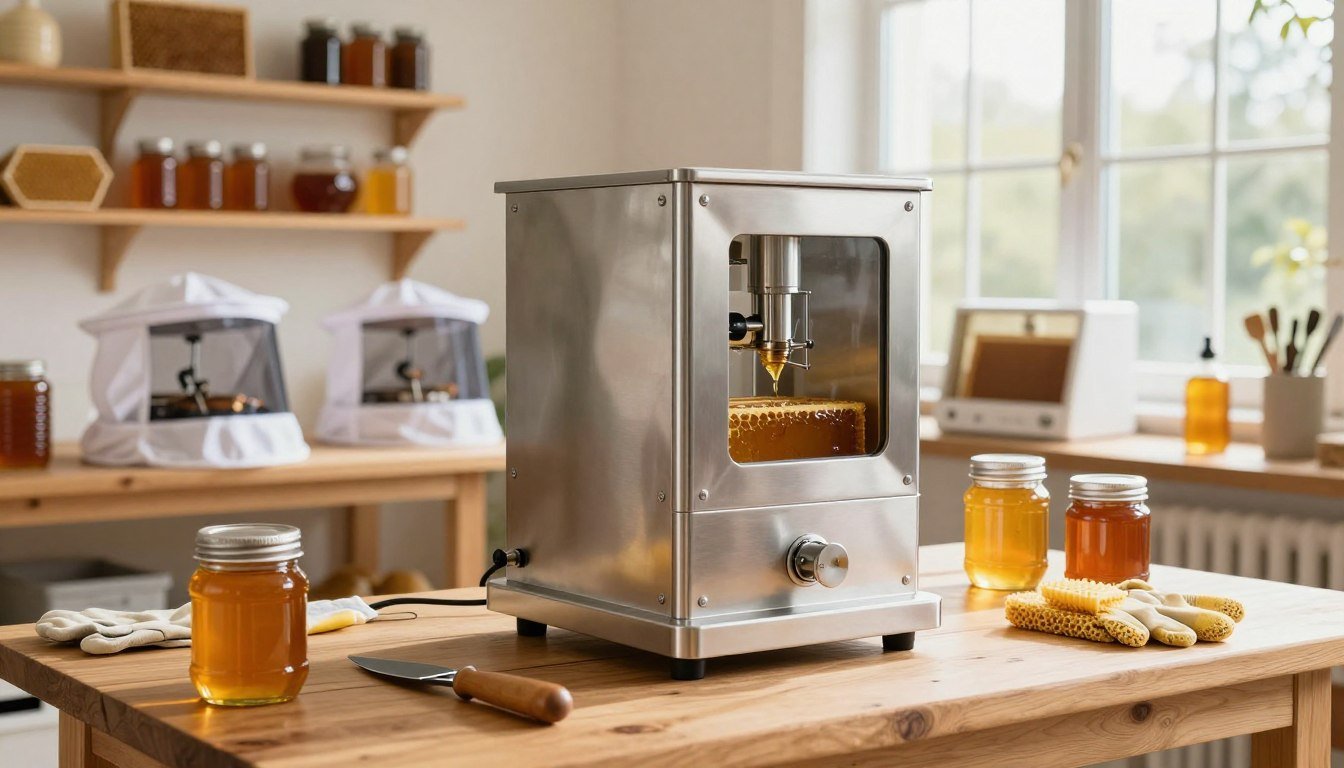
Lyson is a European (Polish) manufacturer that has built a significant international presence, often noted for more advanced automation features (programmable extraction cycles, radial designs with sophisticated frame-basket engineering) at various price points spanning hobbyist through commercial-scale equipment. As an imported brand for U.S. buyers, parts and service logistics require more advance planning than a domestic brand, though many U.S. beekeeping suppliers now carry Lyson equipment and parts specifically to address this.
Side-by-Side Comparison
| Factor | Maxant | Dadant | Lyson |
|---|---|---|---|
| Origin | United States | United States | Poland (imported) |
| Known for | Robust, field-serviceable build | Broad catalog, established supplier | Advanced automation features |
| Parts sourcing (U.S.) | Straightforward, domestic | Straightforward, domestic | Requires more planning, imported |
| Price positioning | Mid-to-high | Wide range | Wide range, higher-end for advanced features |
Build Quality and Material Differences
All three brands offer stainless steel construction at their higher-end models, the material standard for food-contact honey equipment, though gauge thickness, weld quality, and basket/frame mechanism engineering vary between specific models within and across these brands — request detailed specifications rather than assuming all “stainless steel extractors” are built to equivalent standards, since real quality differences exist even within a single brand’s product range depending on the specific model and price tier.
Parts Availability and Support
Domestic brands (Maxant, Dadant) generally offer simpler, faster parts and service support for U.S. beekeepers, since replacement components don’t need to cross international shipping and customs. Lyson’s growing U.S. distributor network has narrowed this gap considerably, but confirm current parts availability and typical turnaround time with your specific intended supplier before purchasing, especially if you’re buying equipment for a commercial operation where extended downtime during a critical harvest window carries real cost.
Matching Capacity to Your Operation
All three brands offer a range of frame capacities from small hobbyist models to large commercial units, and the right size depends entirely on your colony count and harvest volume — an oversized extractor for a small hobby operation wastes money and storage space, while an undersized unit for a growing operation becomes a genuine bottleneck during peak harvest. Size your purchase to your realistic near-term colony count plus reasonable room for growth, rather than either your current tiny operation or an aspirational future scale that may be years away.
Which Brand Fits Which Beekeeper
A U.S.-based beekeeper prioritizing straightforward domestic parts support and field-serviceable design may lean toward Maxant. Someone already sourcing most equipment through Dadant may find consolidating an extractor purchase there simplest. A beekeeper specifically wanting advanced automation features and willing to plan around import logistics may find Lyson’s feature set worth the added sourcing consideration. None of the three is a wrong choice in general — the right fit depends on your specific priorities around support, features, and existing supplier relationships.
Warranty Coverage Across Brands
Warranty terms vary by brand, model, and sometimes by specific retailer, so confirm exact coverage length and what’s included (motor, frame mechanism, general workmanship) before purchasing rather than assuming standard coverage across the board. A longer warranty on a motorized component matters more than one on the stainless steel tank itself, since the tank rarely fails under normal use while motors and drive mechanisms are the more common wear points on an electric extractor.
Buying Used Equipment From These Brands
All three brands have an active used equipment market, since well-built extractors genuinely last many years with proper care — buying used can meaningfully reduce cost for a hobbyist or new commercial operation, but inspect used equipment carefully for basket mechanism wear, motor condition (on electric models), and any signs of improper cleaning or storage that could indicate contamination risk. A used extractor from a reputable brand in good condition is often a smarter purchase than a new budget extractor from a less established manufacturer.
Cleaning and Sanitizing Regardless of Brand
All three brands require the same fundamental sanitation practices between uses and especially after processing honey from any colony with a disease history, following the general guidance covered in our extractor sanitizing guide — brand doesn’t change this baseline food-safety requirement, though some models’ basket and drain designs are genuinely easier to fully clean than others, worth checking during your purchase research if thorough cleanability is a priority for your specific situation.
Motor Reliability on Electric Models
For electric models across all three brands, motor quality and reliability is a real differentiator worth researching specifically, since a failed motor during a critical harvest window creates genuine operational disruption. Look for reviews and community feedback specific to the exact model and motor configuration you’re considering, not just the brand generally, since motor sourcing and quality can vary even within one manufacturer’s product line across different models and price points.
Noise and Vibration Considerations
Larger electric extractors, particularly during spin-up and spin-down cycles, can generate meaningful noise and vibration — a real practical consideration if your extraction space is near living areas, shared buildings, or noise-sensitive neighbors. Some models across all three brands offer better vibration dampening and quieter motor designs than others; if this matters for your specific setup, ask about noise levels directly rather than assuming it’s a negligible factor, since real differences exist between models.
Physical Footprint and Space Planning
Larger-capacity extractors from any of these three brands take up meaningful floor space, and this is easy to underestimate when comparing specifications on paper rather than in your actual honey house or extraction area. Measure your available space and confirm not just the extractor’s footprint but also the clearance needed for loading frames, positioning collection buckets, and moving around it safely during operation before finalizing a purchase, especially for a larger commercial-capacity unit.
Upgrading From a Smaller to a Larger Unit
Rather than buying your absolute maximum anticipated future capacity today, consider whether a mid-size unit that meets your realistic 2-3 year needs, with a clear upgrade path to a larger unit later, makes more financial sense than a large commercial unit sitting mostly underused for years. All three brands offer a range of capacities specifically because growing operations commonly upgrade over time — check whether your chosen brand’s resale market or trade-in options make this upgrade path more financially reasonable than it might first appear.
Ordering Lead Times
Extractor demand spikes seasonally ahead of harvest, and lead times for both domestic and imported models can extend meaningfully during peak ordering periods — order well ahead of when you actually need the equipment in hand, particularly for a larger or specialty-configuration unit, rather than assuming quick fulfillment right before your harvest window. This is especially relevant for Lyson given the added international shipping step, but domestic brands can also see real delays during high-demand spring ordering periods.
Electrical Requirements for Electric Models
Confirm the specific voltage and amperage requirements for any electric extractor model against your extraction space’s actual electrical setup before purchasing, since larger commercial units sometimes require a dedicated circuit or different voltage than a standard household outlet provides. This is a straightforward check that’s easy to overlook until the equipment arrives and doesn’t fit your existing electrical setup, at which point you’re facing an unplanned electrical upgrade during what should be a simple equipment installation.
Researching Real User Experience
Beyond manufacturer specifications, seek out real feedback from other beekeepers who’ve used the specific model you’re considering — local beekeeping association members, online beekeeping forums, and regional extension programs often have accumulated practical experience with these brands that goes beyond what any manufacturer’s marketing materials will tell you. Real-world durability, actual parts-availability experience, and honest assessments of any recurring issues are the kind of practical detail this direct community feedback surfaces far better than spec sheets alone.
Financing and Cooperative Purchasing Options
For a significant commercial-capacity purchase, check whether your brand or dealer offers financing options, and whether your local beekeeping association coordinates any cooperative or bulk purchasing programs that could reduce cost — some regions have active equipment-sharing or group-purchase arrangements specifically for larger, less frequently used equipment like extractors, worth investigating before committing to a full individual purchase if your operation’s scale doesn’t yet justify owning a large unit outright.
Anchoring and Stability During Operation
A spinning extractor, especially at full load, generates real centrifugal force that can cause a poorly anchored unit to wobble or shift during operation — confirm your chosen model’s stability requirements and, for larger units, whether floor anchoring is recommended, since a unit that moves during operation is both a safety concern and a sign the spin cycle isn’t achieving its intended even extraction.
Common Mistakes
Choosing based on brand name recognition alone without comparing actual specifications (capacity, material gauge, basket mechanism) across the specific models you’re considering overlooks real differences that exist even within one brand’s lineup. Underestimating import logistics and parts lead time for an imported brand, only discovering the gap when a part is needed urgently during harvest season, creates avoidable downtime. Buying more capacity than your realistic near-term operation needs ties up capital and storage space that could be better used elsewhere.
Sources
Brand and product details reflect publicly available manufacturer information for Maxant, Dadant, and Lyson extractor product lines, alongside general beekeeping equipment purchasing guidance.
FAQ
Is a domestic extractor brand better than an imported one?
Not inherently better in quality, but domestic brands like Maxant and Dadant generally offer simpler, faster parts and service support for U.S. beekeepers compared to an imported brand like Lyson, though Lyson’s U.S. distributor network has narrowed this gap.
Which brand offers the most advanced features?
Lyson is often noted for more advanced automation features like programmable extraction cycles, though this comes with the tradeoff of imported parts logistics for U.S. buyers.
Should I buy from the same supplier as my other equipment?
It can simplify logistics — Dadant’s broad catalog makes consolidating purchases through one supplier convenient if you’re already buying other equipment there — but compare actual extractor specifications rather than choosing based on supplier convenience alone.
How do I decide what capacity to buy?
Size to your realistic near-term colony count plus reasonable room for growth — an oversized extractor wastes money and storage space, while an undersized one becomes a bottleneck as your operation grows.
Should I buy new or used?
A used extractor from a reputable brand in good condition is often a smarter purchase than a new budget extractor from a less established manufacturer, since these brands’ equipment is genuinely built to last many years — inspect basket mechanism wear and motor condition carefully before buying used.
Are there financing or group-purchase options for extractors?
Some dealers offer financing for larger commercial-capacity purchases, and some regional beekeeping associations coordinate cooperative or group-purchase programs specifically for equipment like extractors that a smaller operation may not need to own individually.