Published March 31, 2026
Deciding whether to merge two hives is a critical beekeeping choice. A weak hive facing winter often triggers the idea to join forces with a stronger one. That step must rest on clear mite counts and colony health.
MaryBeth’s sugar roll showed 13 mites in her South Hive and 34 in her North. Those numbers signal differing infestation levels and raise a red flag about spreading mites between hives.
Proper planning matters: plan treatments such as oxalic acid or formic acid, check honey stores, and assess the queen’s strength. For treatment compatibility guidance, refer to this compatibility guide.
Use monthly sugar rolls to track mites and decide on timing. Learn more on seasonal options like surface oxalic use versus formic strategies at a treatment comparison. Good records and conservative sequencing protect honey, queens, and brood when making the final call.
Key Takeaways
- Assess mite counts and colony strength before merging hives.
- MaryBeth’s test highlights why data guides management.
- Plan chemical choices and timing to avoid harmful overlap.
- Protect honey and the queen by following label and season rules.
- Regular monitoring and record-keeping limit mite spread across hives.
Assessing Colony Health Before Intervention
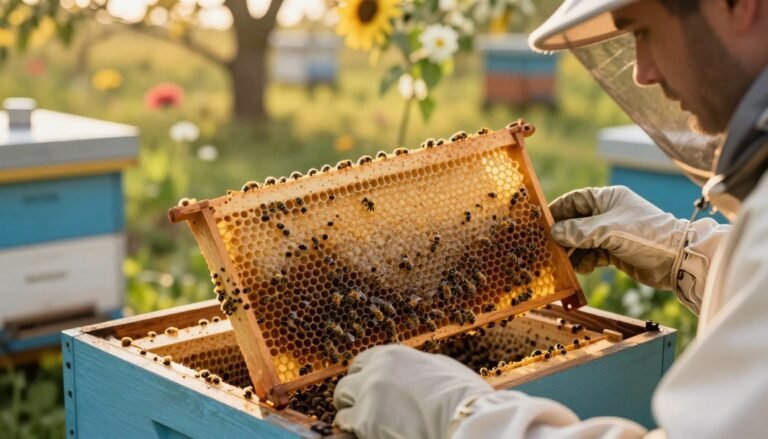
Small frame coverage and spotty brood are the first red flags in weak colonies. Inspect the brood box for frame counts. A colony with only 2–4 frames of bees often lacks the mass to keep brood warm through cool nights.
Identifying Weak Colonies
Look for a falling population, poor queen laying, or reduced guarding at the entrance. Check honey stores in each box. Low resources plus few frames increases winter risk.
Signs of Disease
Spotty brood patterns, visible pests, or abnormal brood mortality suggest mites or other disease. Beekeepers should inspect for wax moths and small hive beetles while noting mite levels.
- Check the queen — uneven egg-laying often explains low population growth.
- Track brood coverage and document changes in each hive for good management.
- Use diagnostic methods like an alcohol wash for clear mite counts; see how to do an alcohol wash for reliable information.
Can You Combine Colonies Before Varroa Treatment
Before any merge, assess whether the smaller colony brings resources that genuinely improve overall population health.
Weigh benefits and risks. A strong hive offers honey, brood, and nurse bees that aid survival. But adding a high mite load risks infecting both units.
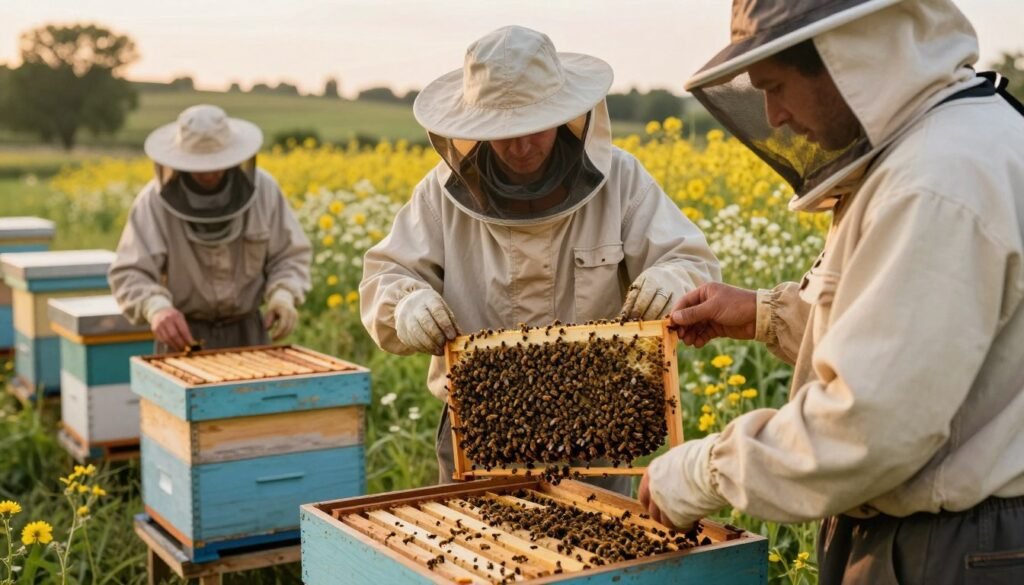
“There is no reason to give a strong hive the problems of a weak one.”
If a group is queenless and cannot raise a new queen, merging is a valid practice to save those bees. Ensure the surviving queen is the one to keep.
- Base the action on recent inspection data: mite counts, brood, and honey stores.
- Prioritize long-term control of mites to avoid collapse of both hives.
- Use the treatment compatibility guide when planning chemical steps after merging.
| Scenario | When to Merge | Risk Level |
|---|---|---|
| Queenless small unit | Merge if strong hive has healthy queen and stores | Moderate — monitor mites closely |
| Weak but reproductively sound | Hold off; brood and queen may recover | Low to Moderate — avoid unnecessary spread |
| High mite load in weak hive | Do not merge; treat or requeen separately | High — likely to harm both colonies |
Final practice: choose actions that protect the queen, brood, and overall population. Effective mite control should remain central to any decision.
Understanding Mite Thresholds and Treatment Timing
Accurate sugar roll counts guide whether to act in late summer or wait until early spring. Readings help convert a sample into colony-level risk and set the proper timing for control measures.
Interpreting Sugar Roll Results
Sugar rolls sample phoretic mites on adult bees. Remember that many mites hide inside capped brood, so counts understate total infestation.
Rule of thumb: a sugar roll showing about 5 mites per 100 bees usually reflects roughly a 10% infestation across the colony.
- Threshold guidance: the University of Minnesota recommends treating in August–September when counts reach 4–5 mites per 100 bees.
- Check hives during summer and early spring to spot rising mite levels before they peak.
- A weekly sugar roll is wise when numbers are uncertain; frequent sampling builds reliable records.
“Treating at the right season protects honey, brood, and overwinter survival.”
Avoid stacking oxalic acid and formic acid; spacing and label directions matter for bee safety and effective control. For more on timing and management, see timing in varroa mite management.
Risks of Merging Infested Colonies
Merging a heavily infested unit with a healthy hive risks overwhelming the stronger population. A high mite load aboard incoming bees and brood may spread rapidly and collapse both groups. Short-term gains in numbers often give way to long-term losses in health and honey production.
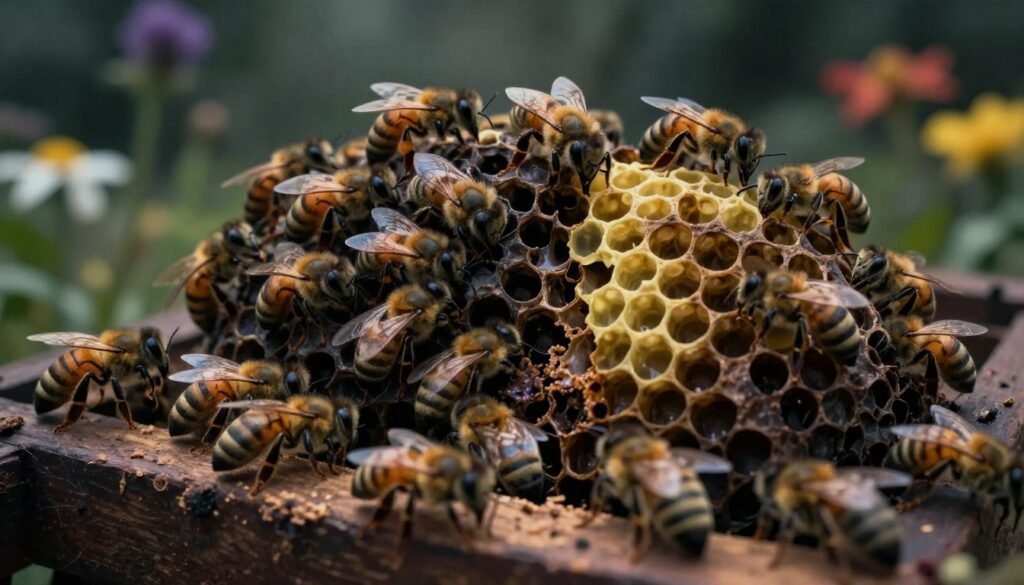
Disease transmission is a top concern. Pathogens move easily through shared brood and stores. Stress from a forced union increases fighting and lowers resistance to pests.
Beekeepers must avoid risky chemical mixes during a merge. Combining essential oils with synthetic miticides or pairing thymol and amitraz has caused queen loss in some operations. Plan the use of formic acid and other acid products carefully.
- High mite loads may overwhelm healthy bees and lead to rapid decline.
- Do not merge if severe disease is present; separate management is safer.
- Prioritize the strongest colony to protect brood, stores, and future control options.
“Protecting the strongest hive preserves apiary resilience.”
Selecting the Right Queen for a Combined Hive
Choose which queen will lead the merged hive by weighing age, egg pattern, and temperament. Pick the younger, more productive queen in most cases. A vigorous queen maintains a solid brood nest and boosts winter survival.
Inspect frames for a uniform brood pattern. Look for solid, closely spaced eggs and few empty cells. This gives clear evidence of laying quality.
Never leave both queens active. Two queens will fight, risking injury or loss of both. That outcome often leaves the colony queenless and weak.
- Queen choice matters: younger, productive queens usually improve colony strength and honey production.
- Favor queens with known resistance to mites and good field records to lower future treatment needs.
- Observe worker behavior around the queen for signs of acceptance and vitality.
- Use your records—age and past performance help decide which queen to keep.
“Selecting a high-quality queen increases the chances that the combined colony will survive and thrive.”
Once the queen is selected and secured, proceed with the combination steps. This protects brood, bees, and long-term resistance while reducing the need for extra treatment.
Preparing for the Newspaper Combination Method
Set up the newspaper barrier to let hive scents blend slowly and reduce conflict. This method gives both colony units a gradual path to acceptance. It lowers fighting and stress during the union.
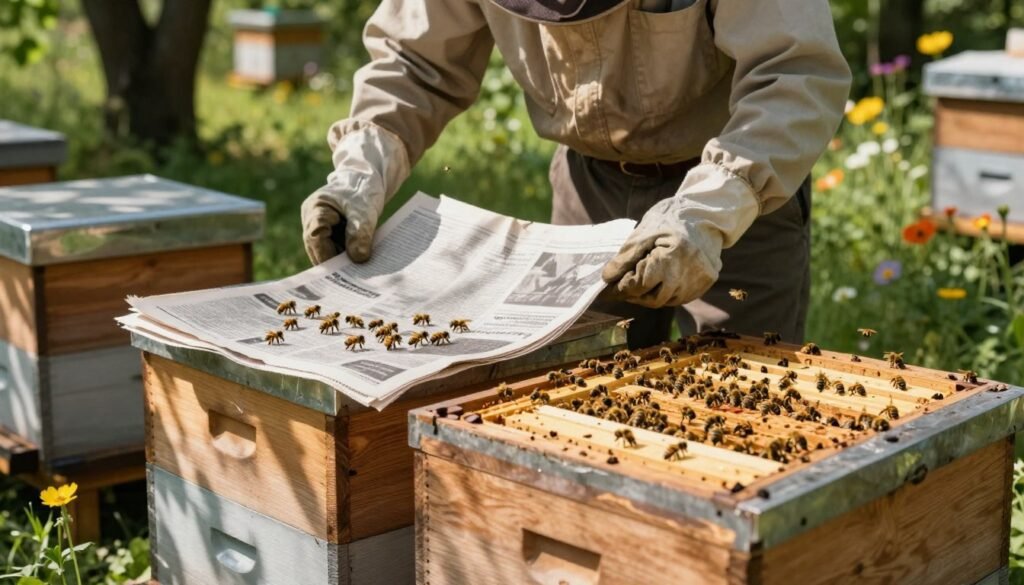
Setting Up the Newspaper Barrier
Place a single sheet of newspaper between brood boxes. Add a few small slits in the paper so bees begin chewing through over several days.
The gentle chewing process helps pheromones mix and lets the populations meet in a controlled way. Keep the upper box with its own entrance so foragers can leave.
Reorienting Foragers
Place grass or pine needles at the upper entrance. This simple marker helps foragers learn the new exit and avoid drifting.
Monitor the hive for several days. Watch for calm movement, steady brood care, and no aggressive fighting. Intervene if fighting or high mite levels appear.
Quick checklist
- Paper with slits between boxes
- Upper entrance open and marked with grass
- Check brood and frames after several days
- Monitor population, honey, and mite signs
| Step | Action | Expected Days |
|---|---|---|
| Install barrier | Place newspaper with 3–5 slits between boxes | 0 |
| Mark entrance | Add grass or pine needles at upper exit | 0–1 |
| Observe | Watch behavior, brood care, and mites | 3–7 |
| Remove paper | Allow full union once paper is chewed through | 5–10 |
“A staged union is safer than an abrupt merge when mite control and winter strength matter.”
Managing Resources and Brood Frames
A careful reshuffle of brood frames and honey stores helps both units form a balanced, resilient colony.
Manually move healthy brood frames and full honey frames so both colonies share resources. Inspect each frame for brood health and visible mites before relocation.
Proper space in the brood nest prevents overcrowding after fusion. Leave open comb and empty frames to allow expansion and to keep the box well ventilated.
Keep detailed records of moved frames. Note which hive supplied brood, which supplied honey, and any signs of resistance to pests.
- Even distribution: spread brood frames across the combined hive to balance nurse bee workload.
- Honey reserves: move surplus frames to bolster stores for winter survival.
- Mite vigilance: avoid transferring heavily infested brood; treat adult bee levels if mites rise.
For broader apiary planning and productivity tips, see apiary productivity. Proper frame management improves control and boosts the bee population’s chance to thrive.
Avoiding Robbing During the Dearth
Robbing pressure spikes during a dearth, making resource protection the top priority for apiaries.

Robbers use scent to find exposed honey, and a stressed colony is less able to defend the nest. Combining units in low nectar periods raises the odds of a raid.
Reduce the entrance on the hive and keep any exposed frames sealed. Smaller exits let guards screen intruders more effectively.
- Avoid leaving honey or open frames accessible after a merge.
- Watch entrance activity for heavy traffic, fighting, or grinding sounds.
- Know that a mite‑weakened bee force lowers defense; monitor mite and brood health closely.
- If possible, delay combinations until spring nectar returns and the risk drops.
“Protect stores first; a secure colony survives the dearth and the season ahead.”
For basic procedural errors that invite robbing and other hazards, review common beginner mistakes to strengthen apiary practice and control measures.
Sequencing Treatments for Maximum Safety
Sequencing treatments preserves colony health by limiting chemical stress and avoiding harmful overlaps. Plan each action, finish one course, and confirm recovery before starting another. This reduces risk to brood and adult bees and lowers the chance of resistance in mites.
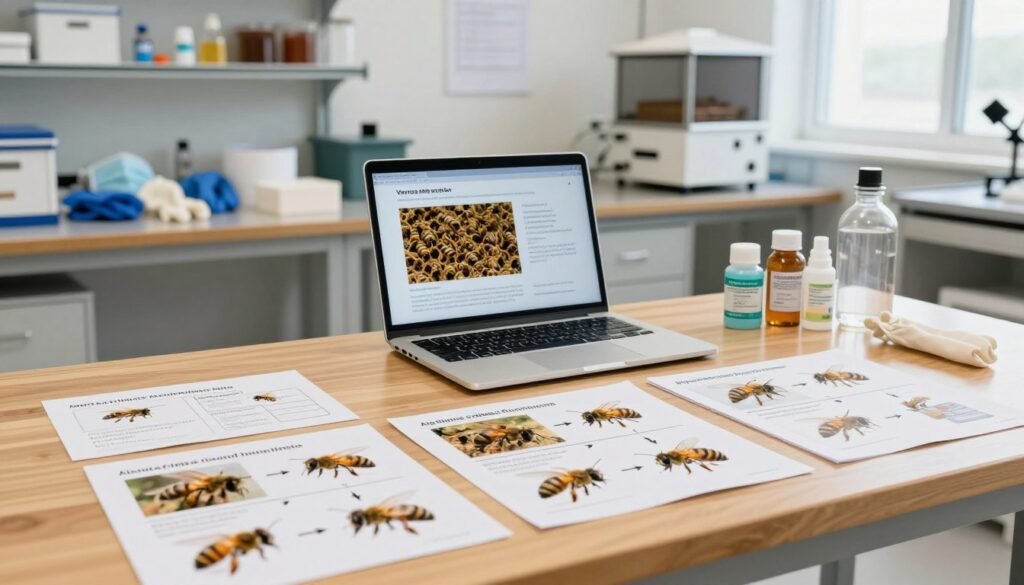
Avoiding Chemical Stacking
Never use more than one varroa method at the same time. Stacking oxalic acid with formic acid or other miticides increases bee stress and may harm the queen or brood. Follow label directions and avoid overlapping active agents.
Spacing Between Applications
Allow recovery time: wait at least 4 weeks between varroa treatments to let the hive stabilize.
- For disease medicines, allow 1–2 weeks between applications.
- Always complete a full course and verify recovery before new action.
- Keep detailed records of dates, methods, and results to guide timing.
| Issue | Minimum Gap | Notes |
|---|---|---|
| Varroa mite control | 4 weeks | Avoid concurrent acids or miticides |
| Disease medication | 1–2 weeks | Shorter gaps but monitor bee stress |
| Severe infestation | One method at a time | Consider alternative techniques; consult sources |
For research on integrated control and resistance risk, review the peer-reviewed study. For natural options and sequencing ideas see natural remedies for varroa mites.
Monitoring Recovery After Combination
Observe the new colony closely in the days after joining units. Wait at least 3–4 days before the first full inspection to let bees settle and scents meld.
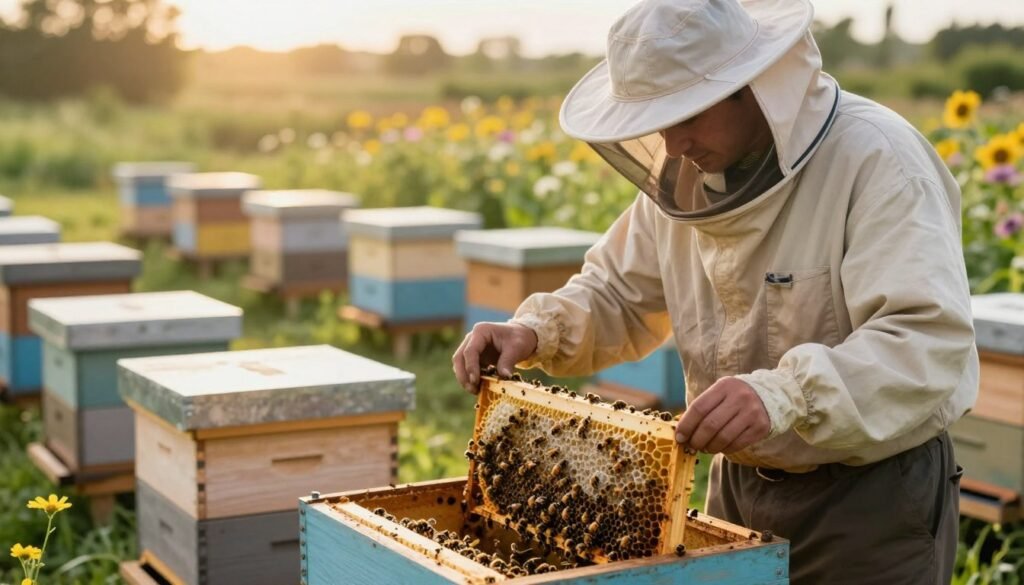
Watch for fighting, erratic flight, or stressed behavior. These signs suggest the method failed and may need correction.
Check brood pattern during the first post‑merge inspection. A healthy, even brood patch shows the queen is accepted and laying well.
- Monitor mite levels if oxalic acid or formic acid was used; run a sugar or alcohol sample within a few weeks.
- Provide supplemental feed when stores are low to help build worker numbers ahead of winter.
- Document observations and actions in apiary records to refine future management.
| What to Check | When | Reason |
|---|---|---|
| Entrance activity | 3–7 days | Detect fighting or calm foraging |
| Brood pattern | 7–14 days | Confirm queen acceptance and colony health |
| Mite levels | 2–4 weeks | Verify control and resistance trends |
| Feed needs | Immediate to weeks | Support population build toward winter |
“Close monitoring after a union preserves health and keeps long‑term control achievable.”
Conclusion
A careful end‑of‑season review helps preserve hive strength and limit mite spread.
Follow clear data, steady monitoring, and staged methods to protect bees and the queen. Use the newspaper method to lower conflict and guard brood while resources merge.
Prioritize mite checks, avoid stacking chemical approaches, and space actions so the colony recovers between applications. Keep records of inspections, counts, and moves to guide future choices.
With patience and planned steps, a thoughtful union supports long‑term apiary health and improves odds for winter survival of both hive and bees.
FAQ
Can I join two hives ahead of a mite control application?
Merging weak and strong hives is a common strategy to boost population and winter survival, but timing matters. If mite levels are high, combine only after reducing mite load in the weaker unit or treat both colonies shortly after joining. Use monitoring tools like a sugar roll or alcohol wash to inform action. Plan merges in early spring or late summer when brood patterns favor treatment effectiveness and forager reorientation is easier.
How do I assess colony health before any intervention?
Inspect brood pattern, queen status, food stores, and population. Look for consistent capped brood, an active laying queen, adequate honey and pollen, and at least eight to ten frames of bees in strong hives. Record findings and test mite levels with a sugar roll or alcohol wash to guide treatment choice and timing.
What indicates a weak colony that needs help?
Signs include spotty brood, laying workers, few foragers, low frame coverage, and diminished stores. Mite infestation often causes deformed wing virus and reduced vigor. A weak hive with high mite counts should be united or requeened, but only after reducing mite pressure to avoid spreading pests.
What are the signs of disease I should watch for?
Watch for foul odors, sunken or perforated brood cappings, chalkbrood mummies, nosema symptoms, and deformed adult bees. Any unusual mortality or abnormal brood warrants immediate sampling and possibly lab diagnosis. Treat specific diseases per extension guidelines and avoid chemical overlap with mite products.
When is it appropriate to unite hives related to mite control?
Ideal times are early spring or after a late-summer honey flow when brood levels decline. Uniting just before a validated miticide reduces the risk of re-infestation. Avoid merging during peak brood rearing unless both units have low mite counts and compatible queens or plan to remove one queen promptly.
How do I interpret sugar roll or alcohol wash results?
Collect about 300 bees, perform the test, and calculate mites per 100 bees. Thresholds vary: for summer management, treat when counts exceed 3–5 mites/100; in late season or pre-winter, act at lower thresholds. Use results to decide on treatment, timing of merging, or requeening.
What are the risks of merging infested colonies?
Merging infested hives spreads mites, increases viral load, and can overwhelm remaining bees, leading to rapid collapse. Infested brood can act as a reservoir. Mitigate risk by reducing mite levels in both units before joining or by applying a safe, single treatment soon after combination.
How should I choose a queen for a combined hive?
Select a vigorous, well-mated queen with a strong laying pattern and known disease resistance. Use queens from reputable breeders or stock selected for hygienic behavior. If keeping the stronger queen, remove the weaker queen or allow bees to supersede before combining to reduce fighting and drifting.
How do I set up the newspaper barrier for a safe union?
Place a sheet or two of newspaper between brood boxes, leaving a few slits to allow gradual mixing. Align entrances and close any extra openings. The barrier gives bees time to integrate scents and reduces aggression. Remove the barrier after a day or two once bees accept each other.
How do I reorient foragers after joining hives?
Reorient by moving the merged hive a few inches and then back to the original location, or place frames of brood and nectar centrally so returning foragers find familiar cues. Provide ample stores and avoid opening the hive frequently for several weeks to minimize drifting and robbing.
How should frames and food be managed when combining colonies?
Balance brood frames, nurse bees, and food stores. Transfer several frames of capped brood to preserve pheromones and nurse population. Ensure adequate honey and pollen; place resources near the queen. Rotate or remove obviously diseased frames and maintain queenright status for brood continuity.
How can I prevent robbing when nectar is scarce?
Reduce entrance size, feed fondant or syrup inside the hive, and avoid exposing open syrup. Keep inspections short and use robber screens if needed. Strong combined colonies defend stores better, but vigilance during dearth weeks is crucial to prevent colony loss.
How should I sequence mite control and other chemical applications?
Avoid overlapping products that stress bees or create chemical stacking. Space different miticide families by several weeks and follow label instructions for intervals. Prefer single, targeted applications timed when brood is minimal or after brood breaks for better efficacy.
What is the recommended spacing between chemical applications?
Follow label directions; many products require two to four weeks between doses. If alternating active ingredients, allow a full treatment cycle and monitor mite levels before reapplying. Maintain records of dates, products, and doses to prevent resistance and harm to bees.
How do I monitor recovery after combining hives?
Inspect every 7–14 days for brood pattern, queen activity, population growth, and mite counts. Reassess stores and disease signs. Use sugar rolls monthly during active season and perform additional checks in fall to ensure readiness for winter.
What seasonal timing best supports safe combining and control?
Early spring and late summer offer the best balance for merging and treating. Early spring allows buildup before nectar flows. Late summer or early fall treatments target mites before winter. Avoid combining during heavy nectar flows or extreme cold to reduce stress on bees.
Which non-chemical techniques help control mites when uniting colonies?
Employ brood breaks, queen caging, drone brood removal, screened bottom boards, and hygienic stock selection. Mechanical methods reduce mite reproduction and pair well with targeted organic acids like formic or oxalic acid when used per label and timed correctly.
How do I protect bees from resistance and chemical hazards?
Rotate active ingredients, use integrated pest management, and rely on monitoring to guide interventions. Avoid overuse of the same product class. Combine mechanical strategies with selective chemical use to reduce selection pressure and preserve product efficacy.