Why does a hive’s internal temperature sensor sometimes show a sharp rise in the dead of winter, weeks before any beekeeper would think to check for brood? The answer is one of the more useful things an in-hive sensor can reveal: a broodless winter cluster and an actively brood-rearing one run at genuinely different temperatures, and watching that shift happen is a real, biologically grounded way to know a queen has resumed laying before a single frame gets pulled.
Key Takeaways
- Honey bee brood must be held within a narrow 32–36°C range to develop normally, with pupae the most sensitive — this comes from research published by Anton Stabentheiner and colleagues in PLOS ONE.
- A broodless winter cluster runs noticeably cooler at its core than an active brood nest, then rises again once the queen resumes laying — a pattern often called the “December dip, January rise” among beekeepers who monitor it.
- Humidity inside an active hive is managed by the bees themselves through water collection, fanning, and ventilation, and normal ranges shift with season and brood presence rather than holding to one fixed number.
- A sensor reading a genuinely abnormal temperature or humidity value for the season is a prompt to inspect, not a diagnosis on its own — it can’t distinguish a dead colony from bees clustered somewhere it isn’t recording.
- Sensor placement matters as much as sensor quality: a probe in the broodnest reads very differently from one in an empty super above it.
Table of Contents
- The Biology Behind the Numbers
- What Normal Looks Like by Season
- The Winter Brood-Resumption Signal
- Reading Humidity Specifically
- Sensor Placement: Why It Changes Everything
- Real Sensors Worth Knowing About
- What These Sensors Can’t Tell You
- Frequently Asked Questions
The Biology Behind the Numbers
A honey bee colony is one of the few insect societies capable of genuine thermoregulation, and the reason beekeepers monitor it at all traces back to how unforgiving the underlying biology is. Research by Anton Stabentheiner and colleagues, published in PLOS ONE (“Honeybee Colony Thermoregulation — Regulatory Mechanisms and Contribution of Individuals in Dependence on Age, Location and Thermal Stress”), documents that developing brood must be held within roughly 32–36°C, with pupae the most sensitive stage — prolonged exposure below about 32°C is associated with shriveled wings, malformed legs, and other developmental defects. Adult bees maintain this range through “endothermy on demand,” shivering their flight muscles to generate heat and clustering more tightly around the brood as ambient temperature drops, applying heat as close to the comb as physically possible.
This is also why a temperature sensor reading is so tightly linked to whether brood is present at all: a colony with no brood to protect has far less reason to hold a precise 34–35°C, and lets its core temperature drift lower, particularly in winter.
What Normal Looks Like by Season
| Season / colony state | Typical broodnest temperature | What a sensor is actually seeing |
|---|---|---|
| Spring buildup (brood present) | ~34–35°C, tightly held | Active thermoregulation around growing brood |
| Summer, strong colony | ~34–35°C in the broodnest; more variable elsewhere in the box | Same tight brood-area control; readings outside the nest reflect ambient heat more than colony effort |
| Early-to-mid winter, broodless cluster | Noticeably lower core temperature than brood-rearing periods, varying with outdoor cold and cluster size | A tighter, lower-effort cluster maintaining survivable warmth rather than brood-rearing precision |
| Late winter, brood resumes | Rises back toward ~34–35°C in the cluster core | The “December dip, January rise” signature many monitoring users specifically watch for |
These are general patterns, not fixed thresholds — colony size, insulation, local climate, and exact sensor placement all shift the specific numbers a given hive shows, which is why comparing a hive’s own trend over time is more informative than comparing it to a number from someone else’s apiary.
The Winter Brood-Resumption Signal
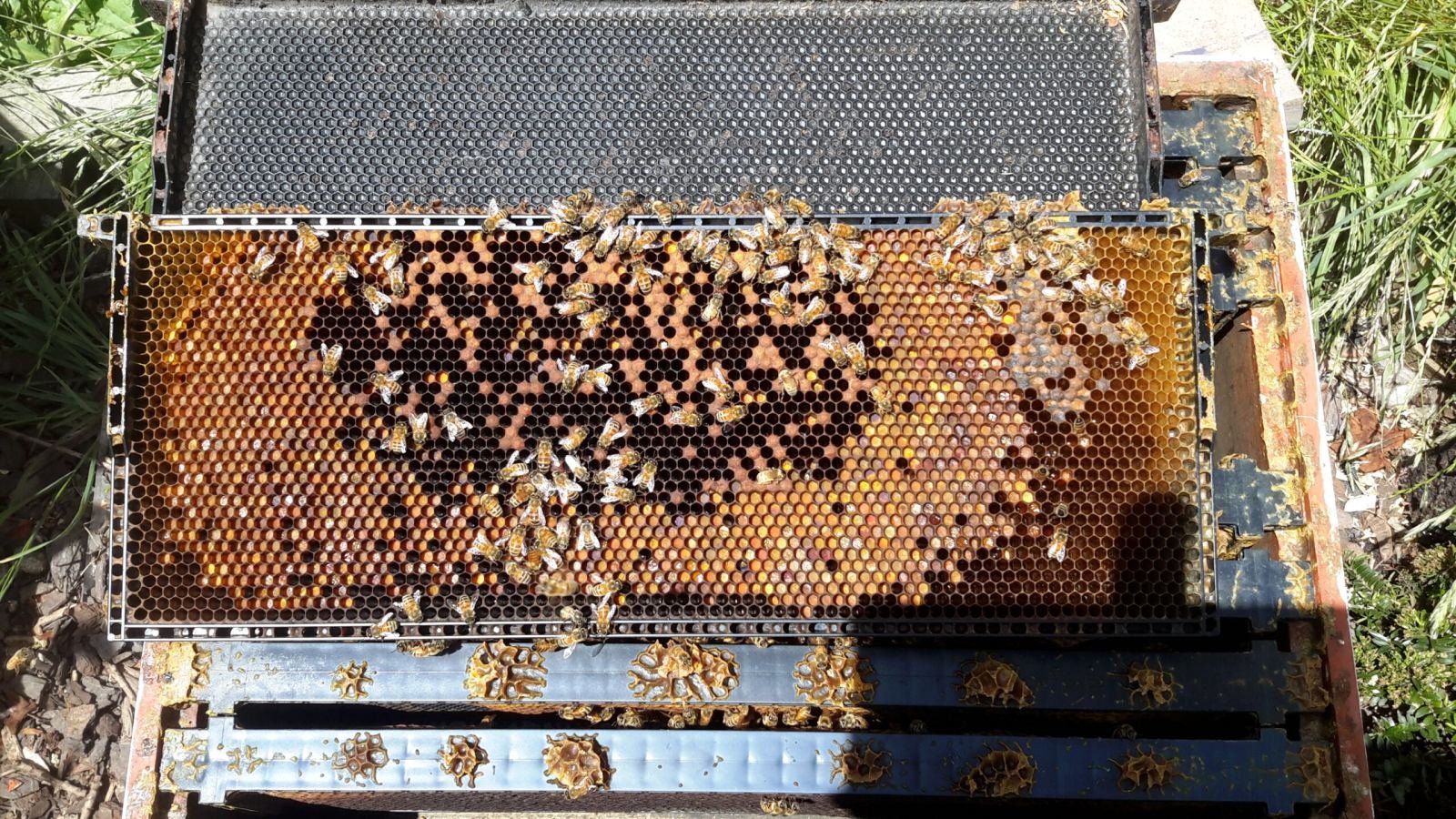
Recent research on overwintering colonies has specifically examined how internal temperature patterns track brood status and even relate to colony survival odds, reinforcing what many beekeepers running continuous sensors already noticed empirically: a colony that stays broodless and cool through the coldest weeks, then shows a clear, sustained temperature rise in the cluster core, is very likely resuming brood rearing — often before any outward sign is visible at the entrance. This is one of the more genuinely useful things a permanently-installed sensor offers, since checking for early brood in January or February by opening a winter cluster carries a real cost in disturbance and chilling risk that a sensor reading avoids entirely.
Reading Humidity Specifically
Humidity inside a hive is actively managed, not just a passive byproduct of the outside air. Bees regulate it through water foraging, fanning, and controlling ventilation at the entrance, and it shifts for real biological reasons: humidity tends to run higher around uncapped, curing nectar and drops somewhat once that nectar is capped as honey, and a broodnest generally runs at a different humidity than the outer edges of the cluster. There’s no single “correct” number the way there’s a tight brood-temperature target — the more useful skill is noticing a sustained, unexplained shift from a hive’s own normal baseline, which can flag anything from a ventilation problem to unusually wet local conditions worth cross-checking against a nearby weather station’s rainfall data.
Sensor Placement: Why It Changes Everything
Where a probe sits inside the hive matters as much as its accuracy. A sensor placed directly in or against the broodnest reads the tightly regulated 34–35°C zone; the same sensor moved to an empty super above the brood chamber, or near an outer wall, will read something much closer to ambient outdoor temperature, because that space isn’t being actively thermoregulated the same way. Consistency matters more than finding a single “best” spot — moving a sensor between inspections makes month-to-month comparisons meaningless, since a temperature drop might reflect a repositioned probe rather than a real colony change.
Real Sensors Worth Knowing About
BroodMinder‘s T2SM internal sensor, verified directly on the manufacturer’s own product page, is a genuine, currently-sold example of this category: $47.99, running about a year on a single CR2032 battery, and rated to roughly ±0.25°C accuracy — precise enough to catch the kind of gradual seasonal shift described above, not just a coarse warm/cold reading. It’s designed to sit directly on or near the top bars of a brood or super frame, which matters given how much placement affects the reading, as covered below. BeeGuard‘s connected hive sensors and BroodMinder’s own broader product line offer comparable internal probes for beekeepers who want the same data feeding into a different app ecosystem, typically alongside a weight scale or weather station from the same brand.
What These Sensors Can’t Tell You
A temperature or humidity reading cannot confirm a queen is present, count mites, or diagnose disease — it’s a proxy for brood activity and general colony effort, not a direct health readout. A colony can maintain a perfectly normal-looking temperature profile while dealing with a real problem that hasn’t yet affected its thermoregulation capacity. As with weight data, the right way to use these readings is as a trigger for a physical check when something looks genuinely off, not as a replacement for one.
BroodMinder’s own product overview of its T2/TH2 internal sensor line shows how an in-hive probe is actually placed and read — the placement principles apply regardless of which brand of sensor is used.
Frequently Asked Questions
What temperature should the inside of a beehive be?
There’s no single hive-wide number — the actively managed broodnest runs roughly 32–36°C whenever brood is present, while a broodless winter cluster core runs cooler, and areas outside the brood area track ambient temperature far more loosely.
Can a temperature sensor tell me if my queen is laying again after winter?
Indirectly, yes — a sustained rise in core temperature back toward the 34–35°C brood-rearing range, after weeks of a lower broodless reading, is a reasonably reliable signal that brood rearing has resumed, though a physical check is the only way to confirm it directly.
Why does my sensor show different readings than my neighbor’s hive?
Colony size, insulation, box configuration, and especially probe placement all affect the specific numbers, so comparing a hive’s own reading against its own history is more useful than comparing it to a different hive or apiary.
Is high humidity inside a hive always a problem?
No — some humidity variation is a normal part of nectar curing and brood-rearing biology; a sustained, unexplained jump well outside a hive’s own seasonal pattern is worth investigating, but moderate day-to-day movement is expected.