Early detection matters when managing colony health. This introduction shows what to watch for and how to spot trouble while inspecting frames, brood, and larvae.
First described in 1913 as Morator aetatulas, this single-stranded RNA pathogen belongs to the Iflaviridae family. It affects honey populations worldwide and often appears alongside other threats such as varroa mites.
Beekeepers must learn to tell this condition apart from American foulbrood, black queen cell issues, or deformed wing concerns. Accurate field checks and prompt action help protect colonies and limit spread across hives.
This guide begins with clear signs to seek during an inspection and sets the stage for actionable management steps in later sections.
Key Takeaways
- Recognize early signs during routine frame and brood checks.
- Morator aetatulas was first recorded in 1913 and remains common.
- Differentiate this condition from foulbrood, queen cell problems, and deformed wing issues.
- Varroa mites can coincide with infections, complicating diagnosis.
- Prompt detection and targeted management limit spread across an apiary.
Understanding Sacbrood Virus Symptoms in Honey Bees
Worldwide, managed colonies frequently report this condition, which can quietly affect brood development if left unchecked. SBV is one of the most commonly encountered viral issues in modern apiaries.
The agent replicates inside the hypopharyngeal glands of adult workers. Those glands produce royal jelly and brood food, so contamination travels directly to young larvae during feeding.
Experienced beekeepers know it often exists at low levels without causing sudden collapse. Yet, when combined with poor nutrition, mites, or other stressors, the infection can weaken a colony fast.
“Early detection and careful hive management keep this disease manageable and reduce long-term losses.”
Practical note: review management guides and regional archives for local advice and thresholds. For background reading and regional guidance, see sacbrood guidance. For related brood hygiene and prevention strategies, consult resources on preventing brood molds.
- Widespread but often low-level.
- Transmitted via contaminated royal jelly.
- Risk rises with added environmental stress.
The Biological Impact on Developing Larvae
Late larval stages are a critical point for brood health. Damage during this period directly alters development and lowers colony strength.
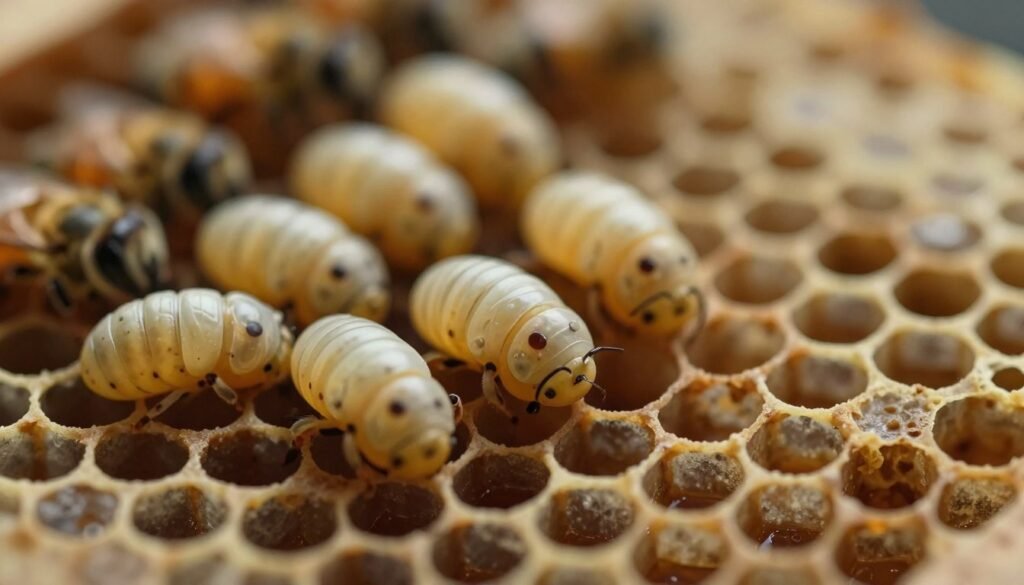
The Transition Failure
At the pre-pupal stage the affected larva cannot shed its final cuticle. In Apis mellifera this molt is essential for pupation.
The result: the larva fails to progress and dies before pupal development begins.
Fluid Accumulation
Fluid collects between the body and the unshed skin. This creates the characteristic sac-like appearance within the brood cell.
Nurse workers often try to remove these carcasses, but removal may lag when colonies face nutritional stress.
- Impact peaks at the late larval stage and blocks the final molt.
- Accumulated fluids give a swollen, translucent look to affected brood cells.
- Persistent infection spreads more easily when worker care or food is limited.
Visual Indicators During Hive Inspections
A careful frame inspection in spring reveals posture and color cues that identify affected larvae early.
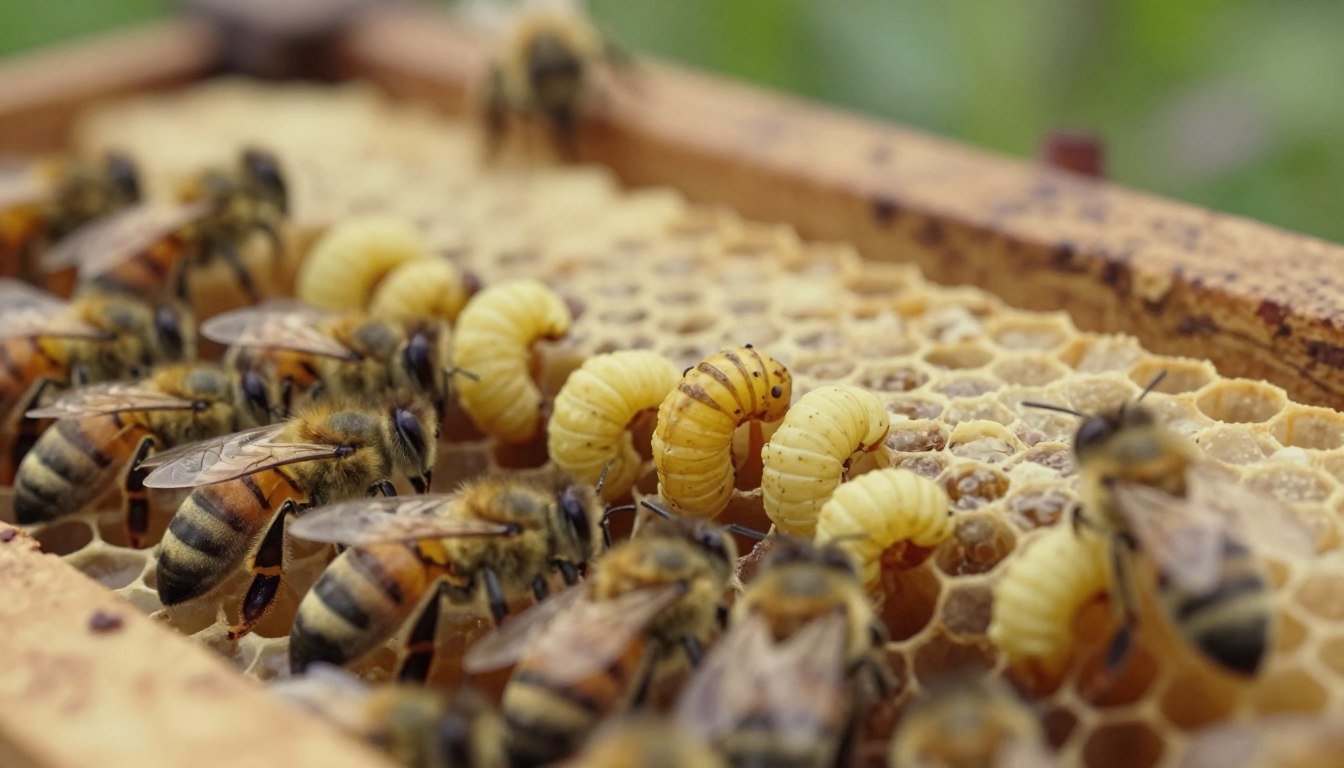
Start with the brood field and scan cells slowly. Look for the distinctive canoe posture where the larval head tilts up toward the cell opening.
Color changes are important. A dying larva moves from pearl white to pale yellow and then to dark brown. Note these shifts at each stage.
Check wax cappings for nibbling or perforations. Workers often open cells when they try to remove infected brood, leaving irregular patterns across the comb.
After fluids dry, brittle dark scales remain on the cell walls. These residues signal an established section of the hive has been affected.
“Field checks that catch posture, color, and capped cell changes help stop spread within a colony.”
- Posture: canoe-like larva position near the cell opening.
- Color: pearly to pale yellow, then dark brown as the larva decays.
- Cell cappings: perforated or nibbled where workers removed brood.
- Residue: brittle dark scales after fluid-filled sacs dry.
| Visual Sign | What to Look For | Immediate Action |
|---|---|---|
| Larval posture | Canoe shape with raised head | Mark frame and monitor adjacent cells |
| Color progression | Pearl white → pale yellow → dark brown | Inspect surrounding brood and note extent |
| Capped cells | Nibbled, perforated wax | Check for worker hygiene and remove if advised |
| Dried residue | Brittle dark scales on cell walls | Consider comb replacement and strengthen nutrition |
Distinguishing Sacbrood from Other Brood Diseases
Simple tests and close observation of cell contents reveal crucial differences between viral and bacterial brood problems.
Compare key field features before deciding on treatment. Odor and texture are the fastest clues during an inspection.
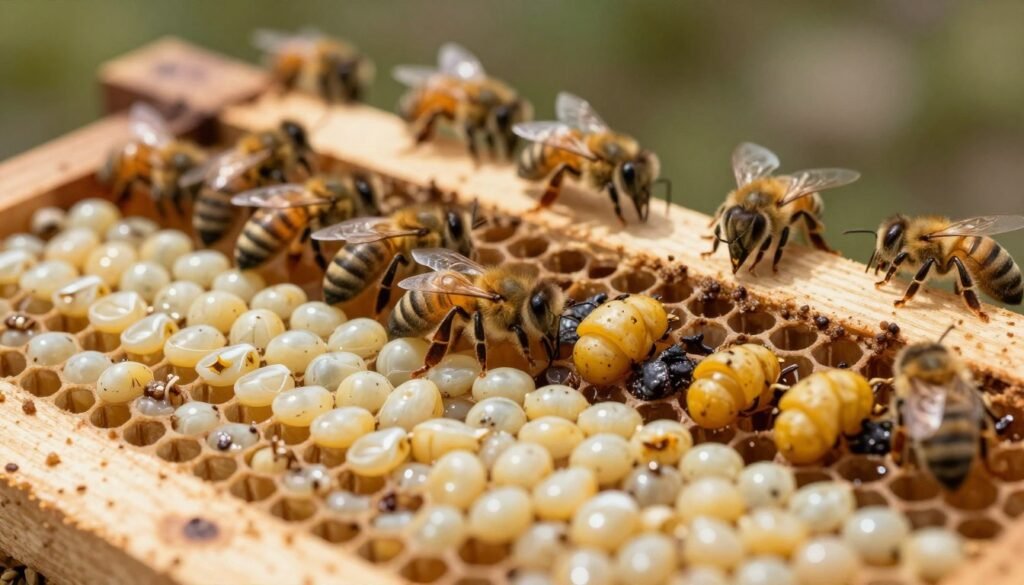
Comparing Foulbrood Characteristics
American foulbrood usually smells foul and yields a long, sticky rope when probed. That ropy thread can reach about 2 cm on a matchstick test.
By contrast, affected larva from this condition remains largely odorless and ropes much less—around 1 cm.
- The dried scale here is brittle and comes away easily from the cell wall.
- Other diseases produce firmly adhered, hard scales that resist removal.
- Do not confuse this infection with black queen cell or queen cell virus; management differs sharply.
Accurate diagnosis matters: treatments for bacterial foulbrood are far more stringent than those for viral brood disorders.
For practical field procedures and diagnostic guidance, review the field diagnosis of brood diseases.
Why Certain Colonies Experience Severe Outbreaks
Stress during the spring build-up often triggers severe outbreaks. A shortage of nectar or pollen reduces nurse numbers and weakens brood care.
Well-fed, populous colonies use hygienic behavior to remove affected larvae early. That action limits spread and keeps the colony strong.
When varroa loads or other stressors weaken a hive, adult workers may start foraging too young. This shift reduces nurse time at the comb and disrupts care for larvae and cells.
- Nutrition matters: pollen and nectar shortages raise susceptibility.
- Population balance: fewer nurses equals less brood protection.
- Co-infections: combining deformed wing virus with another agent speeds decline.
“The cycle is self-reinforcing: poor health begets more infections, and infections erode the workforce needed to recover.”
Beekeepers should focus on bolstering nutrition, monitoring varroa, and using targeted controls. For practical varroa timing and tactics, review the late-summer varroa management plan.
The Role of Colony Genetics in Disease Resistance
Selecting for hygienic traits in queens is one of the most effective long-term defenses against brood disease. Genetic lines influence how quickly workers detect, uncap, and remove affected larvae.
Hives with strong inherited hygiene clear infected cells faster. This limits spread and keeps colony numbers stable. Research shows much of the response comes from worker behavior tied to lineage.
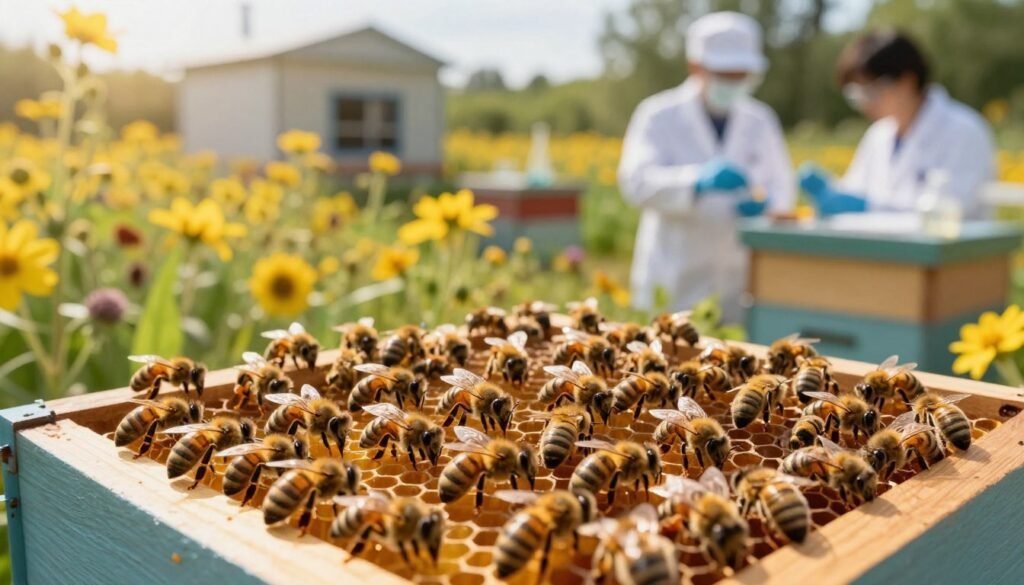
Practical step: choose a queen from tested resistant stock when rebuilding or requeening. A single well-chosen queen can raise the overall resilience of adjacent colonies over time.
“Prioritizing genetic resistance reduces outbreak frequency and supports steady productivity.”
- Benefits: fewer infections, stronger brood care, reduced intervention needs.
- Strategy: combine selection with good nutrition and varroa control.
- Further reading: consider advances in future of varroa-resistant bee genetics for breeding insights.
Effective Management and Control Strategies
Effective control blends smart queen selection, targeted comb removal, and improved nutrition to help affected colonies recover.
Requeening for resistance
Consider requeening when more than 5% of brood shows signs of trouble. Replacing the queen with stock known for strong hygienic behavior reduces spread over time.
For breeding guidance, consult practical resources on hygienic behavior in bee lines.
Removing contaminated comb
Remove dark, old brood comb that can harbor infection and replace it with fresh foundation. Sterilize tools and frames between hives to cut horizontal transmission.
Use careful disposal or controlled freezing of heavily contaminated frames. Sanitize equipment after handling affected comb to protect adjacent colonies.
Strengthening colony nutrition
Boost the nurse population by offering supplemental sugar syrup and pollen substitute during shortages. Stronger feeding helps workers care for larvae and improves brood survival.
There is no chemical treatment for this condition, so focus on bolstering natural defenses and reducing viral load through management steps.
Practical tip: when intervention is needed, combine requeening with comb replacement and targeted feeding to restore population and hygiene quickly.
| Action | When to Use | Expected Benefit |
|---|---|---|
| Requeening | Brood infection >5% | Improves hygienic behavior and long-term resistance |
| Comb replacement | Old, dark comb present | Removes reservoirs and lowers horizontal spread |
| Tool sterilization | After handling affected frames | Reduces cross-hive transmission |
| Supplemental feeding | Pollen or nectar shortage | Supports nurse population and brood care |
For a step-by-step management plan and further field guidance, review regional best practices at sacbrood disease management.
Best Practices for Apiary Hygiene
Simple sanitation steps at each inspection greatly reduce the chance of spread across an apiary.
Clean gloves and tools between hives. Wipe or disinfect hive tools and frames after handling affected frames to avoid moving pathogens from one colony to another.
Keep water sources fresh. Regularly clean drinkers and nearby water spots, since contaminated water can act as a route for the sacbrood threat.
Isolate troubled colonies. Placing a weakened hive away from strong yards and reducing robbing limits drifting and contact that pass infection between units.
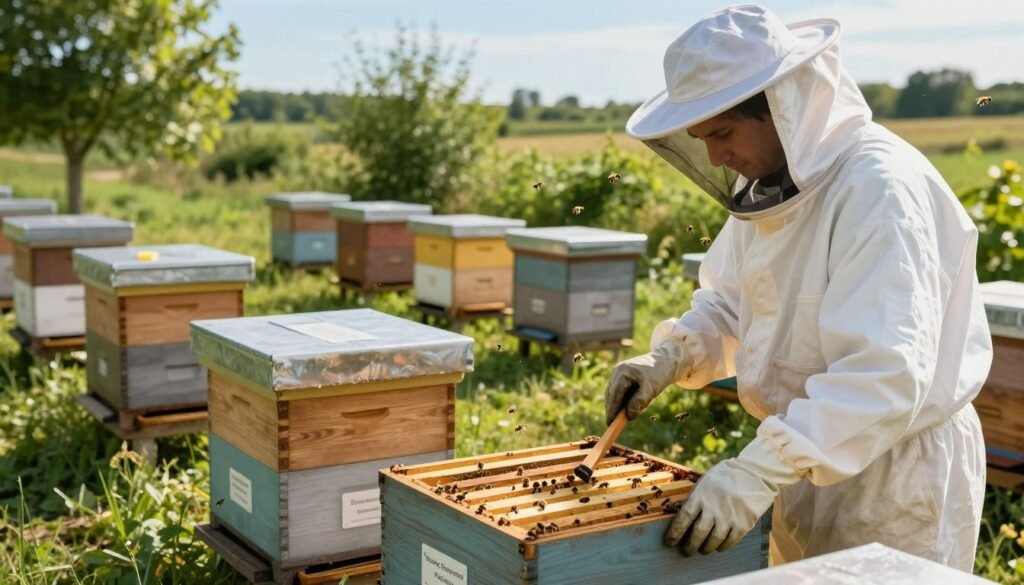
Sanitation of equipment matters. Clean feeders, smokers, and protective gear after use. Replace old brood comb that harbors residues and consider controlled freezing or disposal for heavily contaminated frames.
“A tidy apiary reduces stress, supports brood health, and lowers the chance of secondary disease.”
- Disinfect gloves and hive tools during inspections.
- Maintain and clean water points to stop spread.
- Separate affected hives to prevent robbing and drifting.
- Sanitize equipment and replace dark comb where needed.
| Hygiene Action | How to Do It | When to Use | Benefit |
|---|---|---|---|
| Tool disinfection | Wipe with bleach solution or alcohol between hives | Every inspection, after handling suspect brood | Reduces cross-colony contamination |
| Water maintenance | Clean and refill drinkers weekly | Spring build-up and dry spells | Limits environmental transmission |
| Colony isolation | Move or screen off affected hives | When signs of infection appear | Prevents robbing and drifting |
| Comb management | Replace dark brood comb; freeze or burn badly infected frames | During maintenance or requeening | Removes reservoirs for pathogens |
For guidance on handling product from an affected hive, read what to do with honey from a diseased.
Monitoring and Early Detection Techniques
A steady habit of inspecting brood panels in spring helps spot early changes that predict larger colony setbacks.
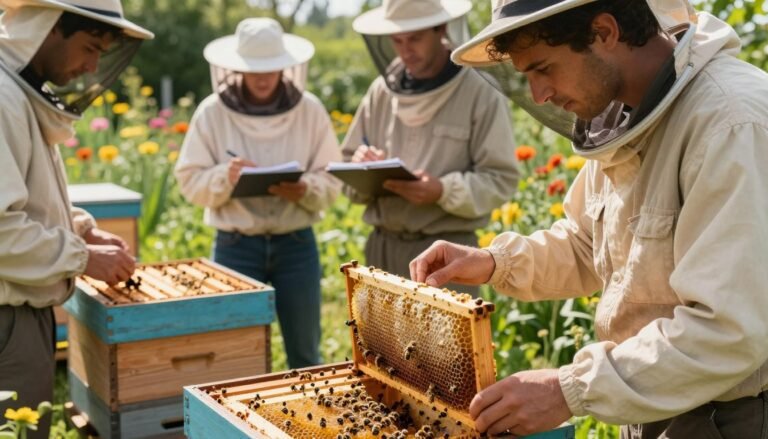
Regular checks give beekeepers the best chance to find a sacbrood infection before it spreads. Scan the brood field weekly and note posture, color, and any perforated cells.
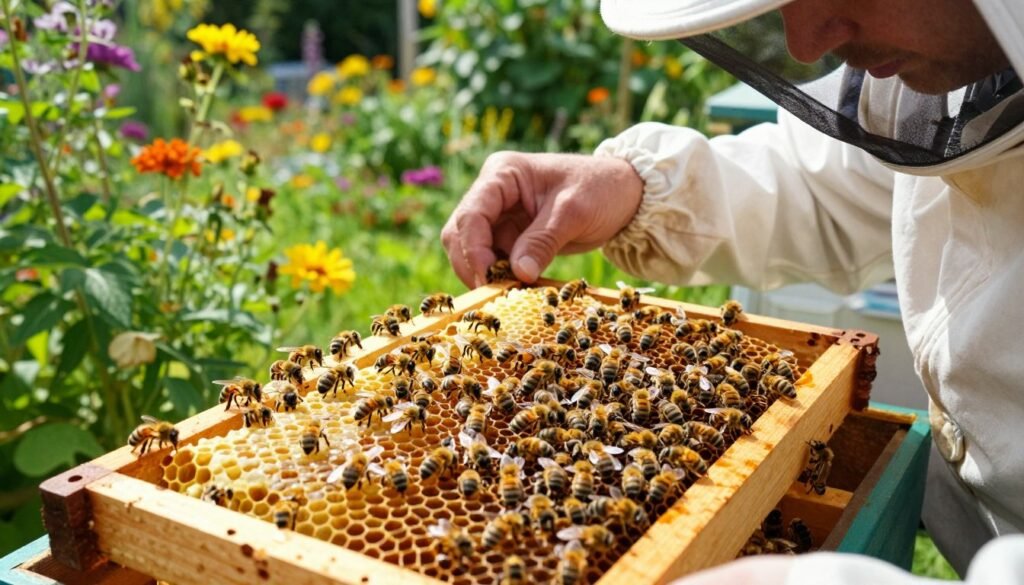
If only a few infected larvae are present, remove them gently with clean forceps. That small action lowers the immediate viral load and slows spread across the hive.
Track population trends. A shrinking nurse force or sudden increases in foragers signals an imbalance that makes a colony vulnerable.
There is no direct chemical treatment, so early detection matters. Timely steps—requeening, targeted feeding, and comb replacement—help restore strength.
Quick field checks and consistent brood cell observation remain the best defense against this common honey bee disease.
Assessing the Prognosis for Infected Colonies
Not every affected apiary faces collapse; many colonies recover with prompt management. Rapid action to reduce stress, bolster nutrition, and support the queen makes a big difference.
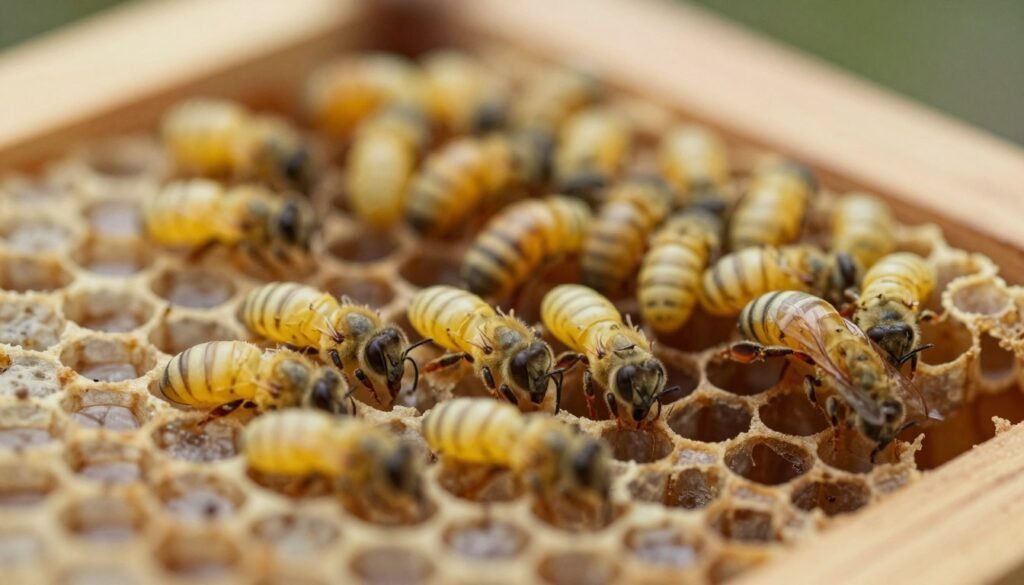
Positive outcomes are common when loss is limited and adults remain numerous. A strong nurse force can clear damaged brood and restore normal care.
Red flags include more than 20% of brood affected or clear declines in worker numbers. At that threshold, some advisors recommend humane destruction to stop spread and protect nearby yards.
Always confirm the diagnosis and rule out american foulbrood before deciding. Treatments and legal steps differ sharply between bacterial foulbrood and a viral brood disease.
- Co-infections with varroa or deformed wing virus worsen prognosis.
- Requeening, targeted feeding, and comb replacement raise recovery odds.
- When uncertain, seek regional guidance on brood diseases: foulbrood guidance.
“Strong colonies with active adults and a healthy queen usually recover; weak, mite-ridden hives often do not.”
When to Seek Professional Inspection
When brood patterns look odd and the cause is uncertain, contact a trained inspector promptly. Early professional inspection helps protect your apiary and neighboring yards.
Call a bee inspector if you notice unusual brood changes you cannot identify. Claire Gill, Deputy Lead Bee Inspector for Scotland, stresses prompt, efficient checks by specialists to keep local colonies healthy.
Professional teams can collect proper samples and send them to a laboratory to definitively rule out American foulbrood. Do not try to diagnose severe bacterial disease yourself; formal testing avoids costly mistakes.
Trained inspectors carry the tools and permits needed for safe sampling and clear guidance. They also advise on immediate steps to reduce spread while results are pending.
- Contact an inspector for unexplained brood patterns or rapid decline.
- Let professionals collect and submit laboratory samples when foulbrood is suspected.
- Seek help early to prevent spread to neighboring colonies and protect the wider population.
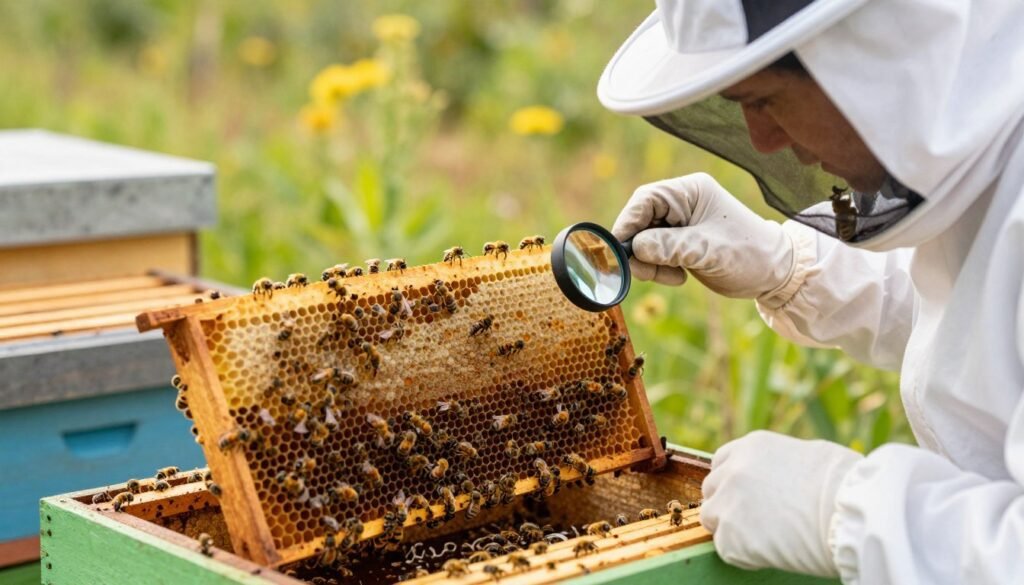
“Efficient inspections and lab confirmation preserve apiary health and prevent unnecessary loss.”
Conclusion
Timely management steps stop many infections before they damage overall colony productivity.
Managing the sacbrood virus requires a proactive focus on nutrition, strict hygiene, and selecting resistant honey bee genetics. Boost nurse numbers with supplemental feed and replace old comb to reduce reservoirs for infection.
Regular brood checks and clean apiary habits prevent spread and protect nearby colonies. Always distinguish this disease from more serious threats like American foulbrood before choosing actions.
For detailed case data and practical outcomes, consult this sacbrood virus case report to guide local management decisions.