Protecting your hive is a core duty for every beekeeper in the United States. Early detection of disease keeps colonies strong and prevents costly losses.
Vigilant inspections help you spot signs such as sunken cells, greasy cappings, or strange odors before an entire colony fails. Clean equipment and routine checks limit spread and protect neighboring apiaries.
Use available resources, including guidance from your state apiary office, and consider simple diagnostic options like the quick screening described at how to diagnose american foulbrood. If gear needs sterilizing, follow a safe disinfection routine explained at how to sterilize hive tools with.
Key Takeaways
- Regular inspections protect your hive and local bee populations.
- Early action limits spread and reduces financial risk.
- State apiculturists offer help and reporting guidance.
- Keep equipment clean and disinfect when needed.
- Simple screening and lab options speed diagnosis.
Understanding the Threat of American Foulbrood
Paenibacillus larvae is the spore-forming bacterium behind one of the most destructive brood infections in honey bee colonies.
This bacterium targets young larvae and moves through stages that end in death of the brood. Spores are extremely resilient and can persist in frames, honey, and equipment for more than seventy years.
Because the bacterium resists heat and many chemical disinfectants, eradication is difficult once a colony is infected. Bees cleaning dead brood can spread spores across a hive and to nearby colonies.
The Role of Paenibacillus Larvae
Key risks include contaminated frames and tools that harbor spores for decades. Careful management of hive equipment limits transmission and protects healthy colonies.
- The bacterium attacks young honey bee larvae and leads to brood death.
- Spores survive in comb, honey, and tools for over seventy years.
- Resistance to heat and chemicals makes control challenging.
- Cleaning behavior by bees can accelerate spread within and between hives.
Learn more about diagnosis and management in this detailed foulbrood overview. For strategies that reduce spread through selective breeding and behavior, see research on hygienic behavior in bee lines.
Identifying Symptoms and Visual Indicators
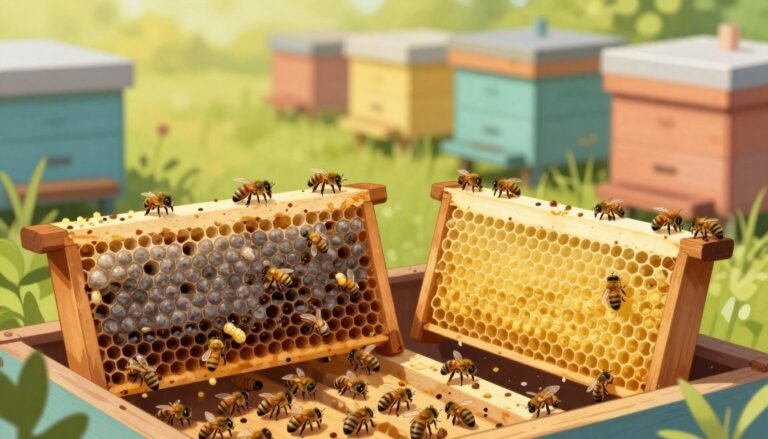
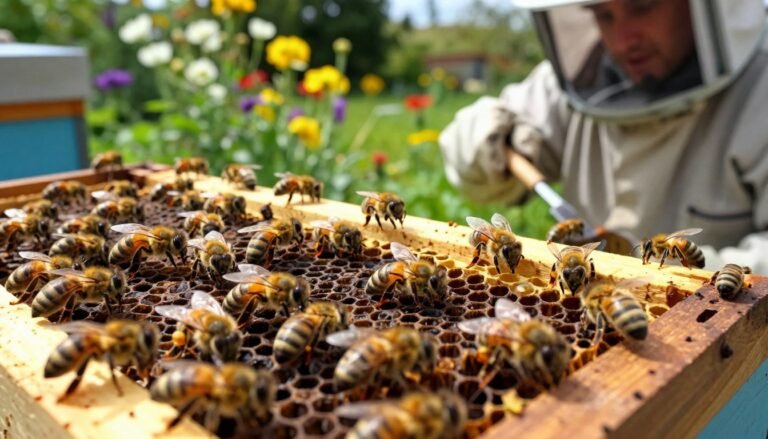
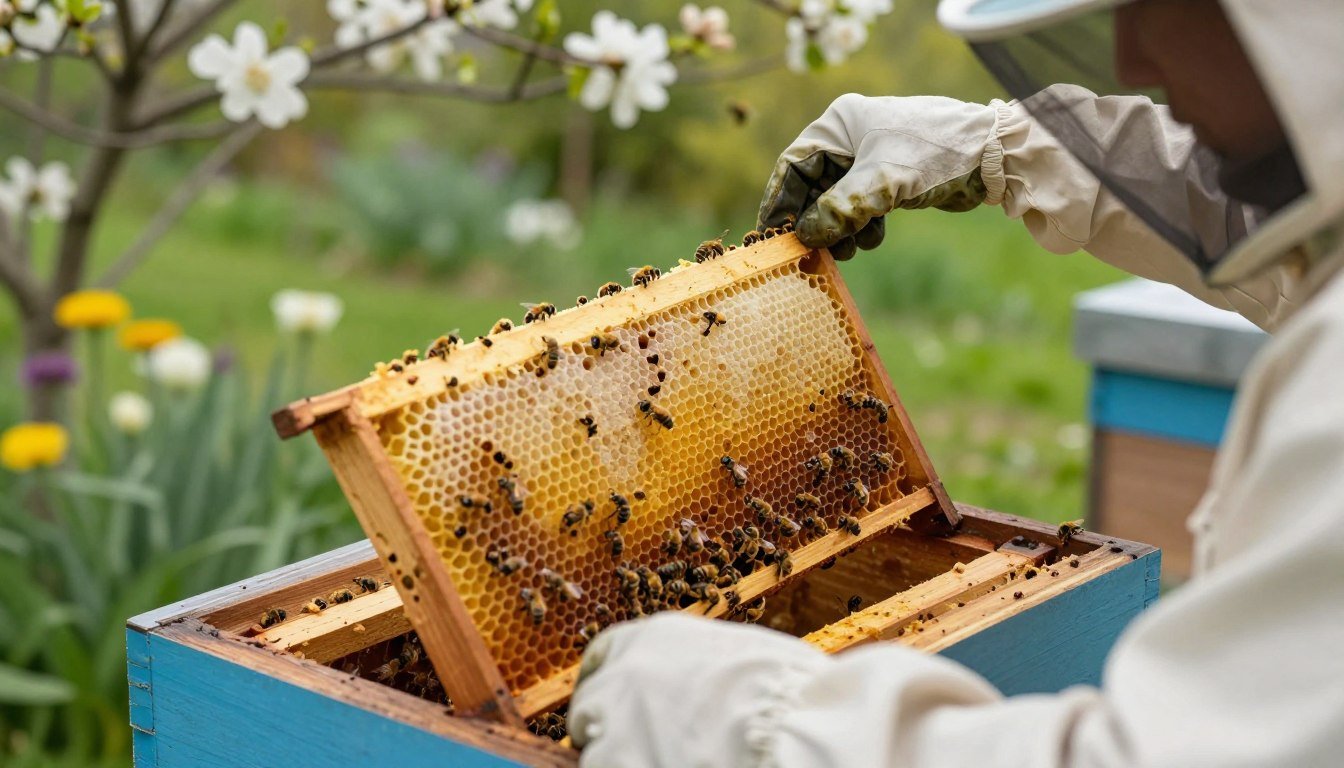
Early visual checks of brood and cells reveal clues that separate routine issues from a serious bacterial infection. Inspect frames with steady lighting and a gentle hand.
Sunken Cappings and Greasy Sheen
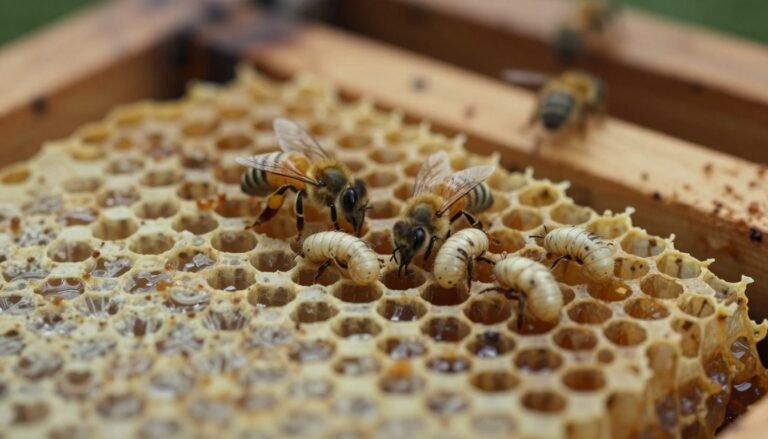
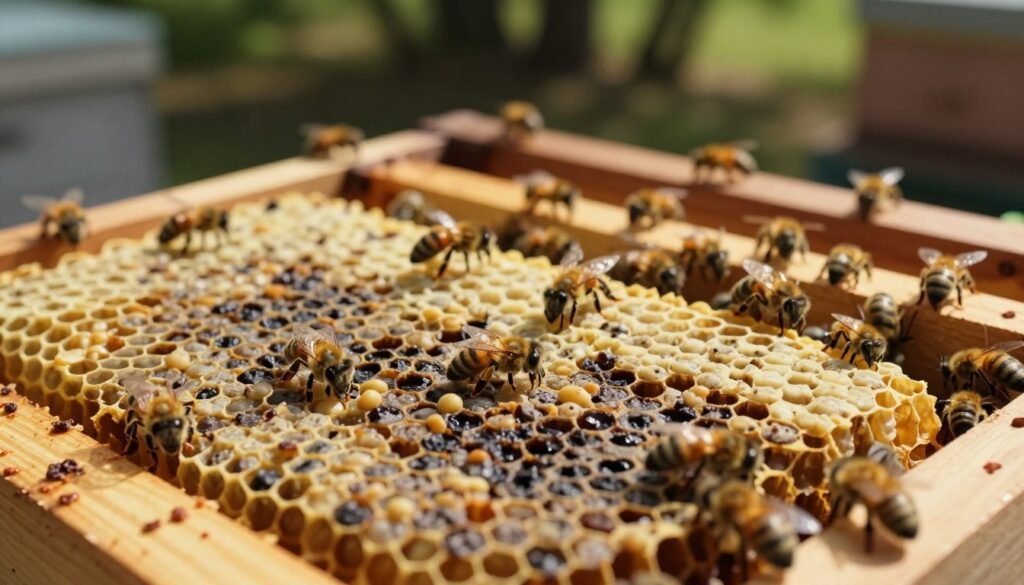
Sunken cappings often show tiny perforations where larvae have died beneath. When you uncap affected cells, you may see a glossy, greasy sheen on decaying larvae.
Decaying larvae darken to brown or black and eventually form a hard scale that sticks to the cell bottom. That scale resists removal and signals advanced infection.
The Distinctive Odor of Infection
A foul odor is a common symptom in advanced cases. Beekeepers describe it as similar to a glue-pot or a filthy gym locker.
“Dying brood gives off a sticky, sickly smell that can tell you an infection is well established.”
- Interrupted pupal stage; sometimes a false pupal-tongue appears at the cell opening.
- Dying brood may rope-out like taffy when probed during inspection.
- Regular checks of frames and equipment reduce the chance of spread to other colonies.
| Indicator | What to look for | Action |
|---|---|---|
| Sunken cappings | Tiny holes, collapsed cell tops | Uncap and inspect; isolate frames |
| Greasy sheen | Glossy, oily appearance on larvae | Collect sample; limit frame movement |
| Foul odor | Glue-like or locker smell from comb | Wear gloves, report if confirmed |
| Scale formation | Hard brown residue at cell bottom | Do not scrape; follow local guidance |
For guidance on reporting and regional rules, see this resource on diagnosis and control: diagnosis and reporting.
How to Perform the Rope Test for American Foulbrood
A simple probing method helps you check suspicious cells during a frame inspection.
Step-by-step: Gently expose a capped cell with dead larva. Use a small object such as the back end of a match tip or similar stick to probe the remains.
What to watch for: If the material pulls up in a sticky, slimy strand, this strongly suggests active disease and spore presence in the brood.
This quick in-hive approach lets a beekeeper assess colony health without lab gear. Test several suspect cells to confirm consistency before taking action.
- Probe gently to avoid spreading contaminated material.
- If positive signs appear, limit frame movement and wear gloves.
- Follow up with a confirmatory kit or consult your state apiarist.
| Action | What it shows | Recommended next step |
|---|---|---|
| Probe suspect cell | Sticky, slimy pull indicates decay | Isolate frame; avoid moving comb |
| Multiple positive probes | Likely active infection in brood | Use diagnostic kit; contact authorities |
| No rope-like pull | No obvious advanced decay | Monitor frames; clean tools and equipment |
For reporting and regional rules, review your state guidance at local foulbrood resources. If equipment needs cleaning after colony loss, see best practices at plastic foundation cleaning.
Confirming Results with Diagnostic Kits and Professional Help
Confirming a suspected hive infection requires rapid, reliable methods and clear next steps. Use field-ready kits to get a quick indication, then follow up with experts when needed.
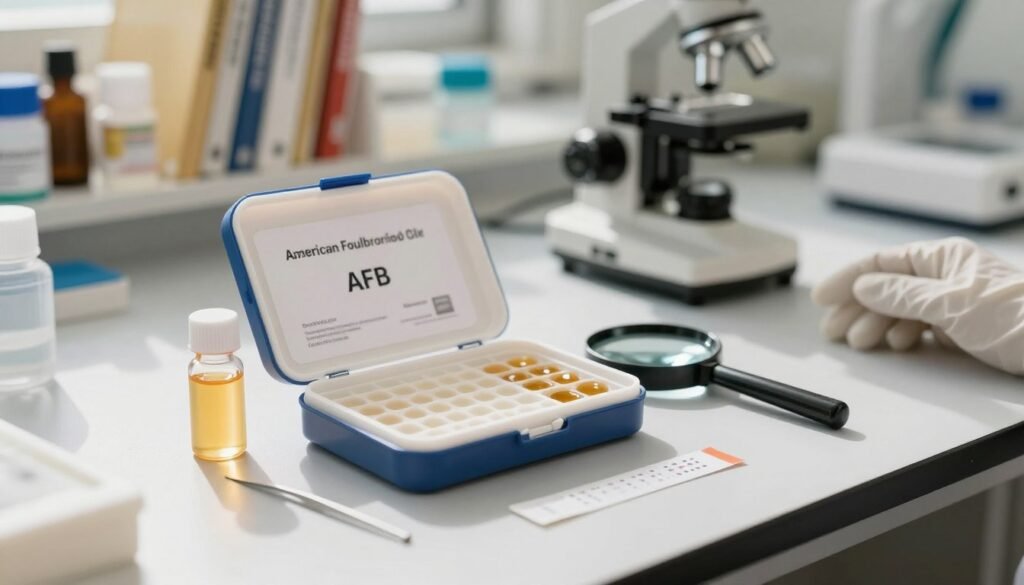
Using lateral flow kits like the Vita Diagnostics kit gives fast results at the hive. These kits cost about $14 and are simple to use.
How to read a kit: If the strip shows a second line, treat that as a positive indication and act quickly. Contact your local veterinarian or state apiarist to confirm the finding and learn legal reporting steps.
When to seek lab confirmation
For a definitive diagnosis, send a brood sample to the USDA Bee Disease Lab in Beltsville, MD. Lab confirmation supports official action and helps protect nearby colonies.
Reporting and safe responses
If results confirm infection, report to your state office and follow their guidance on treatment or disposal. Some beekeepers use antibiotics, but those require a licensed veterinarian’s oversight and may not be practical for every hive.
In heavily infected colonies, euthanasia of adult bees using soapy water and proper disposal of contaminated equipment may be necessary to prevent spread.
- Use a validated kit first; consider lab confirmation if positive.
- Report confirmed cases to state authorities to reduce local spread.
- Seek veterinary advice before using antibiotics.
For more on standardized field probes and diagnostic approaches, see this short guide: standardized diagnostic probes.
Conclusion
Consistent hive checks and prompt action protect your bees and honey production. Regular inspections are the best defense against disease and keep a healthy hive environment.
Use simple in-hive probing and lab kits when needed to spot signs in brood or larvae early. If you see suspicious results, report findings and follow official guidance. See diagnosis and control guidance for reporting and response.
Manage hives and equipment carefully and seek professional advice on treatment that fits your situation. For practical seasonal care and apiary management, review these beekeeping management tips.
Vigilance, quick action, and good record-keeping keep honey bee colonies thriving and reduce the chance of spread to nearby hives.