The hive’s leader sets the pace for the entire colony. When the main female slows down on laying or her scent fades, the brood nest and worker numbers change fast. Early detection helps a beekeeper act before the hive slips toward collapse.
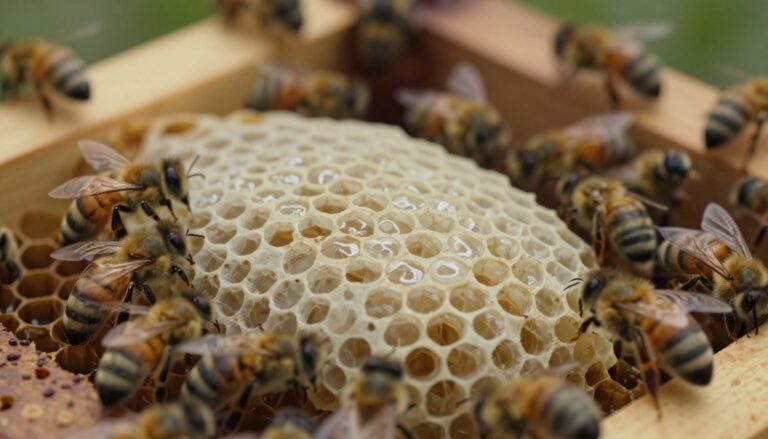
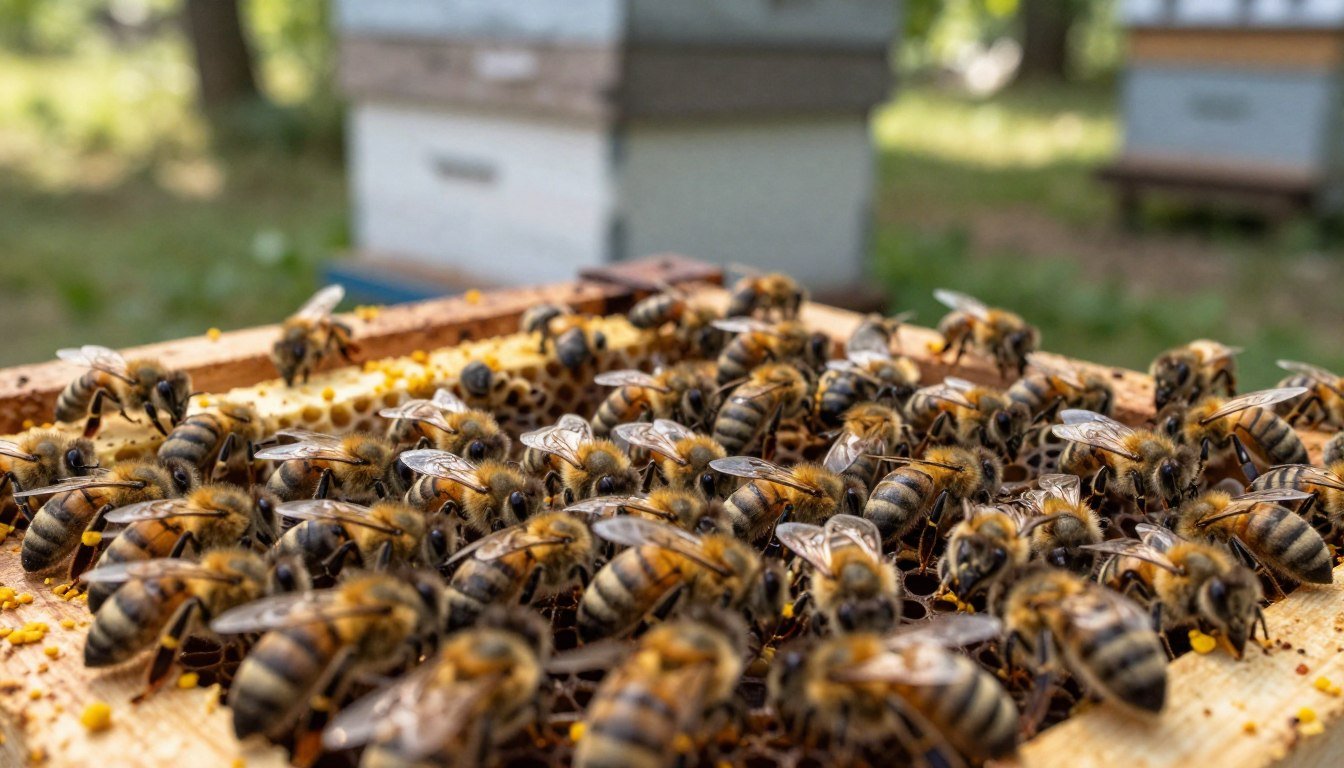
Watch the top of the frames and the center of the brood nest. Irregular patterns in cells and gaps in brood often mean eggs are missing or workers are shrinking in number. A struggling queen may be visible as a caged queen or weak in laying.
Acting in time gives you the best chance to restore balance. Introducing a new queen can revive brood production, bring back honey and pollen flows, and stop a colony queenless spiral.
Key Takeaways
- Identify queen pheromone failure signs early to protect brood and workers.
- Check the brood nest, top of frames, and for a caged queen.
- A colony queenless can lose honey and pollen production quickly.
- Introducing a new queen in time gives the best chance to save the hive.
- A vigilant beekeeper preserves worker numbers and egg laying patterns.
Understanding the Role of Queen Pheromones
The colony’s rhythm starts with one central female who is responsible for laying fertilized eggs that become worker bees. Her steady output of eggs keeps frames full and the brood pattern regular.
Her scent tells the workers how to behave. That single chemical signal keeps bees focused on nursing, cleaning, and foraging so the hive runs smoothly.
When the main female reduces laying or loses influence, a colony queenless state can begin. Workers stop receiving the cues they need, and the brood count falls.
- The central role is laying fertilized eggs that grow into healthy worker bees.
- A healthy pheromone output keeps the hive productive and unified.
- Without regular laying, a queenless hive will struggle to maintain brood and worker numbers.
Understanding this relationship helps beekeepers spot problems early and decide on steps like requeening. For background on why introductions can fail, review why bees reject a queen.
Early Queen Pheromone Failure Signs
Small, scattered gaps on the frames are often the first hint that the colony’s reproductive center is faltering. Inspect the brood nest weekly in spring and early season to catch early change.
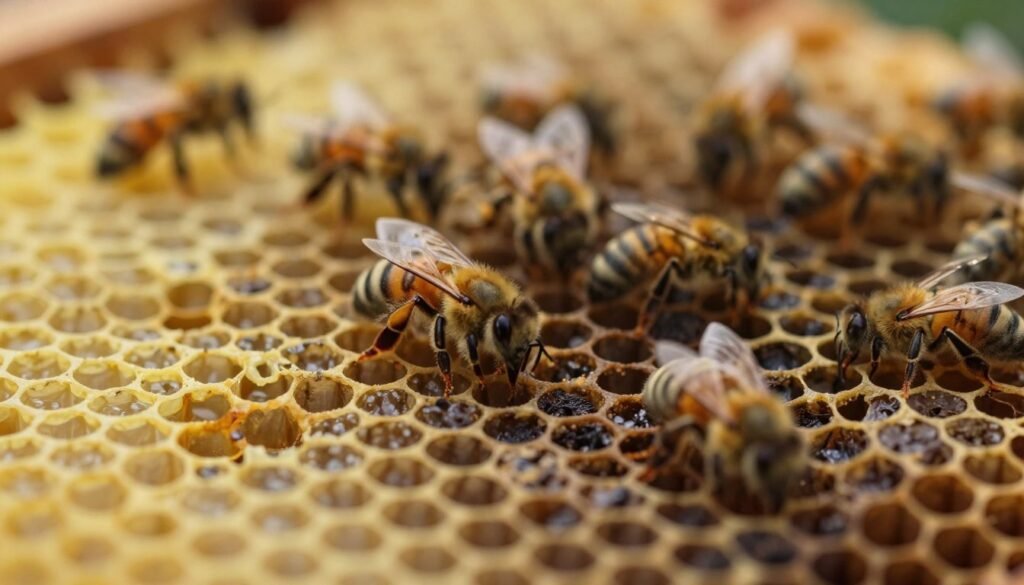
Brood pattern irregularities
A “shotgun pattern” shows as isolated capped and empty cells across a frame. This patchy brood often means the laying routine has broken down.
Beekeepers may also find unexpected queen cells. When workers build these, they try to make a replacement for the colony.
Population Decline
When the queen stops laying fertilized eggs at a steady rate, the population drops. Worker bees fall in number and foraging falls off.
If low brood continues past winter, empty cells in the nest show the problem. After about three weeks all original brood should have emerged; that is a key time to assess recovery.
- Watch frames: shotgun brood is an early alert.
- Track population: steady decline points to poor laying or bad mating during the day.
- Act in time: if the colony becomes a queenless hive, introduce a new queen to give the best chance of recovery.
Visual Clues Within the Brood Nest
A close look at the brood nest reveals small cues that point to colony reorganization.
Inspect frames calmly and methodically. Queen cups are small, bowl-shaped cells on the face of the comb. Empty cups alone may be a simple test of worker intent.
Supersedure cells, by contrast, are built around existing larvae. That shows the bees are actively making a replacement for a failing queen.
Finding cells with larvae is more worrying than empty cups. It often means the colony is already addressing a problem and will produce a new queen cell.
- Routine checks: Inspect the brood nest for queen cells to spot early signs of a colony queenless state.
- Empty cups vs full cells: Empty cups may be normal; cells with larvae mean action is underway.
- Watch for laying workers: If the hive has been queenless for some time, laying workers can appear.
| Visual Cue | Meaning | Action |
|---|---|---|
| Empty queen cups | Possible preparation, not urgent | Monitor over next inspection |
| Supersedure cells with larvae | Colony is replacing a failing queen | Leave colony to rear new queen or consider requeening |
| Multiple laying workers | Queenless hive for extended time | Introduce a new queen or split colony |
Behavioral Changes in the Colony
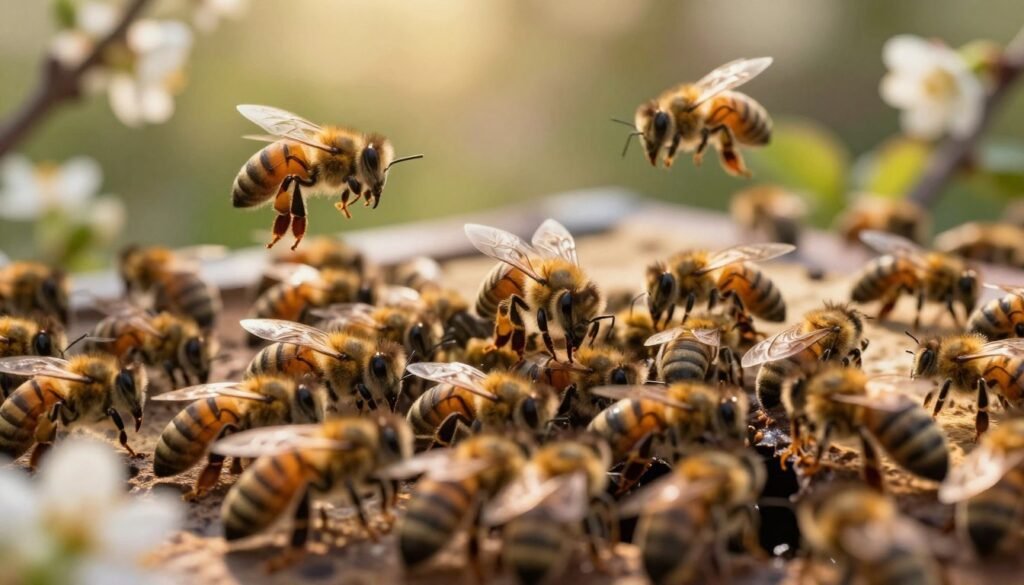
You will notice changes in how bees act before you see clear brood problems. Watch the hive for mood shifts. Workers may grow irritable or unusually calm. These changes often come first.
Irritability and listlessness are common when the colony loses control. Bees may buzz loudly or refuse routine tasks. After several weeks, workers can stop tending brood and foraging declines.
When open brood pheromone and the main scent vanish, some worker ovaries mature. Laying workers then appear and produce multiple eggs per cell or eggs on comb walls.
You may also see more pollen brought in. Without brood to feed, bees collect excess stores. If there’s no new queen or active queen cells, the colony queenless state can worsen.
- Aggressive or high-pitched buzzing — distress in the hive.
- Listless workers and dropped tasks after several weeks.
- Multiple eggs in one cell — confirmation of laying workers.
If intervention is needed, a caged queen can help re-establish control only before laying workers dominate. For more on how to recognize and act when a colony lacks a laying female, see recognize a queenless hive.
| Behavior | What it means | Action |
|---|---|---|
| Aggression / loud buzzing | Colony stress or loss of control | Inspect calmly; monitor brood nest |
| Excess pollen intake | No active brood to feed | Check for queen cells and eggs |
| Multiple eggs per cell | Laying workers present | Consider requeening or split colony |
Environmental and Biological Stressors
Environmental pressures and biology both shape colony resilience. Small events during mating season or hidden chemical residues can tip a hive toward long-term decline.
Impact of Poor Mating Weather
A single wet July day can change the mating outcome and ripple through the hive over weeks.
Poor mating reduces sperm stored by a new queen and lowers fertile egg output. That leads to thin brood and fewer workers over time.
Pesticide Exposure
Chemicals like fluvalinate can alter worker hypopharyngeal secretions.
When nurse bees cannot feed larvae correctly, colonies often fail to rear viable replacements. Residues in the brood nest also increase disease risk and weaken the bee population.
- Monitor weather and mating flights: plan requeening if mating was disrupted.
- Reduce chemical exposure: keep foraging areas and comb free from residues.
| Stressor | Typical Effect | Recommended Action |
|---|---|---|
| Poor mating weather | Low sperm stores, weak brood | Consider introducing a new queen or monitor brood closely; see early requeening advice |
| Pesticide residue | Impaired nurse feeding, disease | Replace comb, limit nearby sprays |
| Winter compounding stress | Delayed recovery, laying workers | Increase inspections and plan supportive feed |
For practical brood‑rearing methods and prevention, review queen rearing basics.
Assessing Hive Nutrition and Health
Low pollen and nectar levels can slow egg laying and shrink the brood nest quickly. Before replacing stock, confirm the colony has adequate stores. Poor nutrition often causes reduced laying activity that looks like a queenless colony.
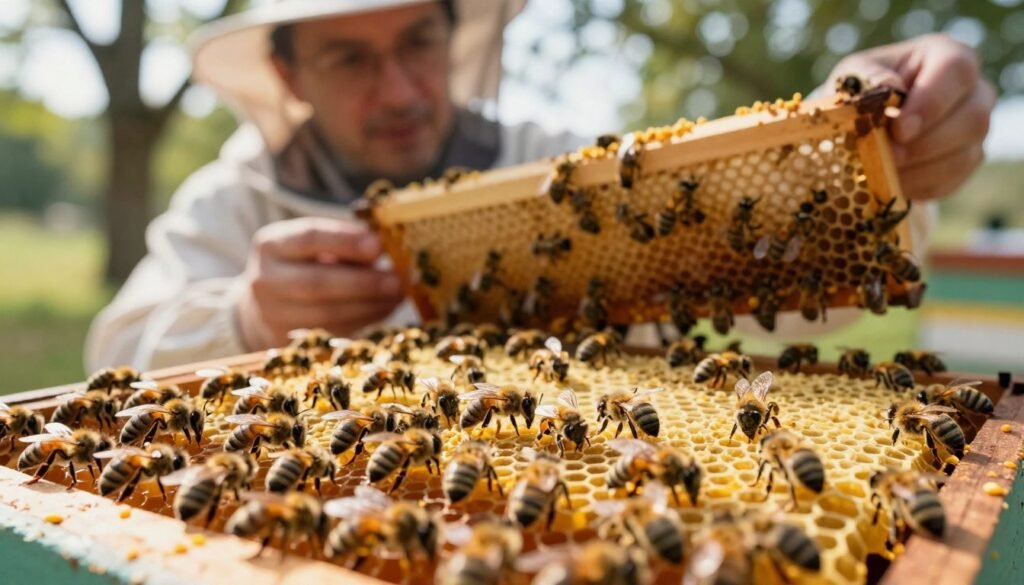
Check frames for pollen and nectar reserves, then watch worker behavior. If bees stash pollen in empty cells where brood should be, the colony may be undernourished rather than queenless.
Supplemental feeding with sugar syrup or protein patties can encourage a slow-laying female to increase eggs. Feed in moderation and monitor brood response over a few inspections.
- Assess stores: inspect comb for pollen and nectar before acting.
- Support the colony: offer syrup or patties when natural forage is limited.
- Observe workers: increased brood rearing after feeding signals recovery.
“A well-fed colony raises stronger brood and is better able to rear a replacement if needed.”
| Problem | What to look for | Action |
|---|---|---|
| Underfed colony | Pollen in brood cells, thin brood nest | Provide protein patties and syrup; recheck in 7–14 days |
| True queenless colony | No eggs, laying workers, multiple eggs per cell | Consider introducing a new queen; review introduction tips at queen bees guide |
| Cold or chilled brood | Patchy brood, dead larvae | Inspect for chilled brood; see identifying chilled brood |
Strategies for Successful Requeening
A planned requeening gives a struggling hive the best shot at steady population recovery.
Successful requeening starts with assessing the colony’s readiness. Check frames for brood, eggs, and adequate stores. If nutrition is low, feed for a short time before introducing stock.
Use a caged queen for introductions. A caged queen lets workers sense her scent and accept her slowly. This method reduces aggression and improves the chance she will be free and laying within days.
Introducing a New Queen
Prepare the hive and remove competing queen cells. If a colony is queenless, clear extra queen cells before adding a new queen. This lowers the risk that workers will reject or kill her.
Ian Anderson’s swarm prevention approach moves brood and nurse bees to a nucleus box. This gives beekeepers a controlled space to introduce a new queen and manage mating flights later in the season.
After placement, monitor the hive daily for the first week. Watch worker behavior and protect the new queen from laying workers or hard aggression.
| Step | Why it matters | Quick action |
|---|---|---|
| Assess brood & stores | Ensures the colony can raise brood and accept a new female | Feed syrup/patties if low; recheck in 7–10 days |
| Remove extra queen cells | Reduces competition and rejection risk | Clear cells before introduction |
| Use a caged queen | Gives workers time to accept her scent and calm aggression | Place cage in center of brood nest; release after acceptance period |
| Monitor post-introduction | Detect laying start or worker hostility | Inspect gently for eggs and stable behavior within 7–14 days |
“A careful requeening improves genetics, boosts honey production, and strengthens population over a season.”
For advanced methods and cage choices, see a detailed guide on advanced requeening strategies and tips for the best introduction tools at best queen cages for introduction.
Long Term Hive Management Practices
Sustained hive health comes from tracking trends and acting before small problems grow.
Record the age and performance of the queen for every colony. Clarence Collison noted many queens are replaced within six months in modern U.S. apiaries. Good records reveal patterns and point to when requeening is due.
Inspect regularly and log brood layout, eggs, and honey stores. These checks help beekeepers spot shrinking worker numbers or excess pollen in brood cells.
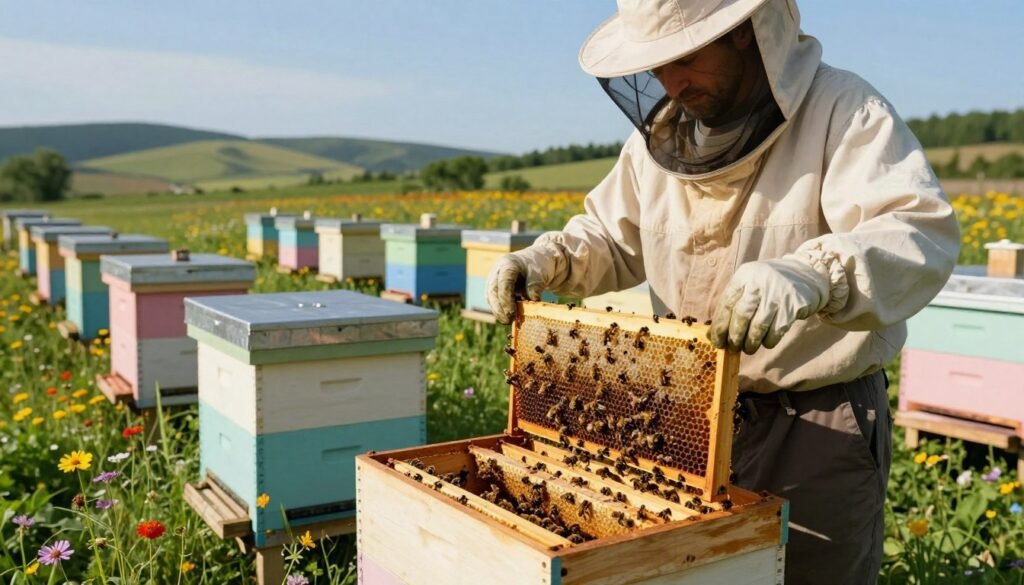
Be ready to act if a hive becomes queenless. Introduce a new queen using a caged queen when appropriate. Or help the bees make queen by leaving suitable larvae and clean comb.
| Practice | Why it matters | Quick action |
|---|---|---|
| Track queen age | Detect shortened productive life | Plan requeening before decline |
| Routine inspections | Catch brood or worker issues early | Log brood, eggs, and stores weekly |
| Record keeping | Identify colony trends across seasons | Use simple sheets or an app to compare hives |
“Good records and steady inspections are the beekeeper’s best defense against rising problems in modern colonies.”
For deeper technical notes on queen performance problems, review the linked guide and adapt its tips to your apiary.
Conclusion
Watch your hive weekly; small changes in brood layout and worker behavior tell you when to act. A healthy queen bee anchors a stable colony, and early checks reveal shifts in brood or a slimmed laying rate. Keep records and note egg pattern and cell activity.
Focus on the basics: inspect for queen cells, count worker bees on frames, and look for multiple eggs or unusual cells. Quick, calm interventions revive a struggling unit and protect stores.
Use research on colony cues for deeper context (research on colony cues) and follow practical swarm-prep indicators when monitoring activity (swarm-prep indicators).
Consistent care and prompt action keep bees productive and your apiary thriving.
FAQ
What are early indicators that a hive’s queen pheromone has declined?
Look for an irregular brood pattern, unusually spaced or empty cells, and a drop in worker numbers near the brood nest. You may also find more queen cups and a rise in unattended larvae. Check frames every few weeks during active season to catch changes early.
How do queen pheromones normally affect colony behavior?
The queen’s chemical signals keep workers organized, suppress emergency egg-laying by workers, and maintain brood care routines. When those signals weaken, workers may alter tasks, build replacement cells, and show reduced cohesion around the brood.
What specific brood pattern changes should I watch for?
Watch for spotty or scattered brood, gaps where larvae should be, and patches of drone brood in worker-sized cells. These patterns often mean eggs are not laid consistently or workers are neglecting certain areas of the nest.
How quickly can a colony’s population decline after loss of queen influence?
A measurable drop can occur within two to four weeks, especially if worker bees stop tending brood or if egg laying ceases. Seasonal timing affects speed—declines happen faster in spring and summer when brood turnover is high.
What do supersedure or emergency cells look like and where are they found?
Supersedure cells are usually single or small clusters on the face of frames near the brood. Emergency cells form when workers convert existing worker cells to rear a replacement from an egg or young larva. They appear larger and oriented vertically compared with regular worker cells.
What worker behaviors indicate loss of queen influence?
Expect increased queen cell construction, laying by workers (unfertilized eggs in many worker-sized cells), flightiness at the entrance, and reduced pollen and nectar storage. Workers may also cluster in odd locations away from the brood nest.
How does poor mating weather contribute to problems after a new queen is introduced?
Cold, windy, or rainy conditions can prevent mating flights, causing a virgin queen to return unmated. That leaves the colony with no fertilized egg layer, prompting workers to start replacement efforts or produce drones from unfertilized eggs.
Can pesticide exposure mimic loss of queen influence?
Yes. Sublethal pesticide effects can reduce worker responsiveness and brood care, creating behaviors similar to reduced queen signaling. Look for disoriented workers, decreased foraging, and abnormal brood alongside other signs.
How should I assess hive nutrition when I suspect queen problems?
Inspect stores of honey and pollen, observe foraging activity, and check protein-rich pollen patties if you feed supplements. Poor nutrition reduces brood rearing and weakens workers, making it harder for the colony to rear a healthy replacement.
When is it best to introduce a new laying queen to a colony?
Introduce a mated, vigorous queen during warm weather when forage is available and a healthy worker population exists. Use established introduction cages and allow workers time to accept her. Avoid replacement during heavy dearth or extreme cold.
What steps improve success when requeening a hive?
Use a quality mated queen, introduce her in a secure cage, reduce hive disturbance for several days, and ensure adequate food and nurse bees. Inspect after one to two weeks to confirm laying and remove the cage once acceptance is clear.
How can long-term management reduce recurrence of queen problems?
Rotate genetics by sourcing queens from reputable suppliers, maintain strong nutrition and disease control, monitor brood patterns regularly, and requeen proactively every one to two years in productive colonies to prevent sudden declines.
What signs indicate laying workers rather than a failing mated egg-layer?
Many drones in worker-sized cells, eggs laid irregularly in multiple cells per cell, and absence of mating flight activity suggest laying workers. Laying workers produce only unfertilized eggs, so no new workers will appear.
How soon should I take action if I suspect the hive is queenless or failing?
Act within a week or two—delay allows further brood loss and population decline. Options include introducing a mated queen, combining with a strong colony, or allowing the colony to rear a replacement if young larvae and ample nurse bees exist.
Are there seasonal differences in how a failing queen affects a colony?
Yes. In spring and summer, failures quickly reduce brood and productivity. In late season, loss before winter can devastate survival because not enough time remains to raise a viable replacement and build winter stores.