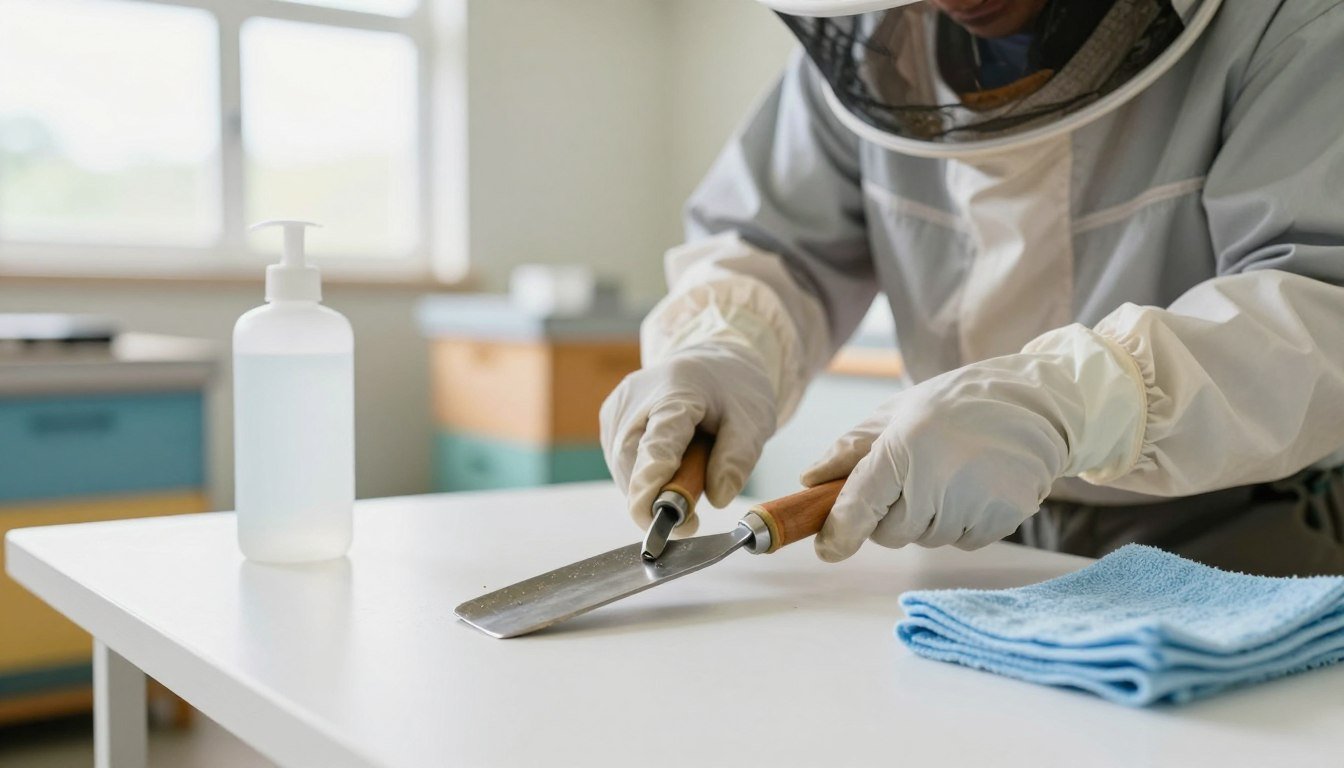
Keeping a clean hive tool is essential for every beekeeper. A well-kept tool protects bees and frames from pests and disease. Dadant and Sons offers quality equipment that helps professionals meet high maintenance standards.
Simple routines reduce the chance of spreading pathogens in an apiary. Remove wax and propolis, rinse with water, and follow a proven sanitization method that fits your time and storage needs.
This short guide explains a clear process for cleaning tools and gear. It covers the best beekeeping practices for handling a hive tool, caring for equipment, and keeping hives productive for honey harvest. For a deeper look at gear upkeep, see our beekeeping tools maintenance guide.
Key Takeaways
- Treat every hive tool as a possible disease carrier.
- Remove wax and propolis before disinfecting.
- Use water and a tested sanitization method for quick maintenance.
- Store cleaned equipment dry and separate to protect frames and hives.
- Consistent care keeps bees healthy and preserves honey yield.
The Importance of Maintaining Clean Beekeeping Equipment
Routine washing of beekeeping gear protects bees and preserves your investment. Clean equipment reduces risk of American Foulbrood and European Foulbrood moving from one hive to another. Good practice keeps the apiary productive and lowers long-term costs.
Preventing cross-contamination starts with simple steps. Use warm water and mild soap for routine maintenance of frames, boxes, and a hive tool. Regular washing removes wax and propolis that trap moisture and microbes.
Extending equipment lifespan
A dry, clean wooden hive resists rot and lasts longer. Routine maintenance of hive components saves money and supports steady honey yields. When you protect equipment, bees spend energy on brood and nectar, not fighting infections.
- Clean frames and boxes after inspections.
- Use warm water with mild soap for daily washing.
- Apply hot water sometimes for stronger disinfection.
| Cleaning Method | Best For | Notes |
|---|---|---|
| Warm water + soap | Routine equipment care | Safe for wooden components; removes wax residue |
| Hot water rinse | Stronger disinfection | Helps stop spread disease; use carefully on wood |
| Deep repair & washing | Damaged boxes, frames | Combine cleaning with repairs — see repair guide |
For guidance on thorough cleaning and sterilization, consult this hive cleaning and sterilisation fact sheet. For box repairs and long-term care, see repair damaged hive boxes.
How to Sanitize Hive Tools Between Colonies
A clean metal tool reduces risk and keeps inspections fast and effective. Start with a clear routine: remove wax and honey residue, then follow a chosen chemical sanitization method. This two‑step process protects your frames and the rest of your beekeeping equipment.
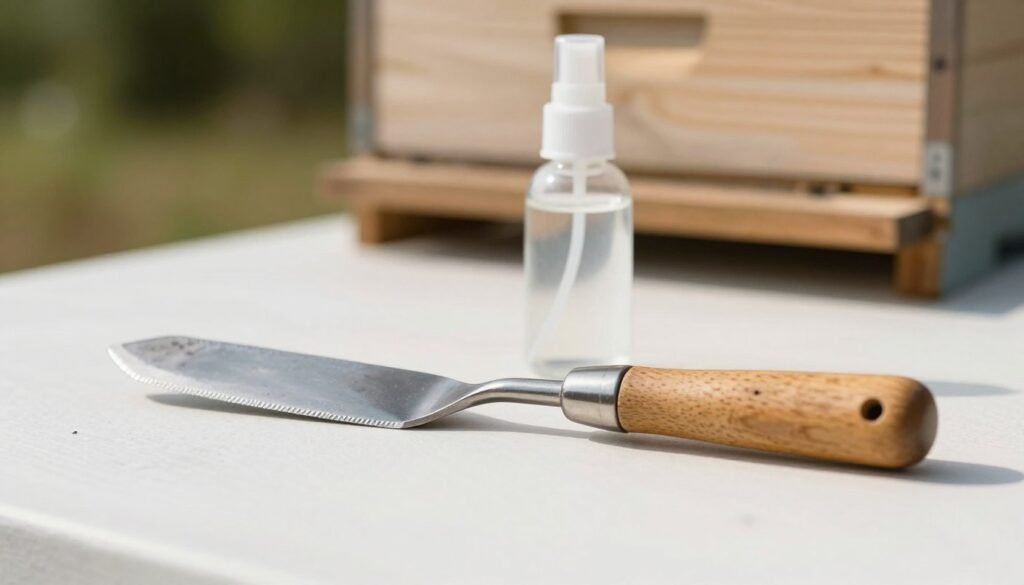
If you work inside one apiary, a basic mechanical scrape and hot water rinse often suffice. When you move across multiple hives or sites, increase rigor. Use a proven disinfectant and let metal air dry before reuse.
- Mechanically remove propolis and wax so chemicals reach the surface.
- Rinse with clean water and apply an approved sanitization method.
- Keep cleaned equipment separate from used gear during inspections.
Professional maintenance treats every beekeeping tool as a possible carrier. A steady cleaning process lowers disease risk, helps bees stay productive, and keeps your apiary running through the season.
Mechanical Removal of Wax and Propolis
Mechanical removal is the first step in a sound cleaning process for any professional hive tool. Clear away large pieces of wax and propolis so the metal surface is exposed. This makes the next steps faster and more effective.
Removing Stubborn Debris
Use the tool edge to scrape off stuck material. Debris often hides pathogens that harm bees, so remove it thoroughly before wet cleaning.
Follow scraping with a stainless-steel scrubber or a dedicated scrub tool. Scrub all metal faces until honey and sticky residue are gone. This prepares the equipment for water rinses or chemical sanitization.
- Scrape first, then scrub for best results.
- Remove buildup that attracts wax moths and pests.
- Keep cleaned pieces separate from dirty gear during inspections.
| Step | Action | Why it matters |
|---|---|---|
| 1 | Edge scrape | Removes bulk debris and exposes metal surface |
| 2 | Stainless-steel scrub | Eliminates sticky honey and stubborn propolis |
| 3 | Inspect before wet cleaning | Ensures sanitization method reaches the surface |
For maintenance tips on a regular schedule and product suggestions, see our hive tool maintenance guide.
Effective Scrubbing and Rinsing Techniques
Scrubbing and rinsing are the backbone of any reliable cleaning routine for metal equipment. Start with mechanical removal, then move into a wet wash that targets sticky honey and wax propolis.
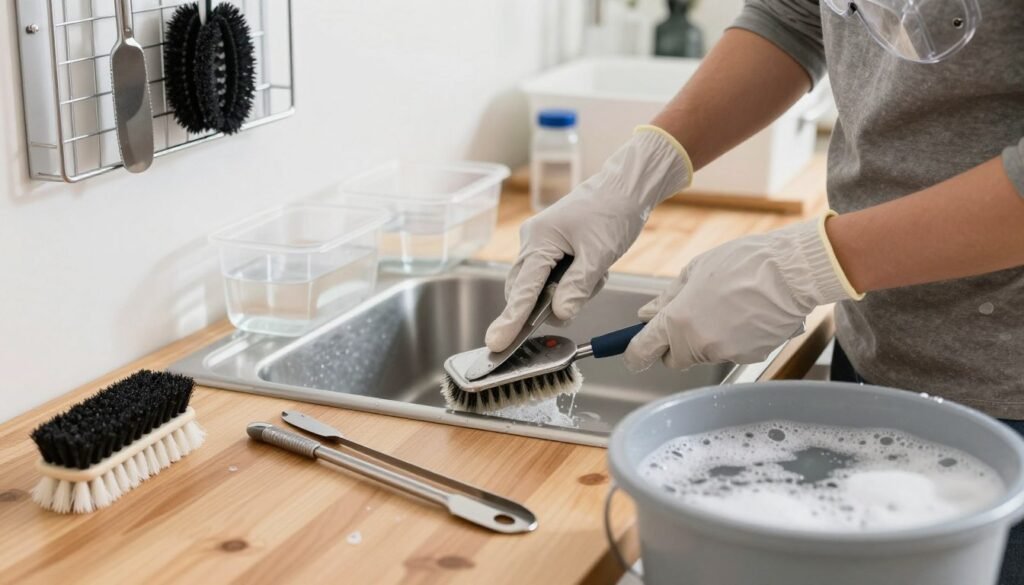
Use warm water with a cleansing powder or mild soap for best results. A stainless-steel scrubber will lift hardened debris and propolis without damaging metal faces.
Work each tool face until visible residue is gone. Rinse with clean water to remove all traces of soap and loosened material. This step prevents harm to bees and prepares the surface for final sanitization or storage.
Proper maintenance means fresh rinse water for every batch and careful drying before placing items in storage. If hot water is safe for the part, brief exposure helps remove oils and sticky honey.
- Scrub with warm water and quality soap after mechanical cleaning.
- Use a stainless-steel scrubber for sticky residue and debris.
- Rinse thoroughly with clean water before the next sanitization step.
| Action | Recommended Material | Why it matters |
|---|---|---|
| Warm wash | Mild soap + cleansing powder | Breaks down honey and wax for easier removal |
| Scrubbing | Stainless-steel scrubber | Removes propolis and stubborn debris without scratching metal |
| Final rinse | Fresh, clean water | Eliminates soap residue and readies tool for sanitization or storage |
For detailed guidance on thorough cleaning and sterilisation practices, consult this hive cleaning and sterilisation resource.
Advanced Sanitization Methods for Disease Prevention
For heavy contamination, select a more aggressive method that targets spores and bacteria. Use advanced steps when routine maintenance cannot guarantee safety for your apiary.
Alcohol Immersion
Quick and portable, alcohol immersion kills many surface pathogens and dries fast.
- Soak metal parts briefly in 70–90% isopropyl or ethanol.
- Allow complete evaporation before reuse to avoid harming bee colonies.
Flame Sterilization
Flame treatment with a blowtorch is effective for metal. Pass the tool through a clear flame for about 30 seconds.
This removes spores on contact and requires no chemicals. Use caution near painted finishes or wooden components.
Boiling with Cleaning Agents
Boiling in hot water with washing soda or caustic soda provides deep sterilization for heavily contaminated equipment.
Do not boil wooden hive components or delicate frames. Rinse with clean water and dry thoroughly before storage.
Routine maintenance that includes these methods helps stop the spread disease and keeps equipment ready for inspections. For a detailed comparison of cleaning methods, see our cleaning and sterilizing guide.
Safety Considerations When Handling Cleaning Agents
Chemical cleaners can be effective, but safe handling is vital for both you and your bees. Wear gloves and eye protection when working with caustic products. Protective gear prevents skin irritation from strong soap or alkaline agents.

Work in a well-ventilated area when using chemical sanitization agents. Good airflow protects your lungs and reduces the chance that fumes reach nearby hives or honey stores.
- Wear PPE: gloves, goggles, and a mask if fumes are present.
- Rinse thoroughly with warm water after cleaning so no residue reaches frames or honey.
- Do not mix different cleaners; mixing can create dangerous reactions.
- Keep equipment separate while wet and label containers for safe storage.
For formal guidance on approved procedures for cleaning and sterilizing beekeeping equipment, consult this cleaning and sterilizing guide. For related safety when working with wax and extraction, see bee wax extraction safety.
Proper Storage for Sanitized Gear
Keeping gear off the floor and away from damp corners prevents rust and contamination.
Store sanitized beekeeping equipment in a dry, well-ventilated area so water evaporates and metal parts stay clean. Simple airflow stops moisture buildup that harms metal and wooden pieces.
Hang a hive tool and other equipment on hooks or a pegboard to keep items organized and safe from rodents. A wall-mounted rack makes inspections faster and reduces the chance that gear will be misplaced.
Designate a storage spot for gloves, spare frames, and small tools. A single place for all beekeeping equipment means fewer surprises at the apiary and less cross-contact with dirty items.
- Keep metal tools dry and separate from used gear after cleaning.
- Label shelves or bins so you can find a hive tool or spare part quickly.
- Check storage for pests periodically and replace any damp packing material.
For detailed equipment care and long-term storage tips, see the cleaning and maintenance guide. If you need ideas for setup and quiet stands near stored hives, review recommendations on noise-reducing stands.
Final Thoughts on Apiary Hygiene
Final Thoughts on Apiary Hygiene
A strong. Good routines protect bees and preserve your investment in beekeeping equipment. Consistent cleaning of a hive tool and other gear cuts the risk of disease and keeps inspections efficient.
Regular maintenance keeps frames, boxes, and the bee hive productive. Clean tools and clear storage reduce pests and rust, and they help you save time and money over seasons.
Make these steps standard today: follow a simple process for each tool, dry items fully, and store equipment apart from used items. That steady care ensures healthy bees and better honey returns for years ahead.