Monitoring mite levels is a core task in responsible beekeeping. Regular checks protect honey production and the long-term health of your hive.
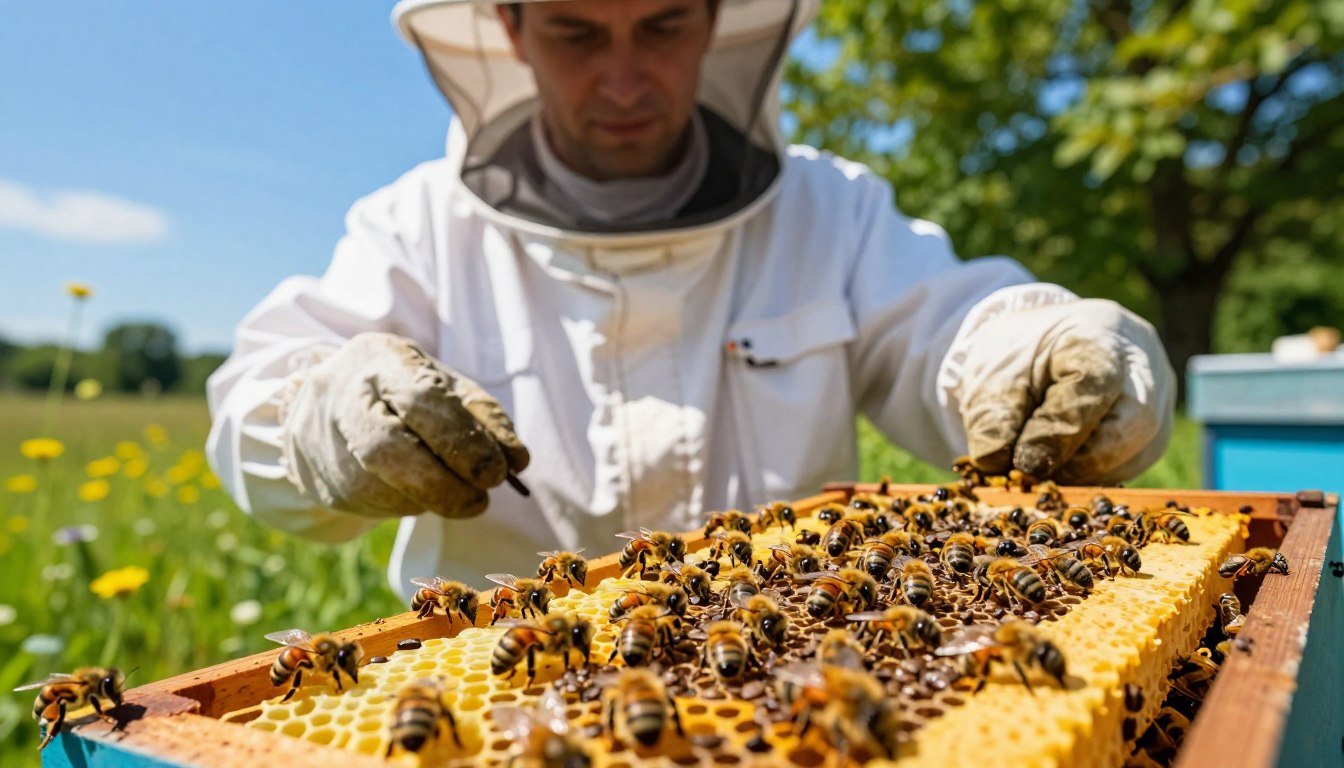
Collect roughly 300 adult bees—about a ½ cup—from brood frames for reliable counts. Ensure the queen is not in your sample so she stays safe during sampling.
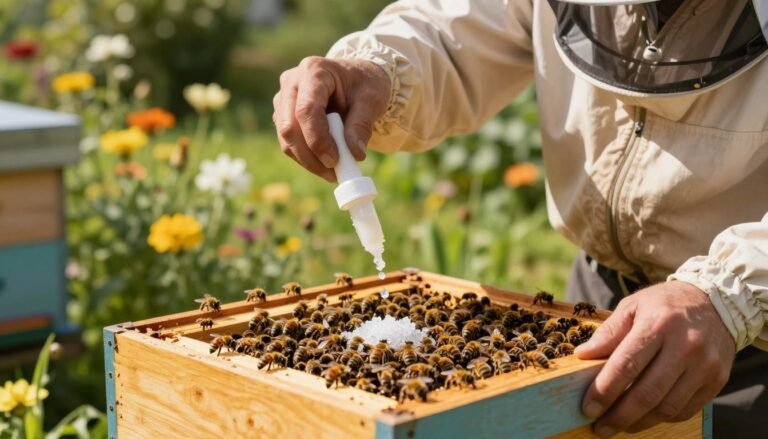
Many U.S. beekeepers sample monthly from March through October. The sugar roll method is often preferred for small or weak hives because it does not sacrifice nurse bees, while an alcohol wash gives very accurate counts.
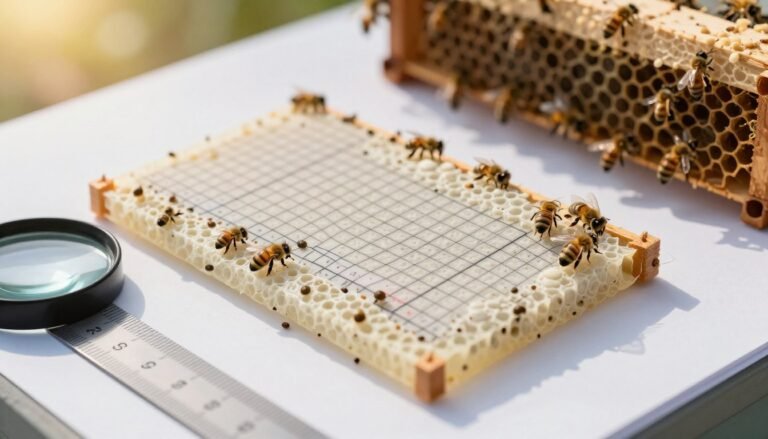
Watch late summer and fall closely. Mite counts tend to rise as brood production falls, and screened bottom boards can provide extra data alongside your sugar or alcohol counts.
For detailed management guidance, consult the HBHC varroa management guide.
Key Takeaways
- Sample about 300 bees (≈½ cup) for accurate mite counts.
- Monthly monitoring from March through October is recommended in most U.S. regions.
- Use sugar roll for weaker hives; alcohol wash for higher accuracy.
- Always avoid including the queen in your sample.
- Late summer and fall need extra vigilance as mite levels can spike.
Understanding the Varroa Destructor Mite
Varroa destructor lives mostly hidden inside brood cells, where reproduction and feeding occur. This behavior lets the pest multiply with each capped cycle and drives rapid population growth within a hive.
The Life Cycle of Varroa
Adult females attach to nurse bees as a transport method and enter a cell just before it is sealed. Inside the cell, the mite lays eggs and the offspring feed on the developing bee larva.
This intimate association with brood makes detection difficult. As brood levels rise, the mite population often rises as well.
Impact on Honeybee Viruses
Beyond direct feeding damage, these mites act as viral vectors. They transmit pathogens that weaken bees and reduce honey production.
Early recognition of infestation and support for hygienic genetics can slow damage. Learn more about selective traits like predisposition to hygienic behavior at predisposition to hygienic behavior.
- Key point: Mites reproduce in brood, harming emerging bees.
- Key point: Nurse bees are the main transport for cell invasion.
- Key point: Viral transmission from mites can devastate a colony.
Why Regular Monitoring is Essential for Colony Health
Consistent monitoring supplies the evidence needed to protect bees and honey yields. Without regular checks, a hive can look fine while mite counts climb unseen.
North Carolina inspector Lewis Cauble noted that 90–95% of beekeeping problems traced back to mites, queen events, and feeding issues.
- Monitoring gives the clear data needed to decide when treatment is required.
- It shows whether a control method worked or if mites rebounded after treatment.
- Tracking trends helps keep the colony below damaging thresholds for long-term health.
A good program acts as an early warning system. It protects honey production and helps prevent sudden losses in the hive.
“Regular checks are the single best defense against sudden infestations.”
Determining How Often to Test Colonies for Varroa
A clear monitoring calendar helps beekeepers spot dangerous mite trends long before visible damage appears.
Recommended Testing Frequency
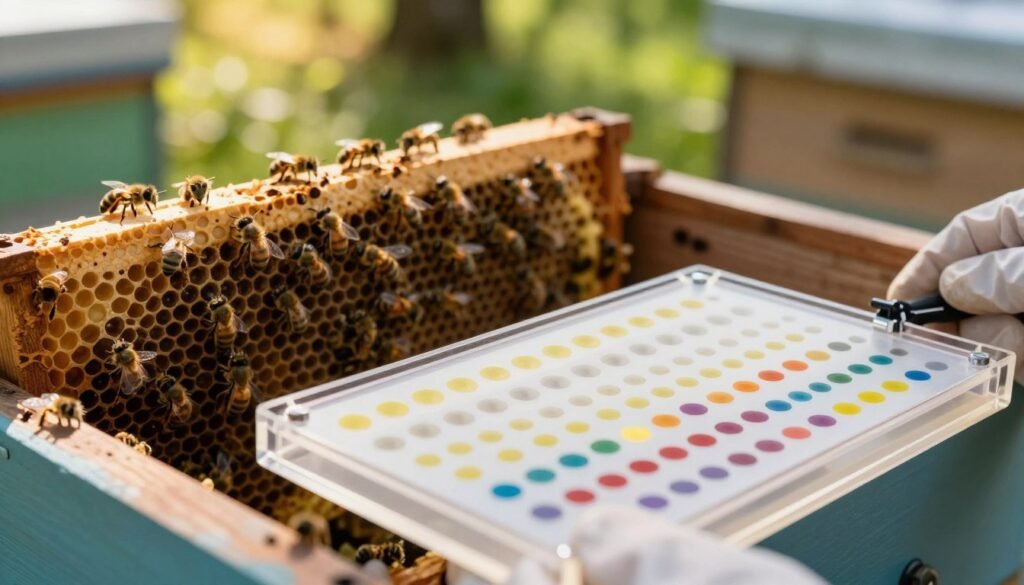
Experts advise monthly checks from March through October in most U.S. regions. This schedule keeps mite counts from growing unseen during active brood periods.
- Monthly monitoring: sample at least once each month from spring start until fall end.
- Always sample any colony that shows poor honey production or weak behavior, even outside the calendar.
- In large apiaries, begin with a representative sample set. Expand if high mite levels appear.
- Use a sugar roll or alcohol wash for reliable counts. These methods give the data needed to decide on treatment.
- Keep an eye on frames and a screened bottom board; brood presence drives rapid mite growth.
If counts exceed threshold, act quickly. Rapid treatment can save a hive and protect nearby colonies.
Selecting the Right Testing Method for Your Apiary
Choose a testing technique that matches your apiary size, goals, and equipment comfort level.
Sugar Roll Method
The sugar roll is a non‑lethal option that works well in small or weak hives. Collect about a ½ cup of bees from the brood area for a representative sample.
Benefits: it preserves nurse bees and lets you repeat monitoring without harming the colony. Use clean kits and steady technique for reliable counts.
Alcohol Wash Technique
The alcohol wash yields highly accurate counts and is the standard for precise mite levels. It does require sacrificing roughly 300 adult bees.
Tools like the Varroa EasyCheck streamline the wash and improve consistency of results. Maintain equipment and record counts so you can track treatment efficacy.
- Match method to hive strength and your management goals.
- Always sample a representative cup of bees from the brood nest.
- If unsure, begin with the sugar roll and move to an alcohol wash when you need tighter accuracy.
For a practical monitoring guide, see this helpful resource on monitoring varroa mite levels.
Best Practices for Accurate Mite Sampling
Start sampling within the brood nest; mites hide where larvae and nurse bees are most active.
Always collect from frames with open brood and older larvae. This gives a true picture of mite levels in the colony.
Be sure the queen is not in your sample. Losing her during monitoring can harm the hive and honey production.
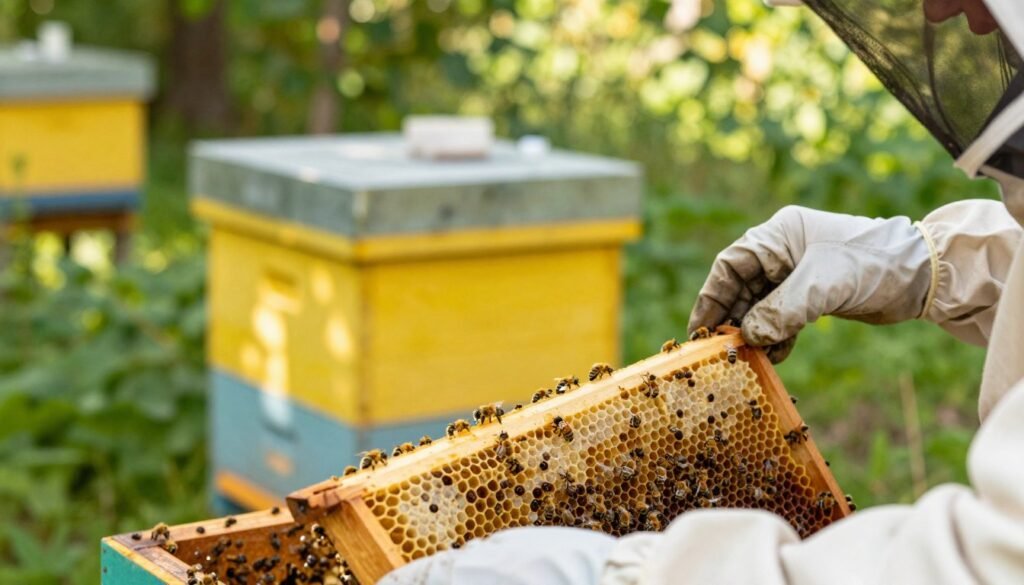
Use reliable equipment: a sturdy mesh sieve, a closed container, and a consistent sample volume. If you use an alcohol wash, record the count and preserve technique across checks.
Wait roughly three days after inspection before applying treatment. This pause reduces stress on bees. When measuring treatment efficacy, wait at least two weeks so new nurse bees emerge and numbers stabilize.
| Step | Target area | Equipment | Timing |
|---|---|---|---|
| Collect sample | Brood nest (open brood) | Mesh sieve, jar | During active brood |
| Exclude queen | Brood frames | Visual check | Each sample |
| Post-inspection wait | Whole colony | N/A | ~3 days before treatment |
Standardize your technique so results are comparable over time. Accurate sampling is the foundation of effective mite control and sound beekeeping. For natural options and follow-up measures, see natural remedies.
Seasonal Variations in Mite Population Growth
When the hive changes its brood rhythm, the mite population shifts right behind it. Mite reproduction tracks bee brood cycles, so population rises when queens lay heavily and falls as brood wanes.
In spring, expanding brood cells create breeding opportunities and mite numbers climb with the growing colony. By late summer and early fall, open brood declines and mites move onto adult bees, which often triggers a sharp spike in counts.
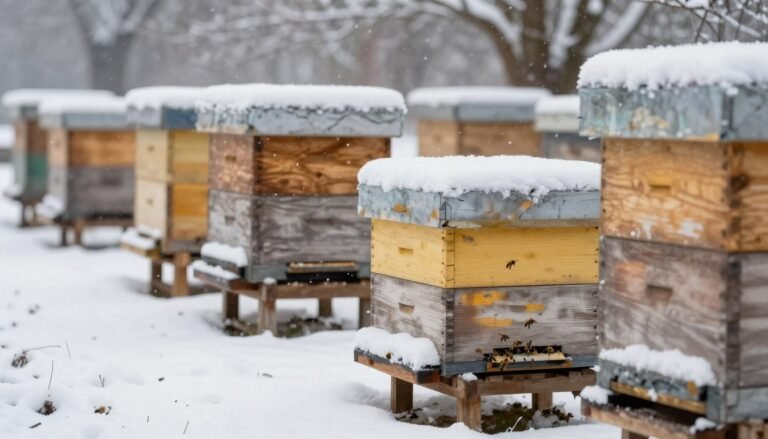
Winter bees must survive until spring, making low levels essential during the last brood pulse. Even a modest rise in mite levels late in the season can harm winter survival.
Use sugar roll or an alcohol wash during these critical weeks to catch infestations before they escalate. A screened bottom board helps you monitor continuous mite drops without opening the hive.
- Track counts across the season so you spot sudden increases.
- Record results and plan treatment around peak risk periods.
- Combine monitoring with timely management; that protects winter bees and honey yields.
For research on seasonal population patterns see seasonal mite research, and for apiary planning advice consult time management for multi-hive apiaries.
Integrating Testing with Treatment Schedules
Plan treatments around your monitoring calendar so interventions align with bee biology and seasonal risk. Linking counts to actions prevents sudden spikes and protects honey yield.
Spring Management
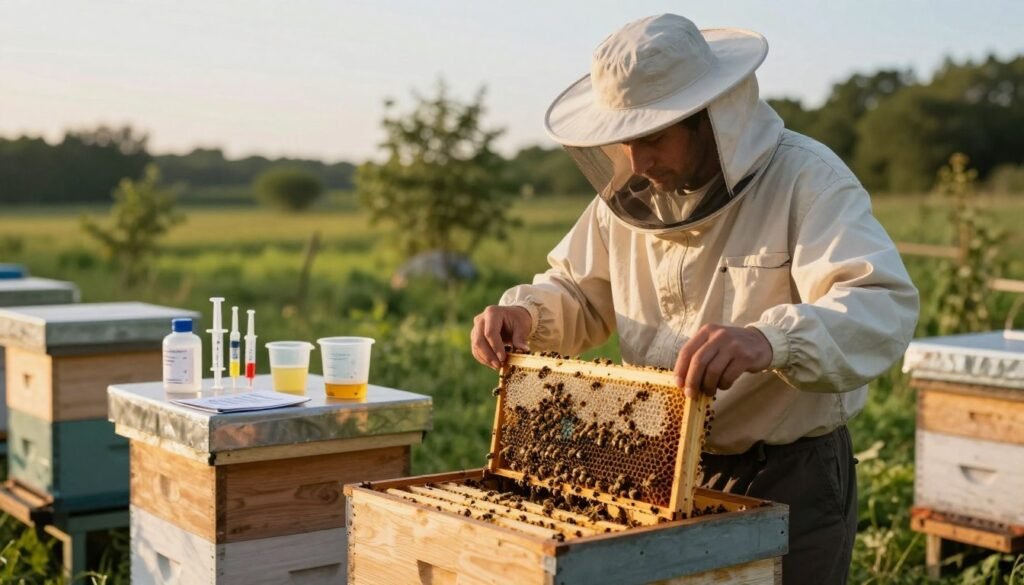
Start the season with a clean slate. When a colony is broodless, consider oxalic acid vapor or dribble for rapid mite reduction.
Note: treat packages or nucs early if brood is absent, and always follow label temperature and super rules.
Late Summer Thresholds
Late summer is critical. Use counts to decide if Formic Pro or Mite Away Quick Strips are needed while colonies remain strong.
Mind honey supers and product labels; some treatments cannot be used during harvest windows.
Winter Broodless Treatment
During the winter broodless period, oxalic acid hits mites when they are most exposed. This reduces winter losses and raises colony survival odds.
After any treatment, wait at least two weeks before performing another count. Monitor efficacy and rotate products to reduce resistance risk.
- Key: schedule treatments from monitoring data, not guesswork.
- Respect label limits on temperature and honey supers.
- Record counts and actions; link to recommended protocols like varroa mite testing.
Identifying and Managing Mite Resistance
Resistance can quietly erode treatment success, leaving healthy-looking hives at real risk.
Lewis Cauble measured amitraz efficacy by placing bees in a container with an ApiVar strip and recording mite fall. His work showed clear signs that a once-reliable product had lost power.
High efficacy means greater than 70% mite kill. Low efficacy signals the product is no longer worth using.
- Perform a controlled exposure on a sample before full-scale treatment.
- Rotate products and include oxalic acid in winter when brood is low.
- Keep detailed records of counts, actions, and outcomes to spot trends.
| Step | Purpose | Indicator |
|---|---|---|
| Controlled exposure | Check local product efficacy | % mite fall measured (>70% = effective) |
| Record keeping | Track changes across seasons | Decline in efficacy over years |
| Product rotation | Delay resistance buildup | Switch classes each season |
If resistance is suspected, contact university labs or extension agents for guidance. A proactive approach protects honey, bee health, and long-term hive survival.
The Importance of Keeping Detailed Beekeeping Records
Simple, consistent notes make it easy to spot rising mite levels before they threaten winter survival.
Keep a brief log at every inspection. Record mite counts, treatment dates, honey weight, and queen status. This habit turns scattered observations into usable data that guides management.
Using Data to Make Management Decisions
Data-driven choices help you decide when to add a frame of brood or replace a queen. Track the number of weeks between actions and the resulting colony health.
- Note sugar roll or alcohol wash counts and any treatment used, including oxalic acid.
- Mark frame condition, bottom board debris, and honey yield at season end.
- Highlight outlier hives so focused attention prevents spread and resistance.
Review records at the end of summer and fall. That review reveals patterns in mite trends, efficacy of treatment, and what to change next season. Share summary data with local beekeeping groups to learn regional lessons and protect bees across nearby hives.
Conclusion
Small, steady actions—routine sampling and clear notes—deliver big gains in colony survival.
Keep a simple monitoring plan and stick with it. Match seasonal timing with accurate sampling methods like the sugar roll or alcohol wash.
Rotate treatment choices and check product effectiveness when outcomes fall short. This reduces resistance risk and protects long‑term returns.
Maintain concise records after every inspection. Good logs reveal trends and guide smarter decisions across your apiary.
Plan, measure, and adjust. For broader operation planning and expansion guidance, see our apiary planning guide.