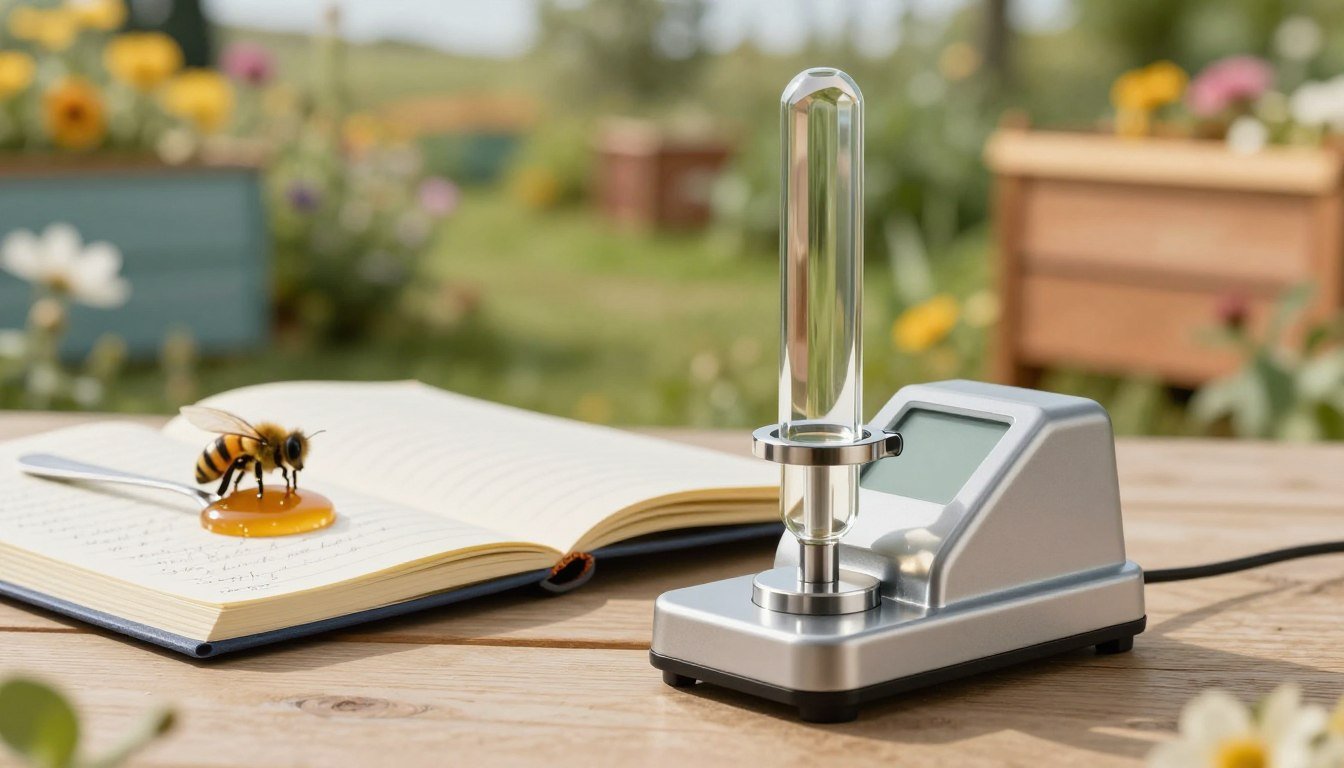
Accurate moisture readings guide every successful harvest. Beekeepers rely on a precise device to know when capped frames are ready and safe for extraction. A quality instrument prevents fermentation and protects product reputation.
The unit measures how light bends through a sample and prism, revealing sugar and water ratios. Brands like Atago are respected across the food industry for durability and accuracy, making them a smart investment for anyone selling jars to the public.
This post links practical steps and field tips with vendor guidance so you can pick the right tool for small-scale or commercial beekeeping. For calibration and step-by-step checks, see the detailed FAQ and buying guide at proper usage and a curated list of models at best refractometers for beekeepers.
Key Takeaways
- Measure moisture accurately to prevent fermentation and ensure shelf stability.
- Choose a trusted brand for consistent readings and long-term accuracy.
- Understand light refraction basics to interpret results with confidence.
- Calibrate and clean the prism regularly for reliable readings.
- Use measurements to time harvesting and keep product quality high.
The Importance of Moisture Control in Honey Harvesting
Moisture control decides whether a harvest becomes a premium jar or a fermented loss.
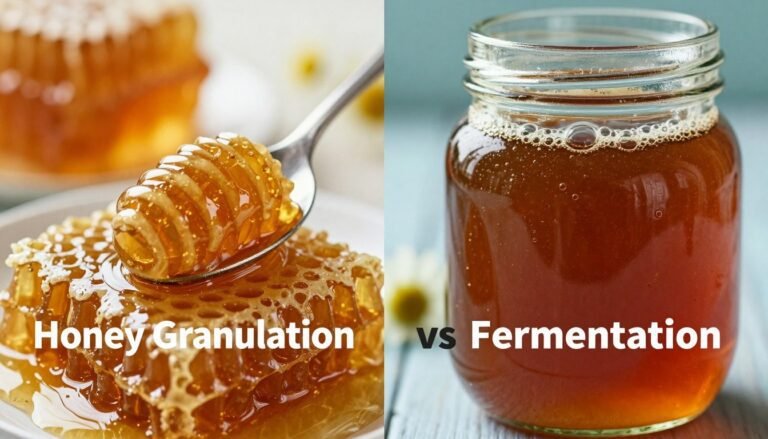
Moisture content in harvested product drives storage life and taste. The ideal range sits around 17%–18%, and readings above 20% raise the risk of fermentation.
The Risks of High Moisture Content
Frames removed before full capping can absorb ambient humidity, raising water content and inviting spoilage.
Fermented jars lose retail value and often become baker’s stock only. That leads to lost income and wasted effort.
Ideal Moisture Levels for Quality Honey
Most beekeepers aim for the 17%–18% window to ensure stability and quality across seasons.
Some thixotropic types may tolerate slightly higher levels, but staying under 20% remains the industry rule.
- Solution: Harvest fully capped frames when possible to lock in proper moisture levels.
- Consider climate and nectar source—both affect the final percentage of water.
- Monitor sugar content as it relates to moisture for consistent product quality.
| Factor | Effect on Water % | Practical Action |
|---|---|---|
| Nectar origin | Varies by plant; can raise or lower moisture | Sample and test before bulk extraction |
| Field climate | High humidity increases water content | Delay harvest after wet weather |
| Frame condition | Uncapped frames absorb moisture | Keep frames capped; store properly pre-extraction |
| Honey type | Some types tolerate slightly higher moisture | Adjust thresholds per variety, but aim |
For practical testing and moisture management tips, see this moisture control FAQ and a field testing guide at hive moisture testing.
Understanding How a Honey Refractometer Works
The prism turns an optical effect into a numeric moisture percentage that beekeepers can trust.
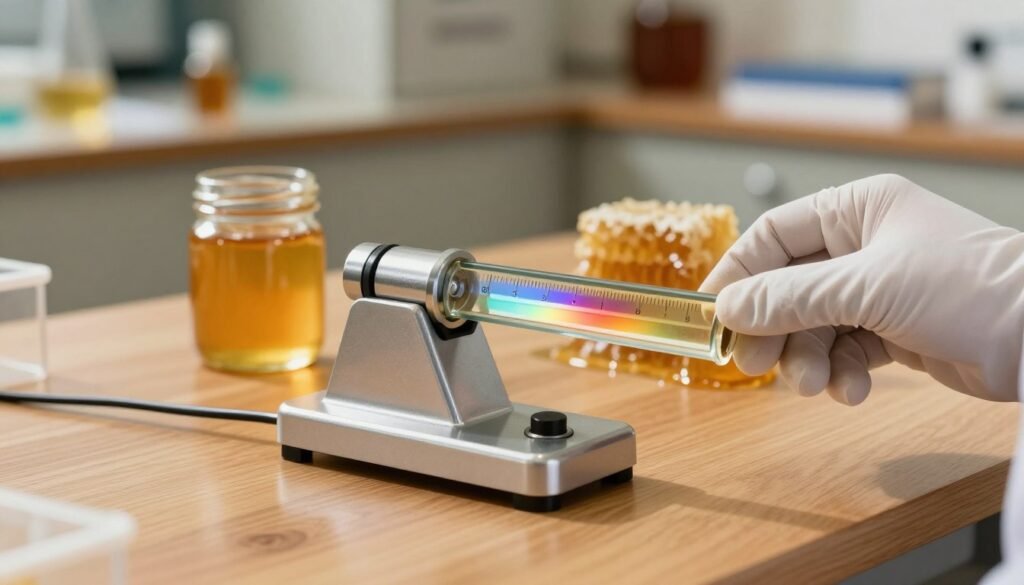
Refraction occurs when light moves from air into a syrupy liquid and bends at the prism surface. The amount the beam shifts depends on sugar and water in the sample.
The internal scale converts that bend into a clear percentage. That reading shows the water content and the sugar content, which are inversely related. Accurate measurements protect shelf life and product quality for farms and the wider food industry.
- Place a small drop on the prism; light interaction creates the visible boundary.
- The scale reads sugar vs. moisture and gives a reliable number for field decisions.
- Manufacturers and labs use these devices for consistent, fast testing across batches.
| Optical effect | Scale reading | Practical action |
|---|---|---|
| Light bend at prism | Moisture percentage | Decide extraction timing |
| Higher sugar | Lower water % | Approve for jarging |
| Lower sugar | Higher water % | Delay or cure frames |
“A clear optical reading is the first line of defense against fermentation.”
For quick field reference, consult a concise quick field guide and learn about ambient humidity’s impact in this humidity effects post.
Mastering Honey Refractometer How to Use for Accurate Results
A fast, simple routine makes every measurement accurate and repeatable. Begin with a calibrated device and steady lighting. Calibration ensures readings reflect the true moisture content and protects your harvest decisions.
Preparing Your Sample
Only a small amount of syrupy liquid is needed. Place a drop on the prism and spread it so the plate is fully covered.
Work quickly to avoid air bubbles. If the amount is uneven, readings will drift and mislead harvesting choices.
Reading the Scale
Look at the right column where the color shifts from clear to blue. That boundary marks the moisture content.
Record the value immediately and note ambient temperature. Temperature affects the scale and may require correction.
Interpreting Your Measurements
Values between 16% and 18.5% indicate prime quality. Above 20% risks fermentation and delayed marketing.
- Always calibrate before testing; use the supplied fluid and follow the maker’s steps.
- Wipe the prism with a damp cloth after each measurement to prevent residue.
- Repeat tests on multiple jars or frames for a confident average reading.
| Step | What to check | Why it matters |
|---|---|---|
| Calibration | Reference fluid and zero point | Ensures accuracy across sessions |
| Sample prep | Full plate coverage, no bubbles | Prevents false low or high readings |
| Cleaning | Damp cloth, no abrasives | Protects prism and future measurements |
For a practical kit guide and calibration tips, review this refractometer guide and a field testing overview at purity testing.
Essential Calibration and Maintenance Procedures
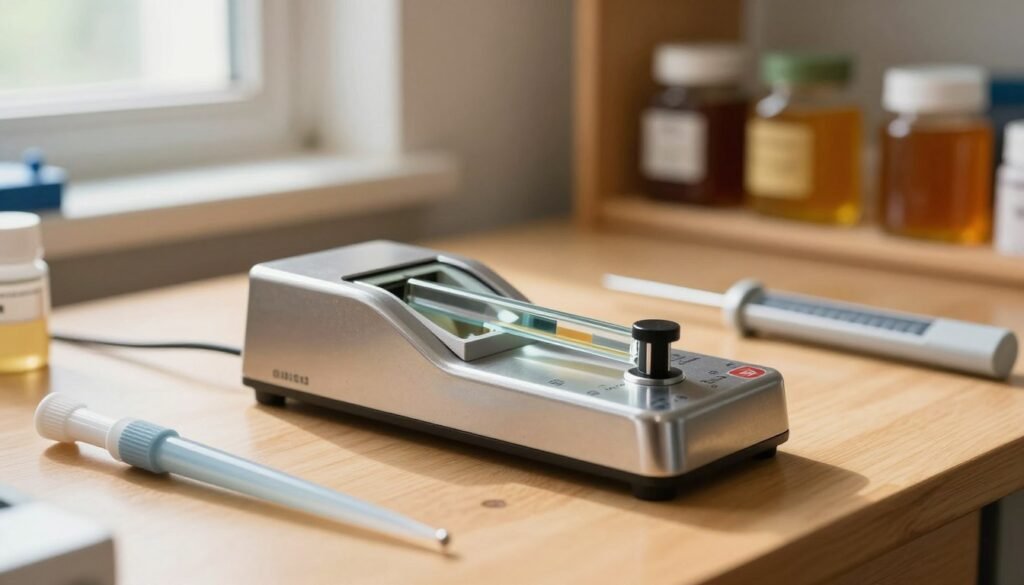
Regular calibration keeps readings trustworthy and helps you avoid costly errors at harvest. Calibration fluid is often required for metal devices and should be on hand before any major session.
Cleaning and Storage Best Practices
After each sample, wipe the prism with a soft, damp cloth. Dried residue or a small amount of sticky liquid can change how light passes through the plate and skew the scale.
Store the unit in a clean, dry case away from extreme heat. Proper storage protects internal parts and preserves long-term quality.
- Calibrate before every large harvest session.
- Clean immediately after each measurement; avoid abrasives.
- Keep the device dry and shielded from direct sun and dust.
Consistent care ensures accurate moisture content and water content readings. For a practical maintenance checklist, see this proper maintenance guide, and review regional grading standards for quality thresholds.
Selecting the Right Refractometer for Your Apiary
Not every model fits every apiary; choices should match your workload and testing routine.
Consider production volume first. A small hobbyist with a few frames may prefer a simple visual scale. Larger operations benefit from a digital display that speeds multiple measurements.
Dadant & Sons offers three strong options. The Pocket Digital model gives fast, reliable digital readings and is used across the food industry for its dependability.
The Standard unit provides a classic visual scale, great for quick spot checks on a single sample. The Atago Master targets durability and precision for heavy field use and frequent calibration cycles.
“Match the device to your harvest rhythm: portability, calibration needs, and ruggedness matter.”
- Pocket Digital: rapid digital results for many jars and frames.
- Standard: simple visual scale for occasional field testing.
- Atago Master: robust accuracy for commercial beekeeping.
Calibration and ease of cleaning are vital. Regular checks keep readings accurate and protect product quality. For a detailed supplier overview, see the Dadant refractometer guide.
Conclusion
Accurate final readings protect your harvest and your brand’s reputation.
Mastering a honey refractometer and monitoring moisture content prevents fermentation and secures shelf life.
Keep a regular calibration routine and clean the prism after each session. Proper care delivers consistent readings across seasons.
Choose the model that matches your workload—digital or visual—and record batch content, dates, and water values for traceability.
For a deeper look at the device as an indispensable tool for beekeepers and practical packing advice, see this packaging and labeling guide.
This post outlines the steps that help you harvest product that is both delicious and safe for customers.