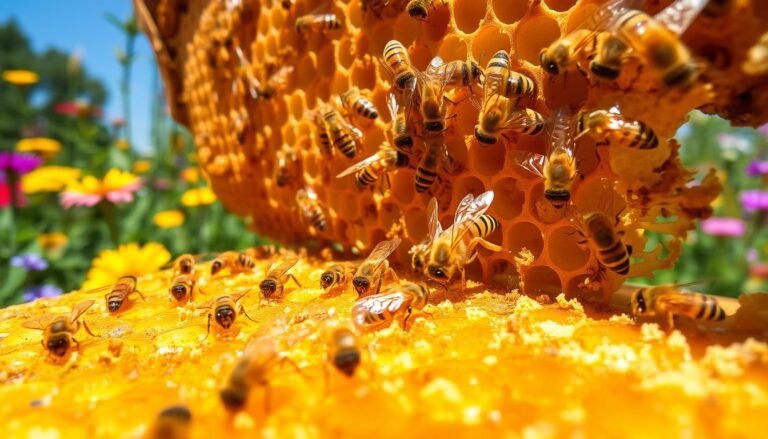
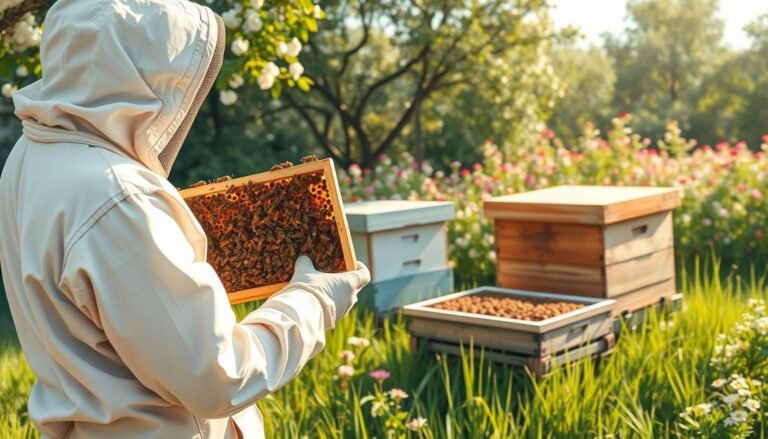
Beekeepers who’ve had to feed a colony through a pollen shortage already know that substitute patties never quite work as well as the real thing — colonies limp along on them rather than thriving. A study out of the University of Oxford, published in Nature, may finally explain the missing piece: pollen substitutes have been leaving out a small group of fat-like compounds that bee brood apparently cannot develop properly without.
Six Sterols Bees Can’t Make for Themselves
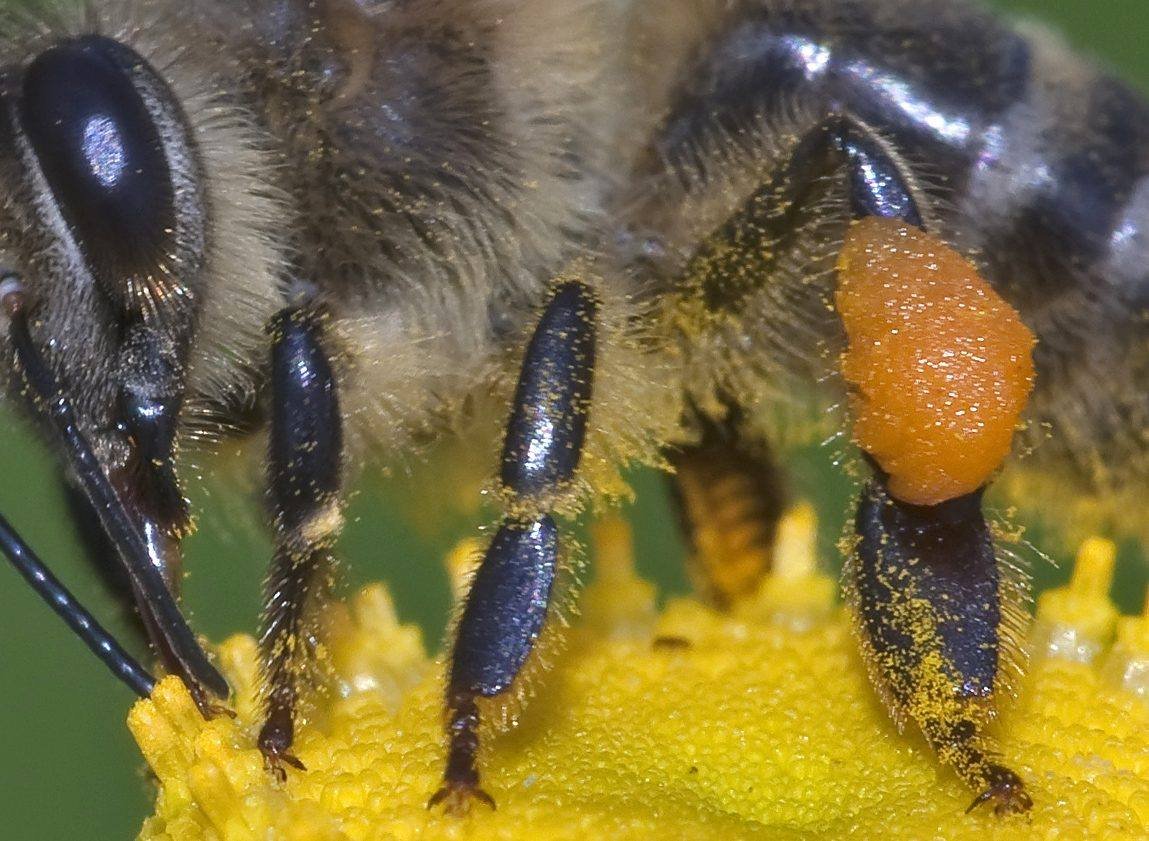
Bees, like most insects, cannot synthesize sterols from scratch the way plants and some other organisms can — they have to get them from their diet, specifically from pollen. Researchers led by Dr. Elynor Moore, then at Oxford’s Department of Biology and now at Delft University of Technology, working with Professor Geraldine Wright and collaborators at the Royal Botanic Gardens Kew, the University of Greenwich, and the Technical University of Denmark, identified six specific sterols bees need: 24-methylenecholesterol, campesterol, isofucosterol, β-sitosterol, cholesterol, and desmosterol. Commercial pollen substitutes, developed mainly to be cheap and shelf-stable, generally don’t replicate that specific mix.
The team’s fix was to genetically engineer a yeast, Yarrowia lipolytica, to produce all six sterols in the right proportions — effectively building a lab-grown stand-in for real pollen’s fat content, rather than trying to extract it from flowers at scale.
Fifteen Times More Brood Reaching Adulthood
The difference between colonies fed the enriched diet and colonies fed a sterol-deficient one wasn’t subtle. Colonies on the deficient diet stopped producing brood entirely after about 90 days, while colonies fed the engineered-yeast supplement kept producing brood throughout the study, with up to 15 times more larvae surviving to the pupal stage compared to the control groups. That’s the kind of gap that shows up as a genuinely different-looking colony, not a marginal statistical improvement only visible in a spreadsheet.
“For bees, the difference…would be comparable to the difference for humans between eating balanced, nutritionally complete meals and eating meals missing essential nutrients like essential fatty acids.”
What This Means for the Patty in Your Feeder
This isn’t a product on shelves yet — it’s a peer-reviewed proof of concept. But it points directly at a real, practical gap this site has already covered in its comparison of commercial pollen substitute patties: none of the major brands were formulated around this specific six-sterol profile, because the profile itself has only recently been pinned down this precisely. For beekeepers who feed patties during dearth periods or early spring buildup, the research is a reasonable explanation for why substitute-fed colonies so often lag behind colonies with access to real, diverse pollen forage — and a signal that the next generation of commercial substitutes may look genuinely different from what’s sold today, rather than just being repackaged versions of the same formulas.
It’s also a reminder that pollen diversity in the field remains the thing no lab formula fully replaces yet. A colony foraging on a wide range of blooming plants is naturally getting a broader sterol profile than any single-source substitute can offer, which is part of why this site’s coverage of bee nutrition fundamentals keeps coming back to forage diversity as the actual foundation, with patties treated as a stopgap rather than a replacement.
Frequently Asked Questions
What are sterols, and why do bees need them?
Sterols are fat-like compounds bees cannot manufacture on their own; they must get them from pollen. The study identified six specific sterols — including cholesterol and β-sitosterol — that appear essential for normal brood development.
Is this engineered yeast diet available for beekeepers to buy?
Not yet. This is a peer-reviewed research finding, not a commercial product, though it points toward how future pollen substitutes might be reformulated.
Does this mean current pollen substitute patties are useless?
No — they still provide protein and calories during genuine pollen dearth. The research suggests they may be missing specific sterols that matter for brood development, not that they provide no value at all.