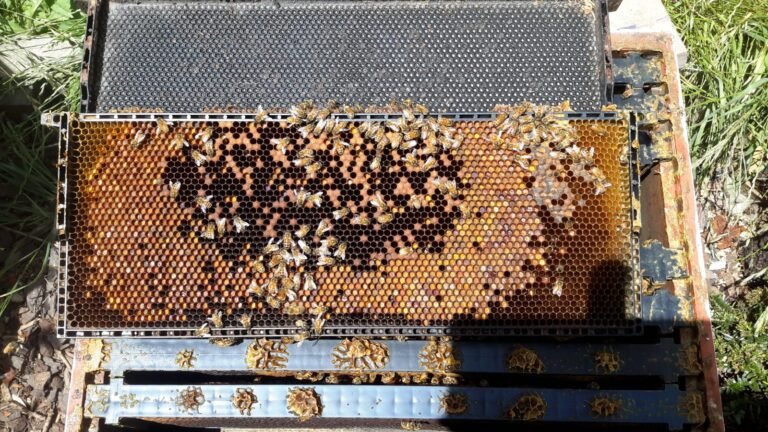
Bee Wax Production: How Worker Bees Actually Make Beeswax
Beeswax is secreted, not gathered — eight abdominal glands, an age-linked production window, and a chewing process that turns clear scales into finished comb.

How a honeybee colony works from the inside: anatomy and the three castes, how brood develops, how workers change jobs as they age, and how the colony keeps its nest at the right temperature and humidity. This section also covers how bees communicate, from the waggle dance and stop signals to queen, brood and alarm pheromones, as well as their senses and navigation, foraging behavior, immunity and the gut microbiome, and recent research on bee cognition.
Come here when something you see on a frame does not match the textbook and you want to know why bees behave as they do.
Start here:
Beeswax is secreted, not gathered — eight abdominal glands, an age-linked production window, and a chewing process that turns clear scales into finished comb.
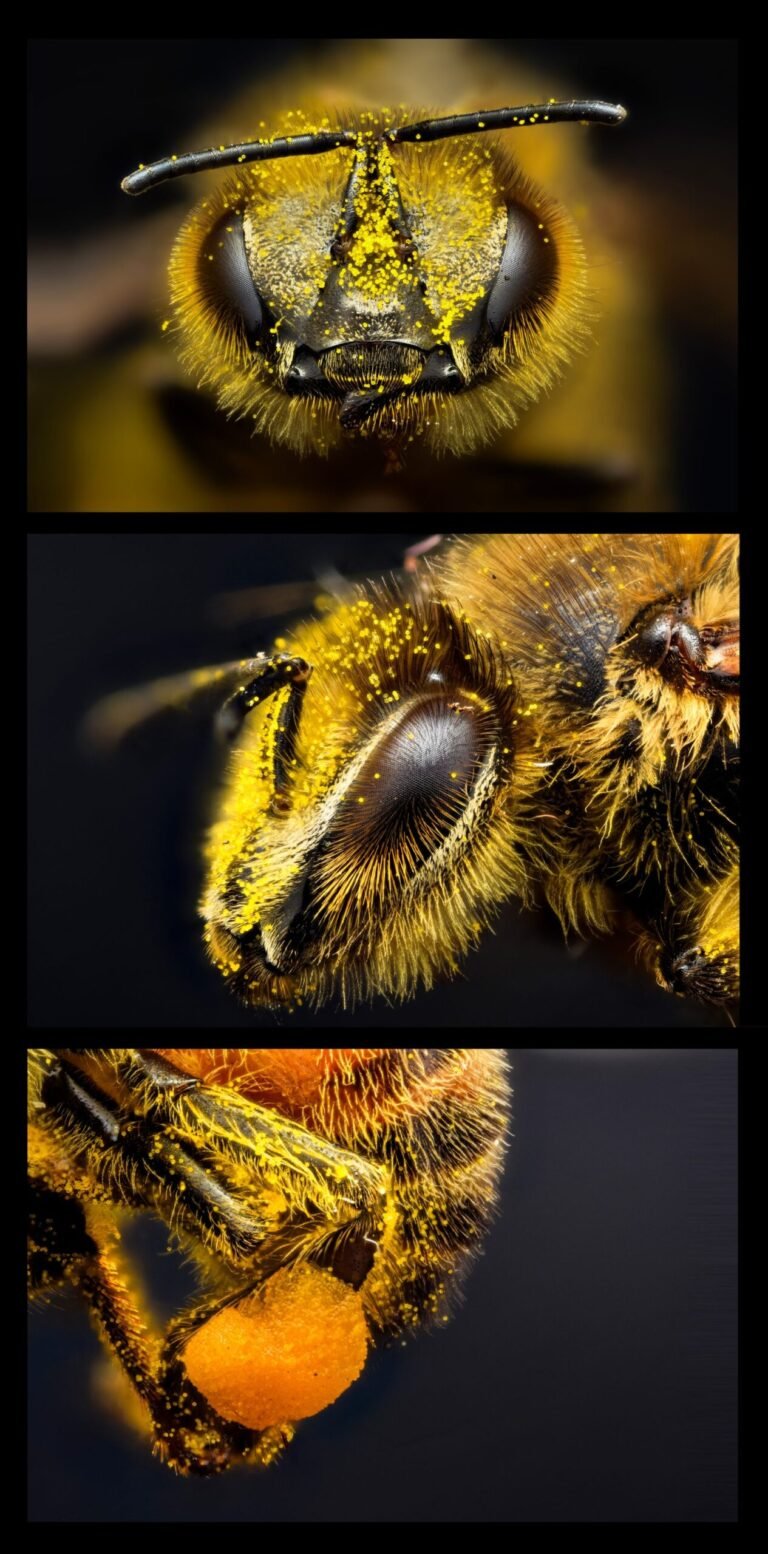
Pollen collection runs on static charge and a leg-driven packing mechanism, not just brute effort — here is how the corbicula works and how much pollen a colony really brings home.
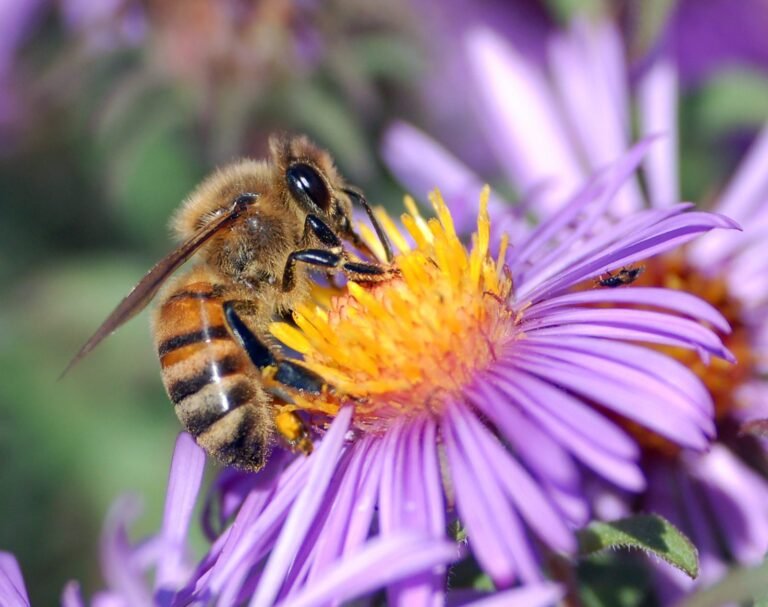
Bees don't sample randomly — flower constancy, sugar concentration, and net energy return all drive which nectar sources a forager keeps visiting, and why the whole colony often follows.
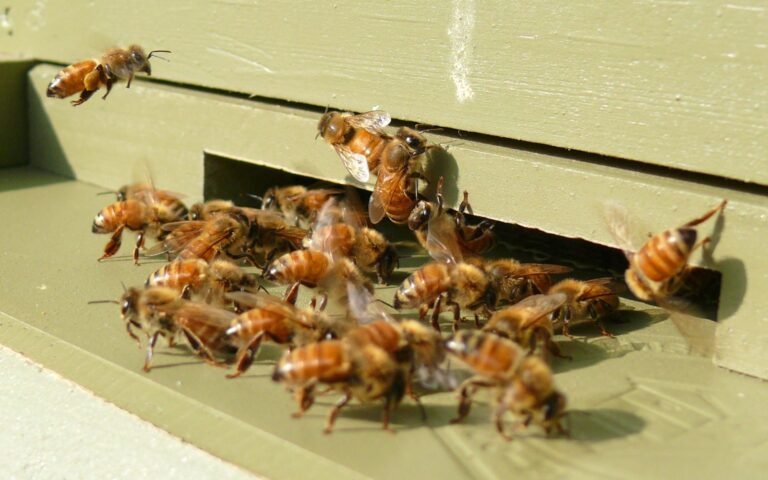
Bees groom themselves and each other constantly, and in some stock that same grooming reflex physically disables Varroa mites — here is how autogrooming, allogrooming, and mite-biting actually differ.
Honey bees warn each other of danger through a specific chemical released at the sting, not a general 'threat' cue — here is what the alarm pheromone actually does, how it differs from the vibrational stop signal, and what it means at the hive.

Genetic research in recent years has traced the honeybee’s origin to the Middle East or northeastern Africa, unsettling decades of assumptions that had placed it in Asia instead. Even a…

A honeybee’s brain weighs less than a milligram and holds fewer than a million neurons – roughly a millionth the size of a human brain. Yet within that tiny package,…
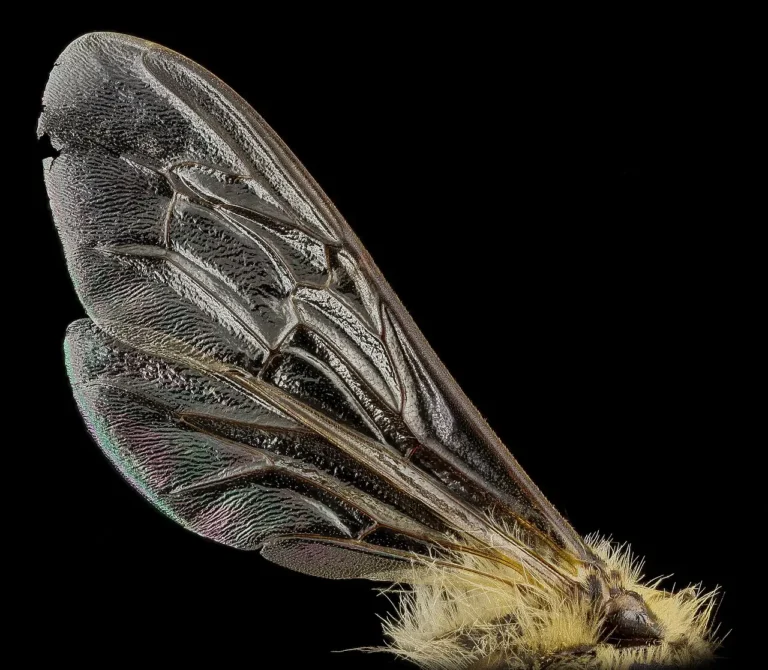
Honeybee wing structure explained: veins, the hamuli hooks that join four wings into two, 230 beats a second, and how wing length flags Africanized bees.

A foraging bee may get one more cue in the final second before landing: in bumblebee experiments, a flower’s weak electric field changed measurably after a visit and bees learned…

What beekeepers casually call honeybee “migration” is really two distinct, well-defined colony behaviors sharing one loose label: swarming, where a healthy colony splits and roughly half the workers leave with…

A honeybee colony’s habitat needs come down to three non-negotiables: continuous forage from early spring through fall, a reliable water source within about two miles of the hive, and shelter…

A honeybee egg becomes an adult worker in about 21 days: three days as an egg, six as a larva, and twelve as a capped pupa, though a queen develops…

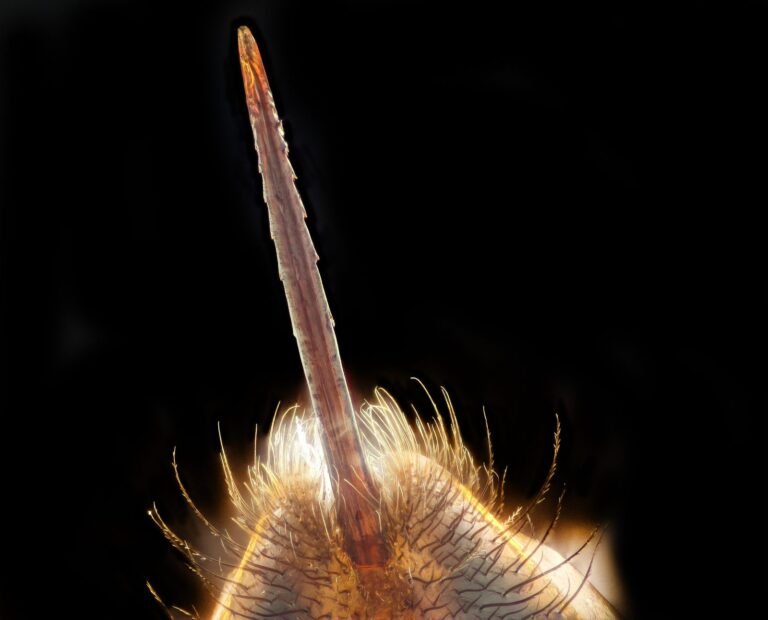
A honeybee’s stinger is barbed specifically to stay lodged in thick mammal skin, which is why stinging a person or another mammal is fatal to the worker bee that does…

A worker bee’s job changes roughly every few days as she ages – cleaning cells, nursing larvae, guarding the entrance, and finally foraging, all within about a six-week working lifespan.…
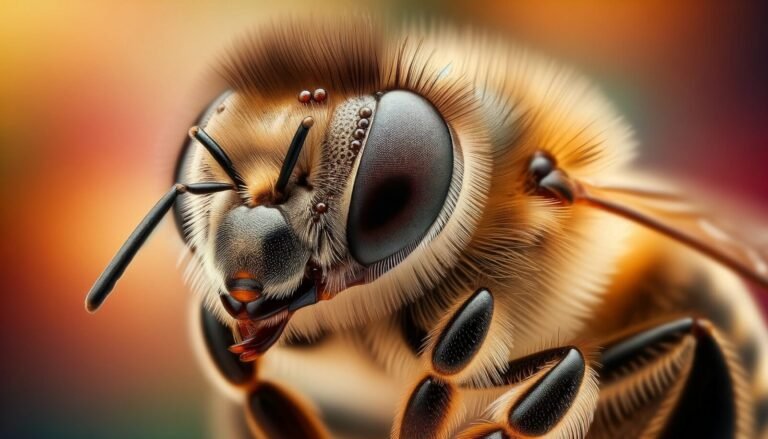
How honeybees use antennae, compound eyes, Johnston's organ, and taste receptors on their feet to navigate, communicate, and survive without ears, a nose, or eyelids.