A bumblebee learns two separate things in the lab: a blue artificial flower reliably contains a sugar reward, and a small ball nearby can be pushed around without any danger. Neither lesson, on its own, teaches the bee anything about combining the two. Then the researchers change the setup so the reward is out of the bee’s reach — reachable only by pushing the ball into position first. In a study published June 4, 2026, in Science, a striking number of bumblebees worked it out anyway, on the first try, with no trial-and-error and no training on the actual solution.
Ruling Out the Easy Explanations
The obvious skeptical response to a result like this is that the bees must have just gotten lucky, or stumbled onto the answer through blind trial-and-error, or were picking up some simple visual cue the researchers didn’t control for. The study’s authors anticipated exactly that objection and built stringent controls to rule out those simpler explanations — and the behavior held up. Bees that had separately learned “flower equals reward” and “ball is safe to move” spontaneously combined the two pieces of information to solve a problem they’d never been trained on and never seen solved before.
The science news outlet Science News put together short video footage of the actual experiment in action, showing a bumblebee rolling the ball into place and climbing it to reach the reward — worth watching directly, since a written description doesn’t quite capture how deliberate the bee’s movements look on camera:
That combination — using a movable object as a tool to reach an otherwise inaccessible reward, without prior training on the specific solution — is what researchers mean by spontaneous, goal-directed problem-solving. It’s a form of cognition long assumed to require a large, complex brain, generally studied in primates, corvids, and other animals with brains many times the size of an insect’s.
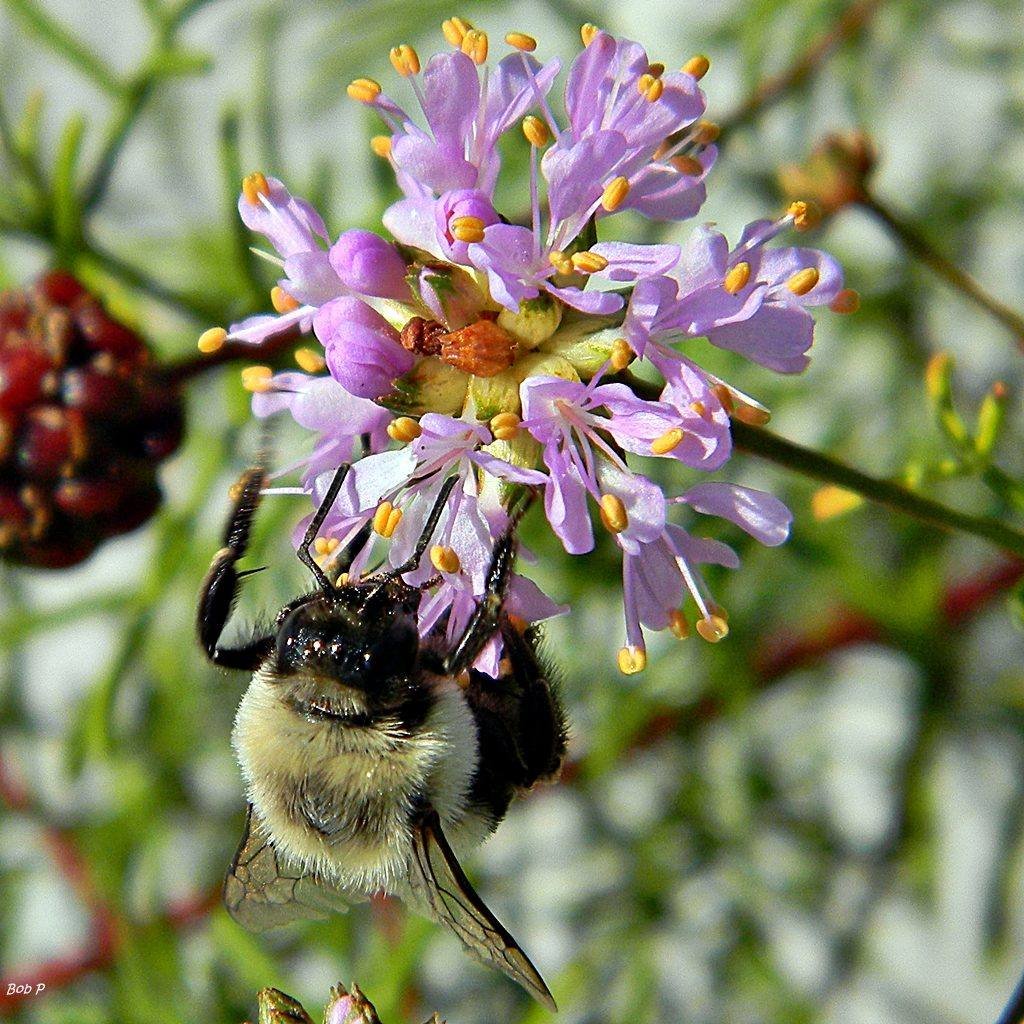
Small Brain, Real Insight
The headline takeaway isn’t just “bees are smarter than people assumed” — it’s more specific than that. It’s evidence that flexible, insight-like problem-solving isn’t exclusively tied to large-brained vertebrates, which is a genuinely significant claim in cognitive science rather than a cute trivia fact. This site has already covered related ground in its look at bee numerical cognition, which documents honeybees’ surprising capacity for basic counting and quantity discrimination. Read together, the two lines of research point the same direction: insect brains, despite their tiny size relative to a mammal’s, appear to be running more sophisticated computation than the simple stimulus-response model long assumed for animals with brains this small.
None of this changes anything about how a backyard beekeeper manages a colony day to day, and bumblebees aren’t even the species most beekeepers keep. But it does reshape a genuinely open scientific question — how much cognitive complexity a nervous system actually needs to produce flexible problem-solving — in a direction that keeps surprising the researchers asking it.