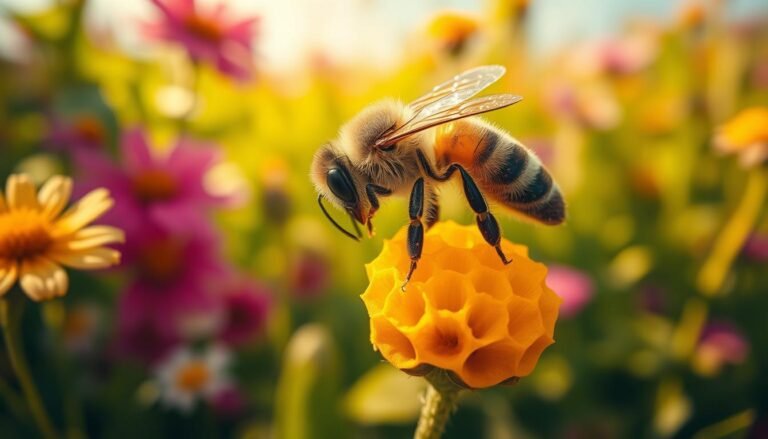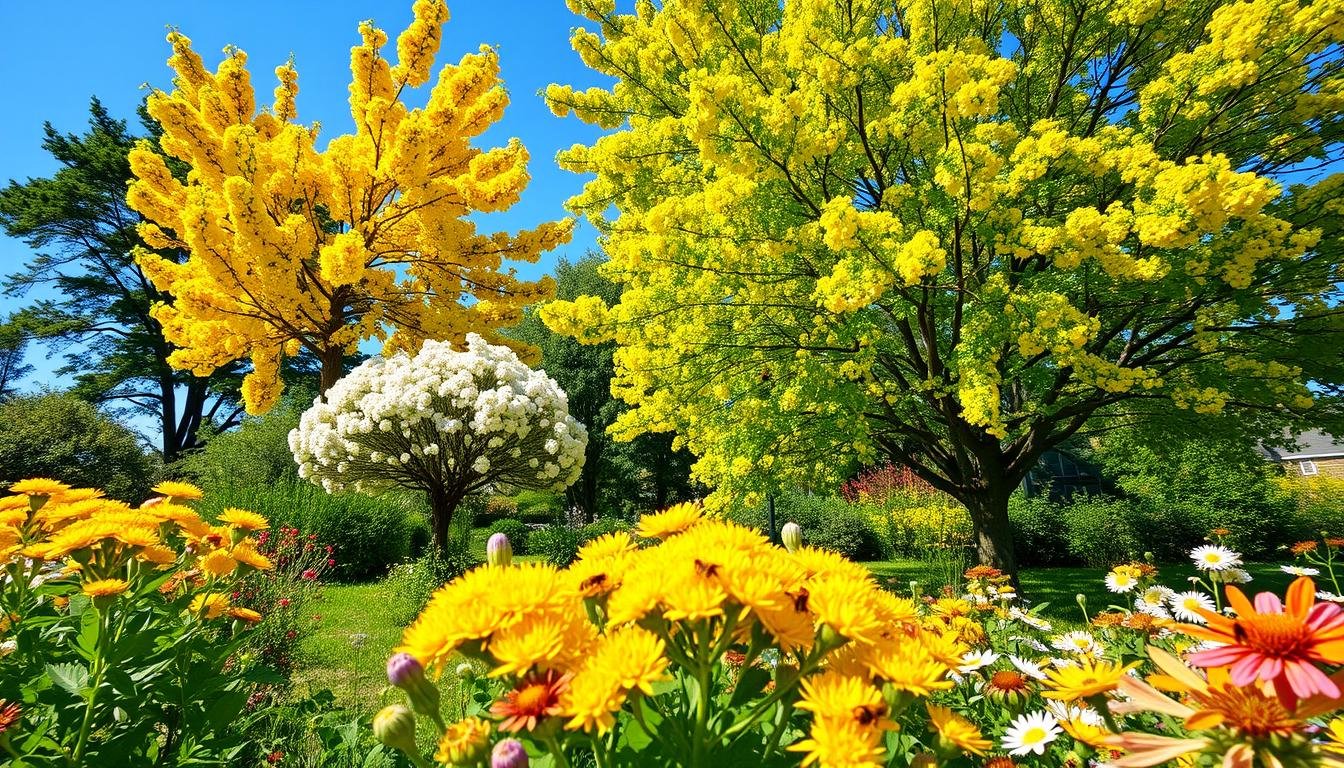
Choosing the right canopy plants can change a garden’s impact on pollination. A single mature tree can bloom far more than many small plants and feed many insects across weeks. This makes a tree-centered plan a high-return approach for supporting local pollinators.
Bees need both nectar and pollen. Nectar powers flight and hive activity while pollen supplies protein for brood and better honey. Willow and maple shine in early spring, and linden (basswood) offers a late-season, fragrant flow that can make distinctive, light honey.
Single-flowered fruit like apple and plum give easy access to floral rewards. By contrast, double or filled ornamental cherries often lack usable pollen or nectar. Mature crowns and steady soil moisture before and during bloom boost secretion, so timing and siting matter through the March–October season.
This piece previews a species-forward list. Expect practical guidance on selecting, placing, and protecting trees to create continuous forage and stronger colonies across the growing season.
Key Takeaways
- A single mature tree supplies far more flowers than many small plants, amplifying pollination.
- Nectar fuels activity; pollen feeds brood and influences honey quality.
- Willow and maple are early season workhorses; linden yields notable late nectar.
- Choose single-flowered fruit over doubled ornamentals for accessible rewards.
- Tree maturity, crown size, and pre-bloom moisture strongly affect nectar flow.
- Plant a sequence of flowering species to cover March–October and reduce forage gaps.
Why Plant Nectar-Rich Trees for Bees Right Now
Planting canopy species now gives immediate gains in forage and long-term habitat for local pollinators.
Canopies produce far more blossoms per square foot than garden beds, so a single specimen can feed many bees through spring into summer and fall.
Water before bloom is critical. Shortages right before or during flowering cut nectar output, while deep watering boosts secretion and improves honey yields.
Pressure from Varroa destructor, habitat loss, and pesticides makes diverse, nectar-rich plantings more important than ever.
- Trees act as high-return assets: they supply sustained nectar and pollen that colonies need to grow and forage.
- Vertical structure multiplies blossoms in urban yards where ground space is limited.
- Staggered bloom times reduce seasonal gaps and can even extend food into mild winter shoulders.
| Benefit | When | Impact | Action |
|---|---|---|---|
| High blossom area | Spring–Fall | More visits, better pollination | Plant canopy specimens |
| Water-dependent nectar | Pre-bloom | Higher nectar output, more honey | Deep water during dry spells |
| Seasonal buffering | Summer–Winter shoulder | Reduces forage gaps | Choose staggered bloom species |
Act this season: add a few well-chosen canopy plants to expand pollination, support colonies, and improve crop set in your garden.
How to Choose Trees That Truly Feed Bees
Pick trees that provide both accessible nectar and pollen across the season to sustain colony growth.
Nectar vs. pollen: giving colonies balanced food
Nectar delivers the carbohydrates bees convert to flight energy and honey. Pollen supplies protein, fats, and micronutrients needed for larvae and healthy brood.
Prioritize species whose blossoms offer both rewards. Confirm cultivar notes: sterile hybrids or doubled ornamentals often lack usable flowers.
Bloom timing from early spring to late summer
Create a simple bloom calendar. Include early bloomers, mid-season anchors, and late bloom options to avoid gaps.
- Water deeply before and during bloom to support nectar secretion.
- Choose staggered bloom times so foragers find consistent forage through the season.
Native, non-invasive, and single-flowered varieties
Favor native or well-adapted species by name and skip invasive or sterile options (avoid Norway maple and some sterile red maple hybrids; check willow cultivars).
Pick single-flowered varieties, especially among fruit and ornamental selections, to keep flowers accessible to insects and pollinators.

| Selection Factor | Why it matters | Action |
|---|---|---|
| Nectar & pollen | Fuel and brood nutrition | Choose dual-reward species |
| Bloom timing | Seasonal coverage | Stagger species across spring–summer |
| Species fit | Low maintenance, local benefit | Use native names and regional lists |
For regional lists and cultivar notes, consult regional guidance on trees for bees before you buy by name.
Best nectar-producing trees for bees: seasonal top picks
Spring’s earliest bloomers set the season: a few well-placed canopy species unlock vital pollen and nectar just when colonies need a jump start.
Willows (Salix spp.)
Willow catkins open very early and deliver abundant pollen. Goat willow (Salix caprea) and pussy willow (Salix discolor) are adaptable choices. Avoid sterile ornamentals that lack rewards.
Maples and redbud
Sugar maple (Acer saccharum) and red maple (Acer rubrum) supply heavy early pollen and sometimes nectar, depending on weather. Eastern redbud (Cercis canadensis) bridges early spring with profuse pink blooms that attract many species, including bumblebees.
Fruit, linden, and large nectar sources
Choose single-flowered apple, cherry, and plum cultivars so blossoms remain accessible to pollinators and later feed birds via fruit. Linden (basswood) yields prized, light honey when well watered. Tuliptree and tupelo provide copious spring nectar and strong seasonal presence.
Summer fillers
Catalpa’s large summer blooms and winged sumac’s late-season display help close dearth gaps. Stagger these species to create continuous blooms and steady pollen and nectar supply.
- Start with willow and maple early.
- Add redbud and single-flowered fruit.
- Use linden, tuliptree, tupelo, catalpa, and sumac to extend flow.
See regional lists and planting tips at local plant picks and a comprehensive guide at beekeepers’ reference.
Planting for the United States: matching trees to your region
Selecting regional species ensures steady floral resources that fit local frost dates and rainfall. Match plant choices to your climate and soil to reduce losses and keep pollinators active through the season.
Northeast and Midwest
Sugar and red maples, American basswood (little-leaved linden), willows, and eastern redbud perform well here.
Avoid Norway maple and sterile red maple hybrids; they often fail to provide real forage. Pair maples with basswood and willow to cover early-to-mid season bloom in your garden and yard area.
South and Mid-Atlantic
Tuliptree, tupelo/blackgum (male cultivars), winged sumac, and catalpa are reliable in warm ranges. Tuliptree favors well-drained soils with steady moisture.
Choose male tupelo to reduce messy fruit and lean on sumac or willow to fill local gaps when needed.
West and variable climates
When conditions vary, pick regionally adapted cultivars and check local arboretum or extension advice. Western areas need species selected by name to match heat, drought or elevation.
- Identify a short list for your area and avoid invasive or sterile selections that don’t feed pollinators.
- Add a few shrubs to increase structural diversity and buffer microclimates.
- Match each plant to soil, sun, and moisture: willows suit wet spots; sumac tolerates dry sites.
For regional cultivar notes and planting guidance, see local pollinator guides and a conservation perspective at beekeepers’ conservation advice.
Design ideas: trees, shrubs, and layered habitat for pollinators
Layering canopy and understory plantings creates sheltered corridors that boost bloom duration and insect activity. Use mixed heights to reduce wind, manage snow, and improve fruit quality while adding forage.
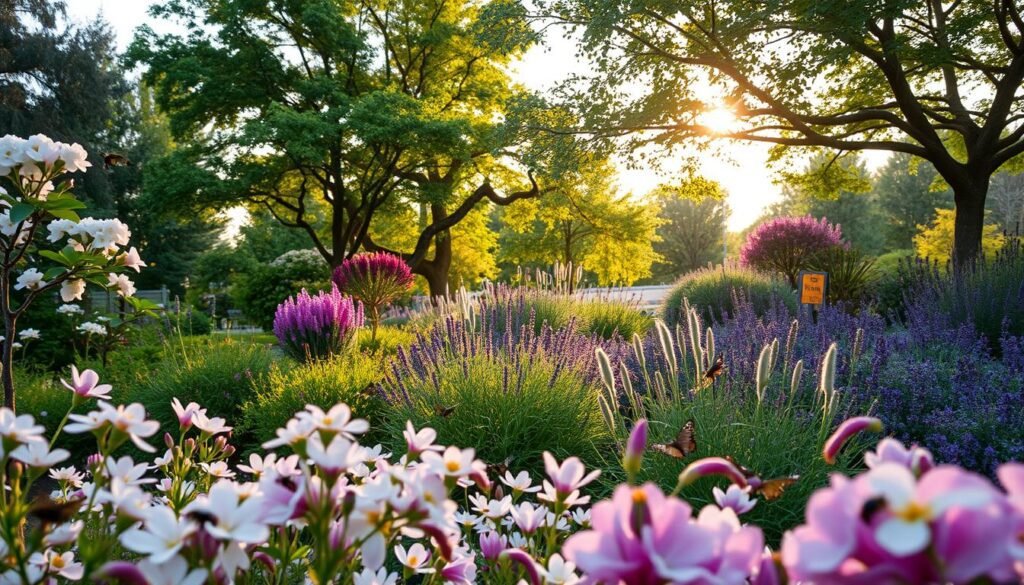
Windbreaks that feed bees and protect orchards
Design windbreaks that double as forage by mixing non-invasive flowering trees at varied mature heights. This buffers wind, cuts erosion, and moderates temperature for better crop set.
Choose lindens, maple, redbud, catalpa, tuliptree, tupelo, willow, and winged sumac to form a bloom ladder. Avoid species that host spotted wing Drosophila or heavy berry crops that invite pests.
Understory allies: shrubs that extend bloom and shelter
Add understory shrubs like American hazelnut, witch-hazel, buttonbush, ninebark, bottlebrush buckeye, and Korean lilac to lengthen the flowering season. These shrubs create nesting spots and habitat for birds and beneficial insects.
- Reserve conifer rows where you need to intercept pesticide drift; they do not attract pollinator visits.
- Stagger spacing so canopies and shrubs interlock, closing gaps and maximizing edge habitat.
- Group plantings by bloom period, add water sources, and plan access paths for maintenance and monitoring.
From planting to protection: getting nectar flow and keeping bees safe
Proper location, steady moisture, and patient management are the keys to strong flowering and lasting nectar flow. Choose warm, sunny sites that match soil needs and plan deep watering in the weeks before and during bloom. Mulch to keep moisture and moderate soil temperature. These steps boost secretion and make each specimen a reliable source of forage.
Site selection, water, and maturity to maximize nectar
Young plantings need time. Expect that a mature crown will produce far more pollen and nectar than a sapling. Mulch, deep irrigation, and correct siting speed benefits and reduce stress during hot spells.
Integrated pest management and drift reduction near blooms
Use IPM: monitor pests, set action thresholds, and pick targeted controls. Spray only when needed, in low wind, and when pollinators are least active. Consider conifer buffers to limit drift since they do not attract pollinators with flowers.
“Protecting pollination and honey production begins with thoughtful timing and precision when managing pests.”
| Topic | Action | Timing | Benefit |
|---|---|---|---|
| Watering | Deep soak pre-bloom | 2–4 weeks before bloom | Higher nectar secretion |
| Mulch | 3–4 inch layer | Year-round | Moisture retention, root protection |
| IPM | Monitor + targeted control | Off-peak hours, outside blooms | Lower non-target impact |
| Drift barriers | Plant conifers or windbreaks | Establish before spraying | Protect flowering spaces |
- Keep pruning routine to improve light and reduce disease.
- Provide water and winter shelter near colonies to support season-to-season survival.
Conclusion
,Plant selection, placement, and watering together decide whether a yard becomes a steady source of floral food.
Choose a mix of region‑suited tree species and shrubs that bloom from early spring into summer and into fall. Favor single, open fruit blossoms over doubled forms to keep nectar and pollen accessible to every bee visitor.
Prioritize canopy maturity, bloom density, and careful IPM with drift reduction. Pick two to three anchor trees, add understory shrubs, and schedule planting and deep watering. Small gardens can yield big pollination and honey benefits.
Want seasonal care steps? See a practical checklist at seasonal beekeeping tasks.
FAQ
What are good trees to plant now to support pollinators in spring and summer?
Choose species that bloom at different times to extend food sources. Early bloomers include willow (Salix) and redbud (Cercis canadensis). Midseason sources are maples (Acer) and fruit trees such as apple and cherry; late or summer-flowering options include catalpa, tuliptree (Liriodendron), and winged sumac (Rhus copallinum). Plant a mix to provide continuous nectar and pollen from early spring through late summer.
How do I balance nectar and pollen to feed a healthy colony?
Provide diverse plants that offer both resources. Trees like willows and maples supply abundant pollen early on, while basswood (Tilia) and tuliptree produce high-quality nectar for honey. Add understory shrubs and native wildflowers to fill gaps. Bees need pollen for protein and nectar for energy, so layering bloom times ensures balanced nutrition for colonies and bumblebees.
Which species are best in urban or small garden spaces?
Pick smaller or columnar cultivars and native species suited to your region. Eastern redbud, dwarf apple varieties, and compact lindens or catalpa cultivars work well. Also include shrubs such as native blueberries or serviceberry to extend blooms. Avoid large, invasive trees and select single-flowered fruit cultivars to maximize nectar and pollen access.
Are non-native trees acceptable if they produce lots of nectar?
Choose non-invasive, well-adapted species carefully. Non-native trees can provide valuable nectar and pollen, but native trees usually better support local pollinator diversity. Prioritize native or non-invasive cultivars and confirm they do not outcompete local flora. Regional extension services can advise on suitable choices for your area.
What should I consider about bloom timing when selecting trees?
Aim for staggered flowering from early spring through late summer to avoid dearth periods. Willows and maples bloom early; redbud and apple bloom mid-spring; basswood and tuliptree peak later; sumac and catalpa help during summer. Mapping bloom windows for your trees helps maintain steady nectar flow and supports colony buildup and honey production.
How does tree maturity affect nectar and pollen yield?
Young trees often produce little nectar or pollen until they reach reproductive maturity. Fast-growing species like tuliptree and some maples can flower earlier, while others may take several years. Proper siting, watering, and pruning promote earlier flowering. Expect more reliable nectar flow once trees are established and mature.
Can fruit orchards be managed to maximize pollinator benefit?
Yes. Use single-flowered fruit varieties, plant diverse pollinator-friendly hedgerows, and stagger bloom with multiple cultivars to extend availability. Avoid broad-spectrum insecticides during bloom; apply integrated pest management and use targeted methods outside active pollination windows to protect bees and other beneficial insects.
Which trees produce honey that beekeepers prize for flavor?
Lindens (Tilia) and tuliptree often produce distinctive, high-quality honey. Tupelo (Nyssa sylvatica) yields a sought-after, mild honey in suitable regions. Honey flavor depends on dominant nectar sources and local climate; combining several nectar producers can create complex, regional varietals prized by hobbyists and commercial beekeepers alike.
How do I reduce pesticide risk to foraging pollinators near flowering trees?
Adopt integrated pest management: monitor pests, use biological controls, and apply targeted products only when needed. Avoid spraying during bloom and at dawn or dusk when bees forage. Use drift-reduction measures and select bee-safe formulations. Coordinate with neighbors and local farms to limit exposure across the foraging range of colonies.
Which trees are best for specific U.S. regions like the Northeast, South, and West?
In the Northeast and Midwest, maples, basswood, willow, and redbud perform well. The South and Mid-Atlantic favor tuliptree, tupelo, sumac, and catalpa. In western and variable climates, select regionally adapted species and cultivars recommended by state extension services or native plant societies to ensure survival and reliable bloom.
How can landscape design improve nectar availability and shelter?
Create layered plantings: canopy trees, understory trees, shrubs, and herbaceous plants to extend bloom and provide shelter. Use windbreaks planted with flowering trees to protect orchards and hives. Incorporate water sources and nesting habitat for native bees. A mixed landscape increases resilience and supports a wider range of pollinators and beneficial insects.