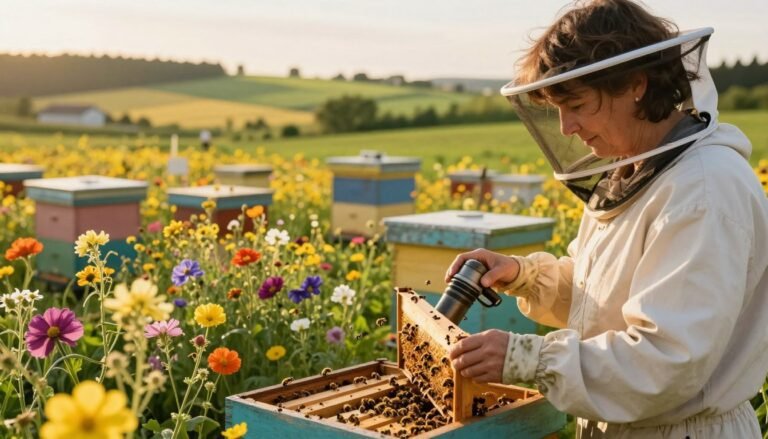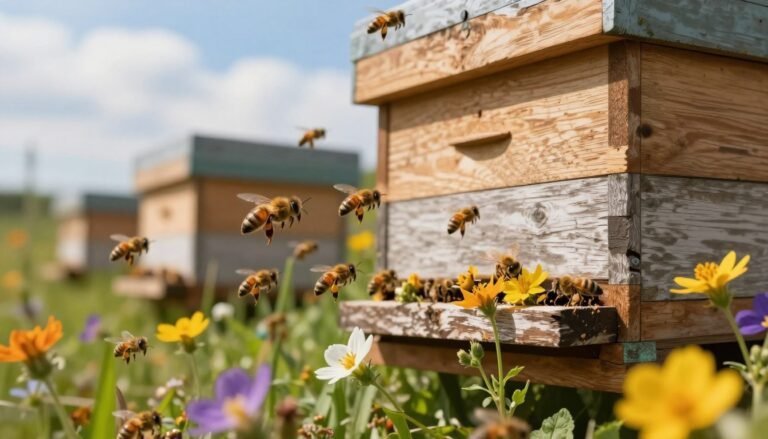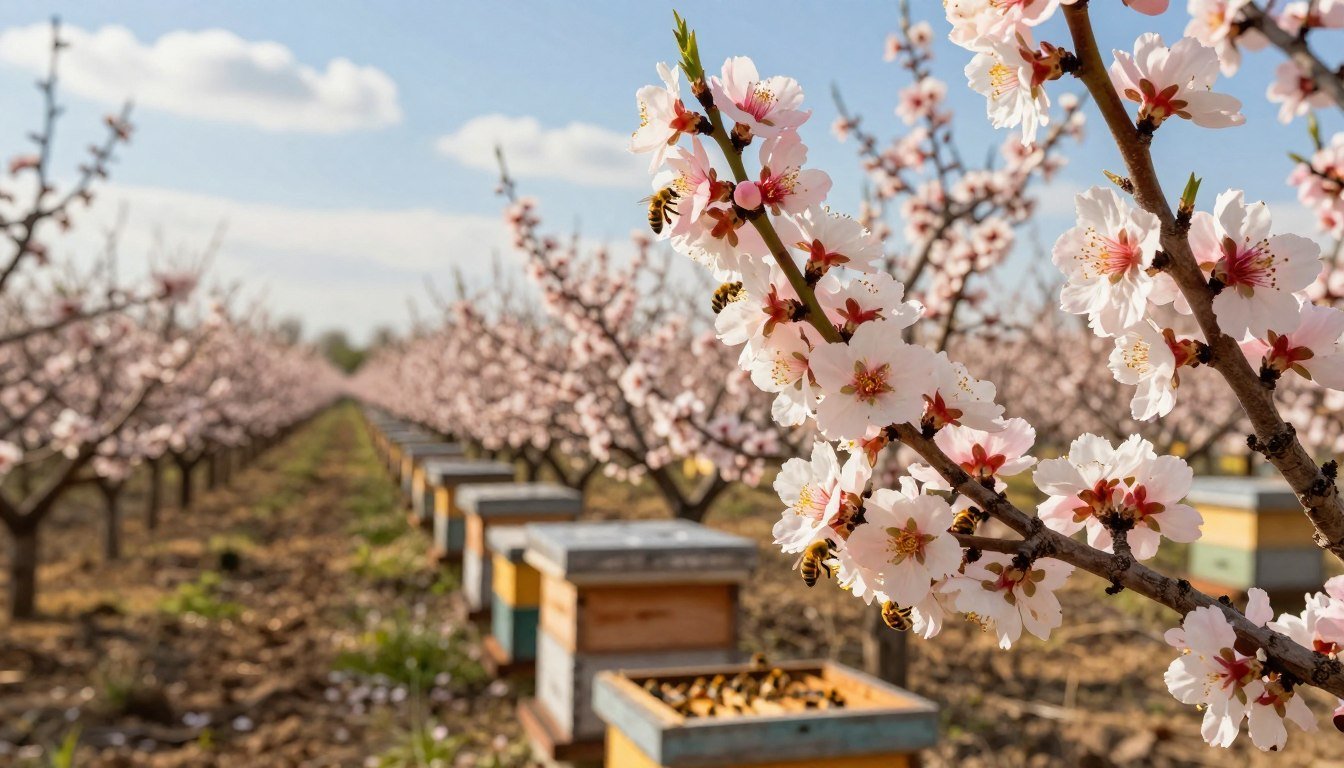
California almond pollination draws roughly 80% of the US commercial hive supply each February. Growers and beekeepers must balance the cost of services with the need for effective coverage across large orchards.
Research dating to Micke (1996) recommends two 6–8 frame hives per acre to boost yields. This guidance still informs how many hives to place and how to manage colonies before bloom.
Weather and colony condition shape daily foraging windows, so stronger colonies often provide more reliable pollen transfer. Modern tools and careful planning help growers choose fewer, higher-quality units rather than crowding fields.
Key Takeaways
- About 80% of commercial hives move to California for the bloom.
- Micke’s guidance favors two 6–8 frame hives per acre for best results.
- Fewer strong hives can outperform many weaker ones.
- Weather and colony prep dictate pollination success.
- Consult resources on hive quality and expansion to optimize placement: hive quality over quantity and beekeeping expansion tips.
The Critical Role of Hive Strength in Almond Orchards
For orchard managers, colony quality often outweighs simple hive counts when forecasting yield. Research since the 1970s shows populous colonies visit more flowers and collect more pollen. Strong units sustain foraging during cool mornings and variable weather, which boosts field coverage.
California almond pollination is the most supply-constrained pollination market in the country. Per-hive rates now range from $185 to $220 for well-populated, 6–8 frame colonies. Contracts often lock in growers and beekeepers by December.
Sheesley and Poduska (1970) found that stronger honey bee colonies deliver substantially more value than weaker ones. A strong colony holds a high population that forages effectively in cooler temperatures. Beekeepers must confirm each delivered hive meets the agreed colony strength in the commercial contract to protect yield potential.
Understanding Almond Pollination Hive Strength Requirements
Practical frame-count guidelines translate colony size into predictable field coverage during bloom. Growers need a clear metric so inspection and contracting can match expectations.
Defining the Frame Count Standard
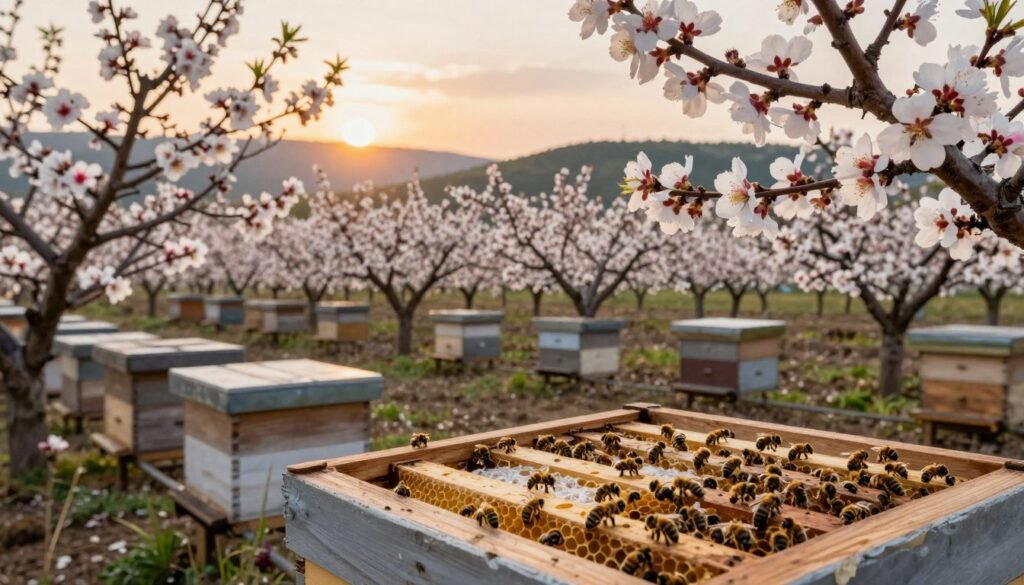
The California Almond Board sets a minimum of 6 frames covered by bees per colony to ensure basic coverage during bloom. Many commercial contracts reference this baseline to prevent under-delivery.
Research guidance from Goodrich and Goodhue (2016) suggests higher targets. Their work indicates that 12–14 frames with about 75% coverage per acre can lower the total number of hives needed and improve uniformity of visits.
The Importance of Bee Coverage
Colony assessment focuses on frames actually covered by worker bees, not empty comb counts. Inspectors count frame faces that show at least 80% adult bee coverage to determine colony quality.
- Specify exact frame count in pollination contracts to avoid disputes.
- Independent inspections are common for large growers to verify standards.
- Beekeepers should prepare colonies to meet the agreed frame-count metric.
| Target Coverage | Frames per Colony | Estimated Number Hives per Acre |
|---|---|---|
| Minimum standard | 6 frames covered | 2 hives per acre (baseline) |
| Optimal target | 12–14 frames, 75% coverage | 1–1.5 hives per acre (reduced total) |
| Inspection metric | 80% frame-face coverage | Used to validate delivered colonies |
For contract language and practical guidance, see honeybee hives for almond orchards. Clear specs protect both grower and beekeeper and help secure reliable pollination services.
Factors Influencing Your Pollination Strategy
Orchard maturity and tree genetics drive how many colonies you’ll need each season. Young blocks in their first harvest year often need only 1–1.5 units per acre as trees have lower floral demand.
Self-fertile varieties still gain from bee activity; studies show varieties like ‘Independence’ realized yield gains of about 20% when honey bees were present. See the research on pollinator effects and practical rental guidance for planning informed orchard choices and options for sourcing colonies from commercial suppliers.
Collaboration between grower and beekeeper matters. Adjust the number of hives per acre by variety, tree age, and past production records.
- A healthy queen keeps the colony productive during early-season bloom.
- Older, high-production orchards usually need more colonies per acre than young plantings.
- Alternative pollinators can supplement honey bees but should not replace standard colony numbers.
Use historical yield and variety data to set your season plan. Tailoring placement each year helps protect return on investment and reduces the risk of under-delivery under the contract.
Standardizing Colony Assessment Methods
Consistent on-site assessment gives growers confidence in delivered units. Use simple, repeatable checks so both parties agree on colony condition before placement. Clear records protect pollination contracts and speed dispute resolution.
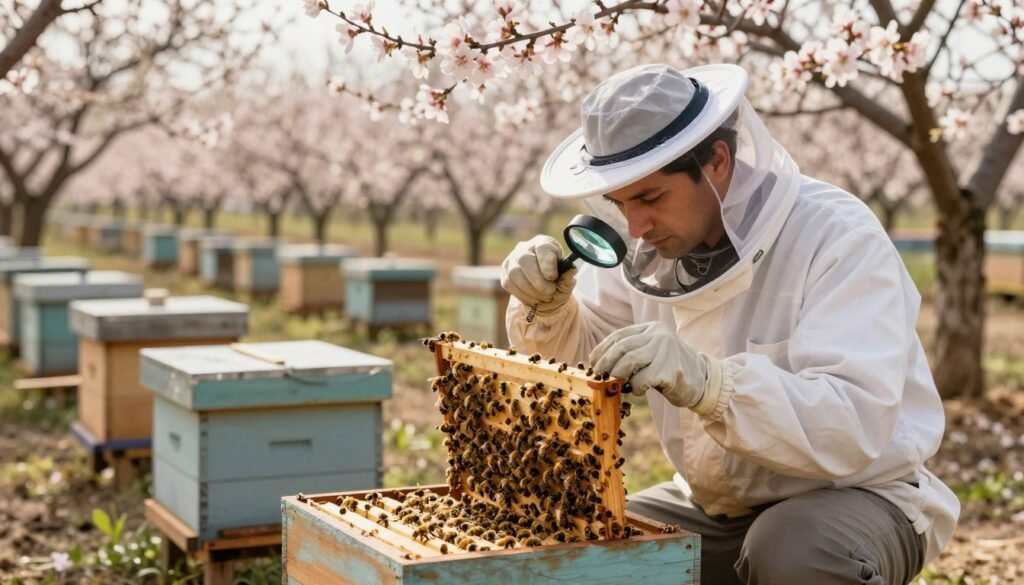
The Quick Count Method
The quick count means opening a box on days above 55°F and counting frame faces with at least 80% bee coverage. Do this without smoke to avoid shifting bees and to see true coverage.
Winter Cluster Considerations
Watch flight activity at about 65°F to estimate colony vigor before opening. Inspect 10% of colonies in a yard to infer overall yard condition.
Alcohol Wash for Varroa
Keep mite levels below 1 per 100 bees before moving colonies. An alcohol wash gives a reliable mite count; see a step-by-step guide for performing an alcohol wash for varroa mites.
- Document every inspection for the grower and contract records.
- Monitor american foulbrood signs; this disease can destroy a bee colony.
- Beekeepers must be ready to perform field checks to guarantee pollination services.
| Check | Method | Action Threshold |
|---|---|---|
| Frame-face coverage | Quick count on warm days | ≥80% per frame |
| Mite level | Alcohol wash | |
| Yard sampling | 10% colony inspection | Pass/fail for delivery |
Preparing Strong Colonies for February Delivery
Start preparations well before winter. Begin queen selection and brood management in August and September so colonies build a solid fall population.
A targeted calendar helps beekeepers hit delivery goals. Use oxalic acid vaporization in October or November during the low-brood window to reduce mite pressure.
Limit hive disturbance between November and January to keep the winter cluster stable. In January, apply aggressive feeding with pollen substitute patties to boost frame coverage and colony numbers for early bloom.
Growers who rent 8-frame colonies often see higher returns — typically an extra $15–$25 per unit versus standard 6-frame contracts. Proper frame count management and steady winter monitoring are key to delivering quality pollination services in the field.
- Young, vigorous queens from the August–September brood cycle support rapid buildup.
- Timed oxalic treatments target mites when brood is low.
- Minimal winter disturbance preserves cluster health and foraging readiness.
| Preparation Step | Timing | Expected Outcome |
|---|---|---|
| Queen refresh and brood ramp | Aug–Sep | Stronger autumn population and quicker winter recovery |
| Varroa control (oxalic vapor) | Oct–Nov | Lower mite load during low-brood period |
| Aggressive feeding (pollen patties) | Jan | Improved frame coverage and hive readiness |
For detailed metrics and hive strength guidance, review this resource: hive strength guidance.
Navigating Pollination Contracts and Documentation
Clear, signed contracts protect both parties and set expectations before the orchard bloom begins. Good documentation reduces surprises at delivery and gives both sides a path to resolve issues.

Essential Documentation for Growers
Start with a Certificate of Health issued by the state apiary inspection program for any out-of-state colonies. This certifies freedom from american foulbrood and provides basic disease assurance.
Contracts should list the exact number of colonies to be delivered and the guaranteed colony strength on arrival. Include an inspection and dispute resolution procedure so both parties know the verification steps.
- Pre-delivery mite counts: Request documented results to confirm Varroa levels before movement.
- Remedies clause: Spell out options for understrength colonies—substitution, price adjustment, or reinspection.
- Digital proof: Encourage timestamped, GPS-tagged colony strength records from beekeepers for verifiable evidence.
- Timing: Secure signed agreements by November to lock rates and placement for the season.
- Placement plan: Confirm number per acre and field layout to maximize coverage and reduce disputes.
| Document | Purpose | Required Action |
|---|---|---|
| Certificate of Health | Disease clearance for out-of-state colonies | Obtain from state apiary inspector |
| Mite count report | Verify Varroa control before delivery | Attach alcohol-wash or sugar-roll data |
| Signed contract | Defines number, guaranteed colony strength, remedies | Finalize and timestamp by November |
For templates and practical contract language, see contract templates and pricing. Beekeepers can review seasonal prep and inspection practices at seasonal beekeeping tasks.
Managing Understrength Hive Scenarios
A clear substitution plan and a modest buffer of extra colonies are essential safeguards when delivered units fail to meet the agreed colony strength.
Operators should keep a 5–10% buffer of spare hives to swap out any unit that underperforms at inspection. This small reserve prevents gaps in field coverage during the bloom window.
- Specify whether a price adjustment or full substitution applies for an understrength colony.
- Be cautious: a discounted rate may not replace lost visits or pollen transfer in the orchard.
- Replace any colony with a failing queen immediately to halt rapid decline.
- Document every inspection with timestamps and photos to avoid disputes.
“A documented remedy clause reduces conflict and preserves long-term grower relationships.”
| Trigger | Remedy | Action |
|---|---|---|
| Shortfall ≥ X% | Substitution or refund | Replace within 24 hours |
| Single understrength unit | Price adjustment | Documented inspection required |
| Multiple failing colonies | Breach clause | Contract dispute process |
Professional operators treat these procedures as standard. For operational metrics and yard productivity guidance, see apiary productivity.
The Impact of Weather and Environmental Variables
Cool mornings and sudden cold snaps can erase a day’s foraging if colonies can’t warm quickly. Weather sets the window for bee flight and the number of productive days during bloom.
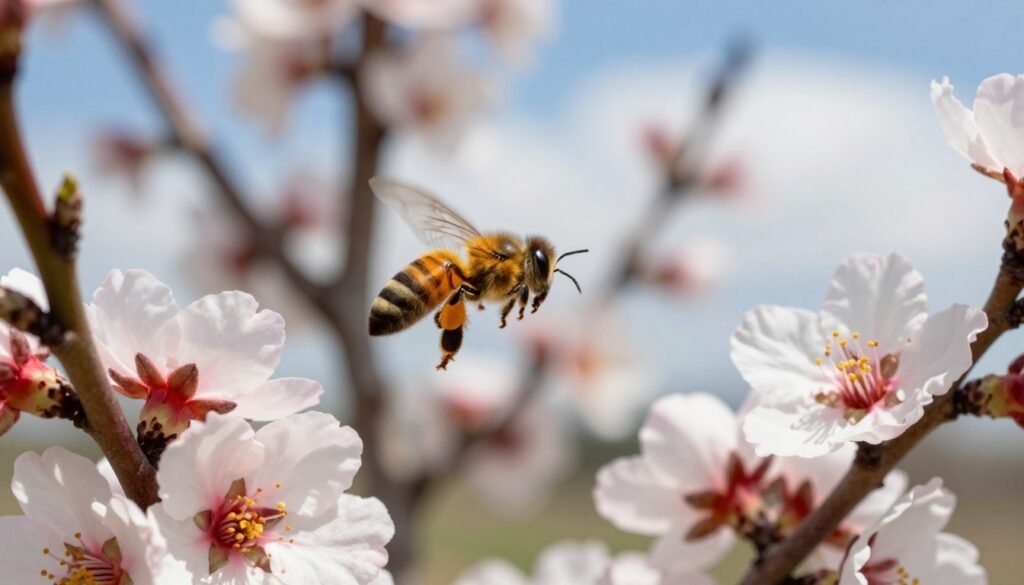
Temperature Thresholds for Foraging
Honey bees rarely fly below 55°F and are most active above 65°F. That makes early spring temperatures a critical limiter for field coverage.
Morning sun at the entrance helps colonies warm faster and start bee flight earlier. Place hives where the yard gets sun on cool days to extend foraging hours.
| Condition | Effect on Foraging | Grower Action |
|---|---|---|
| Below 55°F | Minimal flight | Expect fewer visits |
| 55–65°F | Limited activity | Consider extra hives per acre |
| Above 65°F | Peak foraging | Normal coverage |
The Role of Alternative Pollinators
Alternative species like bumblebees can supplement coverage on cool or wet days. They do not replace honey bees for large-acre management.
- Insurance: In cold regions, renting an extra hive per acre reduces risk of poor coverage.
- Colony internal heat: A strong colony maintains brood temperature for early season growth.
- Queen health: A healthy queen ensures steady brood levels and worker motivation to collect pollen.
- Monitoring: Track frame count across weather to judge true colony strength and delivery performance.
For tips on boosting population before bloom, see boost colony population naturally. Small placement and management changes can preserve valuable foraging days during a short season.
Conclusion
Simple, repeatable checks and agreed delivery terms are the fastest route to reliable bloom coverage. Clear specs for frame counts, inspection methods, and the agreed number of units per acre let both grower and beekeeper manage risk and reward. Include remedy clauses in every contract to speed resolution if a unit underperforms.
Maintaining healthy, populous bee colonies is the best way to secure pollen transfer and crop value. Following recommended units per acre and routine assessments preserves yield and profitability for almonds.
For deeper context on pollination economics and weather risks, review the research on pollination economics and field metrics (pollination economics) and how climate can affect apiary operations (climate effects on beekeeping).
FAQ
What is the industry standard for frame count when preparing colonies for almond bloom?
Most growers and pollination service providers in California expect a minimum of eight to ten full frames of adult bees per colony at delivery. Inspectors count frames with consistent bee coverage on both sides and look for a laying queen, brood, and adequate food stores. Contracts may specify a formal frame count or an equivalent colony strength metric; confirm details before moving stock.
How many colonies are typically recommended per acre for commercial orchards?
Recommendation varies by variety and orchard size, but common rates range from 1.5 to 2.5 colonies per acre for optimal fruit set. Growers with heavier cropping goals or challenging weather often request higher stocking rates. Discuss target pounds per acre and local conditions with your beekeeper to choose the right number.
What methods are used to assess colony population quickly in the field?
Inspectors frequently use a quick frame count, visually estimating frames covered with bees. The rapid “walk-by” count asks how many of the brood comb faces are at least three-quarters covered. For more precision, technicians perform a full frame-by-frame inspection or a cluster size estimate during colder months.
How does an alcohol wash help with preparation and timing?
An alcohol wash measures Varroa mite levels. Beekeepers sample a fixed number of bees and calculate mites per 100 bees. If mite counts exceed treatment thresholds, the colony may need intervention before transport. Low mite loads support stronger, more active colonies at bloom time and reduce disease spread during pollination.
What standards should be included in a pollination contract to protect both parties?
Contracts should list delivery dates, minimum colony population metric (frames or bees), payment terms, inspection windows, acceptable mortality rates, and remediation steps for underperforming colonies. Include disease declarations, queen status, and responsibility for movement and insurance. Clear inspection procedures and dispute resolution are essential.
What happens if colonies arrive under the agreed population threshold?
Contracts usually allow growers to reject understrength units, request replacements within a set number of days, or apply pro-rated penalties. Beekeepers may have a cure period to boost populations or swap boxes. Inspect and document colony counts immediately upon arrival to enforce contract terms.
How does cold or wet weather affect bee flight and orchard coverage during bloom?
Foraging drops sharply below about 55°F and during heavy rain or high winds. Cooler mornings shorten daily flight windows, so growers may increase stocking rates or schedule management to maximize warm hours. Choose hardy colonies with abundant bees and active queens to optimize early-day foraging.
Are alternative pollinators or supplemental strategies useful for orchards facing bee shortages?
Managed mason bees and licensing of bumble bees can supplement honey bees, but they rarely replace large-scale needs. Growers can also use delayed bloom pruning, staggered hive placements to minimize drift, or rental of additional colonies during peak bloom. Evaluate cost and logistical trade-offs with an entomologist or pollination broker.
What biosecurity steps protect colonies during transport and on-site placement?
Require disease declarations, routine inspections for American foulbrood and other pathogens, and minimize mixing of colonies from multiple operations. Maintain clean equipment, follow state transport regs, and provide secure water near placement sites. Promptly isolate or remove visibly sick hives.
How should beekeepers prepare colonies in January for delivery in February?
Focus on queen health, build up brood, treat for Varroa if needed, and ensure adequate winter food. Shift frames so bees occupy brood combs, reduce drifting by marking hives, and time stimulant feeding to boost nectar foragers. Schedule final strength checks a week or two before transport.
What inspection protocols can growers use on delivery day to verify colony condition?
Conduct a rapid frame count, check for a laying queen or ample brood pattern, note food reserves, and look for signs of disease or heavy mite infestation. Use a standard checklist that matches contract language and photograph any deficiencies. Immediate reporting speeds resolution.
How do winter cluster size considerations relate to early-season performance?
Healthy cluster size ensures rapid spring buildup. Colonies that maintain tight, sizable clusters over winter preserve brood and emerge stronger when bloom begins. Poor wintering—due to starvation, cold or disease—reduces forager numbers and delays pollination activity.
What role does queen quality play in orchard coverage and consistency?
A vigorous queen supports steady brood production and balanced age structure among workers, leading to reliable foraging during bloom. Re-queening with tested stock before winter increases the chance of large, cohesive adult populations by delivery.
How can growers and beekeepers handle disputes over colony evaluations?
Use the contract’s inspection and dispute clause. Engage an independent third-party appraiser or extension service to perform counts. Preserve documentation: photos, inspector notes, and time-stamped delivery records. Clear upfront standards minimize conflicts.
What adjustments should be made for orchards in cooler microclimates or higher elevations?
Increase stocking rates or request stronger colonies to offset reduced flight hours. Place hives in sun-exposed, sheltered spots and time placements to maximize warm periods. Discuss local historical bloom-weather patterns with your pollination provider.