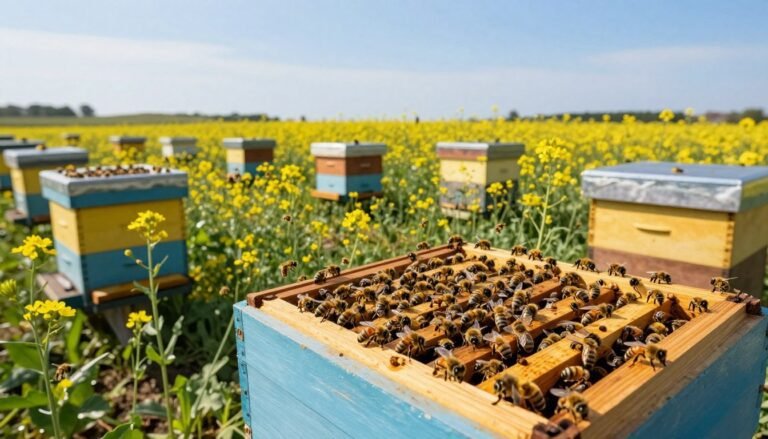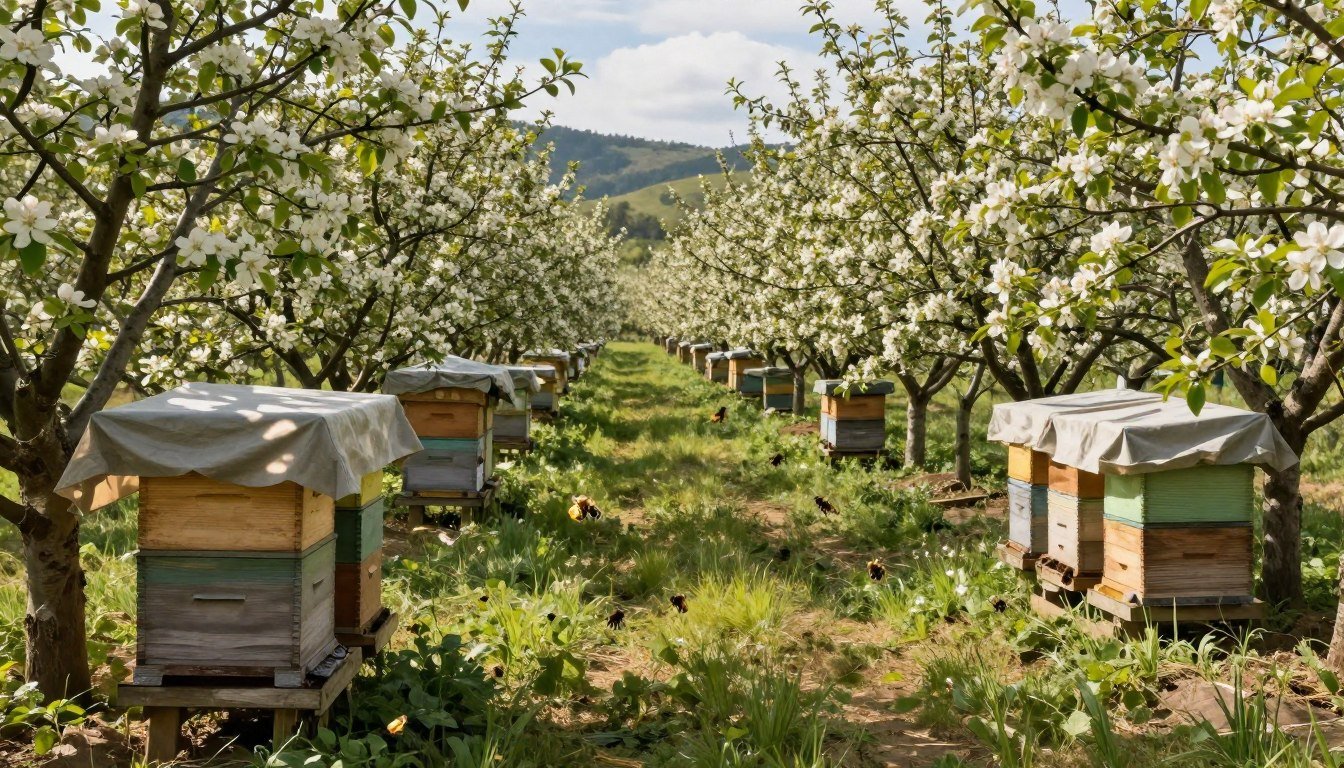
Placement matters. Professional beekeepers like Glen Buschmann of OlyPollinators learned during a BioBlitz that careful hive placement helps colonies thrive across varied orchard terrain.
When planning an apiary, a stable hive stand and smart box design protect brood and frames from heat and pests. Good equipment and a thoughtful stand reduce stress on the queen and speed recovery after swarms.
Many backyard beekeepers place their beehive near large trees to manage temperature and improve honey production today. Observing how bees use the landscape guides better flow and colony management.
For detailed placement guidance and climate tips, see this climate-based hive placement guide and the pollination and site selection guide.
Key Takeaways
- Hive placement directly affects colony health and honey output.
- A sturdy hive stand and proper box design protect brood and frames.
- Trees and thoughtful location help control heat and flow.
- Use solid equipment to reduce beetles and other threats.
- Watch bee behavior to refine placement and management over time.
Understanding Honey Bee Thermal Needs
Thermal needs drive many natural choices bees make when selecting a nest site. Small shifts in temperature change brood development and worker behavior quickly.
The Role of Deciduous Trees
Big-leaf maple canopy buffers intense midday sun and keeps a beehive cooler during summer heat. This natural cover can act like a passive cooling system.
Research shows colonies left in wooded settings often avoid the worst solar radiation. Growers and beekeepers note better honey flow when hives get afternoon relief.
Natural Nesting Habits
Honey bees naturally seek cavities in older deciduous wood. These sites provide insulation and steady microclimates that protect the queen and brood year-round.
- Professional beekeeping mimics this by choosing hive design and wood that moderate temperature.
- Colony stability improves when the hive interior stays near brood-optimal ranges.
- Simple tools and placement choices help bees maintain that balance without heavy intervention.
For a practical comparison of sun vs shade placement, see this sun vs shade placement guide.
Why Shade Strategies for Staging Hives in Orchards Matter
A well-placed beehive that gets timely relief from direct sun reduces heat stress and improves colony health. This matters because when a hive stays cooler, workers use less energy cooling the nest.
Less cooling work means more focus on nectar collection and honey storage. Many people who manage hives in orchards report clearer gains in honey yield when bees expend less energy on thermal control.
Heat stress can weaken the queen and slow brood development. Using simple tools and proper equipment helps create steady microclimates that protect brood frames.
“Providing midday relief lets the colony dedicate effort to foraging, not survival.”
| Benefit | Practical Step | Outcome |
|---|---|---|
| Energy savings | Place partial canopy or reflective cover | Workers spend more time foraging |
| Heat reduction | Use ventilated equipment and raised stands | Lower brood stress and better queen performance |
| Honey focus | Monitor and adjust microclimate with simple tools | Improved honey flow and colony resilience |
Understanding thermal needs is the first step toward responsible beekeeping. With modest changes, people can protect bees and strengthen their hive over the long term.
The Mechanics of Heat Management in the Apiary
Direct sunlight can push hive temperatures up fast, outpacing a colony’s cooling ability.
Impact of Solar Radiation
Solar radiation causes rapid thermal gain inside a hive. Workers must fan and evaporate water to lower temps.
When bees spend energy cooling, they cut back on foraging and honey production. A steady view of sun angles helps with placement and equipment choice.
Limits of Manual Cooling
Manual cooling from the colony has clear limits. Constant fanning tires bees and reduces colony growth.
Professional beekeeping uses simple tools to monitor temperature and protect the queen. Thermometers and vented boxes give better control than ad hoc actions.
“Protecting internal hive climate preserves worker energy and boosts long‑term production.”
| Issue | Practical tool | Result |
|---|---|---|
| Rapid heat gain | Internal thermometer | Early alerts to adjust ventilation |
| Worker exhaustion | Vented boxes & raised stands | Less manual cooling, higher foraging |
| Poor flow | Airflow planning and simple equipment | Improved honey production and colony stability |
For compact sites, review these small-space beekeeping tips when choosing gear and management tactics.
Leveraging Natural Canopy for Hive Protection
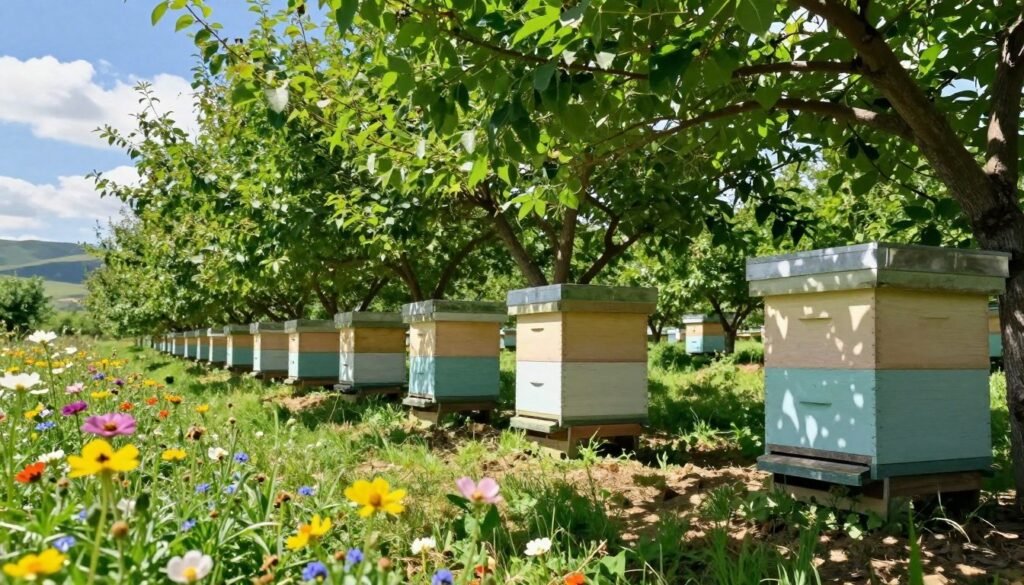
Choosing the right tree spot gives bees steady microclimates and lowers hive stress. Natural cover lets the colony avoid sudden heat spikes and preserves worker energy used in cooling.
Selecting Optimal Tree Locations
Placement matters. Set a hive stand where filtered sun reaches the brood during morning hours but reduces direct midday glare.
- Use a sturdy stand to lift the beehive and improve airflow around the entrance.
- Pick a location with dappled light so the queen and brood stay near ideal temperatures.
- Position equipment to aid ventilation; simple tools like screened bottom boards help.
- Natural cover often beats temporary covers for long‑term protection and better honey yields.
Professional beekeeping benefits from thoughtful placement and robust gear. For guidance on shelter and wind management, review windbreak options at windbreak strategies.
Implementing Artificial Shade Structures
Temporary coverings let beekeepers control light and temperature around a top bar hive quickly.
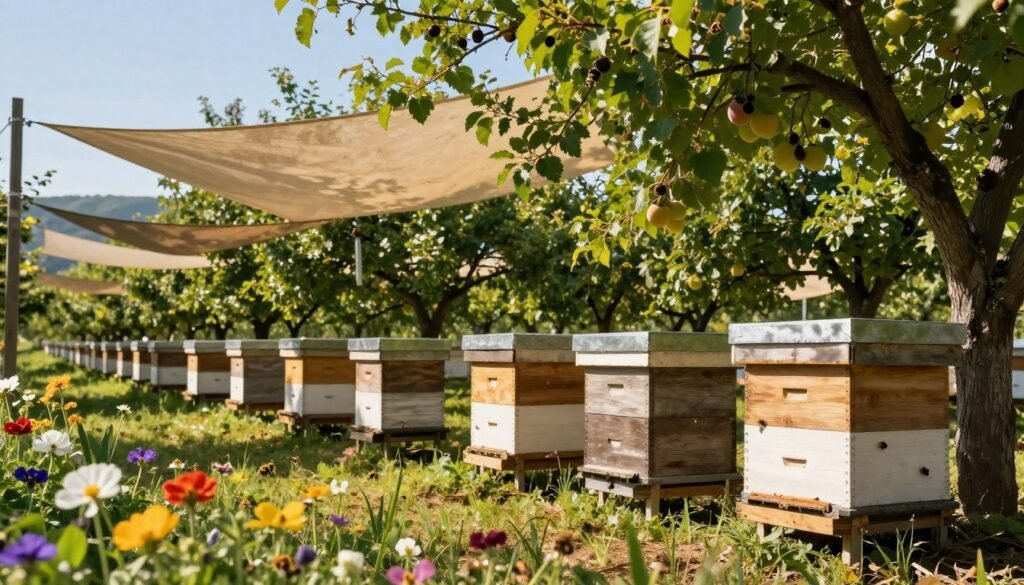
When natural trees are absent, modern beekeeping equipment like shade sails and pop‑up canopies offer reliable midday relief.
These structures give you control over how much sun reaches the hive while keeping access to frames and comb simple.
Design your top bar setup so you can lift lids and inspect the colony without dismantling supports. That clear view helps spot queen or brood issues fast.
“Artificial canopies keep bees focused on foraging rather than cooling the nest.”
Many people who run top bar hives prefer this style because it balances protection and easy management. Install lightweight shelters and pair them with the right tools to keep honey yields steady in open fields.
For a planning checklist and layout tips, see this small-scale apiary planning guide.
Balancing Morning Sun and Afternoon Relief
Placing a beehive to greet the morning sun yet avoid harsh afternoon rays boosts colony performance.
Morning light wakes the workers and warms the brood gently. Aim to give the hive early sun for a few hours so bees start foraging sooner.
Afternoon relief lowers internal heat and saves worker energy. When bees spend less time cooling, they focus on nectar and honey collection.
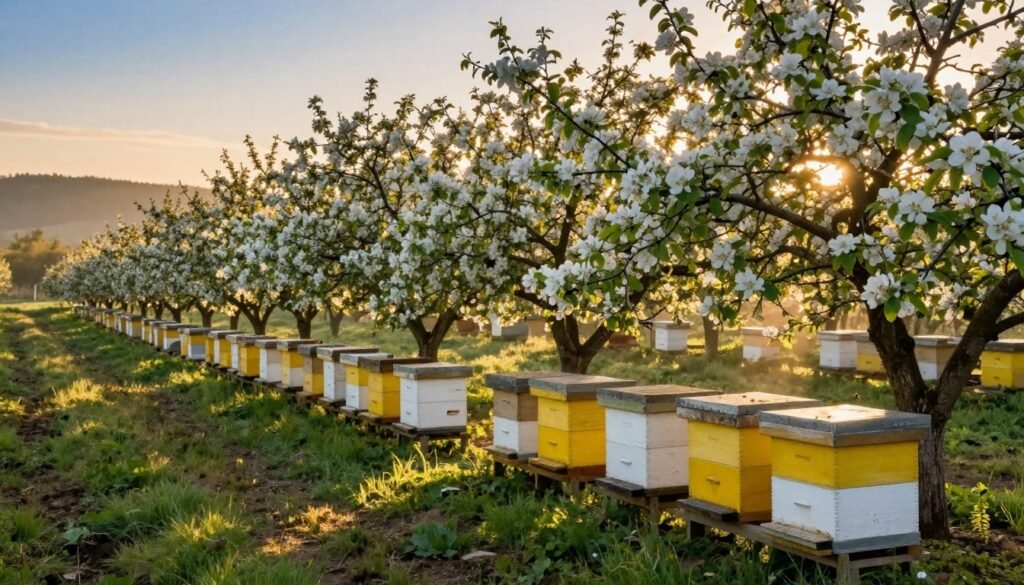
Entrance orientation affects air flow. A well-placed entrance reduces thermal load and can help prevent a swarm by keeping the queen and brood stable.
Professional beekeeping relies on observation of sun angles and equipment position. Use simple tools to record how the sun moves across your site.
- Give morning sun; limit harsh mid‑day rays.
- Set the entrance to promote steady ventilation.
- Watch queen behavior and worker activity; adjust placement as needed.
“Small changes in exposure lead to measurable gains in honey and hive health.”
For detailed technical data on apiary heat and placement, review this apiary thermal guidance.
Avoiding the Risks of Deep Shade
Too much darkness around a beehive increases moisture and gives small beetles a foothold. Keep placement choices that reduce persistent dampness while still giving bees relief from peak heat.
Small Hive Beetle Prevention
Small hive pests thrive in deep, moist cover. If a location stays dark all day, hive beetles find larval and pupation sites near the box.
Raise the box on a solid stand to improve airflow. Elevation cuts ground moisture and makes the beehive less inviting to beetles.
Ensure the entrance of a top bar hive gets some morning sun. Even brief direct light helps dry comb and lowers beetle success.
“Keep the interior dry and use simple tools to track moisture — it protects honey yield and colony health.”
- Avoid continuous deep cover that stays wet after rain.
- Design the stand so the box sits above splash and runoff.
- Monitor heat and moisture with basic equipment and act early.
| Risk | Practical design step | Expected result |
|---|---|---|
| Persistent moisture | Elevated stand and screened bottom | Improved airflow, lower beetle breeding |
| Dark, cool entrance | Orient to get morning sun | Drier comb, reduced larval survival |
| Poor monitoring | Thermometer and moisture checks | Early intervention, saved honey |
Managing Colony Energy and Foraging Efficiency
Efficient energy use inside a colony directly affects daily nectar flow and long-term production. When workers reduce time spent cooling, they make more trips to flowers and raise honey production.
Provide partial shade under trees as natural protection. A cooler hive lets the box retain brood warmth while saving worker effort.
Use well‑ventilated wood equipment and raised stands to aid airflow around the hive. Proper frames and screened bottoms help bees regulate internal heat with less work.
Watch the entrance closely to gauge activity. A steady stream of returning foragers signals good flow; slow traffic can mean heat stress or poor management.
- Energy focus: bees that don’t overheat the nest collect more nectar.
- Protection: tree cover plus ventilated wood gear improves colony resilience.
- Brood support: reduced cooling duties free resources for the queen and young bees.
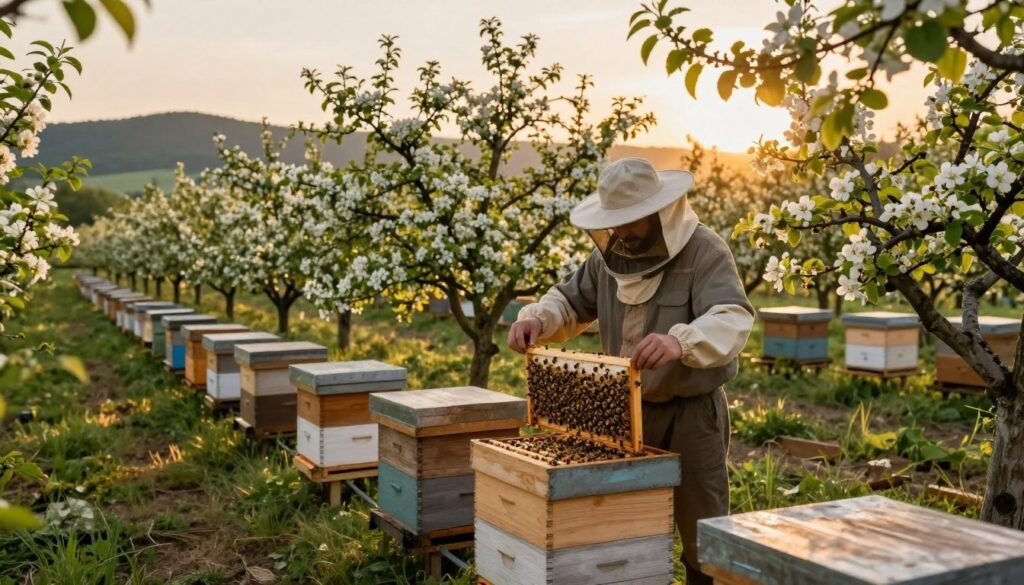
“Reducing internal workload gives colonies a measurable boost in production.”
For practical maintenance in humid areas, review these humid climate tips to protect frames and sustain forage efficiency.
Preventing Swarms Through Environmental Control
Keeping the colony cool and settled is one of the simplest ways to cut swarm risk. A calm hive reduces the impulse of bees to split and leave.
Environmental control means managing sun exposure, airflow, and moisture so the queen and brood feel secure. Good management stops the colony from sensing overcrowding or heat stress.
Use simple tools like thermometers and routine checks to spot restlessness early. When forager traffic slows or many drones appear, act quickly to adjust ventilation or space.
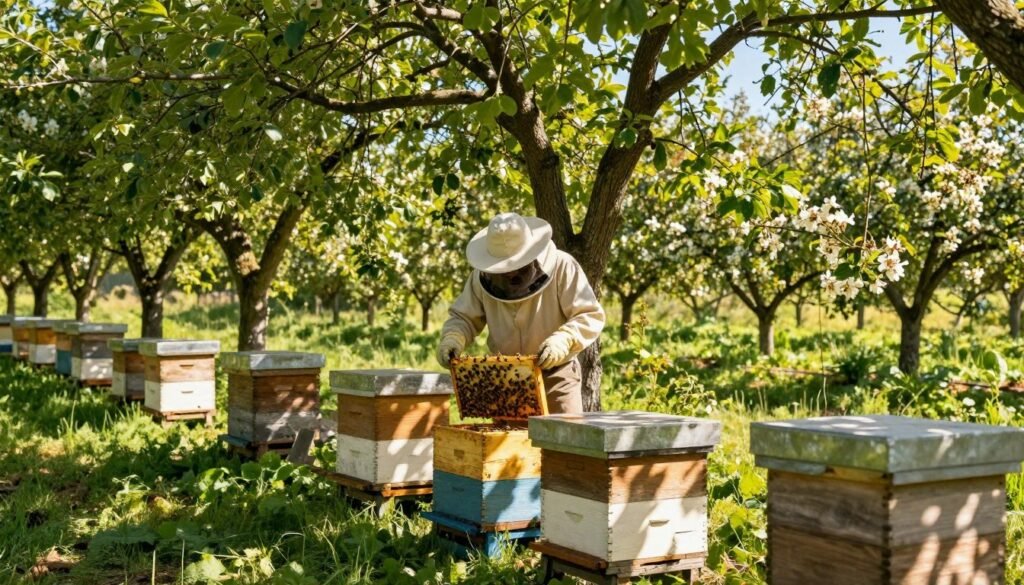
- Give morning sun and midday relief to avoid peak heat.
- Raise the hive to improve airflow and lower moisture.
- Add supers or rearrange frames before congestion grows.
Professional beekeeping emphasizes steady conditions. Stable hives keep bees focused on honey and brood, not on abandoning the site.
“A well-managed hive is far less likely to swarm than one under constant stress.”
For monitoring plans and seasonal checks, see this management checklist and a varroa monitoring calendar.
Conclusion
Simple site choices and gear keep a hive calm, boost honey production, and help a colony use energy on foraging rather than cooling. Backyard beekeepers who watch sun exposure and monitor temperature see healthier bees and better honey outcomes.
Whether you run top bar hives or standard bar hives, invest in a sturdy stand, good ventilation, and reliable tools. Today many people use professional suppliers like HONESTBEE to scale care and source quality equipment.
Manage small hive pests, especially small hive beetles, with elevation, screened bottoms, and routine checks. Practical beekeeping balances the needs of the bee and the keeper to protect brood, sustain honey, and keep colonies strong.
FAQ
What is the best overall placement for a top bar hive in an orchard to manage temperature and colony health?
Aim to place the hive where it gets morning sun and afternoon relief. Morning light helps bees warm up and start foraging early, while cooler afternoons reduce heat stress and moisture buildup. Use a low, open-facing entrance toward sunrise and position the hive off the ground on a sturdy stand to improve airflow and pest control.
How do deciduous trees help with hive thermal regulation?
Deciduous trees provide seasonal benefit: they offer shade during hot summer months and let sunlight through in winter after shedding leaves. This natural cycle helps maintain moderate hive temperatures without permanent dark conditions that invite pests like small hive beetles.
Can natural nesting habits of honey bees guide hive placement in orchards?
Yes. Wild colonies often nest in cavities with filtered light and good ventilation. Mimicking that—partial canopy cover, some direct sun, and steady airflow—supports brood development and stabilizes internal hive humidity and temperature.
How much does direct solar radiation affect honey production and brood development?
Intense midday sun raises internal hive temperatures, which can slow brood rearing and reduce nectar processing efficiency. Moderate exposure boosts foraging activity and nectar ripening. Balancing sun exposure is essential for maximizing honey flow and healthy brood cycles.
What are practical limits of manual cooling methods like wetting covers or fans?
Manual cooling can help short-term during heat waves but requires labor and can disturb bees. Wetting can increase hive humidity; fans need power and maintenance. Long-term solutions favor placement, canopy management, and hive design adjustments over frequent manual interventions.
What criteria should I use when selecting tree locations to shield my hives?
Choose trees that provide dappled shade, have minimal pollen/nectar competition with your orchard, and stand far enough to allow air movement and reduce moisture. Avoid dense evergreens that create permanent darkness and high humidity around the hive.
When are artificial shade structures appropriate, and what designs work best?
Use lightweight, breathable canopies or removable sun sails when natural canopy is absent. Designs that allow airflow—such as mesh screens or angled roofs—are better than solid coverings. Ensure easy removal for inspection and maintenance.
How do I balance morning sun exposure with afternoon shade in hive layout?
Orient hive entrances toward the east or southeast to catch morning light. Place hives near taller trees or adjustable shade screens to block harsh afternoon sun. Stagger hives to prevent mutual shading while maintaining access for inspections.
What risks come from placing hives in deep, permanent shade?
Deep shade increases humidity and mold risk, slows nectar ripening, and elevates pest pressure from small hive beetles and wax moths. Weak colonies may struggle to thermoregulate, leading to reduced honey production and higher winter losses.
How can orchard beekeepers prevent small hive beetles when using shaded sites?
Improve ventilation, raise hives on stands, use screened bottom boards, and maintain strong colonies. In shaded or moist spots, inspect more frequently, reduce exposed comb, and consider beetle traps or diatomaceous earth placements in landing areas.
How does hive placement affect colony energy use and foraging efficiency?
Hives that warm quickly in the morning let workers begin foraging earlier, increasing nectar intake. Excess heat forces bees to spend energy cooling the hive, reducing time for foraging and nectar processing. Proper placement optimizes energy allocation and boosts yields.
Can environmental control help reduce swarming incidents?
Yes. Stable temperatures, adequate ventilation, and balanced sunlight reduce heat and congestion that trigger swarming. Combine placement with routine inspections, timely supering, and swarm prevention techniques like creating space or splitting strong colonies.
What hive stand designs improve airflow and pest control in orchard settings?
Stands that raise hives 12–18 inches off the ground, made from treated wood or metal, improve air circulation and deter pests. Incorporate sloped surfaces to reduce moisture buildup and allow for screened bottom boards or removable debris trays for monitoring.
How should backyard beekeepers adapt these recommendations for small-scale setups?
For small yards, prioritize morning sun exposure and afternoon shade using flexible solutions—portable shade cloths, movable stands, or planting deciduous shrubs. Keep hives accessible, maintain strong colonies, and monitor moisture and pest signs regularly.
What tools and equipment help monitor hive microclimate without disturbing bees?
Use digital thermo-hygrometers, remote temperature loggers, and infrared thermometers to track internal and external conditions. Data helps adjust placement, ventilation, and shading without frequent openings that stress the colony.
Are there orchard management practices that support both trees and bee colonies?
Yes. Coordinate bloom timing, minimize pesticide drift by applying sprays at night or using bee-safe products, and maintain wind breaks that don’t block sun. Encourage diverse bloom sources to sustain foraging throughout the season.