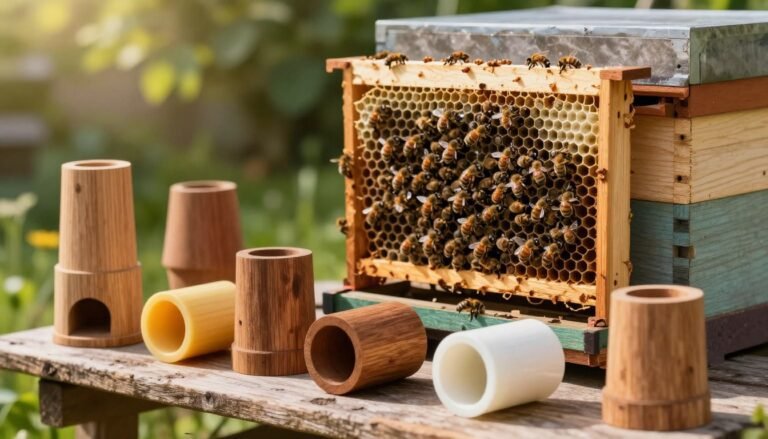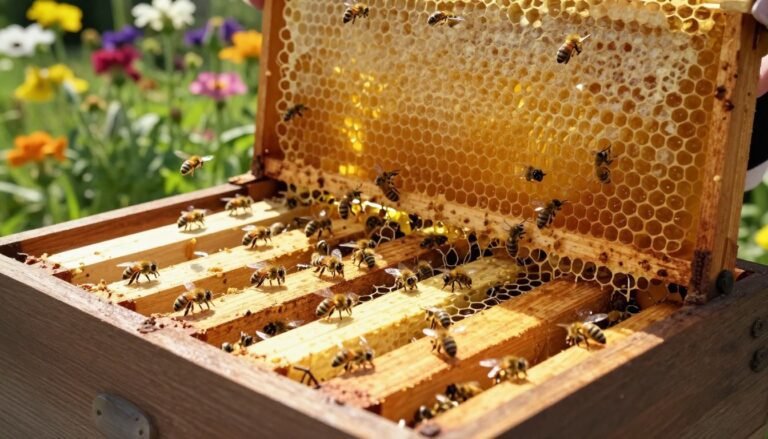
Choosing the right one can save time and protect your harvest. This guide explains key differences between two common hive devices used to clear bees from the honey super before harvest.
Proper timing matters. Apply the 24-hour rule to keep bees from finding their way back into the box and to protect capped frames during collection.
Design matters. A well-made one-way gate lets bees exit a super but blocks their return, while a poor fit can trap insects and cause stress in the hive.
Equipment choice affects workflow. Many beekeepers report that quality devices cut the number of bees left in supers and make harvests smoother.
For detailed design notes on simple conical escapes, see this technical overview at cone escape reference. For practical product picks, review a buyer’s guide at best bee escape board guide.
Key Takeaways
- Follow the 24-hour rule to prevent bees from returning to the super.
- Choose a durable device to reduce the number of bees left on frames.
- Match the gate design to your hive style to avoid trapping bees.
- Proper equipment speeds up harvest and lowers stress for the colony.
- Consult design references and buyer guides before purchasing.
Understanding the Basics of Honey Removal
Effective supers clearing starts with understanding bee movement and seasonal timing. Good planning limits stress to the colony and keeps frames intact during harvest. A professional beekeeper learns to read activity at the hive before acting.
Choose a method that matches your apiary size and schedule. Many operations use a trusted bee escape to clear the back super so frames are largely free of bees before lifting. That saves time at the extractor and reduces handling of individual bees.
- Plan the harvest window to match peak nectar flows and capped frames.
- Place the bee escape or a compatible board at the right location to guide bees out of the super.
- Check the hive the next day to confirm low bee numbers before opening frames.
Whether you are a beginner or experienced, mastering these basics improves beekeeping outcomes. Using correct equipment and timing keeps the hive healthy and speeds up final processing of the honey.
What is a Bee Escape Board
Using a one-way gate changes how bees move between boxes and eases harvest day work.
The Core Principle
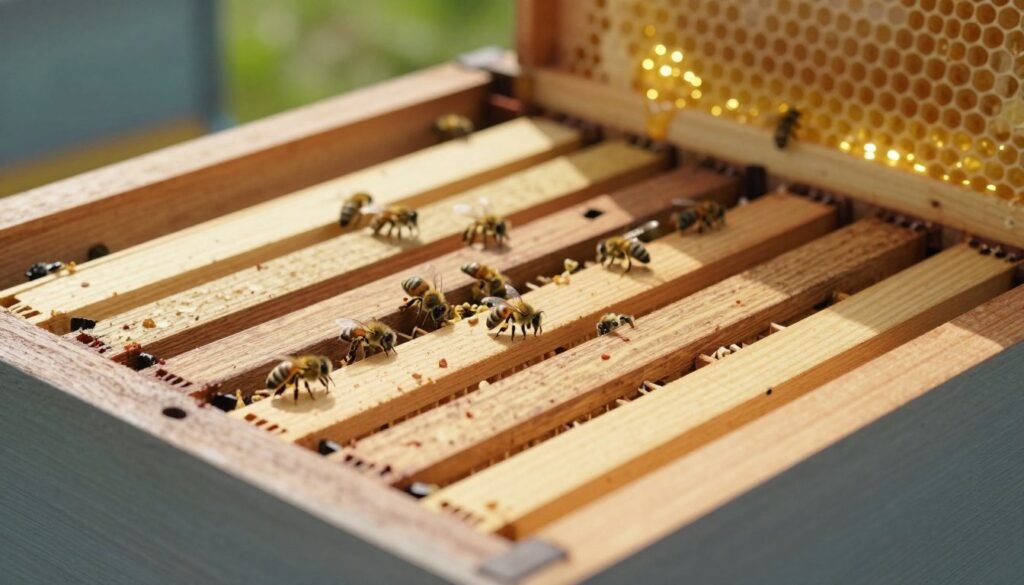
A bee escape board is an inner cover adapted with a one-way gate that guides bees out of the upper super into the lower box. The device lets insects leave but blocks their return. This simple flow control lowers traffic in the frames before you lift them.
The Primary Benefit
Many modern boards are made from durable plastic. That material resists propolis buildup and keeps the mechanism working all season.
Install carefully: orient the entrance hole to the correct side so no bees are trapped in the super. A properly fitted bee escape often removes the need for a bee brush during the process.
The calmest harvests come when bees move out on their own, not when they are forced by smoke or quick handling.
| Feature | Why it matters | Practical tip |
|---|---|---|
| One-way gate | Directs bee traffic downward | Face hole toward lower entrance side |
| Plastic construction | Reduces propolis and wear | Wash between uses |
| Inner cover fit | Prevents bees from re-entering | Check alignment after placement |
- Result: a quieter, low-stress harvest with fewer bees on frames.
Exploring the Escape Cone vs Escape Board for Honey Removal
Choosing the right clearing tool changes how quickly and calmly you can lift full supers.
Both a bee escape and an escape board aim to clear the honey supers within about 12 to 24 hours. A fume method will act in minutes, but it often disturbs the hive more. Many beekeepers accept a longer wait to keep the apiary calm.
https://www.youtube.com/watch?v=i9TA9CT3UzQ
Pick equipment based on your workload. If you manage many hives, fast-acting tools save time. If you run a small yard, the quieter board approach reduces stress on the colony and lowers the chance of tainting the honey.
Seal the super completely when using these devices. A tight fit prevents bees from finding alternative entrances back into the box and keeps frames clear.
- Plan two visits: one to install the device, one to remove cleared supers after suitable hours.
- Avoid chemicals: many prefer a passive board because it needs no fume or repellents.
Allowing bees to move on their own often yields the calmest harvests.
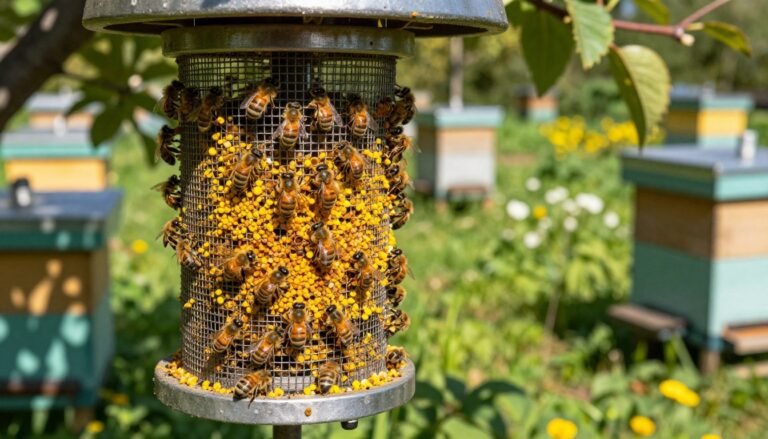
For a practical look at how a bee escape board workflow can speed processing, and to compare other tools like pollen traps, see this pollen trap review.
The Role of Porter Bee Escapes
A Porter-style device uses simple mechanics to move bees out of the upper box without force.
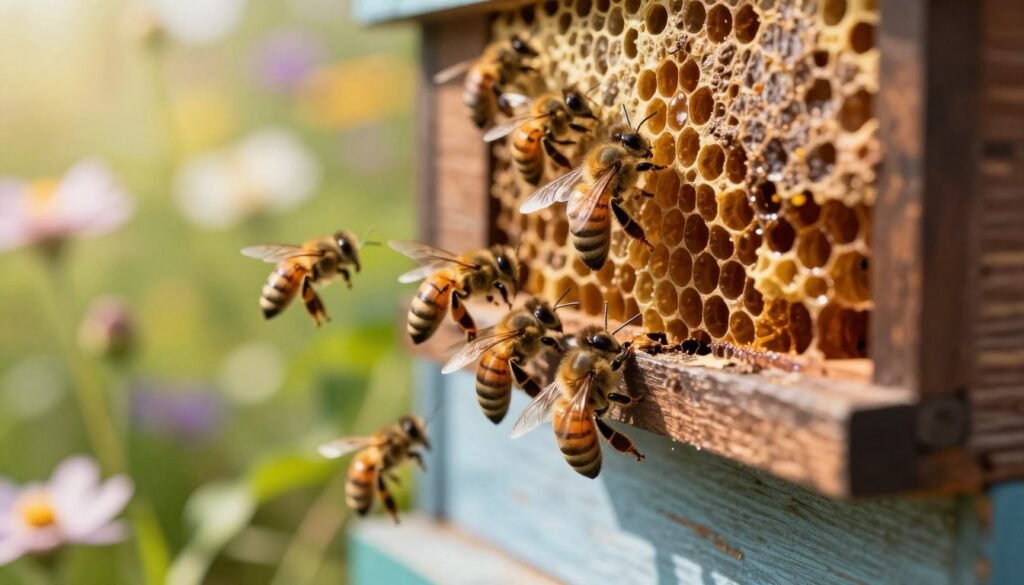
The classic Porter bee escape is a small insert fitted into the inner cover. It uses spring-loaded wires to let a bee leave the super but makes return difficult. This protects capped frames and eases harvest day work.
Design Variations
Common models include a 4-way and an 8-way Porter bee escape. The 8-way gives more exit routes and can clear supers faster across a busy apiary.
- Insert the unit so the hole in the inner cover lines up with the device.
- Install multiple Porter bee escapes on large yards; they cost little and scale well.
- When placed correctly, bees can leave but cannot push back through the wires.
Simple, durable escapes reduce hive stress and keep frames cleaner at harvest.
| Model | Exit Routes | Best use |
|---|---|---|
| 4-way Porter | 4 | Small to medium apiaries |
| 8-way Porter | 8 | Large operations, faster clearing |
| Standard insert | 1–4 | Single super or test use |
Benefits of Using Triangle and Cone Designs
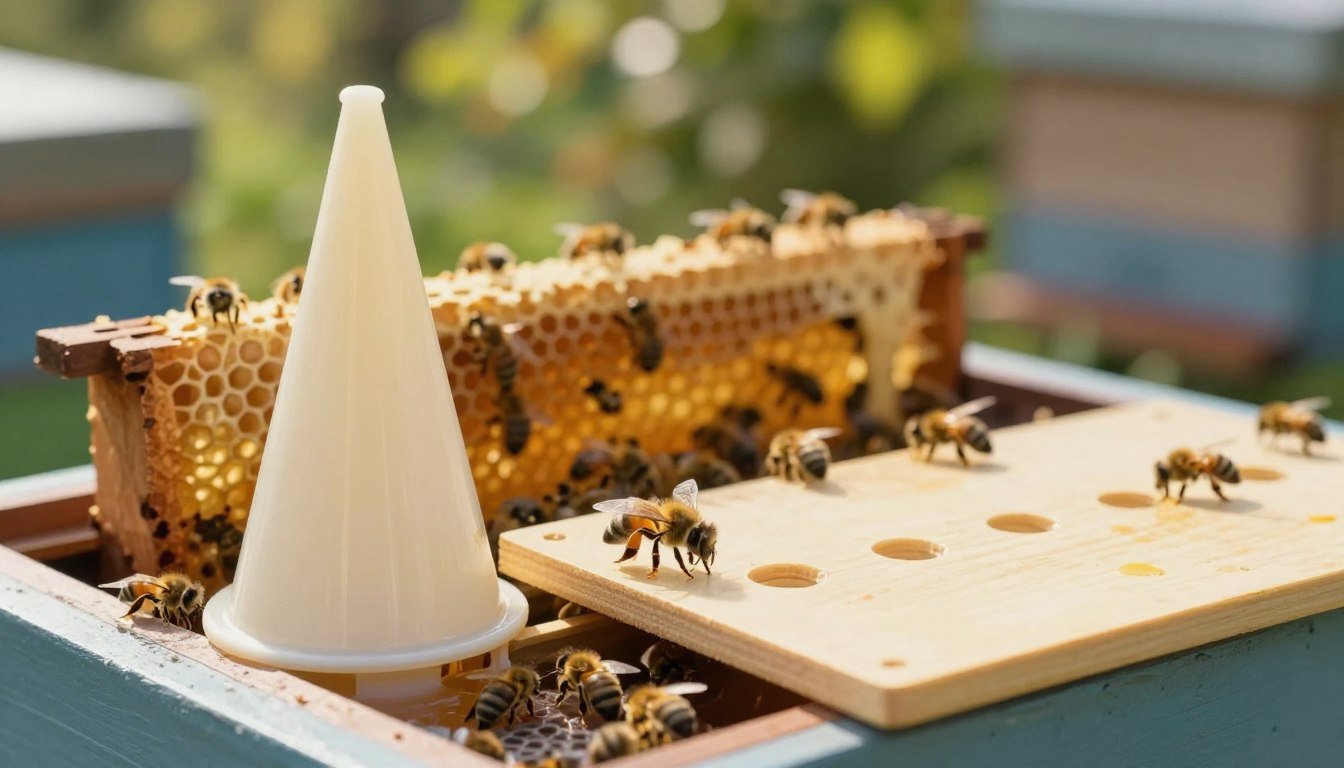
Many beekeepers choose a triangle design because it resists clogging and needs less upkeep. The triangular funnel is simple and robust. It relies on smooth, plastic surfaces that prevent propolis buildup.
Unlike spring-loaded inserts, this approach has no moving parts to jam. That reduces maintenance during a busy season. It also lowers the chance of trapping bees in tight spaces.
- Durability: Plastic triangle funnels last through repeated use and cleaning.
- Reliability: Funnels guide bees out of the supers and make return difficult.
- Scalability: Less clogging means faster clearing across many hives.
Funneling designs work quietly and let bees move on their own, protecting capped frames.
| Design | Key advantage | Best use |
|---|---|---|
| Triangle funnel | Low maintenance, resists propolis | Large apiaries and repeated harvests |
| Porter bee escape | Compact, inexpensive | Small yards or single supers |
| Plastic insert | Easy to clean, durable | Season-long service with minimal care |
For practical tips on clearing supers and preparing frames, see a detailed guide at how to remove bees before harvest.
Critical Rules for Successful Honey Harvesting
Harvest success depends on a few strict rules that protect frames and keep the colony calm.
Ensuring No Brood Is Present
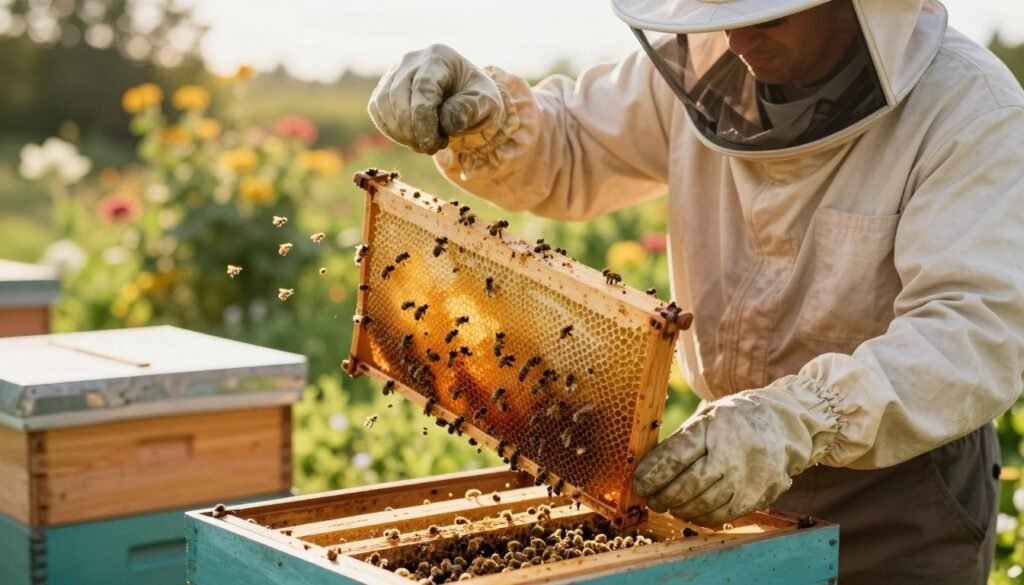
Before fitting a bee escape or an escape board, inspect the top boxes for any brood. Nurse bees will not abandon larvae, and brood in supers ruins the harvest and risks comb damage.
Adhering to the Time Limit
Follow the 12–24 hour guideline. Remove the device within this window to stop bees from finding another way back into the super. This short time frame also lowers wax moth and robber risk.
Checking for Alternative Entrances
Seal notches, holes, or side entrances before you set the device. Also use a queen excluder to keep the queen in the brood chamber and prevent eggs in the honey supers.
A quick brush of the frames can clear stragglers, but proper placement makes that step rare.
“A tight cover and a timely check are the two best defenses against robbers and wax pests.”
| Rule | Why it matters | Quick fix |
|---|---|---|
| No brood in supers | Prevents mixed comb and lost frames | Inspect before installation |
| Remove within 12–24 hours | Limits re-entry and pests | Mark time of placement |
| Seal alternative entrances | Stops bees using other routes | Check inner cover and box sides |
For guidance on selecting a quality device, see a practical guide to selecting a bee escape board. For seasonal hive checks that cut pest risks, review winter prep notes at winter hive tips.
Common Pitfalls and How to Avoid Them
Small oversights can undo a careful plan and leave bees packed on your frames.
Installing an escape board upside down is a frequent error. That simple flip traps bees in the super instead of guiding them into the hive. Double-check orientation before you lower the cover.
Failing to seal the inner cover lets insects bypass the device. Seal gaps and notches so traffic moves only through the intended route. A tight fit cuts re-entry and speeds clearing.
If you use a fume board, apply repellents carefully. Too much product or the wrong placement agitates the colony. Test on a single box first to confirm results.
Leaving the device more than 24 hours risks bees finding alternate routes back into the supers. Mark the placement time and plan a return visit within the window.
Inspect equipment before use. A warped board or a poorly fitting box will compromise any method. Replace damaged parts and keep spare inserts on hand.
Never set a device on a super that contains brood. Nurse bees will not abandon larvae, and frames stay occupied no matter how well the escape functions.
“Check fit, seal openings, and confirm brood-free supers to avoid harvest delays.”
| Pitfall | Why it happens | Quick fix |
|---|---|---|
| Upside-down unit | Rushed installation | Verify orientation, label devices |
| Unsealed inner cover | Missed gaps or notches | Seal edges, use foam or tape |
| Excess fume use | Incorrect dosage or placement | Test small, follow instructions |
| Left on too long | Lack of time tracking | Set alarm; remove within 24 hours |
| Brood in super | Poor inspection | Inspect frames before placement |
Comparing Efficiency Across Apiary Sizes
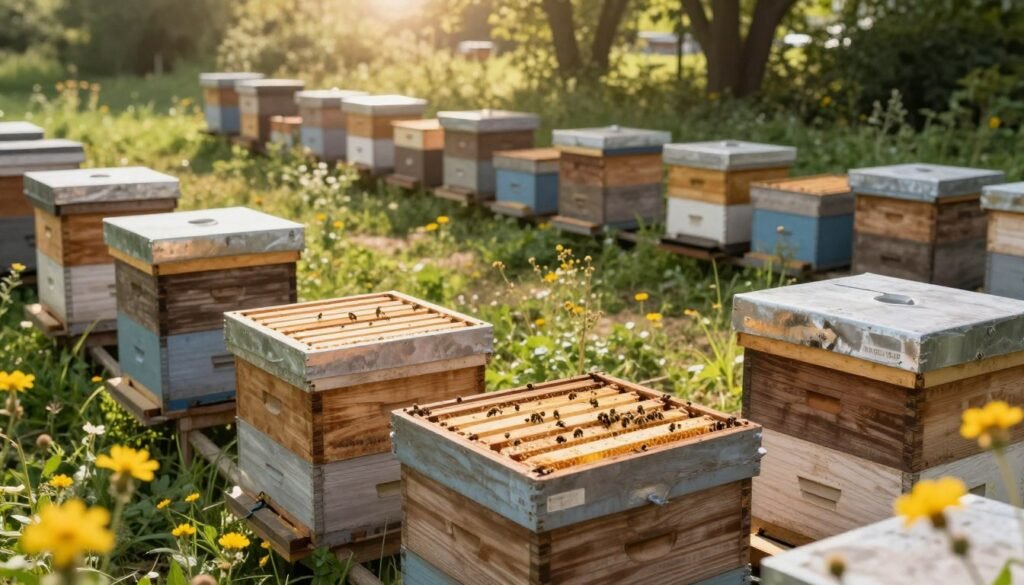
Efficiency shifts with scale. A small yard often benefits from a simple bee device that is inexpensive and easy to use. It minimizes gear and saves time when you manage only a few hives.
Commercial operations tend to favor speed. Fast-acting fume systems or multi-way units clear many supers quickly. That saves labor but can raise stress on the colony.
Time spent installing and removing devices matters most when you have dozens of boxes. Labor adds up, so choose equipment that scales with your workflow.
Use a stand to hold heavy supers while you work. It reduces strain and keeps frames level. Fit a queen excluder in larger yards to prevent accidental movement of the queen between boxes.
“Match tools to the size of your operation, and prioritize methods that protect brood and frames.”
| Operation | Recommended equipment | Time impact | Notes |
|---|---|---|---|
| Small apiary | Simple bee device, porter bee or single insert | Low | Cost-effective; easy to manage |
| Medium yard | Multi-way escapes, stands | Moderate | Balances speed and colony calm |
| Commercial | Fume systems, rapid clears | High speed | Requires strict queen control and planning |
Regardless of scale, the goal stays the same: clear bees from frames quickly and safely. For guidance on gear selection, see a short guide to choose a beehive and related equipment choices.
Alternative Methods for Clearing Supers
Several practical methods let beekeepers clear full supers when a passive funnel isn’t ideal.
Manual brushing with a bee brush removes workers directly from frames. This is gentle but takes time and is best for small yards.
A leaf blower can push bees out of a super fast. It works when you need speed, but it is loud and needs care to avoid damage to bees and comb.
Fume boards act quickly in commercial settings. They use a repellent to send bees down into the hive in minutes. Use them only with proper training and ventilation.
The triangle plastic funnel remains popular. Many beekeepers prefer it because it needs no chemicals and stands up to repeated use.
Ceracell, a New Zealand maker, uses small cones that make re-entry into the super difficult. Their units are a durable option when you want a low-maintenance tool.
“Protect the queen with a queen excluder and seal all entrances before placing any clearing device.”
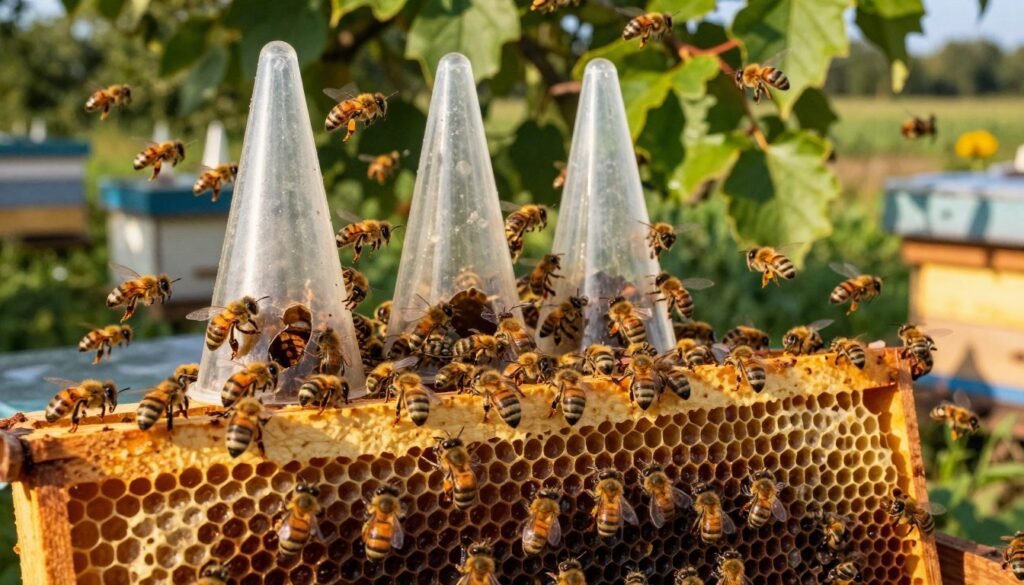
| Method | Best use | Pros | Cons |
|---|---|---|---|
| Bee brush | Small apiary, selective frames | Gentle, precise | Slow, labor intensive |
| Leaf blower | Medium yards needing speed | Fast clearing | Loud, can stress bees |
| Fume board | Commercial operations | Very fast | Requires correct handling |
| Triangle funnel / plastic | All sizes | No chemicals, low upkeep | Slower than fumes |
For a compact look at a classic option, see the Porter bee escape board.
Conclusion
Simple tools and good timing keep bees calm and protect comb during harvest.
Choosing between an escape cone or an escape board depends on your apiary size and how much time you can wait. The classic Porter bee escape still earns trust for small yards, while triangle-style boards give low-maintenance durability for larger operations.
Success rests on a few non-negotiables: confirm no brood in the supers, seal all alternate entrances, and remove the device within the recommended window. Follow these rules and you cut stress on the colony and preserve comb quality.
Begin with a simple board or escape to build experience. For product picks and fit guidance, see this concise guide to the best bee escape.
FAQ
What are the main differences between a cone-style bee escape and a board-based escape system?
Cone-style devices use a one-way passage that lets bees exit a honey super but makes re-entry difficult. Board systems sit between supers and lower boxes and channel bees through holes or fitted ports. Cones are compact and simple; boards provide a larger, often removable interface that can be used with multiple super configurations and queen excluders.
How does a Porter bee escape work and when should I use one?
A Porter bee escape is a small, spring-loaded one-way valve installed in an inner cover or board. It opens for bees to leave the super and then closes to block their return. Use it during a scheduled honey pull, usually 24–48 hours before lifting supers, to clear bees while minimizing disturbance and brood risk.
Can I rely on a triangle or cone design for large-scale honey harvests?
Triangle and cone designs scale well when used correctly. They clear bees efficiently in single supers or stacked setups, but for large apiaries you may need multiple escapes per hive or a mix of cones and escape boards to maintain throughput. Monitor clearance time and add more exits if bees remain after the standard window.
How long should I leave an escape device in place before removing supers?
Typical clearance windows range from 12 to 72 hours depending on weather, colony strength, and device type. Start with 24–48 hours for most Porter-style or cone devices. Check at the shorter end in hot weather to avoid swarming risks and extend time in cool or wet conditions.
What precautions ensure I don’t pull brood with the honey harvest?
Use a queen excluder below supers to keep brood in the brood chamber. Inspect frames for brood before installing escapes. Avoid devices that allow worker movement from brood areas into supers. If you find brood during inspection, postpone removal until the frames are brood-free.
Are plastic escapes as effective as metal or wooden ones?
Plastic escapes are lightweight, affordable, and resist corrosion. Metal parts can be more durable and tolerate heavy use; wood blends with traditional equipment and provides thermal buffering. Effectiveness depends more on fit and placement than material—ensure a tight seal and correct orientation for any type.
What common mistakes should be avoided when using a bee escape board?
Avoid leaving gaps that allow bee re-entry, failing to check alternative entrances, and neglecting to remove propolis that can jam valves. Do not install escapes directly over weak supers or brood frames. Also avoid using excessive fume methods that can harm bees or contaminate honey.
How do I check for alternative entrances and prevent bee traffic from bypassing the device?
Inspect hive stands, bottom boards, and any gaps between boxes. Close or block side entrances and feeder holes during the clearance period. Use a clean inner cover and position the escape centrally to direct flow through the intended path.
What are effective alternatives to escapes for clearing honey supers?
Alternatives include using a bee brush for gentle sweeping, a fume board or shop-vac with a specialized adapter, or timed manual forcing with smoke and minimal handling. Spacing supers at an angle with a slatted rack can also encourage bees to move down without specialized escapes.
Does using an escape board affect wax or honey quality?
Properly used escapes do not affect honey or wax quality. Avoid chemical fumigants that can taint honey. Clean escapes and remove propolis so no residues contact frames. Mechanical devices that prevent bee return preserve comb integrity and reduce damage during extraction.
How do I choose the right number of escapes per super?
For single, shallow supers one escape may suffice. For deep or heavy supers, two devices spaced apart speed clearance. In dense apiaries or high-strength colonies increase the number to prevent bottlenecks. Balance cost and labor with observed clearance times.
Can I use a queen excluder with cone-style devices and boards?
Yes. A queen excluder fits below the honey super and above brood boxes, working with any one-way device to prevent the queen from entering honey supers. Ensure the excluder does not impede bee movement through the escape path or create unintended bypasses.
Is it safe to use bee escapes in cold or wet weather?
Cold or wet conditions slow bee movement and can extend clearance times. Avoid extended exposure that traps bees in supers overnight in very cold weather. Check forecasts and delay escape use during prolonged rain or temperatures near freezing to protect colony health.
What maintenance do Porter escapes and boards require between seasons?
Clean propolis and wax buildup, lubricate moving parts on spring-type Porters, and replace cracked plastic or warped wood. Store escapes in a dry, pest-free place. Inspect holes and seals each season to ensure one-way function remains reliable.
Where should I position a brush and how to use it during final clearing?
Use a soft bee brush along frame tops and sides during inspection or when a few bees linger. Work gently toward the escape or hive entrance to avoid crushing bees. A brush is best for targeted removal rather than full-super clearing, which is more efficient with escapes or boards.