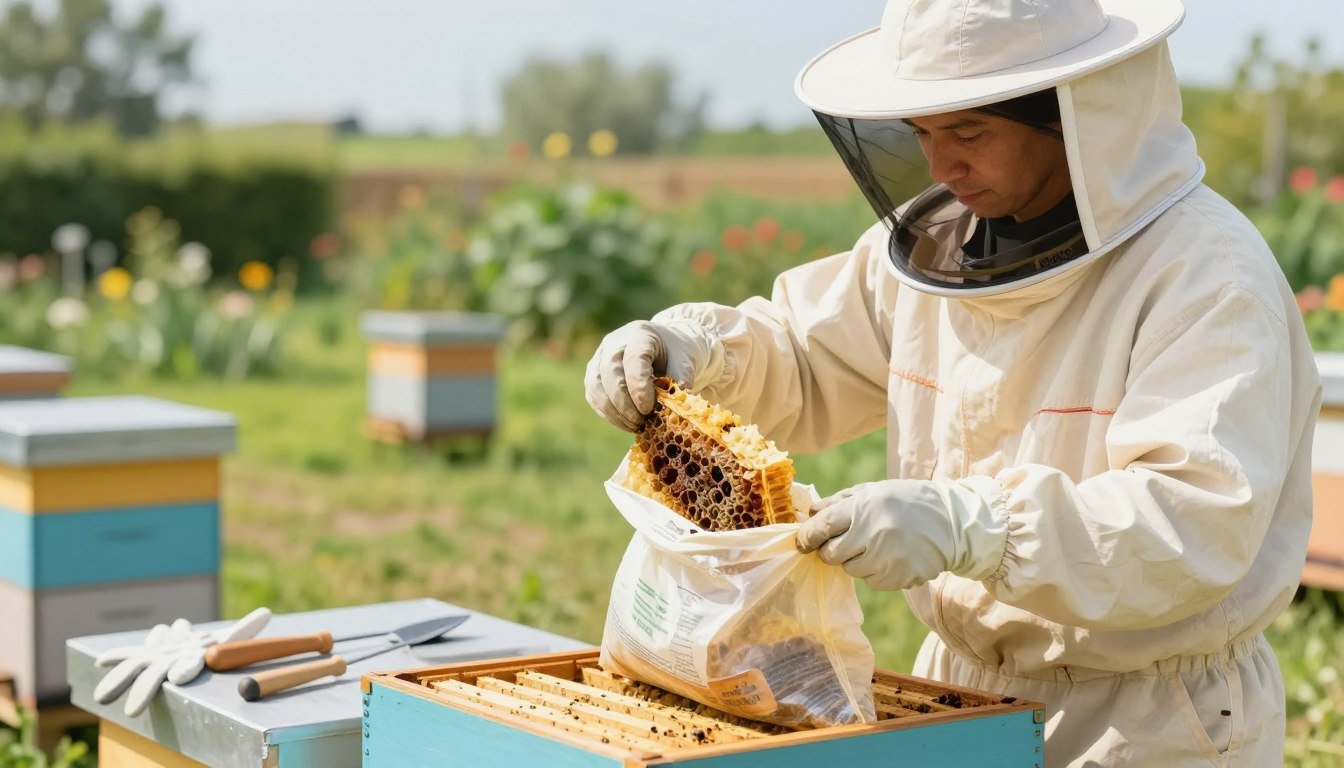
Protecting an apiary begins with prompt, clear action when American foulbrood is suspected. The National Bee Unit provides formal diagnosis for notifiable disease and guides required reporting. Follow their direction so healthy bee colonies face less risk.
Honey bee biology makes infections spread quickly among bees and hives. A single colony can pass spores through wax, frames, and honey. That is why strict equipment hygiene matters for every beekeeper.
AFB spores remain viable for decades, so careful removal and treatment of contaminated frames prevents long-term threats. Learn best practices for handling frames and tools, and consult resources such as repair damaged hive boxes when maintaining gear.
Key Takeaways
- Report suspected cases to the National Bee Unit for official diagnosis.
- Maintain strict hygiene for equipment, wax, and frames to protect colonies.
- AFB spores pose a decades-long risk; act quickly and deliberately.
- Keep records and follow legal protocols to safeguard neighboring apiaries.
- Consult trusted guides on frame and hive maintenance for safe handling.
Understanding the Risks of Infected Brood Comb
Pathogens in used frames can move between colonies fast, making a single compromised hive a threat to an entire apiary. This rapid spread raises the overall risk to bees and reduces honey yields.
Equipment such as frames, boxes, and tools can hold spores that resist decay for years. If left unaddressed, that contamination can cause long-term damage to colony health and future hives.
- Rapid transmission: disease moves quickly between nearby colonies through robbing and drifting.
- Persistent spores: equipment can shelter viable pathogens for decades.
- Production loss: failing colonies mean less honey and weakened apiary resilience.
Recognizing the danger in old comb helps beekeepers act early. For formal guidance on American foulbrood and reporting, consult American foulbrood disease guidance.
| Risk | What it affects | Mitigation |
|---|---|---|
| Pathogen spread | Multiple colonies | Isolate and inspect frames |
| Long-term contamination | Equipment and future hives | Sanitize or remove affected gear |
| Colony collapse | Honey production | Follow strict hygiene and monitoring |
Identifying Signs of Foulbrood in Your Apiary
Early visual checks let beekeepers spot signs of foulbrood before an outbreak spreads. Regular inspection reduces risk and helps with prompt diagnosis of american foulbrood in a hive.
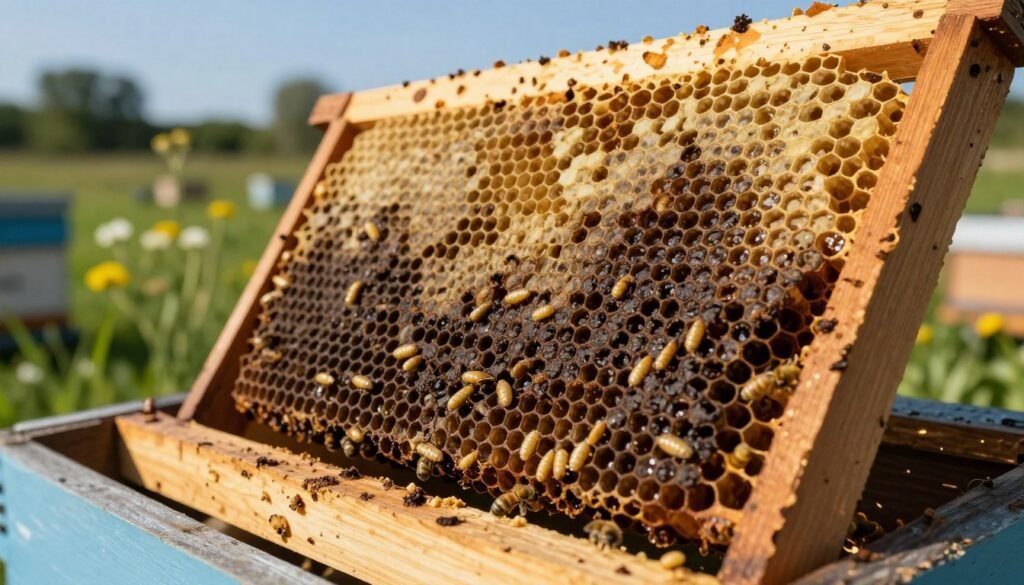
Recognizing AFB Spores
The National Bee Unit notes that afb spores resist extremes of temperature and humidity. These spores can remain in wax and frames for years, so even old equipment can be a persistent source of infection.
Monitoring Colony Health
Check frames for sunken or perforated cappings and irregular brood patterns. Scales on cell walls, patchy brood, or unusual odors are classic signs of disease.
- Clean tools between inspections to avoid transferring pests or pathogens.
- Cold conditions make propolis removal from queen excluders easier for thorough checks.
- Early diagnosis protects nearby bee colonies and preserves honey production.
How to Dispose of Infected Brood Comb Legally
Prompt removal, documented destruction, and strict transport safeguards form the core response when american foulbrood appears in a hive. Follow your local Bee Inspector’s instructions for the required course of action and official diagnosis.
Burning frames and comb is the only fully effective method for eliminating AFB spores. Do this in a deep pit so no honey or wax remains accessible to other bees or wildlife.
Move contaminated material in a large, sealed container to prevent spore spread during transit. Treat the hive box, frames, and any equipment as contaminated material subject to regulatory rules.
Record the time, method, and any observations in your apiary logs. Keeping accurate notes helps your inspector and creates a clear trail for future management.
- Do not attempt to salvage parts of the colony; re-use is a serious risk.
- Follow official guidance and report actions if requested; see the AFB factsheet for more information.
Essential Safety Precautions for Beekeepers
A clear safety plan is the first line of defense when handling frames or other equipment that may carry disease. Keep instructions simple and act deliberately to lower risk for yourself and nearby colonies.
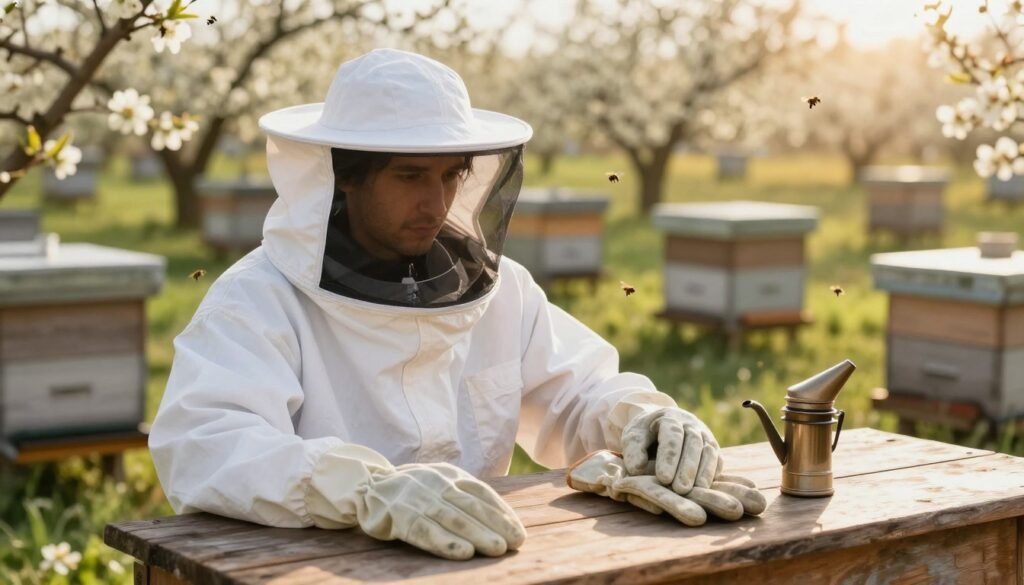
Personal Protective Equipment Requirements
Beekeepers must wear appropriate PPE when working with suspect frames. Thick rubber gloves and eye protection reduce the chance of cuts and exposure.
Nitrile gloves are ideal for inspections. They are disposable after contact with a potential infection and cut cross-contamination risk.
- Use sealed gloves when handling honey, brood, or contaminated equipment.
- Keep a bucket of water nearby during any work that uses heat or flame.
- Protective clothing should be cleaned carefully: close zips and tuck hoods before washing.
- Follow label directions when using chemical disinfectants to avoid personal harm.
Routine precautions protect the bee, the colony, and your apiary. Small steps now prevent larger problems later.
Initial Cleaning and Debris Management
Start by clearing loose debris so spores and pests have no hiding places in frames or boxes. Scrape wax and propolis off runners and corners onto cardboard or newspaper. Collect the waste in a sealed container for removal.
Place frames and small hive parts in a chest freezer at -20°C for at least 48 hours. This method kills wax moth pests and reduces live pests before further handling.
After freezing, clean internal corners of the box and frame runners with a suitable tool. Remove all organic material before any chemical solution or heat method is applied.
Burn collected debris promptly. A clean work area prevents cross-contamination among colonies and protects honey and equipment.
For detailed regional guidance see the best management practices. For tips on repairing cross combs and handling frame runners, consult this fix cross-comb guide.
| Step | Tool | Timing | Outcome |
|---|---|---|---|
| Scrape propolis and wax | Scraper, cardboard | Immediate | Removes hiding material |
| Freeze frames | Chest freezer | 48 hours | Kills wax moth pests |
| Clean corners | Hook, brush | After freezing | Removes spores and debris |
| Burn debris | Sealed container, fire pit | As collected | Prevents spread within apiary |
Methods for Scorching Wooden Hive Components
Scorching wooden hive parts with controlled heat removes entrenched residues and cuts pathogen risk. This method darkens timber and helps kill spores that survive in wax and propolis. It works well on solid wood frames, boxes, and other equipment.
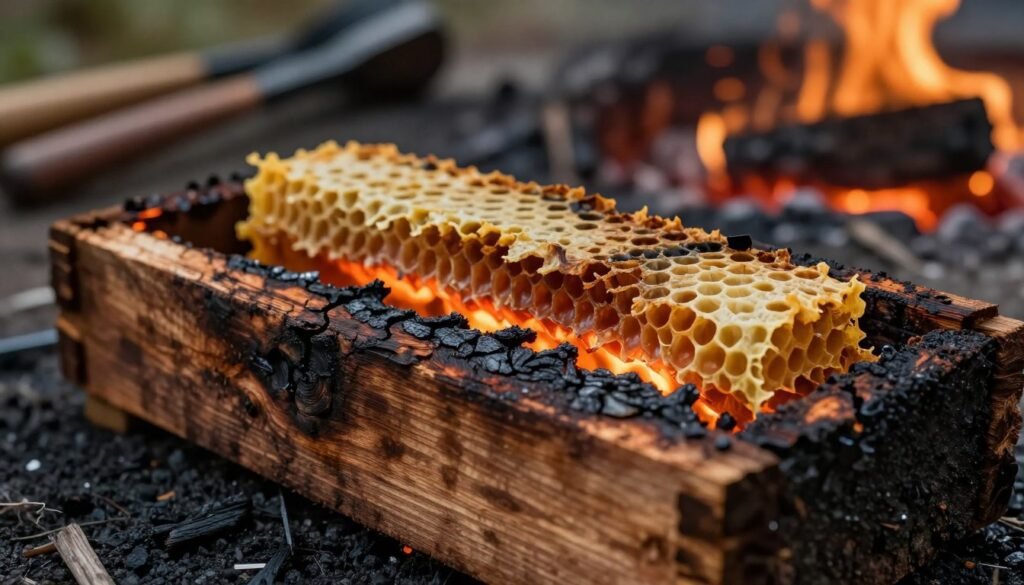
Blow Torch Techniques
Use a propane torch and the tip of the blue flame for steady, even passes. Move slowly until the wood reaches a uniform coffee-brown color.
Be thorough in corners and cracks where propolis and spores hide. Apply the flame to frame runners and box edges, not to plastic hives or polystyrene, which will melt.
Safety During Scorching
Always work on a stable, non-flammable surface. Keep a bucket of water and a fire extinguisher nearby. Wear thick gloves and eye protection while heating wood.
Monitor the wood for smoldering and allow time for cooling before returning equipment near bees. Regular scorching of wooden material helps lower disease pressure across colonies and supports honey production.
| Step | Action | Key point |
|---|---|---|
| Prep | Clear debris, wear gloves | Reduces spread during handling |
| Scorch | Use blue-flame tip, aim for coffee-brown | Kills spores in wood surface |
| Cool | Douse smolders with water if needed | Prevents accidental fires |
| Inspect | Check corners and runners | Ensures thorough treatment |
Chemical Disinfection for Hive Equipment
Chemical disinfectants offer a practical line of defense when thermal methods are unsuitable for certain hive parts.
Immersion in a 0.5% sodium hypochlorite solution for twenty minutes is proven to kill afb spores and many other bacteria. Use a large container so every surface of boxes, frames, and plastic parts is fully submerged.
Prepare the bleach mix with cool water. Sodium hypochlorite breaks down faster in warm water and loses effectiveness against spores.
Wear protective gloves and eye protection when handling disinfectants. After soaking, rinse thoroughly with clean water and allow items to dry in sunlight. Sunlight adds a natural sanitizing effect for wax and plastic.
For tools, a washing soda mix (1 kg to 4.5 L water) cleans grime and lowers the risk of disease transfer between colonies. Regular use of this method helps keep inspections safe.
- Tip: Use sealed containers for transport of used solutions and never re-use spent bleach.
- Record the time and treatment in your apiary log for traceability.
For preventative guidance on related hive problems, see this prevent chalkbrood resource.
Managing Queen Excluders and Specialized Parts
Queen excluders deserve focused attention because material and design change how they respond to cleaning and disease control. Inspect excluders during routine checks and note any contact with known infection.
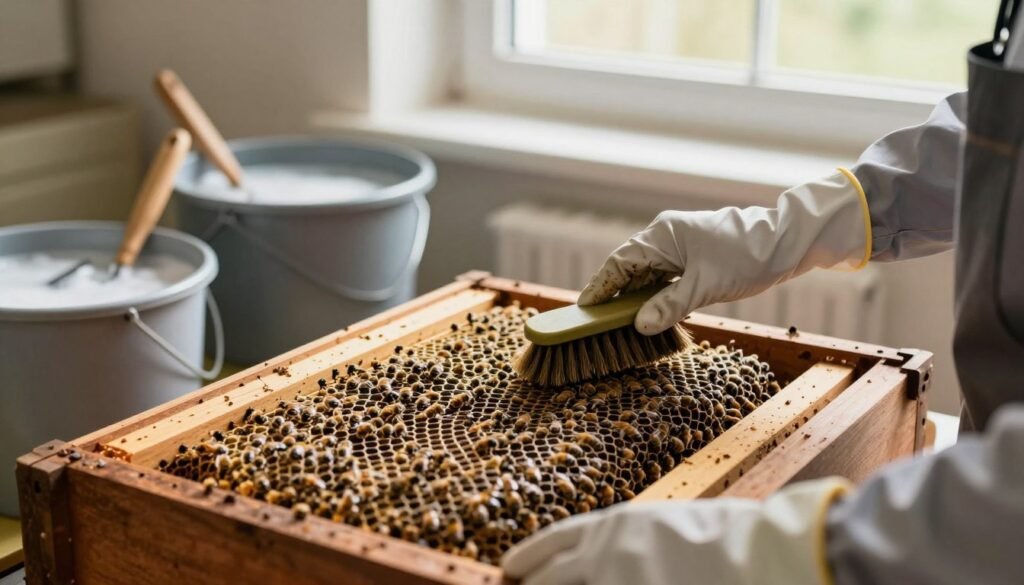
“Protect small parts as carefully as frames; they carry equal risk for spread.”
Cleaning zinc slotted excluders requires a hard rule: if they have been in contact with foulbrood, burn them. Zinc slotted material cannot be reliably decontaminated for reuse when spores are involved.
Practical care for other excluder types
- For non‑contaminated parts, scrub with a concentrated washing soda solution and a dash of liquid soap. Rinse in clean water and dry in sunlight.
- Wear rubber gloves while handling strong solutions to protect skin and prevent cross‑transfer between hives.
- Wire excluders can be scorched with a blow torch, but move carefully to avoid melting solder joints.
- Plastic excluders should be treated like plastic boxes: chemical disinfection is the preferred method before reuse.
Keep excluders free of propolis and wax buildup. Propolis is brittle in cold conditions, so winter work often makes removal simpler and reduces stress on bees and colonies.
Proper Handling of Protective Clothing
Clean, well-kept protective clothing is a vital barrier that keeps spores off your hands and out of the hive. Treat suits and gloves as part of your everyday equipment.
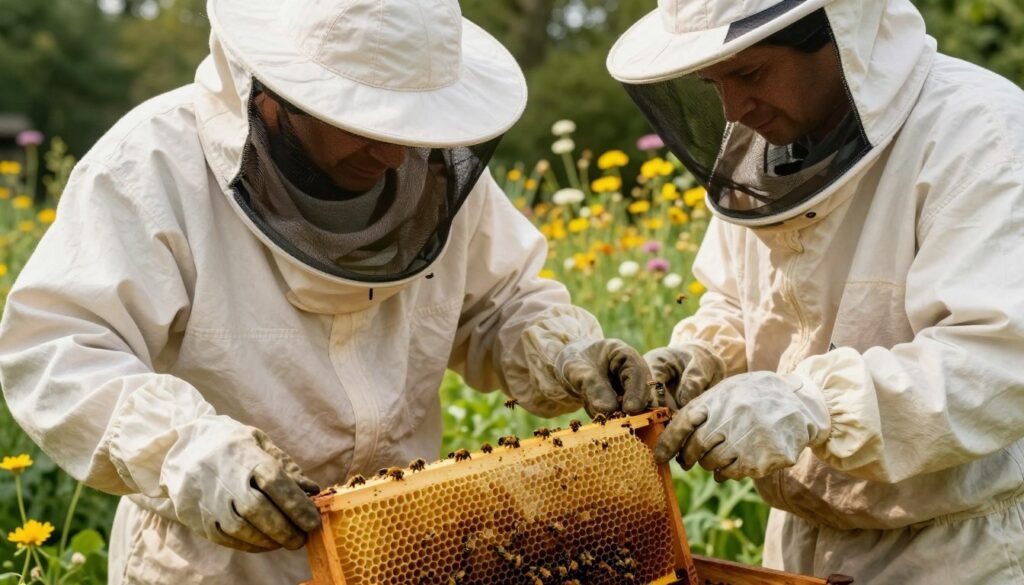
Wear nitrile gloves for inspections. They change quickly between colonies and cut cross‑contamination risk. If a pair contacts foulbrood, discard them immediately and use a fresh pair.
- Launder suits regularly: add a small amount of soda crystals to detergent to lift honey and propolis stains.
- Rinse gear: use clean water after any chemical or bleaching solution before drying.
- Store clean items in a sealed, dry area so spores and pests cannot reach the material.
“Proper handling of clothing is as important as cleaning frames and tools.”
Record any contact with suspect disease in your apiary log. For formal cleaning guidance see this cleaning and sterilisation guide, and consult practical rescue and gear tips at bee rescue techniques.
When Destruction is the Only Option
When infection has taken hold, removal and secure destruction may be the only choice for protecting neighboring colonies. A clear, documented plan keeps the apiary safe and helps meet legal obligations after a confirmed diagnosis.
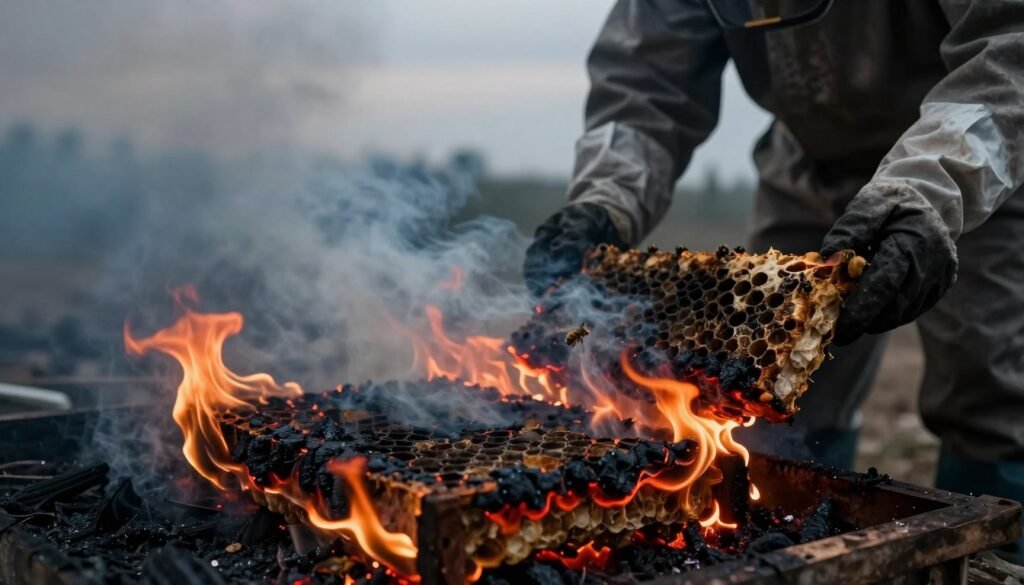
Burning Infected Material
Wooden frames, boxes, and other contaminated material should be burnt in a pit at least 45 cm deep. Cover the pit after burning so no unburnt honey or wax attracts wildlife or other bees.
Keep a sealed container ready for small parts and propolis before burning. Use water nearby and observe local fire rules during the process.
Regulatory Reporting
American foulbrood is a statutory notifiable disease. You must report suspected cases to the National Bee Unit and work closely with your local Bee Inspector.
Follow the inspector’s guidance for the destruction process, record the time and method used, and never attempt to salvage honey, wax, or frames. These materials can carry afb spores and bacteria for years and pose an ongoing risk to bee colonies and beekeeping neighbors.
Conclusion
A clear end‑of‑season routine keeps spores and other threats from returning next spring.
Maintaining a healthy apiary requires steady cleaning and careful care of equipment and frames after every season. Stay informed about disease guidance and regulatory steps that protect your honey bee colony and neighboring colonies.
When serious infection appears, prioritize the safety of your bees and the environment. Proper handling of comb and decisive action preserve hive productivity and protect honey supplies. For practical tips on repairing and managing cross combs, see this fix cross‑comb resource.
FAQ
What are the legal options for getting rid of AFB-contaminated frames?
State and federal rules vary, but options commonly include on-site destruction by burning, deep burial in a permitted facility, or handing material to an approved waste contractor. Contact your state apiary inspector or the USDA APHIS office before acting. Always document the action and location, and follow required reporting steps.
How can I tell if a colony has American foulbrood (AFB)?
Look for sunken, perforated brood cappings, a rotten odor, and brown pupal remains that pull into a sticky, ropy strand. Confirm with a lab test or your state apiary inspector for AFB spores before taking irreversible steps.
What immediate steps should I take after confirming AFB in a hive?
Isolate the affected colony, limit movement of frames and bees, wear protective gloves, and contact your state apiary inspector. Avoid transferring equipment or honey until you have official guidance to reduce spore spread.
Are there approved chemical treatments for contaminated woodenware and tools?
Yes. Strong caustic solutions like 10% sodium hydroxide or commercial sterilants approved for beekeeping can disinfect metal tools and some wood. Follow manufacturer directions, neutralize rinses, and ensure chemical disposal complies with local regulations.
Can I salvage wax or honey from an AFB-affected hive?
Do not reuse brood comb or brood wax from infected colonies. Honey may carry spores and should be tested before use. Many jurisdictions require destroying or rendering contaminated honey into products not fed to bees, such as heat-processed human food, under supervision.
Is scorching or torching wooden hive parts effective against AFB spores?
Scorching woodenware with a propane torch can destroy spores on surfaces. Burn until charcoal forms and then recoat or replace severely damaged parts. Follow safety procedures and local burn restrictions; check with your inspector whether burning on-site is allowed.
What personal protective equipment should be used when handling infected material?
Use nitrile or heavy rubber gloves, a bee suit with veil, and washable footwear. Wear eye protection when using chemicals or a torch. Treat protective clothing as contaminated and launder or dispose of it according to guidance.
How should I clean and store hive boxes after treating them for disease?
After chemical disinfection or scorching, allow boxes to dry fully in sunlight if possible. Store cleaned equipment separately from active hives and label it as treated. Replace any boards that remain cracked, heavily stained, or charred beyond repair.
What is the recommended method for destroying frames that cannot be saved?
Burning in a controlled, permitted fire is common and effective. Alternatively, deep burial at an approved landfill or incineration by licensed waste handlers meets many legal requirements. Always get authorization from your state apiary program first.
How should I handle queen excluders, metal slides, and zinc parts contaminated with AFB?
Metal excluders and zinc components tolerate heat and caustic baths. Scrub away propolis, then soak in an approved sterilant or apply a torch carefully. Rinse and neutralize chemical residues before reuse and keep records of the cleaning method used.
What records should be kept after disposing of infected materials?
Keep dates, GPS location of destruction or burial, the method used, inspector contact details, and photos. Maintain inventory of destroyed frames and equipment for your hive records and any required reporting to state agencies.
When is burning the only acceptable option and what permits are required?
Some states mandate destruction by burning for confirmed AFB cases. If burning is required, secure local burn permits and follow air-quality and fire-safety rules. Coordinate with your state apiary inspector for required oversight and documentation.
Can I use household bleach to disinfect hive parts?
Household bleach (sodium hypochlorite) can disinfect some surfaces but is less reliable on stained wood and organic residues. If used, apply a properly diluted solution, rinse thoroughly, and avoid reusing heavily impregnated wood. Prefer approved sterilants or heat for better spore control.
How long do AFB spores remain infectious in contaminated material?
AFB spores are extremely resilient and can remain viable for decades in wax, wood, and comb. That persistence is why complete destruction, approved sterilization, or permanent isolation of contaminated equipment is necessary to protect other colonies.
Who should I contact for a confirmed diagnosis and legal guidance?
Contact your state apiary program or extension service first. The USDA Animal and Plant Health Inspection Service (APHIS) can provide additional federal guidance. Local beekeeping associations like the American Beekeeping Federation can also connect you with resources.
What precautions protect neighboring apiaries during disposal actions?
Work on calm days to limit drifting bees, isolate the infected apiary, cover or seal transported material, and perform disposal activities away from other yards. Notify nearby beekeepers and the state inspector before major actions to coordinate containment.