Published March 31, 2026 · Last Updated August 26, 2026
HOJ Innovations has guided warehouses for over 50 years, helping teams choose the right material handling equipment to match unique facility needs.
Selecting the right pallet truck starts with a clear look at weight, load capacity, and lift height. A manual pallet is often the first tool considered when moving heavy loads across tight warehouse spaces.
Design, fork size, and maneuverability matter when you move heavy pallets in varied areas. Whether a manual or an electric pallet, the correct choice boosts safety and daily productivity.
For practical guidance on moving heavy beehives and related transport tools, see this resource on recommended mechanical equipment: recommended mechanical equipment.
Key Takeaways
- Match equipment capacity and fork dimensions to your load and space.
- Manual pallet jacks suit short runs; electric pallet lifts help long shifts.
- HOJ Innovations offers expert advice based on decades in the industry.
- Correct design and lift height improve safety and efficiency.
- Consider maneuverability and warehouse layout when choosing a truck.
Understanding the Role of Material Handling in Commercial Hives
Material handling shapes daily workflows in any active warehouse, where moving loads safely is nonnegotiable.
Pallet truck tools bear weight that people should not lift by hand. This reduces strain and lowers injury risk in your facility.
A clear operations plan paired with the right equipment boosts productivity. Teams move supplies faster and with less fatigue when they use the correct pallet jacks and trucks.
“Effective handling systems protect workers and speed up every shift.”
Choosing between a manual pallet or an electric pallet affects daily workflow and lifting demands. Understanding different types helps you match capacity, fork width, and maneuverability to your aisles and loads.
- Structured processes reduce mistakes during operations.
- Right design improves maneuverability in tight warehouse aisles.
- Proper use of jacks increases both efficiency and safety.
| Tool | Typical Capacity | Use Case |
|---|---|---|
| Manual pallet jack | 3,000–5,500 lb | Short runs, simple lifts, low cost |
| Electric pallet truck | 3,000–8,000 lb | Long shifts, heavier loads, tighter effort |
| Specialty truck | Varies by model | All-terrain or unusual pallet sizes |
Learn more about integrating heavy-handle solutions in beekeeping operations with this guide on industrial handles and practical hive selection techniques: industrial handle uses and choosing a hive.
Evaluating Your Operational Needs and Workspace
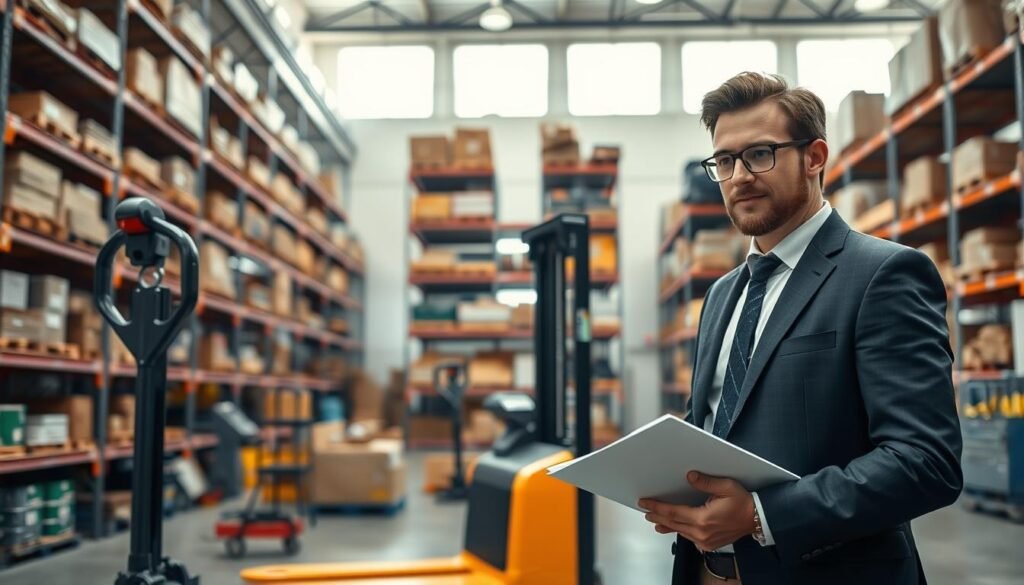
Start with a clear site survey. Walk aisles to note floor type, traffic flow, and any clean zones with strict sanitation rules. Record shelf heights and door widths to check if a pallet jack will clear them.
Assessing Workspace Environment
Identify whether this is a regular warehouse or a food-area that needs extra cleaning. Sanitation needs affect the choice between a manual pallet and an electric pallet model.
Measure fork length and lift height. If forks are too short, loads will be unstable. Ensure lift height matches your shelving to avoid damage during handling.
Defining Daily Task Requirements
List typical loads, weight, and how often each pallet is moved. This step reveals required capacity and whether you need single-shift manual use or powered support.
“Matching design and capacity to daily operations cuts downtime and raises safety.”
- Check if the facility needs low-profile forks or longer forks to support irregular pallets.
- Decide if a lighter manual unit or a powered truck will improve efficiency and reduce lifting strain.
- Include safety protocols in daily operation plans to protect staff during frequent handling.
| Factor | What to Measure | Decision Impact |
|---|---|---|
| Aisle & door width | Clearance in inches | Determines truck design and maneuverability |
| Fork length & forks | Fork reach vs pallet size | Affects load support and stability |
| Shelving height | Lift height needed | Prevents collisions and improves workflow |
For noise and vibration issues near sensitive stacks, consider linked solutions like noise-reducing hive stands when planning layout changes.
Comparing the Best Pallet Jack Option for Commercial Hives
Start by evaluating how often loads move, the distance covered, and aisle clearance. That quick scan helps match a truck type to your daily operation.
Manual Pallet Jacks
Manual units are common in small warehouses. They handle typical capacities of about 4,500–5,500 lbs and work well for short runs.
These trucks are low cost and simple to maintain. Use them when moves are brief and floors are smooth.
Electric Walkie Models
Electric walkie trucks add motorized drive and lift. They cut worker fatigue and speed up long-distance handling.
Electric pallet trucks remove fumes and lower noise, making them ideal inside a warehouse.
Specialty and All-Terrain Solutions
For yard work or uneven ground, all-terrain trucks keep materials moving. They protect loads and offer better traction outdoors.
Choose a manual electric truck when you need both simple handling and powered support during frequent heavy loads.
“Always verify capacity and fork length to protect inventory and people.”
- Check capacity against your typical weight to avoid overload.
- Prioritize maneuverability in narrow aisles to keep productivity high.
- Match lift height and fork design to your pallets and shelving.
Essential Technical Specifications for Reliable Performance
Accurate measurements make the difference between smooth daily operations and costly stoppages.
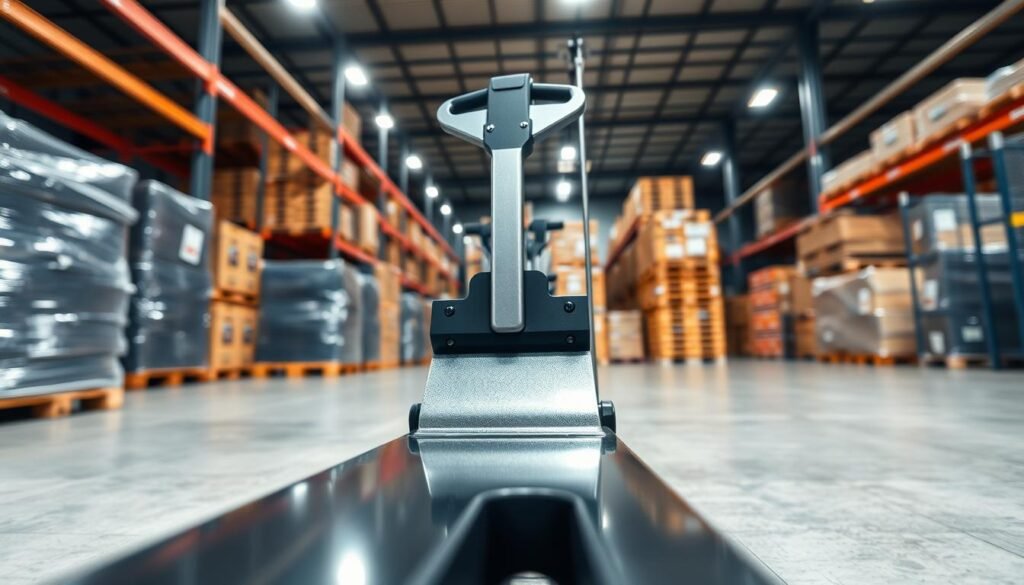
Start with fork dimensions. The average width of one fork is about 7 inches. Most units have 48-inch long forks to fit a standard GMA pallet (40″ x 48″). Match fork width and length to your pallet openings to keep loads stable during moves.
Understanding Fork Dimensions and Lift Height
Lift height matters when you store inventory on shelving. Verify the lift and capacity of your pallet truck at the heights you will use. Loads shift differently as lift increases, so check rated capacity at working height to avoid tipping.
Decide between a manual pallet and an electric pallet based on typical weight and daily distance moved. Manual units suit short, light runs. Motorized trucks reduce fatigue on long shifts and heavy loads.
“Choose equipment with the right forks and rated lift to protect inventory and people.”
- Confirm fork length equals or exceeds pallet depth (48″ for GMA pallets).
- Ensure fork width aligns with pallet openings (avg. 7″ per fork).
- Always cross-check capacity at the required lift height.
- Keep the hydraulic lift well maintained to ensure reliable handling.
For design notes on heavy-transport systems, see this commercial migratory pallet design.
Key Factors to Consider Before Making Your Purchase
A smart buy begins with a simple inventory of weights, aisle widths, and how long operators run each shift. Verify that the rated capacity meets the heaviest loads you move daily. Confirm fork dimensions match your existing pallets to prevent unstable lifts.
Maneuverability matters. Test a pallet truck in tight spaces and narrow aisles. Wheels, steering, and turning radius affect speed and safety in busy warehouse lanes.
OSHA guidelines require proper training and routine maintenance for safe operation. Schedule regular checks and document maintenance to extend service life and keep operators safe.
- Match capacity to peak weight and expected lift heights.
- Prioritize safety features such as brakes and clear controls.
- Balance budget against productivity—manual units suit short runs; an electric pallet jack helps long shifts.
- Pick a reputable maker to ensure parts and service are available.
For guidance on warehouse hand trucks and matching designs to facility needs, see this warehouse hand truck guide. A clear checklist reduces risk and keeps material handling efficient.
Conclusion
Matching capacity to daily tasks and space constraints prevents delays and reduces risk. Choose a pallet jack that meets your load needs, lift height, and aisle clearances. That helps teams move loads safely and keeps workflows steady.
Whether a manual pallet or an electric pallet truck, prioritize equipment with clear controls and reliable maintenance plans. Train operators and document upkeep to extend service life and protect staff.
Measure fork length and verify capacity before purchase. Small choices in truck design change handling speed and safety across the warehouse. Use this guide to select the right pallet truck and improve daily material handling performance.
FAQ
What types of material handling equipment work best in commercial hive facilities?
Facilities that process or move heavy loads often rely on a mix of manual pallet trucks, electric walkie units, and specialty all-terrain models. Manual trucks are cost-effective for short runs and light loads. Electric walkies (ride-on or walk-behind) boost efficiency and reduce operator fatigue for frequent moves. All-terrain and specialty forklifts handle uneven surfaces or tall stacks. Match the equipment to load weight, frequency, aisle width, and surface conditions to optimize safety and productivity.
How do I assess my workspace to choose the right handling equipment?
Measure aisle widths, door clearances, and floor surface type. Record typical load weights, pallet dimensions, and lift heights. Note traffic patterns and loading dock constraints. These simple metrics reveal whether a compact manual unit or a powered walkie with higher lift and tighter turning radius is necessary. Also consider battery charging space and maintenance access for electric models.
What daily task requirements should influence my purchase decision?
Track the number of trips per shift, peak load weights, and whether operators need to lift pallets to racking heights. High-frequency moves and heavy loads favor electric equipment with higher capacity. Occasional lifts and lighter loads can often be done safely with a manual truck. Prioritize operator ergonomics, cycle time, and downtime tolerance when evaluating models.
What are the main differences between manual trucks and electric walkie models?
Manual trucks are simple, low-cost, and low-maintenance; they rely on operator strength and are ideal for light-duty, short-distance moves. Electric walkies provide powered propulsion and lifting, improving speed and reducing fatigue. They require batteries, chargers, and periodic service but deliver higher throughput and consistency in busy operations.
When should I consider specialty or all-terrain solutions?
Choose specialty machines if your facility has uneven floors, outdoor ramps, or nonstandard pallet sizes. All-terrain units and articulated handlers keep loads stable on rough surfaces. Specialty forks, extra-wide frames, or reinforced components help with oversized or irregular materials used in some beekeeping supply operations or outdoor storage yards.
Which technical specifications matter most for reliable performance?
Focus on capacity (weight rating), fork length and width, lift height, and overall machine length for maneuverability. Battery runtime and charge time are critical for electric units. Inspect wheel material and steering design for floor type, and check serviceability and parts availability to reduce downtime.
How do fork dimensions and lift height affect daily operations?
Fork length must match your pallet and crate sizes to ensure stable support. Wider forks or adjustable fork spacing can help with nonstandard skids. Lift height determines whether you can load trucks or reach rack levels. Choose a lift that clears your tallest storage requirement with a safety margin.
What safety features should I prioritize when buying handling equipment?
Look for reliable braking systems, operator presence controls, horn and lights, and overload protection. For electric units, consider emergency disconnects and clear battery access. Proper training, signage, and routine inspections complement built-in safety features to reduce incidents.
How do cost and total cost of ownership compare between manual and electric models?
Manual units have lower upfront costs and minimal maintenance but can increase labor effort and slow throughput. Electric models cost more initially and require battery upkeep but often lower labor costs and increase productivity. Calculate expected life, maintenance, energy, and downtime to determine total cost of ownership for your operation.
Are there preferred brands or models known for durability in heavy-use environments?
Reputable manufacturers such as Toyota Material Handling, Crown Equipment, Raymond, and Hyster offer durable manual and electric units with strong service networks. Choose models with proven track records in warehouse environments and readily available replacement parts to keep equipment online.
How can I improve maneuverability in tight spaces?
Select compact frames, shorter fork lengths, and units with tight turning radii. Electric walkies with articulated steering or center-pivot designs often navigate narrow aisles better than standard trucks. Also review rack layout and consider narrower pallets or adjusted storage patterns to improve flow.
What maintenance practices keep handling equipment reliable and safe?
Establish a daily checklist: inspect wheels, forks, hydraulic fluid, brakes, and battery condition. Schedule routine servicing with certified technicians, replace worn parts promptly, and keep a log of repairs. Proper charging practices for electric units extend battery life and prevent unexpected downtime.
Can I retrofit existing manual trucks with powered drives to improve efficiency?
Retrofit kits exist that add powered traction or lifting to manual frames, which can be cost-effective for moderate upgrades. Ensure compatibility with your truck model and factor in warranty, battery management, and serviceability before retrofitting. In high-use settings, purchasing a purpose-built electric model may offer better long-term value.
How do I choose between higher capacity and increased maneuverability?
Balance required load weight with the space available. If you move very heavy loads, select higher-capacity machines even if they are larger. If space is constrained, prioritize compact, lower-capacity units and adapt storage or load practices. Often a mix of both types across the facility yields the best results.
What should I look for in warranties and service agreements?
Seek clear coverage for major components—drive units, hydraulics, and batteries. Check warranty length and exclusions, and confirm the availability of local service technicians. Consider preventive maintenance plans to lock in response times and predictable costs.