Published March 31, 2026 · Last Updated August 26, 2026
Understanding the Varroa destructor is essential for any beekeeper who wants healthy bees and a thriving colony. First found in North Carolina in 1990, this mite spread rapidly across the United States and has led to steep losses. Some regions report a near 44 percent drop in managed colonies over time.
Early observation of brood and larvae can help you act before damage becomes severe. Watch uncapped cells for unusual coloration and check adults for wing deformities that may hint at viral transmission.
Routine monitoring of mite levels and careful care of honey stores, cells, and larvae give bees the best chance to manage threats naturally. Learn practical inspection tips and visual cues from this reliable guide at visible indicators of infestation.
Key Takeaways
- Varroa destructor reached North Carolina by 1990 and spread quickly.
- Early checks of brood and larvae reduce the risk of severe infestation.
- Monitor mite levels regularly to protect colony health and honey production.
- Look for wing deformities and abnormal larvae color as warning clues.
- Consistent inspection increases the chance colonies survive seasonal stress.
The Threat of Varroa Destructor
The arrival of this parasite in 1990 marked a turning point for beekeepers and their colonies. After detection in North Carolina, managed hives suffered heavy losses that changed how apiarists protect honey production.
This pest targets both adult bees and developing brood. The mite feeds on workers and pupae, and when it feeds on developing larvae it often transmits diseases that can deform wings and weaken the entire colony.
Unchecked mite levels can overwhelm a single colony and reduce larvae survival and honey yields. Understanding the parasite’s life cycle is the first step toward protecting bees and cells from lasting harm.
- Why it matters: one pest can spread quickly and cause regional declines—estimates show near a 44 percent drop in managed hives after the 1990 arrival.
- What to learn: monitor mite levels, track brood health, and act early to limit disease spread.
For historical context and management guidance, see the archive on pest impact and research on the future of resistant bee genetics.
Understanding Varroa Resistance Signs in a Hive
Subtle shifts in brood care and worker activity reveal how well colonies cope with parasitic pressure. Beekeepers should watch which cells get uncapped and how quickly bees remove damaged young.
Natural defenses grow when detector workers learn to scent and remove infested pupae. Professor Marla Spivak’s research highlights specialized bees that identify diseased larvae and speed removal, limiting mite spread.
Testing for these traits helps reduce reliance on chemical treatments. Check uncapped cells, track mite levels with routine sampling, and note whether the colony removes the varroa mite without intervention.
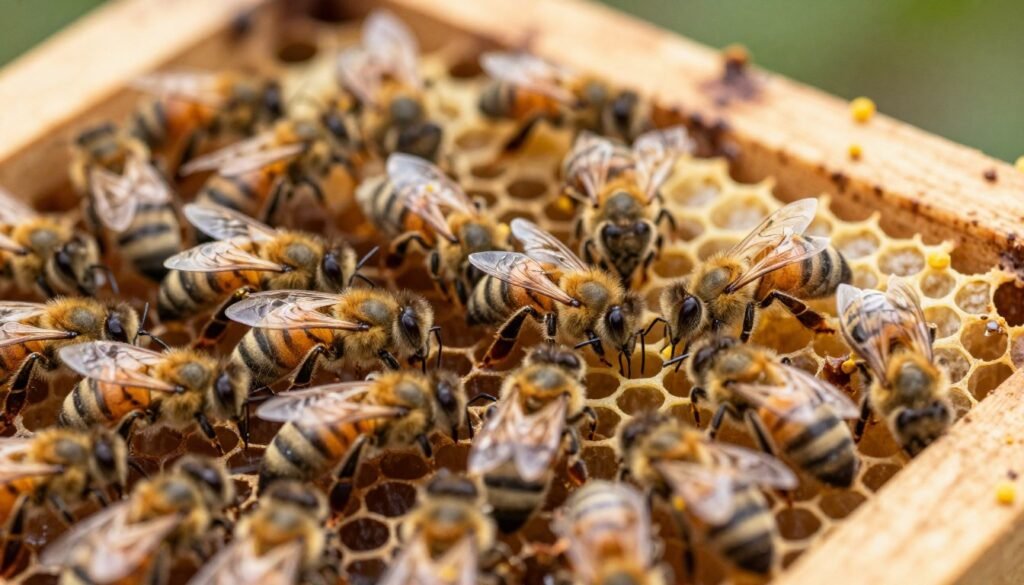
Over years, selective breeding and careful observation let honey bees develop stronger hygienic behavior. If beekeepers record steady brood cleanup and lower infestation counts, the colony may show real mite resistance.
The Role of Hygienic Behavior in Colonies
Some worker bees act like detectives, sniffing out infected larvae and keeping colonies healthy.
Hygienic behavior is a natural control mechanism where worker bees detect and remove dead or diseased brood from the hive. This cleanup helps limit mites and stops pathogens from spreading through the brood and adult population.
Professor Marla Spivak’s group found specialized detector bees and linked the behavior to changes in brain chemistry. That learning lets honey bees associate the smell of an infestation with the presence of the varroa mite.
- What it does: removes damaged cells to lower mite levels.
- Why it matters: supports colony health and reduces chemical control needs.
- How to support it: select for trait lines and record brood cleanup rates.
“Detector workers speed removal of infected brood, limiting parasite spread and improving colony survival.”
| Behavior | Benefit | Field Tip |
|---|---|---|
| Uncapping and removal | Reduces pathogen load | Record how fast cells are cleaned |
| Odor learning | Targets mites efficiently | Consider selective breeding |
| Detector workers | Indicators of strong colonies | See predisposition studies: predisposition to hygienic behavior |
Observing Uncapping and Recapping Activity
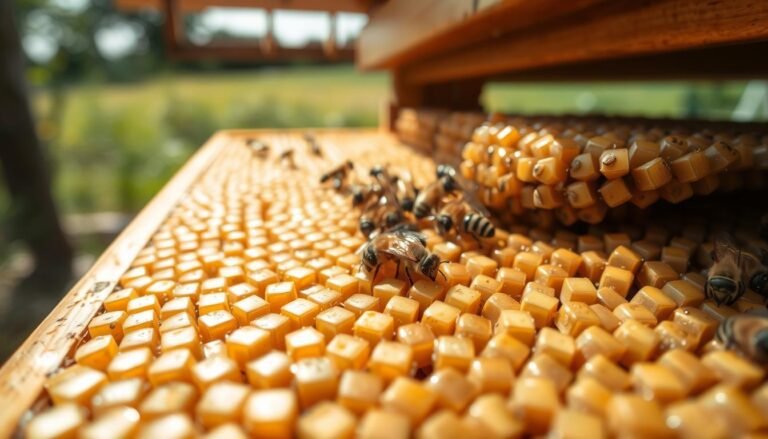
Careful photos of sealed frames help reveal how worker bees inspect developing brood during the roughly 12 days that worker development is sealed.
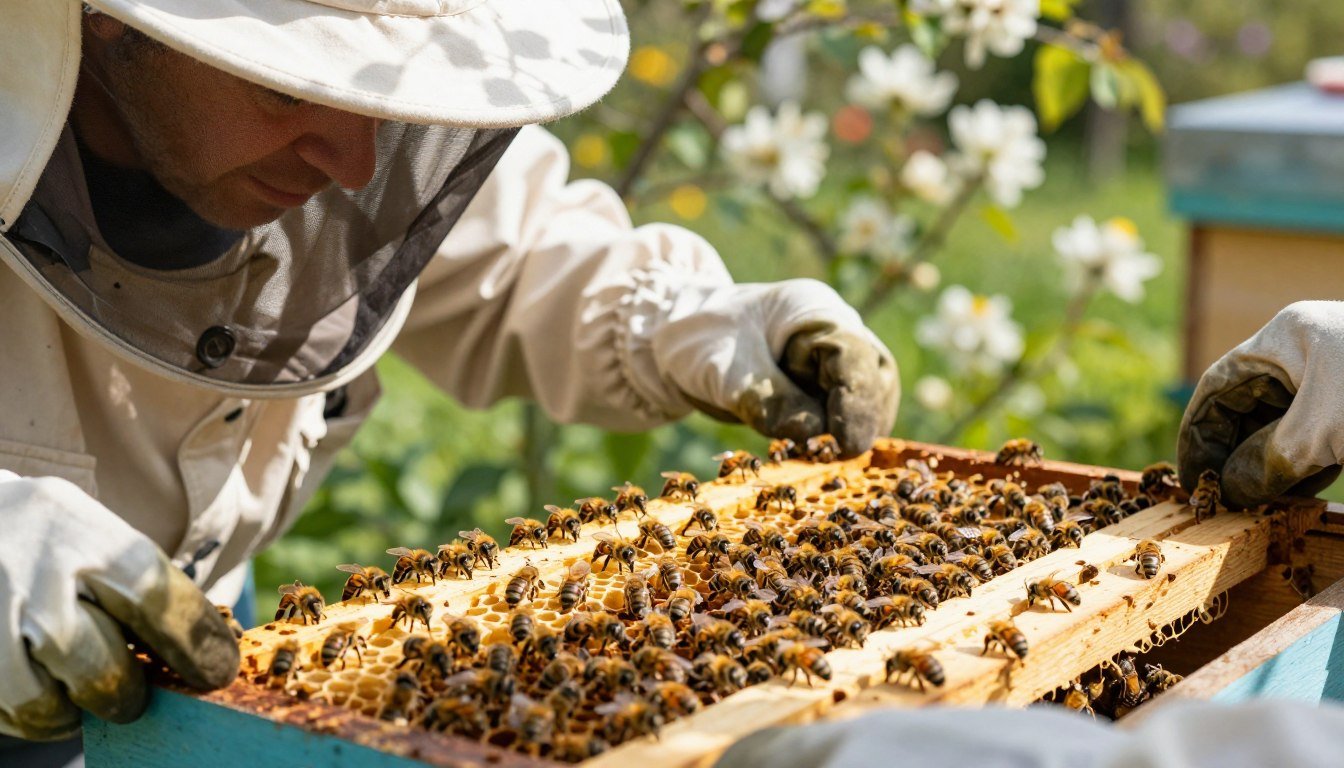
Nurse bees may uncap and recap brood cells to check for mite presence. This interrupts the mite life cycle before offspring mature and leave the cell.
Identifying Cluster Patterns
Look for groups of disturbed cell surfaces rather than long, straight damage runs. Clustered uncapping often appears as patches on a frame.
These patterns show colonies are removing or testing brood cells to protect larvae and overall colony health.
Distinguishing from Wax Moth Damage
Wax moth trails usually form linear paths and webbing across comb. Clusters of uncapped cells are irregular and localized, not in straight lines.
Using Magnification for Inspection
Take a centered photo of the sealed frame and magnify it to spot subtle cap breaks. Repeat checks over several days to track changes.
- Test your observation skills mid-season for best results.
- Note patterns on each frame and record time between inspections.
- For deeper reading, see targeted research on uncapping behavior: uncapping behaviour study.
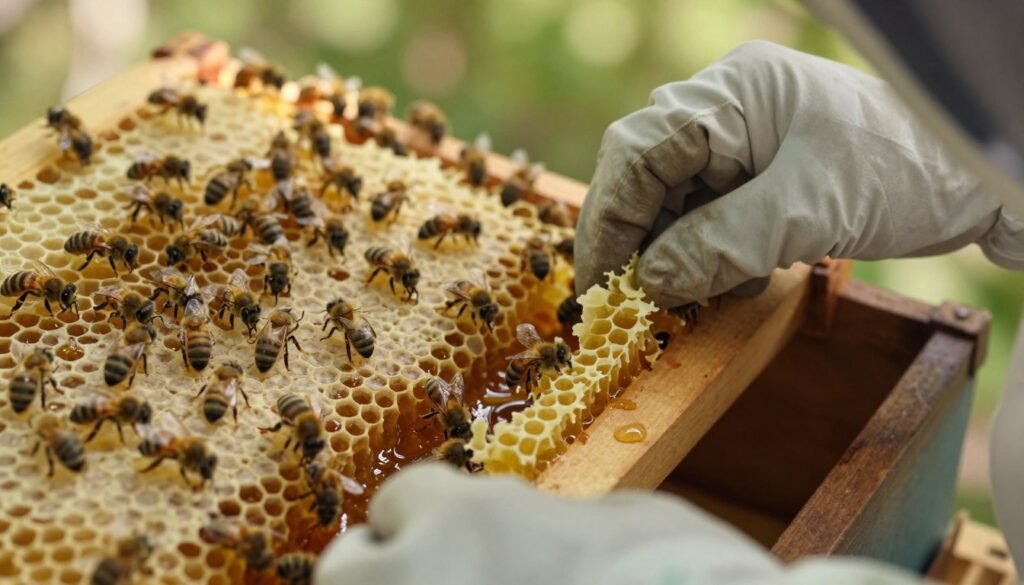
Monitoring Mite Levels Through Integrated Pest Management
Routine sampling gives beekeepers timely data to manage mite pressure before populations spike. Integrated Pest Management (IPM) blends cultural steps, targeted testing, and selective treatments to keep colonies healthy.
Powdered sugar roll is a quick field test. Shake bees from a brood frame into a tub, add two tablespoons of powdered sugar, wait 2 minutes, then shake the jar for 1 minute to dislodge mites.
Use a 100 ml sample (about 300 bees) for this test. Count the number mites collected and divide by 3 to estimate mites per 100 bees. This gives an infestation level you can track over days and seasons.
If counts exceed 2–3 percent, consider treatments such as oxalic acid or Apivar. Apivar has over 90 percent effectiveness in many trials. Some beekeepers also use essential oils to support colony health, but monitoring remains the core control method.
Keep records of test dates, frame sampled, and number mites found. For tips on boosting apiary productivity while managing pests, see apiary productivity.
Evaluating Brood Patterns for Signs of Stress
Subtle gaps across sealed cells may show that worker bees are removing compromised pupae. Watch frame patterns for irregular clusters or scattered empty cells.
Recognizing deformed wing virus starts with spotting bees that look stunted or have crumpled wings. This condition often follows when a mite feeds on developing pupae and passes viral particles.
Simple tests help confirm colony health. Inspect brood cells for uneven spacing, dead brood, or discolored larvae. Count mites using a powdered sugar or roll test and record the number mites per 100 bees.
When workers chew out infected pupae they interrupt the mite reproduction cycle. The mother mite only lays eggs two to three times, so removal reduces the next generation.
- Inspect frames every few days during peak development.
- Note patterns of brood loss and record mite levels.
- If brood stress is severe, consider oxalic acid or regular powdered sugar treatments to lower mite levels.
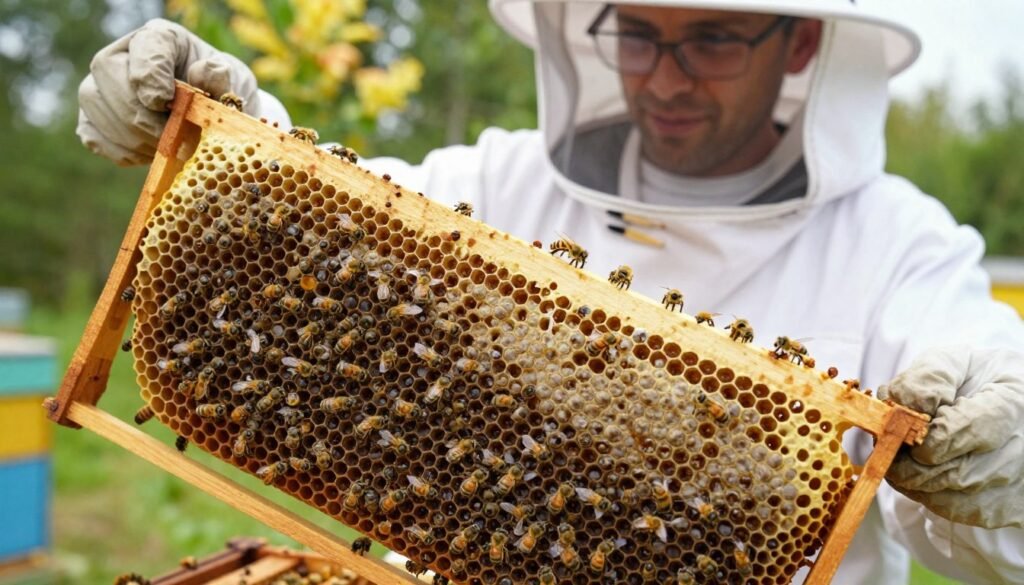
“Monitoring brood layout and mite counts gives the clearest picture of colony recovery potential.”
| Check | What to look for | Action |
|---|---|---|
| Brood pattern | Patchy, scattered cells or dead brood | Inspect frames, mark affected areas |
| Adult bees | Stunted or deformed wings | Perform mite test and isolate frames |
| Mite count | Number mites per 100 bees exceeds threshold | Apply treatment (oxalic acid or powdered sugar) and retest in days |
For tips on avoiding common errors while evaluating colonies, see beginner mistakes.
Selecting for Natural Resistance Traits
Choosing stock that actively removes infected brood creates a steady path to lower mite counts over years. This method helps beekeepers cut chemical use and build healthier colonies over time.
Steve Riley advises watching hygienic behavior rather than relying on pin-kill tests. Nurse bees do the work: they find troubled cells and remove affected brood. That action interrupts mite reproduction and lowers number mites across frames.
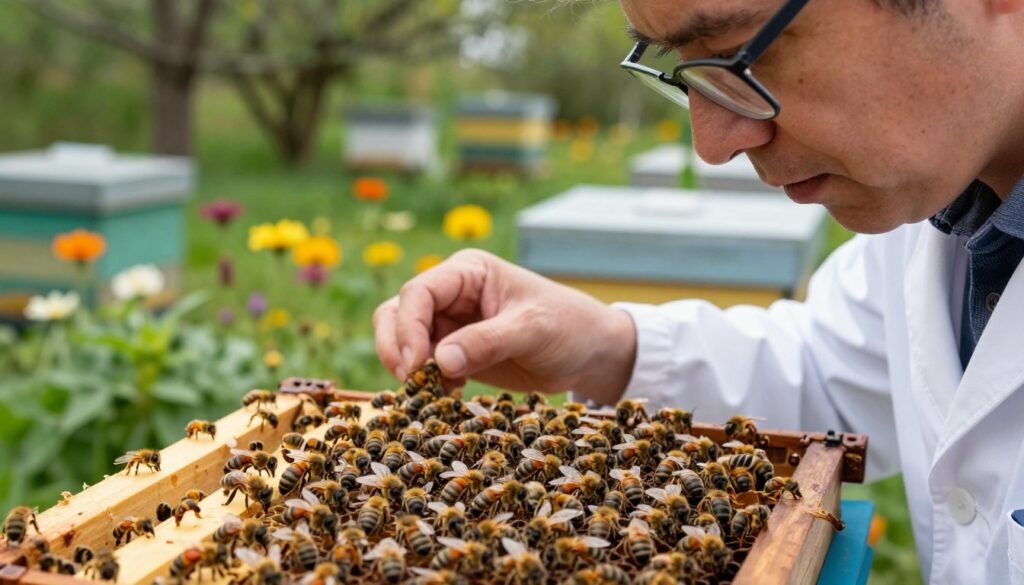
Work with other keepers when possible. In northwest Wales, 100 beekeepers manage 500 colonies and have grown a strong, self-sustaining population. Group selection speeds progress and preserves useful traits.
- Long-term strategy: track brood cleanup and record counts over years.
- Supportive methods: use powdered sugar for monitoring and essential oils to support colony health while breeding.
- Chemical backup: oxalic acid remains an option when numbers spike.
“Foster bees that detect and remove mites, and over time your apiary will need fewer treatments.”
Conclusion
Small, regular inspections give the best chance for bees to thrive and produce honey.
Developing varroa resistance in your apiary is a steady process. Track the number mites per 100 bees and record results each season.
Use simple tests like a powdered sugar roll and note the 100 bees sample numbers. If counts rise, consider targeted treatments such as oxalic acid to protect brood and adult bee health.
Every hive and colony is unique. Watch natural behaviors, keep clear records, and act when data shows risk. This approach helps maintain honey yields and strong colonies for years to come.
Thank you for caring for our bees and for taking steps to protect their future.
FAQ
What are early indicators that my colony is coping with Varroa destructor?
Look for frequent uncapping and recapping of brood cells, strong hygienic removal of infested larvae, and low counts from sugar shake or alcohol wash tests. Healthy colonies show limited mite reproduction, steady adult populations, and minimal spillover of mites on bottom boards. Regular monitoring every 7–14 days during brood periods helps confirm trends.
How can I test for mite load without harming the bees?
Use the powdered sugar shake method or an ether-free alcohol wash on a sample of about 100 workers to estimate mites per 100 bees. Sticky boards placed beneath screened bottom boards for 24–48 hours give a noninvasive trap count. Track results over time to see if levels stay low without chemical treatments.
What brood patterns suggest my stock has partial natural defenses?
Irregular but purposeful brood removal, spotty capped brood where some cells are opened and resealed, and lower rates of deformed wing disease can indicate genetic or behavioral defenses. Nurse bees that uncap and remove pupae quickly reduce mite reproduction, preserving colony strength.
How does hygienic behavior reduce mite reproduction in colonies?
Hygienic workers detect, uncap, and remove infested pupae before mites complete their reproductive cycle. This shortens the mite’s reproduction window and can lower overall infestation. Selective breeding for this trait amplifies the effect across generations.
What’s the difference between uncapping by bees and damage from wax moths?
Bees typically uncap single or few adjacent cells and often recap them after inspection. Wax moth damage appears as widespread webbing, tunnels, and destroyed comb structure. Use magnification to confirm pupal remains and look for cleanly removed cocoon material when bees are responsible.
When should I use oxalic acid or essential oils to control mite levels?
Apply vaporized oxalic acid during broodless periods for maximum effect, and consider thymol-based treatments when honey supers are off. Rotate methods to avoid overuse. Always follow label directions and local regulations to protect colony health and honey quality.
How often should I inspect frames and nurse bee behavior for signs of control?
Inspect frames every 7–14 days during active season. Watch nurse bees at brood frames for uncapping, recapping, and removal. Note any increase in spotty brood or workers carrying out brood, as that can indicate developing defenses or rising pressure.
Can selective breeding reduce the need for chemical treatments?
Yes. Choosing queens from colonies that consistently show hygienic removal, low mite counts per 100 bees, and limited virus symptoms reduces dependence on treatments. Track performance over years and use instrumental insemination or natural mating in areas with strong local traits.
What role do viruses like deformed wing virus play in assessing colony health?
Viral symptoms, especially deformed wing disease, reveal when parasitic loads have allowed pathogen spread. Reduced prevalence of these symptoms often accompanies effective grooming and hygienic behaviors. Test symptomatic bees and monitor virus trends alongside mite counts.
How can I tell if grooming behavior is helping control mite populations?
Evidence of grooming includes damaged or missing mite legs found on bottom boards, lowered mite fall after interventions, and worker bees actively removing mites from each other. Combine observation with periodic quantitative tests to assess impact.
What integrated pest management (IPM) approach is recommended for sustainable control?
Combine regular monitoring, cultural controls (screened bottom boards, drone brood removal), timed chemical or organic treatments, and genetic selection for defensive traits. Data-driven decisions—using threshold counts from sugar shakes or sticky boards—minimize unnecessary treatments.
How do I interpret mite counts from an alcohol wash of 100 bees?
Counts under 3 mites per 100 bees typically indicate low pressure; 3–6 suggests caution and closer monitoring; above 6 often warrants treatment depending on season and brood presence. Use seasonal thresholds and colony strength to guide actions.
Are there quick field signs that differentiate low infestation from true colony-level control?
Quick signs include steady honey production, strong worker populations, limited dead or deformed adults, and consistent low counts from rapid tests. True control shows these signs across multiple inspections and through brood cycles.
How long does it take to see improvement after selecting for hygienic traits?
Improvements can appear within 2–5 years of consistent selection, depending on mating control and local gene flow. Performance gains accelerate when combined with good management and reduced chemical reliance.
This is part of a broader system for managing varroa — see the complete Varroa management guide for monitoring, treatment, and seasonal timing.