How many species of bee actually exist? Ask that question and you’ll usually get a confident “just over 20,000” — a number that’s been repeated for years, based mostly on species that have already been formally described and cataloged. A 2026 statistical analysis published in Nature Communications set out to answer a harder version of the same question: not how many bee species have been written up in the literature, but how many almost certainly exist, described or not. Its answer is bigger — and the gap between the two numbers turns out to be the more interesting story.
Between 24,700 and 26,200, According to the New Estimate
The study, led by evolutionary biologist Dr. James Dorey at the University of Wollongong, estimates the true global bee species count at somewhere between 24,705 and 26,164. That implies 3,700 to 5,200 species have never been formally described — a shortfall of roughly a fifth on top of the commonly cited “20,000-plus” figure most people repeat without knowing where it came from.
Dorey’s team didn’t go looking for new bees in the field. They analyzed existing taxonomy datasets, country-level checklists, and published literature across 186 countries, then applied species-richness estimators — the same kind of statistical modeling used to project how many words exist in a language from a limited sample of text. A region where researchers keep turning up new species every time they look gets flagged as having a large remaining gap; a region that’s been surveyed for years with nothing new showing up gets treated as close to fully cataloged.
The Gaps Aren’t Where You’d Expect
The most surprising part of the study isn’t the total — it’s where the biggest blind spots turn out to be. The assumption most people would reach for is “unexplored rainforest,” but the researchers estimate Turkey alone may hold around 843 undiscovered bee species, more than they estimate for the whole of continental Europe put together. Turkey sits at a genuine crossroads between Europe, the Middle East, and Central Asia, packing a wide range of climates and habitats into one country — and it already has an active, long-running community of bee researchers, which makes the size of the remaining gap a real surprise rather than a simple case of nobody having looked yet.
| Metric | Figure |
|---|---|
| Estimated total global bee species | 24,705–26,164 |
| Estimated undescribed species | 3,700–5,200 |
| New species described per year, on average since 1960 | ~117 |
| Estimated undiscovered species in Turkey alone | ~843 |
At the historical pace of about 117 new species described per year, the study’s own math suggests closing the current gap would take another 30 to 45 years — and that’s an optimistic extrapolation, since the species easiest to find and describe tend to get discovered first, leaving progressively harder cases for later. “Bees are a perfect example,” Dorey said. “They’re keystone species; their diversity underpins healthy environments and resilient agriculture.”
Why a Taxonomy Number Matters Outside Academia
A global species estimate can read like pure academic trivia, but it connects directly to conservation policy in a way that’s easy to miss. A species that hasn’t been formally described can’t be added to an endangered species list, can’t receive targeted habitat protection, and can’t be tracked for population decline in any official capacity — it doesn’t functionally exist for regulatory purposes, regardless of how real its ecological role already is. Every one of the thousands of bee species already known and covered on this site’s native bee identification chart went through that same process of description before it could be studied, protected, or even named in a pollinator garden guide. The 2026 estimate is essentially a map of how much of that groundwork is still ahead — including, as it happens, one very specific example: a Texas mining bee called Andrena cenizophila, described the same year this estimate was published.
Frequently Asked Questions
So how many bee species are there — 20,000 or 26,000?
Both numbers are defensible depending on what’s being counted. Around 20,000 is roughly what’s already been formally described in the scientific literature; the 2026 estimate of 24,705–26,164 factors in species that almost certainly exist but haven’t been described yet.
Where are most of the undiscovered species likely to be?
Turkey stands out specifically, with an estimated 843 undiscovered species — more than the study estimates for all of continental Europe combined — thanks to its position at a biogeographic crossroads.
Does this estimate include honeybees?
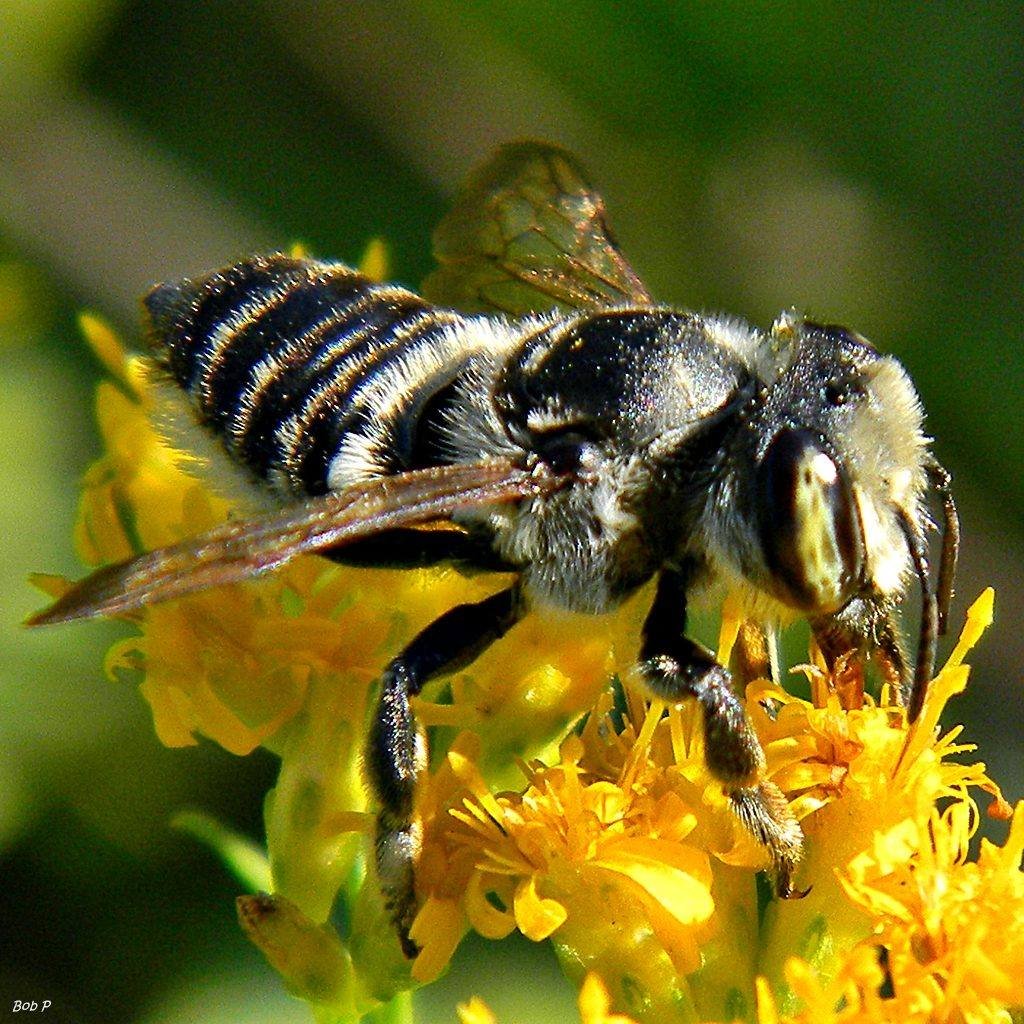
Yes, but the honeybee (Apis mellifera) is only one species among tens of thousands. The vast majority counted in this estimate are wild, mostly solitary bees that never form honeybee-style colonies.