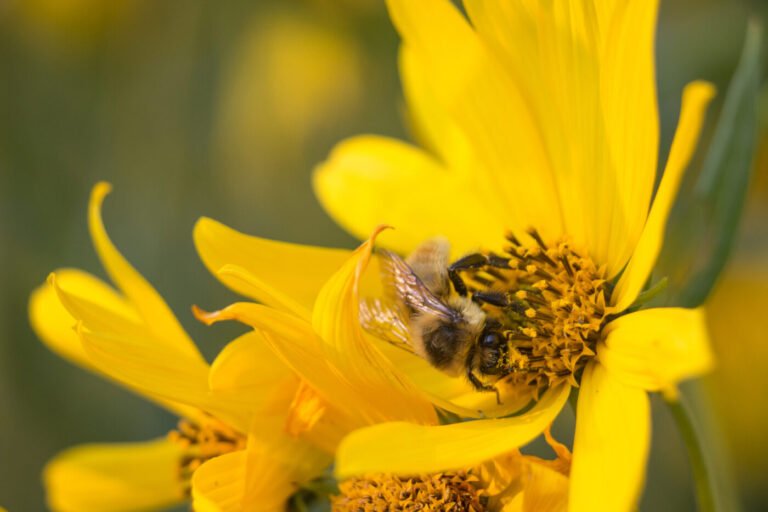
On June 17, 2013, a landscaping contractor sprayed 55 blooming linden trees in a Wilsonville, Oregon parking lot with the pesticide dinotefuran to control aphids — and by the time anyone realized what had happened, it stood as the largest documented mass bumblebee kill in United States history, with a later peer-reviewed reanalysis putting the real toll as high as 107,000 bumblebees from nearly 600 colonies. The original application violated the pesticide’s own label in a specific, avoidable way, and the fallout genuinely changed pesticide law in Oregon — which makes this less a story about a freak accident than about exactly how a label violation on flowering trees can cascade into a landscape-scale wildlife disaster.
Key Takeaways
- The June 17, 2013 incident in Wilsonville, Oregon killed an initially estimated 50,000+ bumblebees after 55 blooming linden trees were sprayed with the neonicotinoid pesticide dinotefuran.
- A 2021 peer-reviewed reanalysis published in Environmental Entomology estimated the true toll at between 45,830 and 107,470 bumblebees, from an estimated 289 to 596 colonies.
- Oregon Department of Agriculture lab testing confirmed dinotefuran as the cause, and found the application violated the product’s own label instructions on two specific points.
- Dinotefuran’s label prohibits application to flowering parts of plants and warns of toxicity to bees for more than 38 hours after treatment — the Wilsonville application did both anyway.
- In direct response, Oregon subsequently restricted neonicotinoid pesticide use specifically on linden trees, a species commonly planted as an urban ornamental near parking lots.
Table of Contents
- What Happened on June 17, 2013
- The Real Scale: A 2021 Reanalysis Revises the Numbers
- The Label Violation That Caused It
- Why Linden Trees Specifically Are a Recurring Risk
- Oregon’s Regulatory Response
- The Broader Lesson for Anyone Managing Landscaping Near Bees
- Frequently Asked Questions
What Happened on June 17, 2013
The immediate trigger was mundane: linden trees in a Wilsonville, Oregon parking lot were dripping sticky aphid honeydew onto cars parked below, and a pest control contractor was brought in to treat the aphid infestation. The trees were in full bloom at the time — which matters enormously, because linden flowers are highly attractive to bumblebees, and an entire local bumblebee population was actively foraging on them when the pesticide was applied. Within a short period, dead and dying bumblebees began covering the ground beneath the trees in numbers large enough that the event was immediately recognized as unusual, not just a routine pesticide incident.
The Real Scale: A 2021 Reanalysis Revises the Numbers
The figure most commonly repeated in early coverage — more than 50,000 dead bumblebees — was itself already being described as the largest mass bumblebee kill on record at the time. A more rigorous scientific reckoning came years later: a 2021 study published in the peer-reviewed journal Environmental Entomology reanalyzed the incident and estimated the actual toll at between 45,830 and 107,470 bumblebees, originating from an estimated 289 to 596 separate colonies. That range is worth sitting with for a moment — it means a single afternoon’s pesticide application may have wiped out roughly the bumblebee-colony equivalent of a small city, in one parking lot, in one county, in one state.
The Label Violation That Caused It
What makes the Wilsonville case more than a tragic accident is how directly it traces back to an identifiable, preventable violation. Oregon Department of Agriculture laboratory testing confirmed dinotefuran, marketed under the name Safari, as the cause of death. The product’s own label specifically warns that it remains toxic to bees for more than 38 hours after application — and separately, explicitly instructs that it should not be applied to the flowering parts of plants, precisely because bees forage on blooms. The Wilsonville application did both: it was applied while the linden trees were in full flower, exposing foraging bees directly, during a period the label itself flagged as high-risk. This wasn’t a case of an approved, correctly-applied product turning out to have unexpected effects — it was a documented departure from stated application instructions.
The regulatory finding was direct: the application “violated dinotefuran’s label instructions, which indicate that the compound is toxic to bees that are exposed to it for more than 38 hours, and that the product is not to be applied to plants’ flowering parts, as was done in 2013” — two separate, specific label rules broken in a single application.
Why Linden Trees Specifically Are a Recurring Risk
Linden trees are popular urban and commercial landscaping choices for reasons that have nothing to do with bees — attractive form, reliable growth, tolerance of urban conditions — which is exactly why they turn up so often near parking lots and along transportation corridors, the kind of setting where aphid-related “nuisance” complaints (sticky honeydew on cars, sidewalks, outdoor seating) are common and where a quick pesticide fix looks like an easy solution. Unfortunately, linden bloom is also unusually attractive to bumblebees specifically, concentrating large numbers of foragers into a small area of canopy during a narrow flowering window — meaning a mistimed or mislabeled pesticide application on a linden tree in bloom carries a uniquely high risk of a mass-casualty event compared to treating many other ornamental species.
Oregon’s Regulatory Response
The regulatory aftermath was concrete, not merely symbolic. Following the kill, Oregon moved to restrict the use of neonicotinoid pesticides specifically on linden trees — a targeted rule addressing the exact combination (this pesticide class, this tree species) responsible for the incident, rather than a broad, harder-to-enforce ban on neonicotinoids across all landscaping use. It’s a useful case study in how a single, well-documented ecological disaster, properly investigated and attributed to a specific cause, can translate into a narrowly tailored and more politically achievable regulatory fix.
The Broader Lesson for Anyone Managing Landscaping Near Bees
For beekeepers, landscapers, and anyone managing pest control near flowering trees, the practical takeaway from Wilsonville isn’t abstract: read and follow the actual label instructions on any pesticide product, particularly the timing restrictions around bloom and the post-application bee-toxicity window, since those instructions exist precisely because incidents like this one are foreseeable and preventable when followed. Tools built specifically to reduce this kind of risk at scale — connecting pesticide applicators with registered apiary locations before spraying — are covered in more detail in this site’s piece on DriftWatch and BeeCheck, and the organization most closely associated with documenting and responding to the Wilsonville case itself, the Xerces Society, continues to track pesticide-related pollinator incidents of this kind nationally.
Frequently Asked Questions
What pesticide caused the Wilsonville bumblebee kill?
Dinotefuran, sold under the brand name Safari, applied to 55 blooming linden trees to control an aphid infestation.
How many bumblebees actually died?
Initial estimates put the toll above 50,000; a 2021 peer-reviewed reanalysis in Environmental Entomology estimated the real range at 45,830 to 107,470 bumblebees from an estimated 289 to 596 colonies.
Was the pesticide application actually illegal?
It violated the product’s own label instructions in two ways: applying it to flowering parts of plants (explicitly prohibited) and exposing bees during the 38-hour post-application window the label identifies as toxic.
Did Oregon change any laws after this happened?
Yes — Oregon restricted the use of neonicotinoid pesticides specifically on linden trees following the incident.
Why were linden trees involved specifically?
Linden trees are popular urban ornamentals near parking lots and are unusually attractive to foraging bumblebees when in bloom, concentrating large bee populations in a small area during flowering.