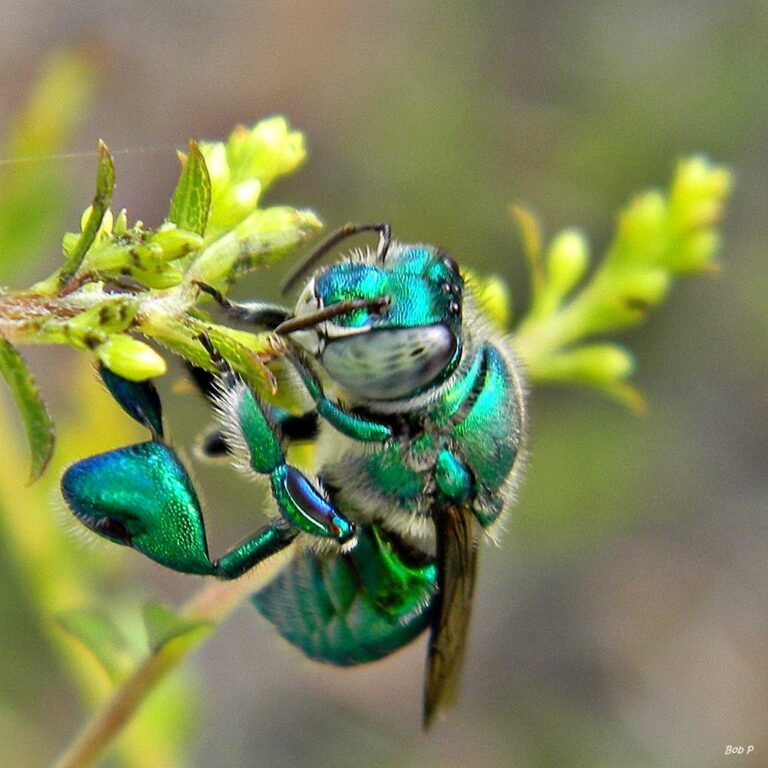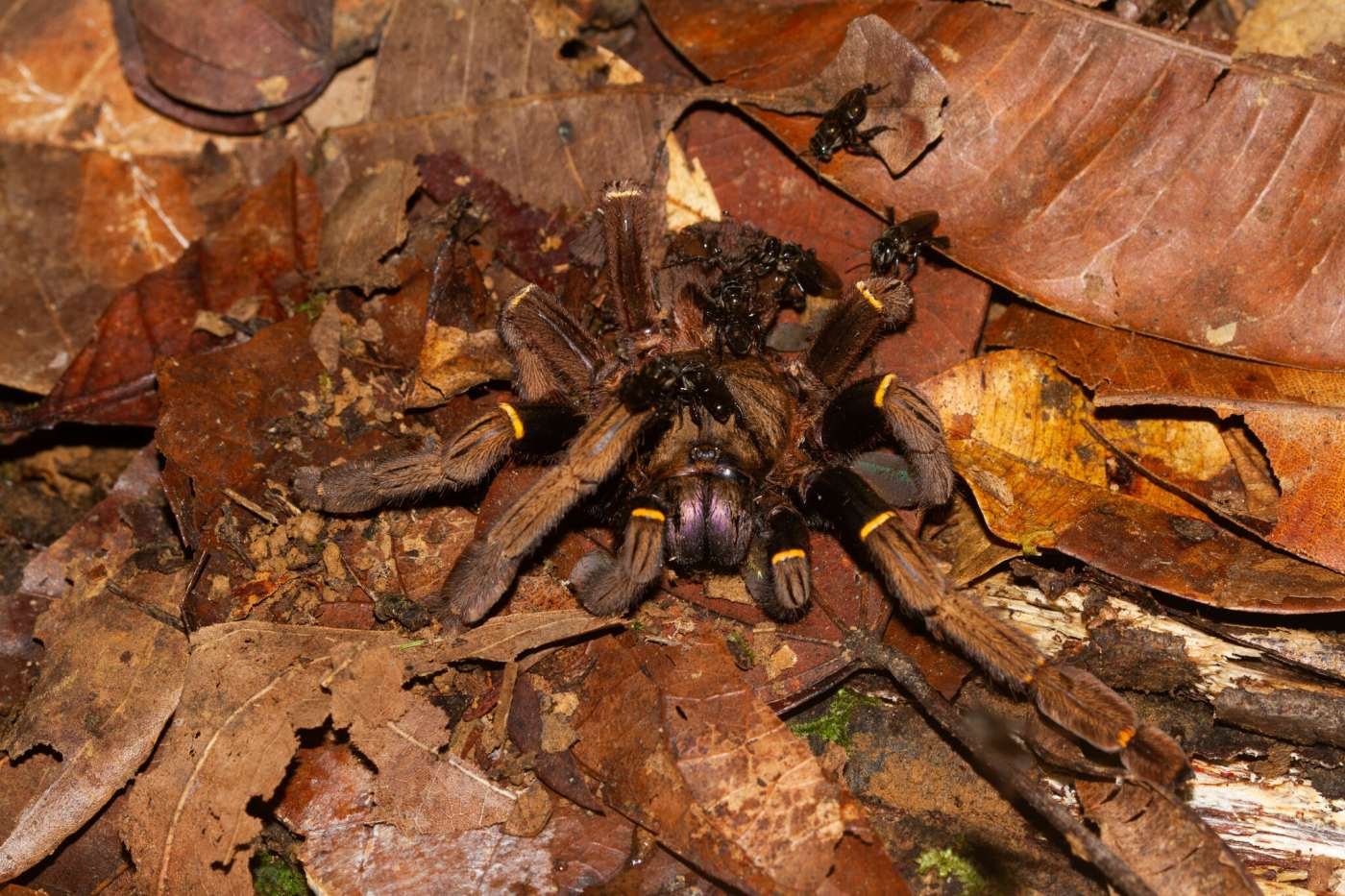
Three species of stingless bee in the genus Trigona — found in the tropical forests of Central and South America — have completely abandoned pollen in favor of eating rotting meat, making them the only bees on Earth known to feed exclusively on carrion. Vulture bees still make something honey-like from what they collect, and recent microbiome research has found their gut bacteria closely resembles that of actual vultures — a striking case of two completely unrelated animals evolving similar internal solutions to the same problem: eating decaying flesh without getting sick from it.
Key Takeaways
- Three closely related stingless bee species — Trigona hypogea, Trigona necrophaga, and Trigona crassipes — are the only bees known to feed exclusively on carrion instead of pollen, a behavior scientists call obligate necrophagy.
- The behavior was first formally documented in 1982 by Smithsonian Tropical Research Institute entomologist David Roubik, who observed Trigona hypogea feeding on dead animals in the Panamanian rainforest.
- Vulture bees feed on the flesh of dead lizards, snakes, birds, monkeys, and other animals, recruiting nestmates to a carcass with pheromones once a forager finds one, usually within about eight hours.
- Foragers carry regurgitated flesh back to the nest, where it’s mixed with plant-derived sugars and stored in special pots, gradually transforming into a yellowish, honey-like substance distinct from ordinary floral honey.
- A 2021 microbiome study found vulture bees carry specialized, highly acid-tolerant gut bacteria that let them safely digest carrion-associated bacteria and toxins — a gut microbiome distinct even from their own pollen-feeding stingless bee relatives, and functionally similar to the specialized gut flora of actual vultures.
Table of Contents
- How Vulture Bees Were Discovered
- What Feeding on Carrion Actually Looks Like
- The Gut Bacteria That Make It Possible
- A Rare Exception in the Bee World
- Frequently Asked Questions
How Vulture Bees Were Discovered
The scientific documentation of vulture bees traces to 1982, when Smithsonian Tropical Research Institute entomologist David Roubik, working in the tropical rainforest of Panama, observed a stingless bee species — later identified as Trigona hypogea — feeding exclusively on the flesh of dead animals rather than visiting flowers for pollen or nectar. That single observation launched decades of follow-up research, which eventually confirmed two additional closely related species, Trigona necrophaga and Trigona crassipes, share the same obligate necrophagy — meaning carrion isn’t an occasional supplement to their diet, as it is for some other bee and wasp species, but their only protein source, entirely replacing pollen.
What Feeding on Carrion Actually Looks Like
Vulture bee foragers seek out carcasses of dead lizards, snakes, fish, birds, and monkeys, among other animals, in the forest understory. Once a forager finds a suitable carcass, it releases pheromones that recruit the rest of the colony, and a substantial number of nestmates typically arrive within about eight hours to begin feeding. Rather than eating on site, foragers carry regurgitated flesh material back to the nest, where it’s deposited in specialized storage pots and mixed with sugary plant-derived material the colony also collects. The stored material starts out paste-like and gradually transforms into a viscous, then eventually thick and sweet, yellowish substance — chemically and texturally distinct from the floral honey produced by pollen-feeding bee species, though it serves a broadly comparable role as the colony’s stored food reserve.
The Gut Bacteria That Make It Possible
Eating rotting flesh carries an obvious problem: decaying meat carries bacteria and toxins that would sicken most animals. Research on vulture bee gut microbiomes, including a widely cited study examining their internal bacterial communities, found that vulture bees carry a distinct, highly acid-tolerant set of gut bacteria not found in their pollen-feeding stingless bee relatives — bacteria capable of processing the toxins and pathogens that build up in decomposing flesh. Researchers have specifically compared this adaptation to the specialized, highly acidic gut environment of actual vultures, which similarly allows them to safely consume carrion most other animals couldn’t tolerate. The underlying microbiome research is documented in detail in a peer-reviewed study available via the National Institutes of Health’s PubMed Central archive.
A Rare Exception in the Bee World
Vulture bees belong to the stingless bee tribe Meliponini, the same broad group covered in this site’s existing look at Maya meliponiculture and Australia’s sugarbag bee tradition — but almost every other stingless bee species in that same tribe forages on pollen and nectar in the conventional way. What makes the three vulture bee species remarkable isn’t just that they eat meat occasionally, the way some wasps or even a handful of other bee species opportunistically do, but that they’ve evolved to depend on carrion completely, with the specialized gut biology to make that total dietary switch survivable. It remains one of the more extreme examples of dietary specialization documented anywhere in the bee family, a family otherwise defined almost entirely by its relationship to flowers.
Frequently Asked Questions
Are vulture bees a real thing?
Yes. Three species of stingless bee in the genus Trigona — found in Central and South America — feed exclusively on carrion rather than pollen, a behavior first documented scientifically in 1982.
What do vulture bees actually eat?
The flesh of dead animals, including lizards, snakes, birds, fish, and monkeys, which foragers locate, feed on, and carry back to the nest for the colony.
Do vulture bees make honey?
They make a honey-like substance from a mix of regurgitated flesh material and plant-derived sugars, stored in nest pots — chemically distinct from ordinary floral honey, though it serves a similar storage role for the colony.
Why doesn’t eating rotting meat make vulture bees sick?
Research has found they carry a specialized, highly acid-tolerant gut microbiome distinct from other stingless bees, allowing them to safely process the bacteria and toxins present in decaying flesh — functionally similar to the specialized gut biology of actual vultures.
Do vulture bees sting?
No. Like other members of the stingless bee tribe Meliponini, vulture bees lack a functional sting, though some stingless bee species can still bite defensively.