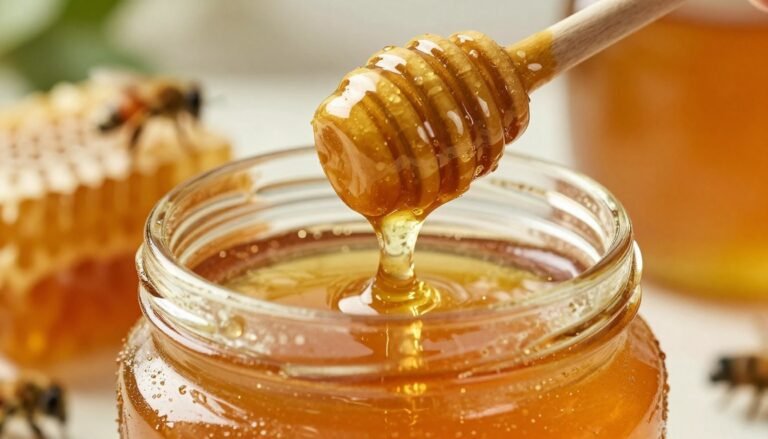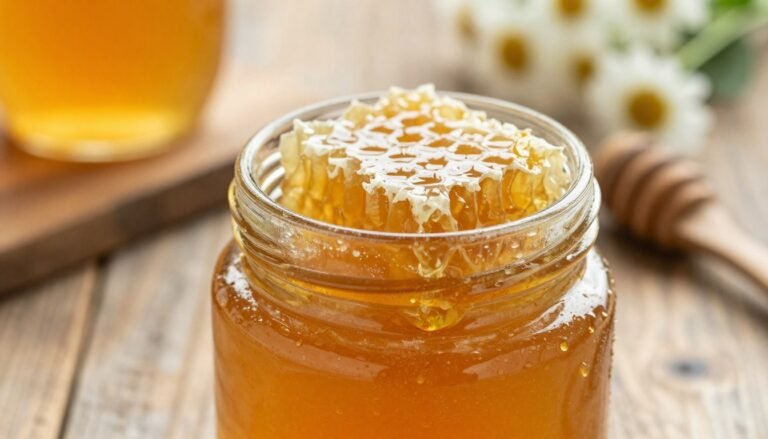
Sage honey is the honey world’s answer to a neutral cooking oil — light in color, mild enough that most chefs reach for it specifically because it sweetens a dish without adding a strong honey flavor of its own — and it stays liquid on the shelf for 12 to 18 months or longer thanks to an unusually high fructose-to-glucose ratio, one of the slowest-crystallizing honeys commonly sold in the United States. California has been the dominant U.S. producer since the late 1800s, working several native sage species that bloom across a narrow spring-to-midsummer window.
Key Takeaways
- Sage honey comes from several California native Salvia species — Black Button Sage, White Sage (Salvia apiana), and Purple Sage are the most commonly worked by beekeepers, with Black Button and White Sage typically producing the lightest-colored honey.
- Its nectar has an unusually high fructose-relative-to-glucose ratio, which is the specific chemical reason it resists crystallization for so much longer than most other honey varietals — this isn’t a processing trick, it’s a property of the source nectar itself.
- California has been America’s dominant sage honey producing region since the late 1800s, a real, long-standing regional specialty rather than a recent marketing category.
- Its mild, delicate flavor is specifically why many chefs prefer it over a stronger varietal honey — it sweetens without competing with a dish’s other flavors, a genuinely different use case from a bold single-origin honey meant to be tasted on its own.
- Bloom timing runs from roughly early spring (April) through mid-summer (July) depending on the specific sage species and region, giving California beekeepers a comparatively long working window for this one varietal relative to some single-week specialty blooms elsewhere in the country.
Table of Contents
- Which Sage Species Actually Produce This Honey
- Why It Resists Crystallization So Well
- A Deliberately Mild, Chef-Friendly Flavor
- Frequently Asked Questions
Which Sage Species Actually Produce This Honey
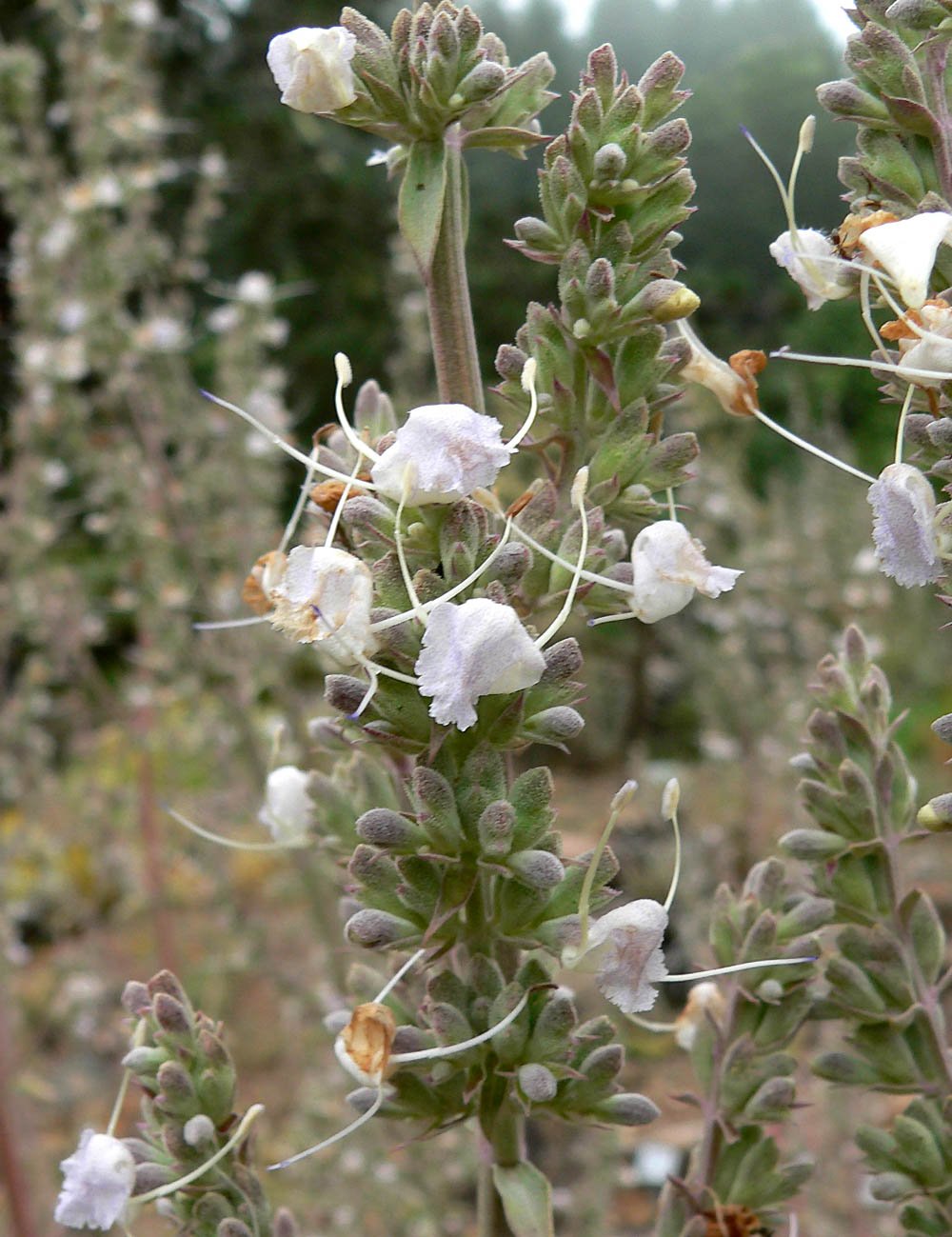
“Sage honey” isn’t sourced from the culinary sage used in cooking, but from several native California Salvia species that beekeepers specifically site hives near for this bloom. Black Button Sage and White Sage (Salvia apiana, sometimes called bee sage) are the two most commonly associated with the lightest, most prized honey, while Purple Sage is also worked in the same regions. White sage in particular is concentrated in Southern California, where beekeepers cultivate access to existing wild stands specifically as a nectar source for this honey rather than for the plant’s other traditional uses.
Why It Resists Crystallization So Well
Honey crystallizes when its dissolved glucose falls out of solution and forms crystals — a process that happens faster in honeys with a higher glucose-to-fructose ratio (which is why clover honey, relatively glucose-heavy, crystallizes within weeks to months) and much more slowly in honeys where fructose dominates. Sage nectar produces honey with an unusually high fructose content relative to its glucose, which is the specific, checkable chemical reason it can stay liquid on a shelf for 12 to 18 months or longer without the granulation most other honeys show well before that mark. This makes it a practical choice for anyone who wants a honey that reliably pours straight from the jar over a long storage period, rather than needing a warm-water bath to re-liquefy every few months the way a faster-crystallizing honey would.
A Deliberately Mild, Chef-Friendly Flavor
Where a buckwheat or heather honey is prized specifically for a bold, assertive flavor, sage honey’s appeal runs the opposite direction: it’s light in color with a mild, delicate sweetness that doesn’t impose much distinct “honey” flavor on whatever it’s added to. That’s precisely why many chefs reach for it deliberately — as a way to sweeten a sauce, dressing, or baked good without the honey itself becoming a competing flavor note, the way a stronger varietal like buckwheat or chestnut honey would. It’s a genuinely different use case from a specialty honey meant to be tasted and appreciated on its own, and worth choosing specifically when a recipe calls for sweetness without a pronounced honey character.
Frequently Asked Questions
Is sage honey made from the sage plant used in cooking?
No — it comes from native California Salvia species (Black Button Sage, White Sage, and Purple Sage) that beekeepers specifically work for their bloom, not the common culinary sage (Salvia officinalis) used as a cooking herb, though both belong to the same broader Salvia genus.
Why doesn’t sage honey crystallize like other honey?
Its nectar produces honey with an unusually high fructose-to-glucose ratio. Crystallization is driven mainly by glucose falling out of solution, so a fructose-dominant honey like this one stays liquid far longer — commonly 12 to 18 months or more — than a glucose-heavy honey like clover.
Why do chefs prefer sage honey specifically?
Its mild, delicate flavor sweetens a dish without adding a strong, distinct honey taste of its own, which makes it useful when a recipe calls for sweetness without competing with other flavors — a different role than a bold single-origin honey meant to be tasted directly.
When is sage honey harvested?
Bloom timing runs roughly from early spring (April) through mid-summer (July), varying by the specific sage species and California region.
Where is most sage honey produced?
California, which has been the dominant U.S. sage honey producing region since the late 1800s, working native Salvia species found across the state.
Is sage honey the same as wildflower honey?
No — genuine sage honey is a monofloral honey predominantly sourced from Salvia species nectar, while wildflower honey is an intentional blend from many different, unspecified plant sources. Check the label for a named sage-specific source rather than assuming any light, mild honey is sage honey.
This is covered in more depth by National Honey Board.