Published August 28, 2026
Table of Contents
- What Cut Comb Honey Is
- Cut Comb vs. Ross Round and Hogg Half Comb
- Equipment: Simpler Than You’d Expect
- Setting Up Foundationless Frames
- Nectar Flow Timing
- Cutting and Packaging
- Handling the Cut Edges
- Cost and Economics
- Who Should Try Cut Comb
- Choosing the Right Cutting Tool
- Choosing Package Sizes
- Queen Excluder Use for Cut Comb
- Colony Strength Still Matters
- Shelf Life and Storage
- Labeling for Retail Sale
- Using Leftover Wax and Trim
- Pricing Cut Comb Honey
- Scaling Cut Comb Production
- Regional Flow Suitability
- Common Mistakes
What Cut Comb Honey Is
Cut comb honey is made by cutting sections of capped, honey-filled comb directly from foundationless frames into rectangular pieces sized for packaging, rather than extracting the honey and leaving the comb structure intact for consumption alongside the honey itself. It’s the simplest and lowest-cost path into comb honey production, using standard equipment rather than the specialized commercial systems covered in our guides to Ross Round and Hogg Half Comb.
Cut Comb vs. Ross Round and Hogg Half Comb
| Factor | Cut Comb | Ross Round / Hogg Half Comb |
|---|---|---|
| Equipment cost | Lowest — standard frames | Higher — specialized systems |
| Presentation | Rustic, variable shape | Uniform, factory-consistent |
| Post-harvest labor | Higher — cutting, draining, packaging | Lower — pre-formed, minimal handling |
| Best for | Small-scale, artisanal positioning | Consistent retail-ready product at volume |
The practical tradeoff is straightforward: cut comb costs less to start and appeals to customers who value a rustic, obviously hand-made product, while the commercial systems trade higher upfront cost for consistency and reduced labor per unit. Many beekeepers new to comb honey start with cut comb specifically because it uses equipment they may already own, before deciding whether a specialized system is worth the added investment.
Equipment: Simpler Than You’d Expect
Cut comb requires only standard frames set up without foundation (or with only a thin starter strip), a sharp, clean knife or cutting tool sized appropriately for the comb, and packaging material (typically clear plastic clamshell containers or similar) sized to the sections you’ll cut — no specialized rings, cassettes, or system-specific hardware needed. This is the format’s clearest advantage for a beekeeper testing comb honey production for the first time without committing to specialized equipment.
Setting Up Foundationless Frames
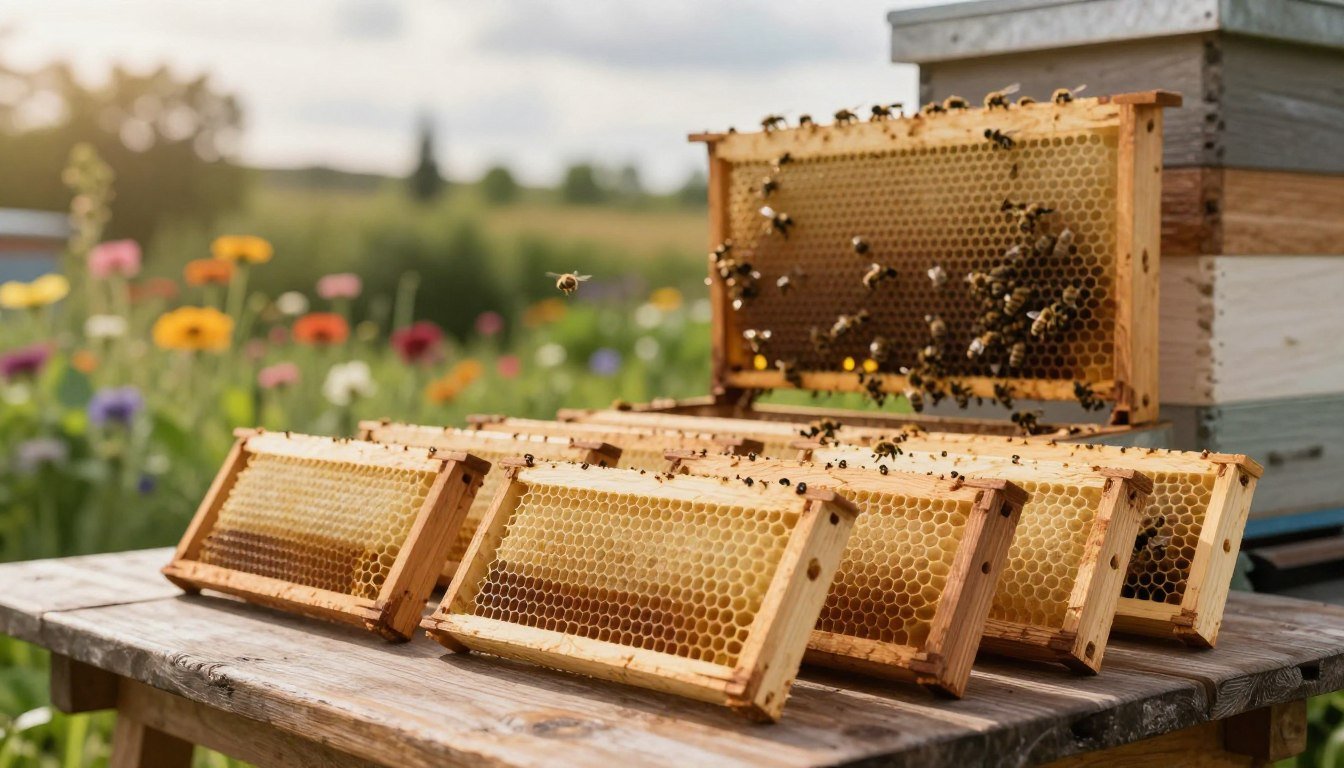
Prepare frames with either no foundation at all or a thin starter strip along the top bar to guide straight comb-building, since crooked or diagonal comb complicates clean cutting later and reduces your usable yield from each frame. Place prepared frames on a strong colony during a reliable flow, following the same fundamental colony-strength and flow-timing requirements that apply to any comb honey production — cut comb doesn’t relax these underlying requirements, it just uses simpler equipment to work within them.
Nectar Flow Timing
As with any comb honey format, add foundationless frames right as your region’s main nectar flow begins, giving bees the strongest possible flow window to draw, fill, and cap comb completely — an incomplete comb section has real salvage value for cut comb (you can still use unfinished portions for personal consumption or blend into other products) but isn’t sellable as a premium cut comb piece, so timing still matters for maximizing your sellable yield.
Cutting and Packaging
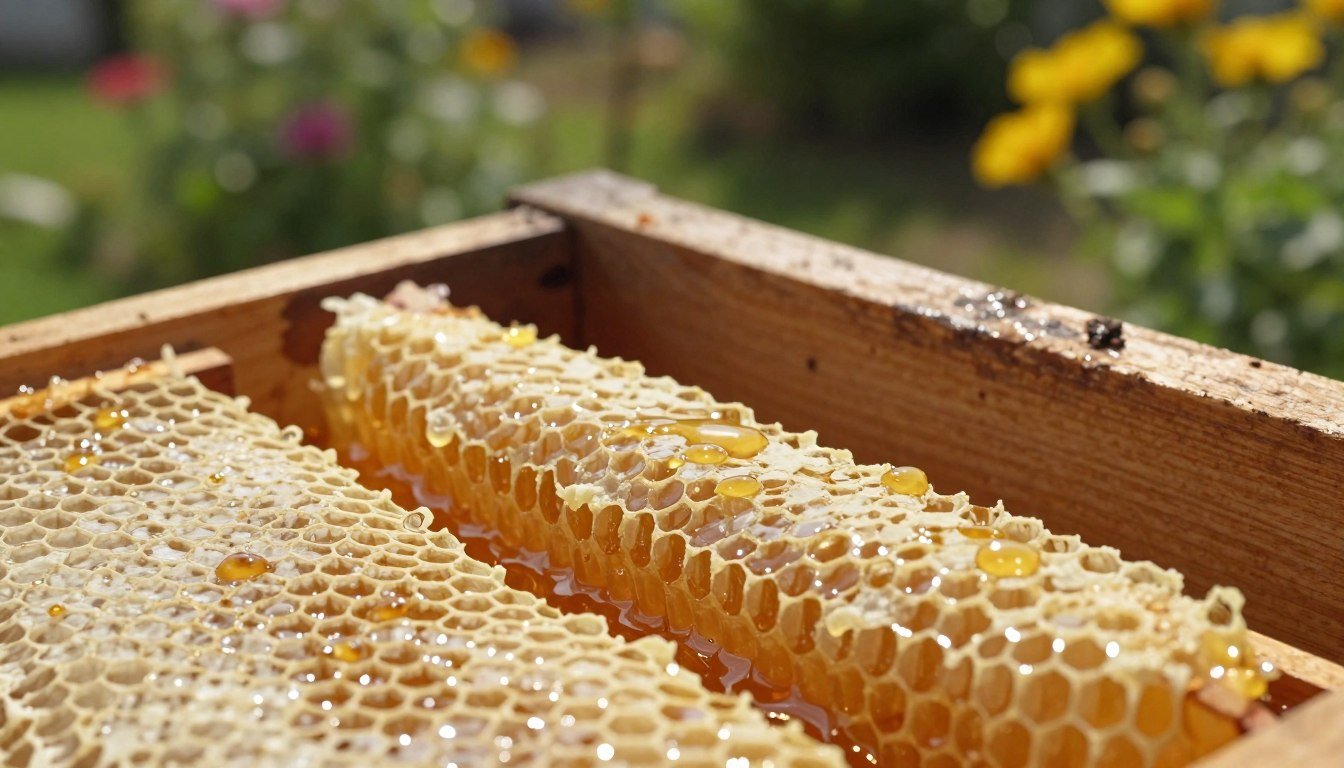
Once frames are fully capped, remove them from the hive and cut sections to your desired package size using a sharp, clean knife — work over a container to catch honey that inevitably drips during cutting, and cut cleanly in single motions rather than sawing, which tears cell walls and increases mess and honey loss. Package cut sections promptly in food-safe containers sized to minimize excess empty space, which both looks more professional and reduces the comb’s exposure to air before sealing.
Handling the Cut Edges
Cut edges inevitably weep some honey after packaging, since cutting through capped cells opens them along the cut line — place cut sections on a rack or slightly tilted surface for a short period before final sealed packaging, letting excess honey drain away from the cut edge rather than pooling inside a sealed container, which can look messy and reduce shelf appeal. This brief draining step is a small but meaningful quality difference between a rushed cut-comb operation and a polished one.
Cost and Economics
Cut comb’s low equipment cost makes it genuinely accessible for a beekeeper wanting to try comb honey production without a significant upfront investment, though the additional hands-on labor per unit (cutting, draining, individual packaging) is a real, ongoing cost that scales with volume in a way the pre-formed commercial systems don’t. For very small-scale, direct-to-customer sales, this labor tradeoff is often worth it; for larger-volume production, the specialized systems’ reduced per-unit labor may become the more economical choice despite higher upfront equipment cost.
Who Should Try Cut Comb
Beekeepers testing comb honey production for the first time, hobbyists producing small quantities for direct sale or personal use, and anyone specifically marketing toward a rustic, hand-crafted product positioning are the clearest fits for cut comb. A producer scaling toward larger, consistent-volume comb honey sales, or without the time for the additional hands-on cutting and packaging labor, may find a specialized system a better long-term fit despite the higher initial cost.
Choosing the Right Cutting Tool
A sharp, thin-bladed knife specifically kept clean and dedicated to comb cutting works better than a general kitchen knife that may carry residue from other food prep, and a warm (not hot) blade cuts more cleanly through wax than a cold one, since gentle warmth helps the blade glide through cell walls rather than tearing them. Some producers dip the blade in warm water between cuts to maintain this clean-cutting temperature throughout a longer cutting session, wiping it dry between dips to avoid introducing excess water to the comb.
Choosing Package Sizes
Common cut comb package sizes range from small snack-sized pieces to larger family-sized portions, and your choice should reflect both your specific packaging material’s dimensions and your target market’s typical purchase pattern — a farmers market customer buying a gift item may want a different size than a regular customer restocking a household staple. Plan your cutting layout across each frame before starting, maximizing usable sections and minimizing wasted comb between cuts, since a frame cut without a plan often yields less usable product than one cut with a clear size template in mind.
Queen Excluder Use for Cut Comb
As with any comb honey format, use a properly seated queen excluder between the brood chamber and your foundationless comb honey super, preventing brood from ending up in what should be a pure honey product — this matters just as much for cut comb as for the specialized commercial systems, since finding brood cells while cutting is both a food-safety issue and a genuinely unpleasant surprise mid-production.
Colony Strength Still Matters
Don’t mistake cut comb’s simpler equipment for a lower colony-strength requirement — bees still need to draw entirely new comb from scratch and fill/cap it within a single flow window, exactly the same fundamental challenge every comb honey format faces regardless of what container or system holds the finished product. Reserve your genuinely strongest, most populous colonies for comb honey production, cut comb included, rather than treating it as a lower-stakes use for a mediocre colony.
Shelf Life and Storage
Properly packaged cut comb honey has a genuinely long shelf life thanks to the natural protection wax cappings provide against moisture and contamination, similar to the specialized commercial systems, though the cut edges (where cells were opened during cutting) are marginally more exposed than an entirely intact, factory-sealed unit. Store finished packages in a cool, dry location away from temperature swings, and a sealed, food-safe container further protects the cut edges from drying out or attracting pests during storage.
Labeling for Retail Sale
Check your state’s specific labeling requirements before selling cut comb honey directly to consumers, since requirements around net weight declaration and any required disclosures can differ from standard liquid honey rules and vary by jurisdiction. Confirming current requirements with your state’s agriculture department before your first sale avoids a compliance issue discovered only after product is already at a market or in a customer’s hands.
Using Leftover Wax and Trim
Cutting comb into uniform packaged sections inevitably produces trim and edge pieces that aren’t suitable for sale as premium cut comb — rather than discarding this material, many beekeepers process leftover trim into crushed-and-strained honey for a secondary product, or render the wax scraps separately for candles, cosmetics, or other beeswax uses, getting real additional value from material that would otherwise go to waste.
Pricing Cut Comb Honey
Price cut comb in line with the genuine premium it commands over standard liquid extracted honey, reflecting the real added labor and the distinctive, minimally processed nature of the product, rather than defaulting to a similar price point as jarred honey out of uncertainty about what customers will pay. Research comparable cut comb and other comb honey pricing in your specific local market, since regional familiarity with and demand for comb honey varies and directly affects what price point actually sells.
Scaling Cut Comb Production
If cut comb proves popular with your customer base and you want to scale beyond a hobbyist quantity, the labor bottleneck is almost always the cutting and packaging stage rather than colony production capacity — consider whether investing in a specialized system like Ross Round or Hogg Half Comb, which reduce this per-unit labor significantly, makes more sense than continuing to scale cut comb’s more hands-on process. Track your actual time spent cutting and packaging per batch to get a realistic sense of when this tradeoff point arrives for your specific operation.
Regional Flow Suitability
Cut comb, like any comb honey format, works best in regions with a genuinely reliable, reasonably intense nectar flow — a region with a weak or inconsistent flow makes comb honey production of any kind a poor bet compared to standard extraction, which tolerates a weaker flow far more gracefully since bees are reusing existing drawn comb rather than building new comb from scratch under time pressure.
Common Mistakes
Using foundation instead of going foundationless (or using only a thin starter strip) defeats much of cut comb’s point, since standard foundation isn’t necessarily food-safe or pleasant to eat in the finished product the way purpose-appropriate thin foundation or foundationless comb is. Sawing rather than cutting cleanly through comb tears cell walls unnecessarily, increasing mess and reducing yield. Skipping the drain period before final sealed packaging results in pooled honey inside containers that looks messy and can reduce shelf appeal to customers.
Sources
Production technique and equipment guidance reflect general USDA/university extension guidance on comb honey production and standard beekeeping practice for foundationless frame use.
FAQ
Is cut comb honey cheaper to produce than Ross Round or Hogg Half Comb?
Equipment cost is lower since it uses standard frames without specialized systems, but per-unit labor (cutting, draining, packaging) is higher — the tradeoff favors cut comb at small scale and specialized systems at larger volume.
Do I need special foundation for cut comb honey?
No — use foundationless frames or a thin starter strip rather than standard foundation, since the finished product includes the wax itself and standard foundation isn’t necessarily appropriate for direct consumption.
Why does cut comb honey leak after cutting?
Cutting through capped cells opens them along the cut line — letting sections drain briefly on a rack before final sealed packaging reduces pooling and improves shelf appeal.
Can I still use incomplete comb sections?
Yes — unlike the pre-formed commercial systems, incomplete cut comb sections still have salvage value for personal consumption or blending into other products, even if they’re not sellable as premium finished pieces.
Can I use leftover trim from cutting comb?
Yes — edge pieces and trim not suitable for premium sale can be processed into crushed-and-strained honey as a secondary product, or the wax rendered separately for candles or other beeswax uses, getting real value from material that would otherwise be wasted.
Does cut comb work in any climate?
It works best in regions with a genuinely reliable, reasonably intense nectar flow — a weak or inconsistent flow makes any comb honey format, including cut comb, a poor bet compared to standard extraction.