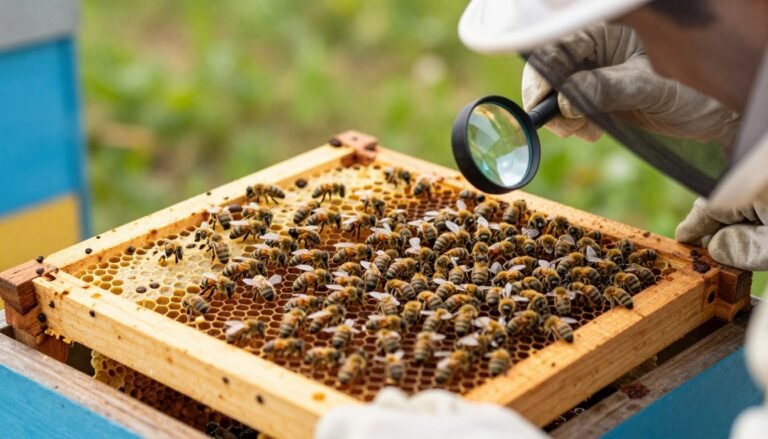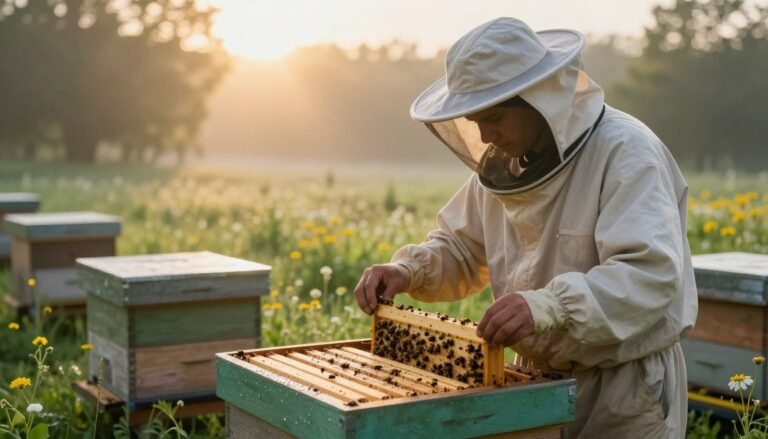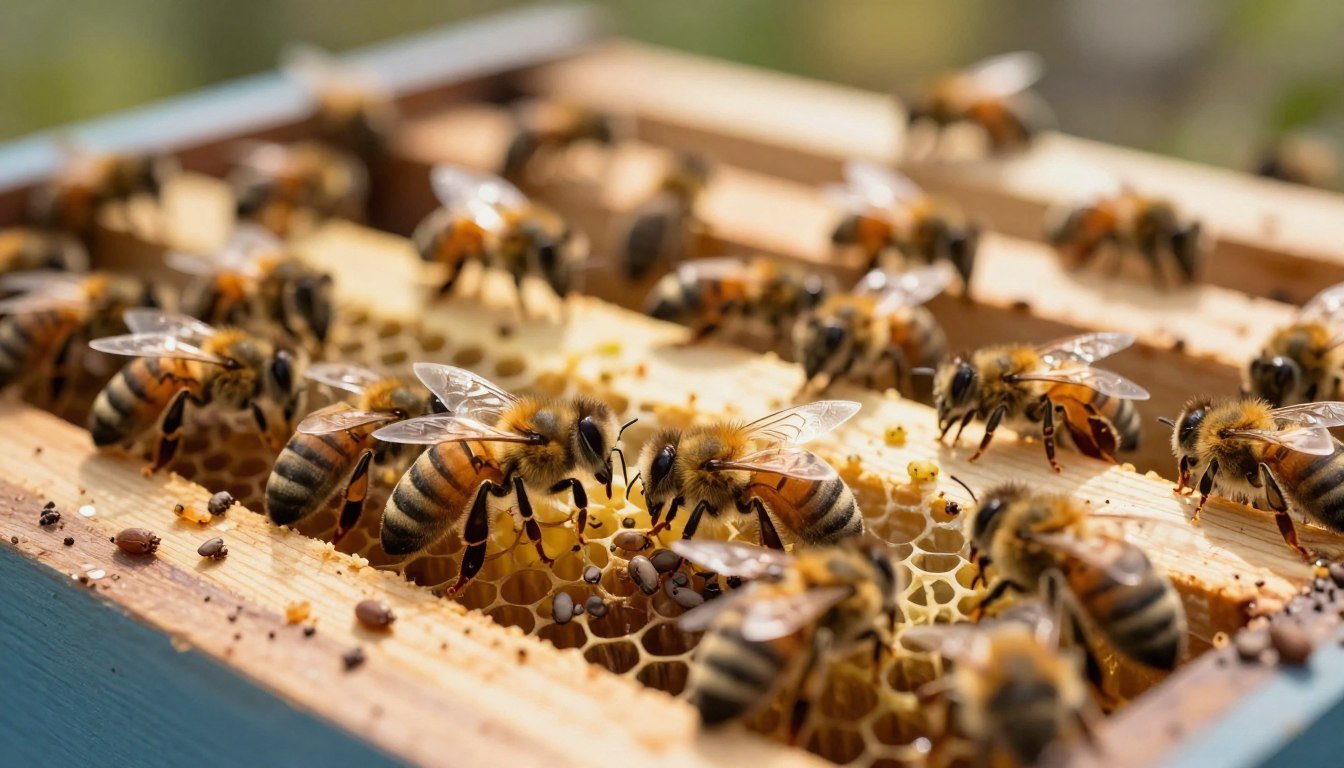
Managing mite pressure after a new queen joins a hive matters for colony health and honey production. The pest was first found in North Carolina in 1990, just three years after reaching the U.S., and its impact on colonies has shaped modern beekeeping practices.
When you introduce a new queen, population dynamics shift. Monitor adult bees and brood closely. Small changes in mite counts can signal when to act.
Use consistent testing and practical timing for any treatment to protect the queen and developing brood. For detailed testing guidance and post-treatment counts, consult this resource on post-treatment mite counts.
Key Takeaways
- Requeening changes colony population; watch adults and brood.
- Regular, consistent testing gives early warning of rising mite pressure.
- Choose treatments that protect the queen and brood during recovery.
- Keep records to spot trends and time interventions well.
- Stable adult populations help the queen establish a strong brood pattern.
Understanding the Threat of Varroa Mites
An invasive parasite quietly undermines hive health by feeding on adult workers and developing brood.
The Life Cycle of Varroa Destructor
The Varroa destructor reproduces inside brood cells. A female enters a cell just before it is capped and lays eggs beside the developing pupa. The offspring feed on the bee pupa and emerge with the new adult, spreading the parasite through normal bee activity.
This feeding behavior damages bees and provides a pathway for viruses that deform wings and weaken immunity. One mite can lead to more mites if left unchecked, making early detection vital for colony survival.
Historical Impact on Colonies
“North Carolina saw a 44 percent drop in managed hives after the initial invasion in 1990.”
The historical toll shows how rapidly an infestation can escalate. Beekeepers must treat surveillance and intervention as routine tasks to protect honey bees and keep colonies productive.
- The parasite harms both adult bees and brood, shortening lifespan.
- It spreads viruses that often trigger colony collapse.
- Proactive monitoring and records help spot trends early.
For a deeper primer on biology and impacts, see this detailed guide on understanding varroa mites and their impact.
Why Requeening Impacts Colony Health
Introducing a new queen shifts social dynamics and can expose weaknesses in hive health. This transition forces rapid role changes among worker bees and alters brood production.
Research by Cargel and Rinderer (2009) found that Italian honey bees show higher rates of queen failure when infestations are high. That study links parasite pressure to reduced queen acceptance and poorer brood patterns.
High varroa burden also harms drone reproductive organs. Damaged drones produce lower quality semen, which reduces mating success for a fresh queen and can limit genetic vigor in colonies.
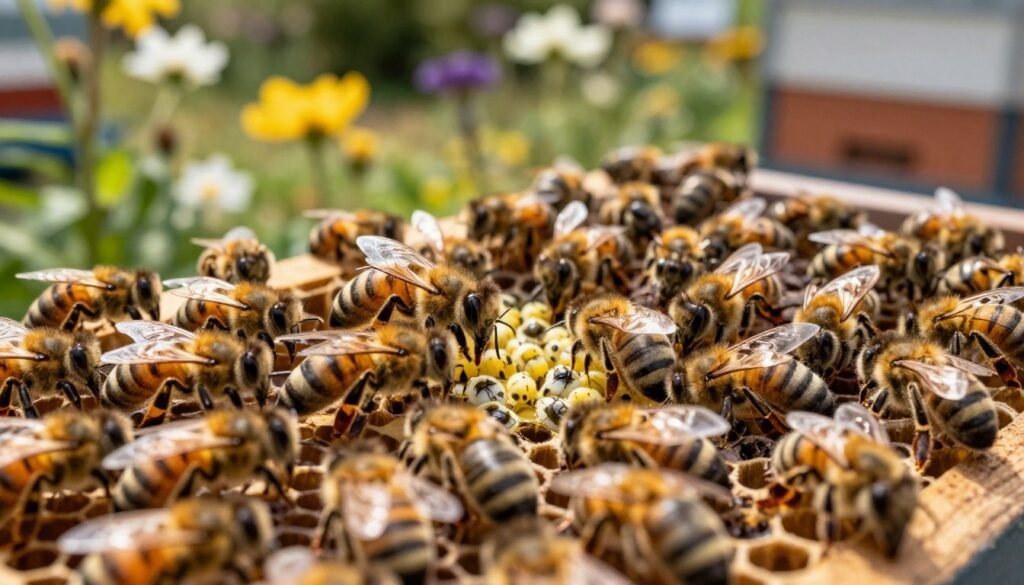
- Requeening stresses the colony; a queen placed into a heavy mite environment may fail more often.
- Weakened adult workers struggle to feed and protect brood, cutting short colony recovery.
- Protecting drone health supports successful mating and stronger honey production later.
Practical tip: Beekeepers should treat and stabilize hives before a queen introduction. For more on how mite pressure affects queen success, see how mites impact queen success.
Monitoring Varroa Levels After Requeening
Early, regular checks help beekeepers understand how mite pressure changes as the colony adapts to a new queen. Test both adults and brood to catch trends before they harm production or queen acceptance.
Sugar Roll Testing Procedures
What to sample: Collect roughly 300 adult bees (about a 100 ml measuring cup) from brood frames. Avoid taking the queen.
Place the sample in a jar with powdered sugar, roll gently, then sift the sugar to dislodge mites. Count mites and record the result as a snapshot for each colony.
Sticky Board Monitoring
Install a sticky board under the screened bottom and leave it for a set time—commonly 48 hours. Remove and count the natural mite drop to compare trends across the apiary.
Combine sticky board counts with sugar roll data to track reproduction in brood cells and infestation among adult bees.
| Method | Sample Size | Timeframe | Best Use |
|---|---|---|---|
| Sugar Roll | ~300 adult bees | Immediate result | Quick colony-level estimate |
| Sticky Board | Whole hive drop | 48 hours typical | Passive trend monitoring |
| Brood Inspection | Selected frames | Ongoing checks | Detect reproduction in brood cells |
Keep consistent records of each sample and use tools like an alcohol wash guide when needed for comparison. Regular monitoring makes treatment timing clearer and protects colonies through the transition.
Integrated Pest Management Strategies
A layered IPM approach blends cultural, genetic, and mechanical tactics to keep mite pressure low in colonies.
Start with prevention. Place hives in full sun when practical, use screened bottom boards, and reduce hive crowding to slow pest growth. These steps help adult bees stay healthier and lower brood exposure.
Genetic tools are central. Introduce queens bred for hygienic traits such as Varroa-sensitive hygiene (VSH). Such queens improve colony defense and cut reproduction of the varroa mite in brood cells.
Drone frames and brood trapping catch a sizable share of mites by concentrating brood in removable frames. Remove and freeze or treat these frames to reduce population in the main colony.
Monitor routinely. Use sugar rolls or an alcohol wash sample to track mite counts and confirm that pest management is working. Regular checks guide whether nonchemical steps suffice or targeted treatment is needed.
- Cultural: site selection, hive spacing, sunlight exposure.
- Genetic: VSH queens and hygienic lines to boost natural resistance.
- Mechanical: screened boards and drone trapping to remove mites.
- Monitoring: sugar roll or alcohol wash to validate success.
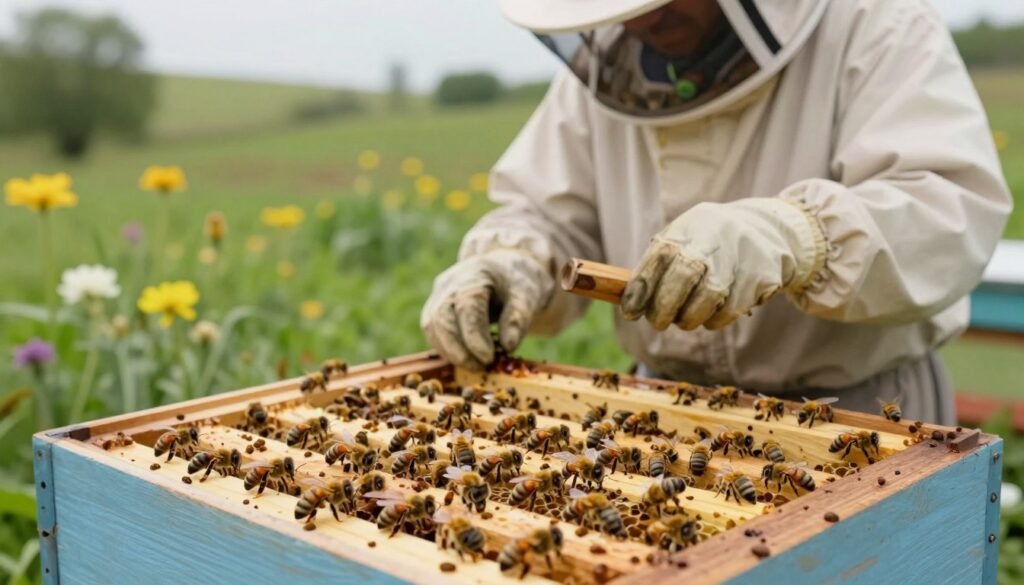
| Strategy | Action | Benefit |
|---|---|---|
| Cultural | Full sun placement, hive spacing | Reduces pest reproduction; healthier brood |
| Genetic | VSH queens, hygienic lines | Long-term resistance in colonies |
| Mechanical | Screened bottoms, drone frames | Removes mites without chemicals |
| Monitoring | Sugar roll or alcohol wash sample | Data-driven treatment decisions |
For beekeepers focused on breeding and behavior, read more about predisposition to hygienic behavior in bee lines at predisposition to hygienic behavior. Integrating these methods helps you manage varroa responsibly and build resilient honey bee colonies.
Selecting the Right Treatment Modality
Choosing the right control method demands careful weighing of effectiveness, safety, and timing for each hive.
Synthetic and organic options each have trade-offs. Apivar is an amitraz-based synthetic with a strong track record—often over 90% efficacy against varroa mites. It works well on adult bees and cuts populations fast.
Organic choices like Formic Pro offer a different benefit. They can penetrate cell cappings and reach mites inside brood. That makes them suitable when honey supers remain on the hive.
Comparing Organic and Synthetic Options
- Efficacy: Apivar is highly effective; organics may act slower but reach brood cappings.
- Resistance risk: Repeated use of the same synthetic can select for resistance; rotate treatments.
- Honey safety: Many organics allow treatment during the honey flow; always follow label rules.
- Colony condition: Consider population size and whether the queen is actively laying before treating.
| Option | Strength | Consideration |
|---|---|---|
| Apivar (amitraz) | High efficacy (>90%) | Risk of resistance if overused; follow time on label |
| Formic Pro (organic) | Penetrates brood cappings | Usable with honey supers; temperature limits may apply |
| Rotation strategy | Long-term control | Reduces resistance; combine with monitoring |
For a detailed comparison of Formic Pro and oxalic options, see this Formic Pro comparison. Follow manufacturer instructions for time in hive to ensure maximum mite reduction and protect your colonies.
Interpreting Mite Counts Across Seasons
Interpreting sample results depends more on seasonality than on a single raw count. A test in spring means something different than the same result in late summer.
Read counts in context: during the growth season a rising brood population can hide a fast increase in mites. Compare your sample to seasonal thresholds before deciding on treatment.
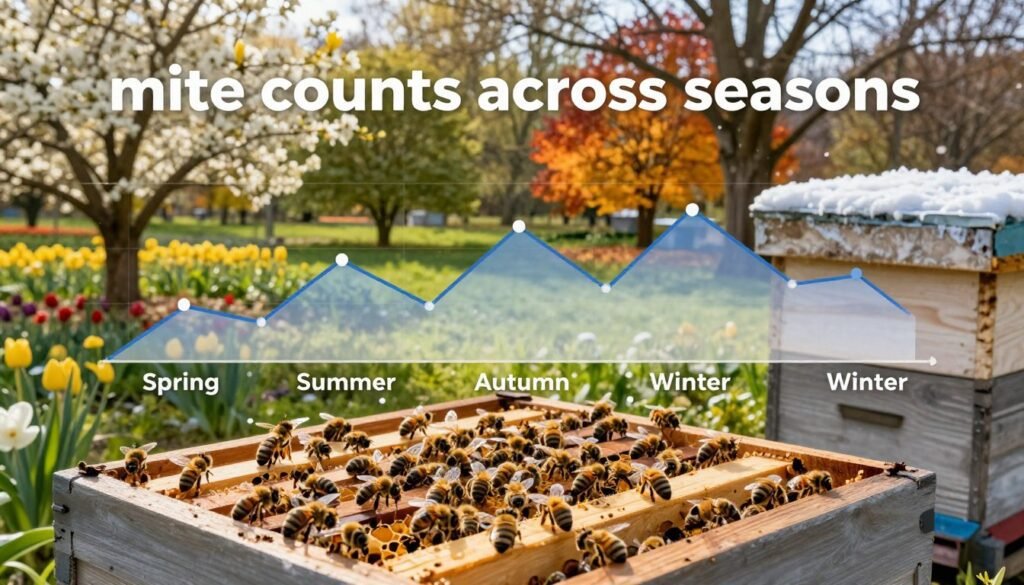
Late-season infestations hurt winter bees most. High counts after harvest increase winter mortality because those bees keep the cluster warm. Protecting adult bees now preserves colony survival.
- Use consistent sampling (sugar or alcohol) and log results by month and year.
- Check worker and drone cells on frames to see reproduction trends.
- Compare counts to established thresholds to judge risk and possible resistance concerns.
With experience you will read patterns faster and refine management for each apiary. For tips that boost hive output and overall apiary productivity, see improving apiary productivity.
Managing Infestations During the Growth Stage
When a hive is expanding, prompt action on infestations preserves brood health and worker strength.
Test early and often. A mite count of 7 or more in a 300-bee sample signals high virus pressure and poor recovery odds. Counts reaching 10 or higher commonly trigger absconding, so act before the colony reaches those thresholds.
The growth stage is ideal for treatments because there is little or no honey to taint. Smaller populations mean lower doses and simpler application for the beekeeper.
Keep the queen laying. Avoid treatments that halt egg production during expansion; the goal is population gain so workers and brood recover quickly.
Use regular sampling of adult bees and brood frames to track results by season and year. Combine sugar or alcohol tests with comb and cells inspections. If counts rise, choose targeted treatments to reduce mites and limit resistance.
- Treat in growth stage when honey risk is low.
- Sample adults and brood regularly to stay ahead of infestations.
- Prioritize colony health and queen continuity during management.
For practical protocols and regional options consult the management guide and a roundup of control methods to match treatments to your apiary.
Handling Mite Loads During Peak Season
Hot months force beekeepers to balance honey harvest and timely treatments. When honey supers are in place, choices shrink and risks rise for the colony and the queen.
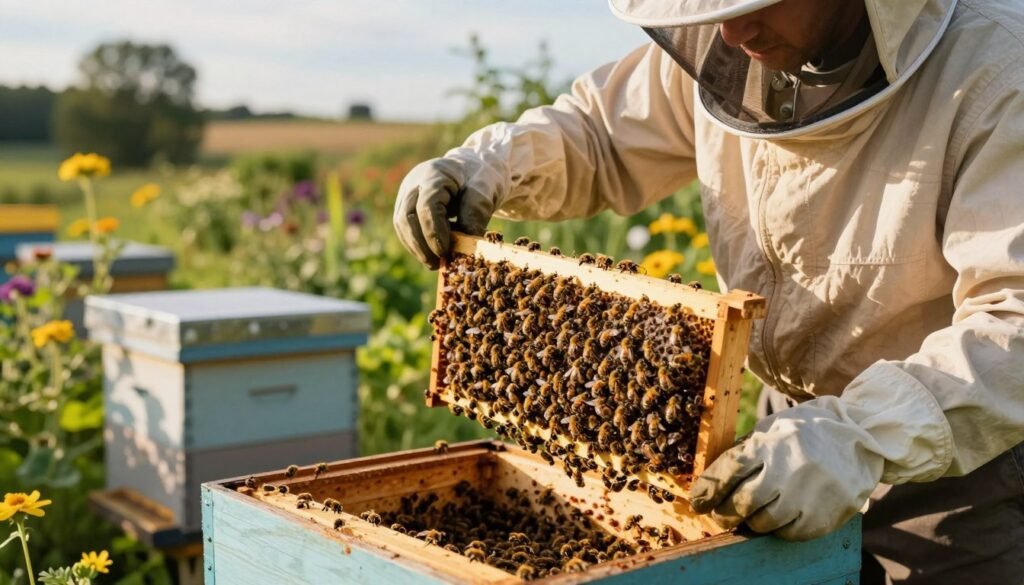
Know product limits before you act. For example, Formic Pro requires daytime temps between 50 and 85 degrees Fahrenheit for the first three days. Using it outside that range can harm bees or the queen.
Temperature Restrictions for Treatments
During peak season, high heat can increase the chance of absconding or queen loss when treatments are misapplied. If you plan to treat with a product that penetrates brood cappings, check label temperature windows first.
Harvest if possible. Remove honey for human consumption before applying most miticides unless your sugar or alcohol sample shows a count of 6 or greater. That level calls for immediate action to protect worker and drone brood.
- Few options exist when supers are on the hive; plan ahead.
- Monitor mites regularly—heat speeds infestations and masks results.
- Rotate methods to reduce resistance and protect colony population long term.
For a late-season plan that helps time treatments and harvests, see the late-summer varroa plan.
Winter Preparation and Late Season Treatments
Late-season checks and decisive treatments give winter bees their best chance to survive cold months. Focus on reducing mite counts and building strong adult bees for the cluster.
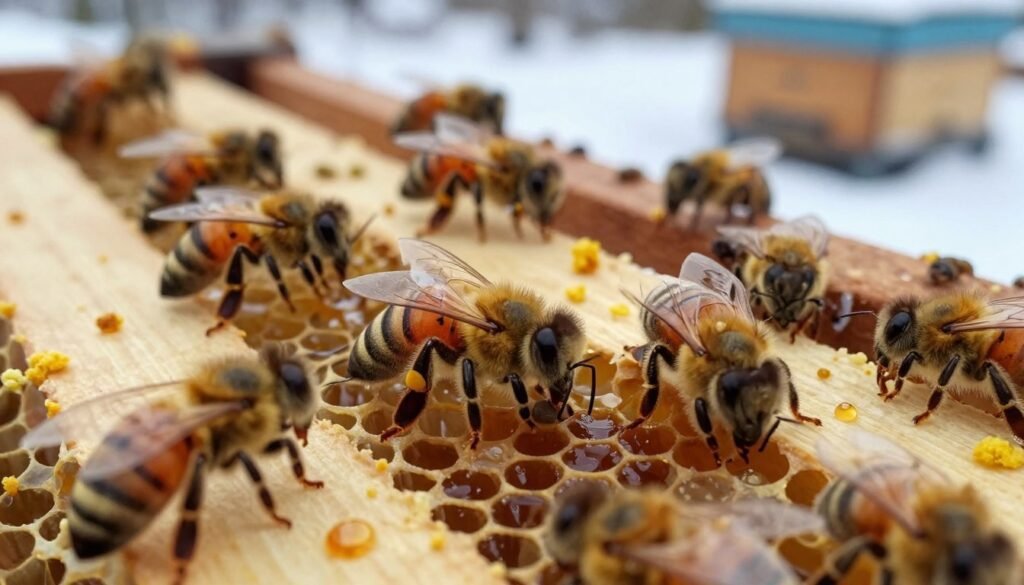
Cold-climate beekeepers should aim for 0 or 1 mite in late season to protect long-lived bees. Use oxalic acid dribble or vaporization when brood is minimal; these methods hit mites on adult bees well.
Apiguard works only when daytime temps stay between 60 and 100°F for the full treatment. Allow a full 4–6 week cycle so the product can reach mites hiding in brood and reduce infestations across the colony.
Remove any honey meant for consumption before treating. This avoids contamination of stored honey and keeps your apiary’s product safe.
In warm climates, acceptable counts can be slightly higher, but keep numbers low before the next nectar flow. Good late-season management sets colonies and queens up to build population and healthy brood in spring.
prepare your bees for winter with these steps to improve results and protect your hives year to year.
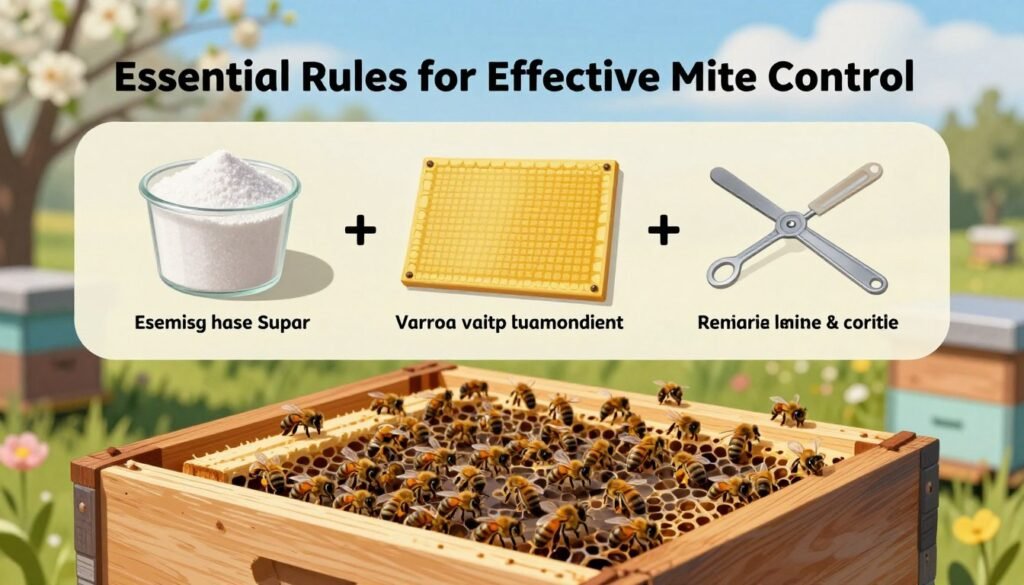
Essential Rules for Effective Mite Control
A disciplined testing schedule is the backbone of any effective mite control plan. Conduct a mite test every 4 to 6 weeks when outside temperatures reach about 70°F or higher. This cadence helps you spot trends in adult bees and brood before infestations surge.
Treat the whole apiary when you treat one hive unless a colony consistently shows a count of 0 or 1. That prevents untreated neighbors from reseeding infestations and protects the queen and population across your yards.
One colony threshold to keep in mind: roughly 1,000 mites in a hive signals serious risk to health. Use sugar or alcohol samples, comb and frames inspection, and sticky boards to confirm results and pick the right action.
Rotate products to avoid resistance. Never rely on the same active ingredient year after year. Follow manufacturer dosage and safety steps exactly to protect you and your honey.
- Test on schedule; log each sample and result.
- Treat all hives when intervention is needed.
- Re-test after treatment to confirm success.
Conclusion
strong, A steady testing schedule helps you spot trouble before it weakens the colony. Check adult bees and brood on a regular time cadence so small changes do not become big losses.
Managing mites is continuous work and calls for attention to each bee and comb. Log your samples and compare results to guide practical steps. Healthy population and clear records improve decisions.
Good management shows in stronger colony performance and better honey bee production across the season and year. Every honey bee colony is different, so adapt methods as conditions change.
With the right tools, steady checks, and timely action, you protect your bees and enjoy better results at harvest.
FAQ
What immediate changes should I expect in mite counts after requeening?
Replacing a queen can change colony behavior and brood production, which in turn influences pest numbers. In many hives, mite counts drop within a few brood cycles as the new queen establishes a different laying pattern and colony population stabilizes. Continue regular sampling with alcohol or sugar roll tests for at least six to eight weeks to confirm trends.
How soon should I begin monitoring following a queen change?
Start sampling two to three weeks after requeening and repeat every one to two weeks during the transition. That timing captures shifts in adult bee infestation and brood cell occupancy. Use consistent sampling methods so results are comparable across dates and frames.
Which sampling method is best for tracking mite pressure after a requeen?
Both sugar roll and alcohol wash tests give reliable adult bee counts. Sugar roll avoids killing bees and is great for live apiaries; an alcohol wash yields slightly more accurate mite recovery. Sticky boards are useful for long-term trends and seasonal comparisons, especially when combined with adult-bee sampling.
How do drone brood and worker brood influence population trends after replacing a queen?
Drone brood attracts more mites because of its longer pupal period. A new queen often adjusts brood patterns, and changes in drone production will affect infestation distribution. Monitor drone comb and consider drone brood removal or trapping as part of integrated pest control to reduce population growth.
Can requeening alone control heavy infestations?
Replacing the queen helps in many situations but rarely eliminates severe infestations on its own. Combine requeening with targeted treatments or brood-management tactics. If counts exceed action thresholds for the season, apply approved treatment options promptly to protect adult bees and honey stores.
What treatment choices should I consider after requeening?
Evaluate integrated pest management options: cultural tactics (brood breaks, drone trapping), organic acaricides such as formic acid, oxalic acid vapor or dribble, and registered synthetic miticides when necessary. Match the method to colony stage, honey supers, and local temperature limits to protect colony health and honey quality.
How do seasonal shifts affect interpretation of test results post-requeen?
Counts vary by season—spring growth often dilutes mite prevalence per 100 bees, while summer and fall can show spikes as brood peaks and mite reproduction accelerates. Compare results to seasonal thresholds rather than a single fixed number, and track trends over multiple samples.
Are there temperature constraints for treatments after installing a new queen?
Yes. Some acids and miticides perform poorly or harm bees outside recommended temperature ranges. For example, formic treatments require warm conditions but can stress brood in extreme heat. Always follow label guidance and avoid treatments that could disrupt the queen’s laying during critical brood-rearing periods.
What role does integrated pest management play when combining requeening with other actions?
Integrated pest management (IPM) emphasizes monitoring, cultural controls, resistant stock, and selective chemical use. After requeening, use IPM to sequence interventions—monitor first, apply nonchemical steps like comb replacement or drone culling, and reserve treatments for threshold breaches to limit resistance development.
How can I avoid chemical residue in honey while treating colonies after a queen change?
Time treatments outside of nectar flows and follow withholding periods on product labels. Use approved organic methods when honey supers are present, and select products with low residue risk. Proper treatment timing minimizes contamination and protects consumer safety and marketability.
What sampling thresholds should trigger action throughout the year?
Action thresholds depend on season and management goals. Lower thresholds apply before winter or during dearths when colonies cannot recover from losses. For brood-rearing peaks, use established regional thresholds from extension services and adjust based on colony strength and honey production objectives.
How should I manage infestations while colonies are in rapid growth after requeening?
Prioritize monitoring and quick, targeted responses: remove excess drone comb, increase ventilation and space, and apply brood interruption techniques if needed. If counts are high, use approved treatments safe for growing colonies and schedule follow-up sampling to verify efficacy.
Is genetic resistance an alternative to chemical control when requeening?
Breeding for hygienic behavior and mite-tolerant stock helps reduce reliance on chemicals. Requeening with queens from resistant lines can lower infestation pressure over seasons, but adopt this alongside monitoring and other IPM steps to ensure long-term colony health.
What winter or late-season steps are recommended after a fall requeen?
Late-season evaluations are critical. Treat if counts exceed fall thresholds, consolidate frames to reduce cold stress, and avoid disruptive treatments close to cold snaps. Plan varroa suppression well before heavy overwintering periods to protect adult bee population and winter survival.
How often should I inspect frames and comb for brood cell signs after a queen swap?
Inspect comb every one to three weeks during the establishment period to confirm consistent laying and to check for drone build-up. Look for signs of hygienic behavior, spot infections, and abnormal brood patterns. Gentle, quick inspections reduce stress on the new queen and colony.
What records should be kept to evaluate the success of requeening for mite management?
Keep dates of queen introduction, sampling results (method and counts), treatments applied, brood observations, honey flows, and weather. These records let you compare year-to-year trends, assess treatment performance, and refine your integrated management plan.
Can resistance develop to treatments if I requeen frequently?
Resistance relates more to repeated, improper use of the same chemicals than to requeening frequency. Rotate active ingredients, combine nonchemical tactics, and adhere to label rates to slow resistance in mite populations while maintaining colony health.