Protecting young colonies is one of the smartest steps a keeper in the United States can take. This guide outlines clear protocols to keep small units healthy and growing. Early action helps reduce viral spread and colony loss.
Beekeeping demands attention to timing and biology. Knowing the honey bee life cycle lets you spot risks and act before populations peak. Professionals rely on precise windows to shield small colonies from parasitic pressure.
We focus on proven strategies that help nucs become full, productive colonies by summer. These methods include monitoring, targeted interventions, and routine checks that fit a practical apiary schedule.
Key Takeaways
- Early inspection prevents heavy pest build-up in small colonies.
- Follow the bee life cycle to time protective measures.
- Use monitoring tools and targeted steps to limit spread.
- Routine checks help nucs develop into strong hives.
- Adopt proven protocols used by professional beekeepers.
Understanding the Varroa Mite Threat
Early knowledge of parasite biology and its effects is essential to protect small hives. Beekeepers must know how low-level infestations can erode productivity and weaken colony resilience.
The Impact on Colony Health
Research by Dr. Rob Currie shows that levels above 1 mite per 100 bees can cut honey production and reduce overall colony strength.
Infested brood may develop poorly, and queens often show reduced longevity under viral stress. These outcomes make seasonal losses more likely.
Viral Transmission Risks
These parasites vector more than 20 viruses to the honey bee, including deformed wing virus and acute bee paralysis virus.
Viruses pass directly into developing brood and adult bees, accelerating decline within managed colonies. Protecting bees early limits spread and preserves honey yields.
For detailed protocols and monitoring guidance, see managing varroa mites.
| Threat | Effect on Bees | Critical Threshold | Management Priority |
|---|---|---|---|
| Parasite load | Reduced honey and weakened brood | >1 mite / 100 bees | Early detection |
| Viral vectors | Deformed wing, paralysis, colony decline | Any detectable virus presence | Limit spread into brood |
| Queen stress | Shortened lifespan, lower egg-laying | High mite pressure | Protect queen health |
Why Nucs Require Specialized Care
Spring nucs need extra attention because they have limited worker numbers to absorb sudden pest pressure. The Bee Informed Partnership reported a 48% average annual colony loss in the U.S. (Apr 2022–Apr 2023), which underlines why every small unit matters.
Many start-up colonies are built from frames of brood taken from larger hives. That practice can unknowingly move a high mite load into the new unit. A small colony lacks the resilience of a full hive when parasite counts spike.
Protecting the queen and developing brood is critical. These individuals form the future workforce that builds honey and strengthens surrounding colonies.
Consistent monitoring and quick action limit spread across an apiary. Learn practical steps in our guide to managing varroa in starter colonies and review how resistance shows up in a hive at signs of mite resistance.
The Importance of Early Season Intervention
Early season action gives a small colony the best chance to get ahead of pest pressure and viral spread. Quick steps in spring protect developing brood and let the queen focus on steady egg-laying. This builds workforce strength that lasts into summer.
Benefits of Early Season Control
Lower starting pressure reduces exponential growth of the parasite population during warm months. Beekeepers who begin the year with low numbers see better colony survival and higher honey yields.
Dr. Medhat Nasr observed strong results when Alberta keepers prioritized very early season control in their nucs. Early work on a small hive limits virus transfer into brood and adult bees.
| Action | Immediate Benefit | Season Outcome |
|---|---|---|
| Early inspection | Detect low-level infestation | Stronger colony growth |
| Prompt intervention | Protect brood health | Fewer colony losses |
| Low starting pressure | Queen can lay steadily | Higher honey production |
For threshold guidance, review threshold guidance and compare spring options at treatment comparisons.
Identifying the Optimal Treatment Window
Pinpointing timing makes early management practical and effective. A clear window lets a beekeeper act when adult bees carry the highest share of parasites, while brood and a new queen remain safe.
Calculating the Treatment Window
Randy Oliver recommends a narrow window: Day 19–21 after making up a nuc. During these days most parasites leave sealed brood and become phoretic on adult bees.
Managing Brood Cycles
Insert a 10-day queen cell to set a predictable laying schedule. Mites typically do not invade a cell until about day 8 after the egg is laid. That timing creates a predictable period when treatments hit phoretic mites without harming brood or the queen.
- Make up the nuc and mark Day 0.
- Introduce a 10-day queen cell to sync egg-laying.
- Apply your chosen control on Day 19–21 to target phoretic mites.
| Metric | Timing (days) | Benefit |
|---|---|---|
| Queen cell insertion | Day 0–1 | Predictable egg-laying start |
| Cell invasion by mites | ≈Day 8 after egg | Brood protected until invasion |
| Optimal treatment | Day 19–21 | Maximize phoretic control, protect brood |
After application, monitor counts and adjust management. See post-treatment mite count guidance to verify effectiveness and plan follow-up checks.
Methods for Treating Nucs for Varroa Mites
A clear plan helps beekeepers apply safe, effective controls to young colonies during critical growth days.
Select options that protect the queen and brood while lowering pest pressure on adult bees.
Many keepers prefer organic acids after research showed some synthetic miticides can harm colony resilience. Dr. Pierre Giovenazzo highlighted risks that led others to choose gentler products.
- Pick a miticide that spares a newly mated queen and steady brood development.
- Apply treatments consistently and follow the manufacturer’s label every time.
- Expect frames moved from established colonies to bring parasites; plan follow-up checks.
| Method | Queen Safety | When to Use |
|---|---|---|
| Organic acids | High | Early spring, low brood |
| Synthetic miticide | Variable | When label allows |
| Physical/management | High | Alongside chemical use |
Follow label timing and monitor colony counts after treatment to verify success and protect honey yield.
Evaluating Organic Acid Options
Many beekeepers turn to oxalic acid because it combines quick application with proven efficacy on adult bees. Organic acids can protect a developing colony when applied at the right time and concentration.
Oxalic acid dribble techniques use a 5% glycerin solution to reduce brood impact and ease application. Studies by Dr. Pierre Giovenazzo show that oxalic acid can cut mite levels while leaving the queen unaffected.

Dribble method and timing
Since oxalic acid kills mainly phoretic pests, timing matters. Apply during broodless windows or the Day 19–21 window recommended by Randy Oliver to hit phoretic bees.
- Use a 5% glycerin carrier to soften effects on the brood and bees.
- Wear gloves, eye protection, and a respirator—oxalic acid is corrosive.
- Many keepers favor this option because it is inexpensive and fast when managing many small hives in spring.
For more step-by-step guidance and comparative options, see this concise treatment options.
Assessing Synthetic Miticide Alternatives
Beekeepers often weigh synthetic options when low thresholds become high risk. Select products that reduce adult mite loads while protecting the queen and brood.
HopGuard (hops beta acids) is a promising option that is gentle on the queen and suitable for small nucs. It can be a good first choice when you need safe, quick control.
Apivar (amitraz) delivers a high kill rate and is commonly used by beekeepers to manage severe infestations in a colony. It requires attention to label timing and strip placement in the hive.
Rotate active ingredients to limit resistance. Check each product’s registration with your State Department of Agriculture before use, since rules vary across the United States.
- Plan longer application times; some synthetic treatments need strips left in the hive for several weeks.
- Monitor the hive and brood after removal to confirm reduced mite counts and healthy colony recovery.
| Product | Queen Safety | Application Notes |
|---|---|---|
| HopGuard | High | Short exposure, suitable for small nucs |
| Apivar | Moderate | Longer strip duration; high efficacy |
| Rotation | — | Reduce resistance over seasons |
The Role of Essential Oils in Mite Control
Many keepers turn to plant-derived products to reduce pest pressure while protecting the queen and brood. Thymol, an extract from thyme, is a common active ingredient in Apiguard and similar gels.
Use caution with concentrations. High levels can disrupt brood rearing in a small colony and slow queen egg-laying. Apply exactly as the product label directs and avoid stacking multiple scented products.
Temperature matters. Warm, hot conditions can push bees to beard at the hive entrance or even lead a colony to abscond. Monitor daily when using oils during spring and summer honey flows.
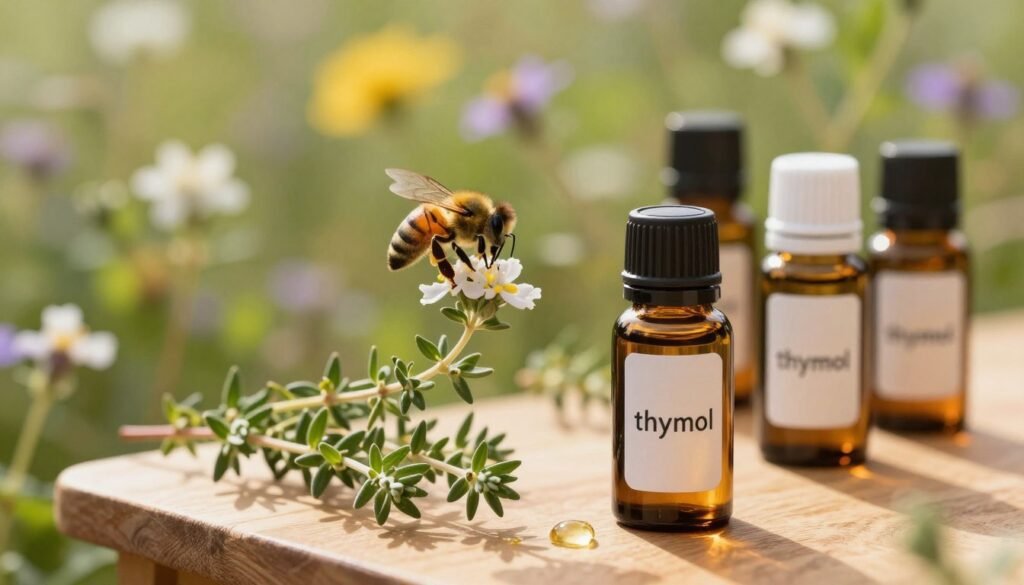
Formic options like Mite-Away Quick Strips (formic acid) can penetrate capped cells and reach hidden pests inside brood cells. These strips work in many small hives, but label timing and temperature windows are critical.
- Choose products that spare the queen and keep frames intact.
- Watch colony behavior after application and inspect brood patterns within a week.
- Combine oils with regular monitoring to confirm reduced mite counts and healthy bees.
| Product | Active Ingredient | Queen Safety | Temperature Note |
|---|---|---|---|
| Apiguard | Thymol | High if used to label | Best 59–86°F (15–30°C) |
| Mite-Away Quick Strips | Formic acid | Moderate; can reach cells | Avoid extremes; follow label |
| Essential oil blends | Multiple plant extracts | Variable; risk at high dose | Monitor for bearding in heat |
Monitoring Mite Levels After Application
A clear post-treatment plan helps beekeepers verify success and decide next steps for colony care.
Regular checks show whether a control step lowered the pest population in the hive. Monitoring confirms the health of the brood and adult bees and guides any follow-up action.
Alcohol Wash Procedures
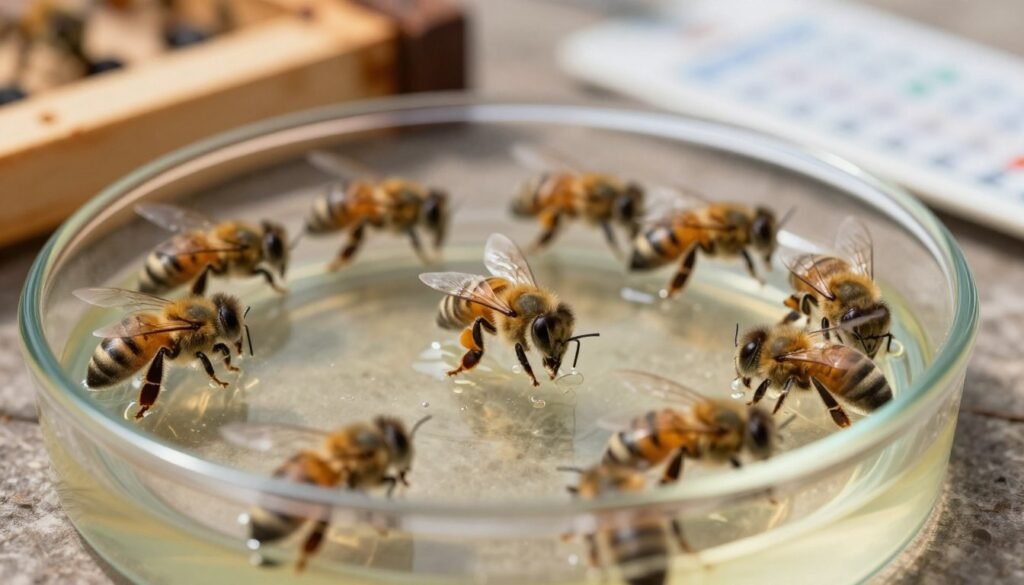
An alcohol wash using one-half cup of bees — roughly 400 individuals — gives the most accurate estimate of the mite population.
Sample young nurse bees from brood combs rather than older bees on honey frames. This yields a true representation of the mite levels that affect colony growth and the queen.
Use a labeled cup to collect one-half cup of bees, pour them into a jar, add alcohol, and agitate to dislodge parasites. Count mites and divide by the bee number to get a percentage.
- If counts reach or exceed a 3% economic threshold, act immediately with an approved treatment.
- Repeat checks at regular intervals to confirm that treatments reduced the mite population.
- Keep detailed records of counts, dates, and methods to improve long-term management of your nuc and surrounding colonies.
Managing Colony Strength and Productivity
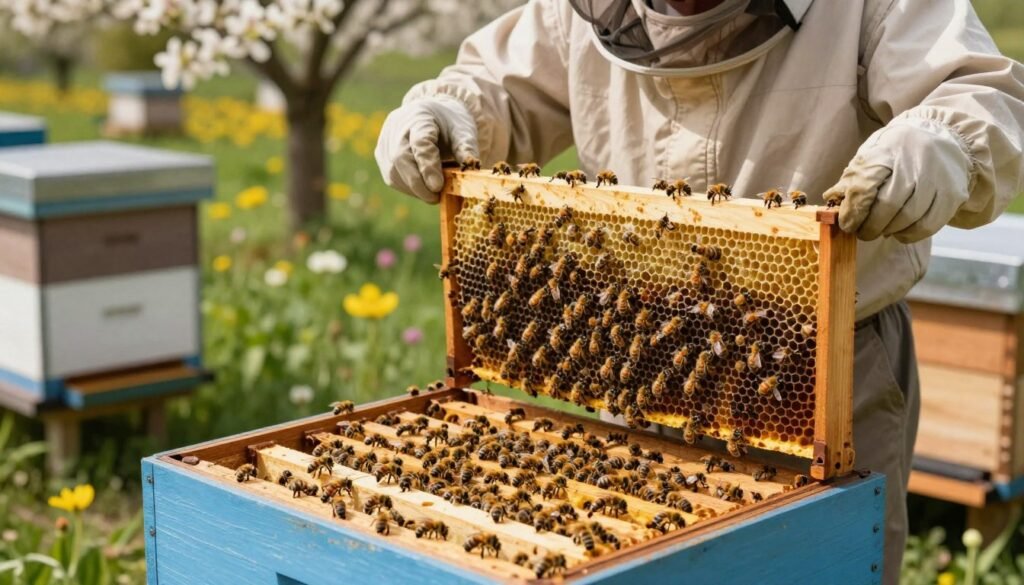
A robust colony resists population collapse and captures more nectar during peak honey flows. Focus on steady brood production and a healthy queen to build workforce quickly.
Supplemental feeding with sucrose syrup helps colonies draw new comb and expand the number of bees over weeks. This support is most effective when brood is actively reared and nectar is scarce.
Monitor brood pattern regularly; a spotty pattern often signals a struggling queen or high viral loads. If the brood looks uneven, act quickly to restore strength.
Beekeepers should aim for 5–9 seams of bees before winter. Reaching that critical mass improves survival and boosts honey yield the following season.
When a colony is weak, consider adding frames of capped brood from a healthy, inspected source to jump-start population growth. Always verify donor frames are low in mite levels first.
“Strength and timely support are the best defenses against rapid pest-driven declines.”
For a practical timeline and extra steps, review the seasonal proactive schedule used by professional keepers.
Preventing Reinfestation in the Apiary
Keeping reinfestation out of an apiary demands clear rules and steady checks across every hive.
Coordination matters. Keep mite levels low across all colonies year-round. A single high-count colony can seed neighbors and undo weeks of work.
Watch for robbing behavior. Yellow jackets or stray bees can carry a varroa mite into a treated colony during aggressive robbing events.
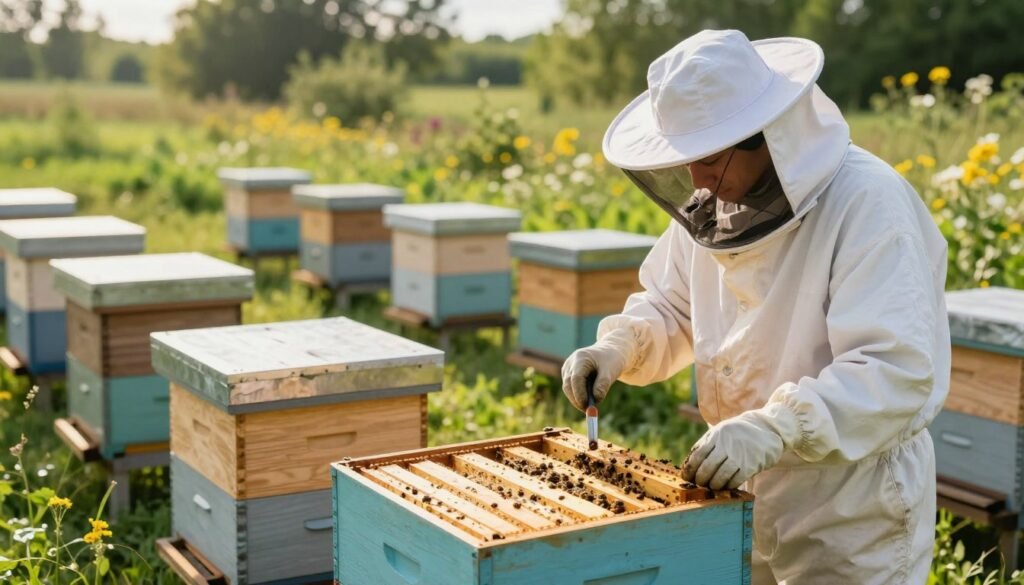
Use entrance reducers and tight screens to help colonies defend entrances. These simple barriers reduce robber access and give guards a better chance to repel intruders.
Talk with nearby beekeepers and share a plan. Community effort lowers the overall mite population and protects local honey yields and queens.
Inspect hives often for odd brood patterns or sudden adult losses. Early viral signs can signal reinfestation before numbers spike.
- Schedule regular checks across the apiary every few weeks to track mite levels and colony strength.
- Limit drift by spacing hives and marking entrances so returning bees find their home.
- Use consistent treatments and follow post-application monitoring; see a concise varroa mite treatment guide and learn how to read an alcohol wash.
“Preventing reinfestation requires planning, neighborhood cooperation, and consistent inspections.”
Best Practices for Queen Health During Treatment
A queen’s health determines how quickly a small colony recovers after intervention. Protecting her is the most important step when you apply a control step in a hive.
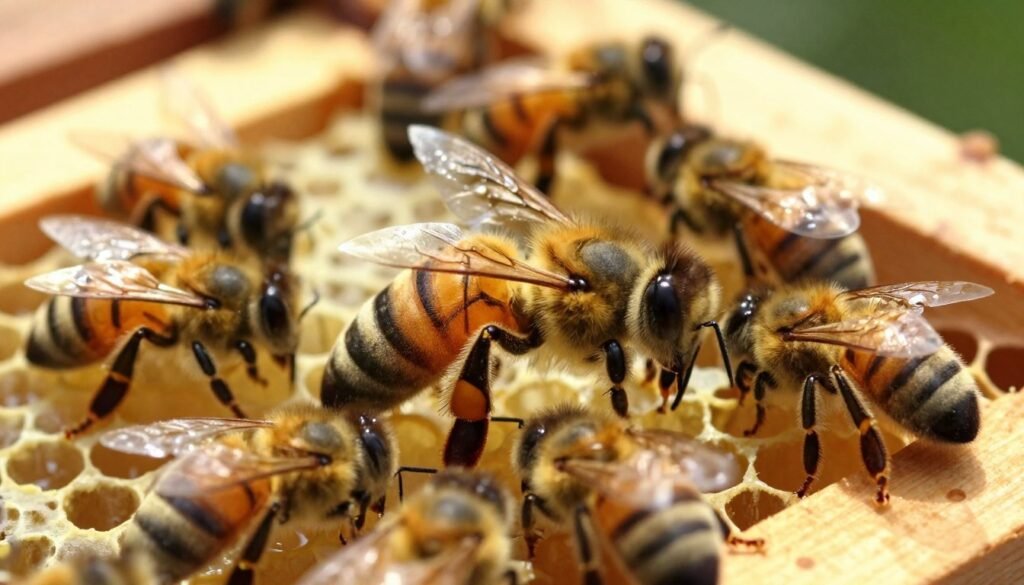
Protecting Newly Mated Queens
Handle gently. Move frames slowly and avoid sudden heat or strong odors near the entrance. Excessive warmth or chemical stress can cause a queen to stop or reduce laying.
Choose products known to be queen-safe. Many beekeepers favor acids and short-exposure options that minimize brood harm while lowering pest population on adult bees.
- Watch brood patterns: Spotty or missing cells can signal queen failure after an application.
- Monitor behavior: A drop in egg-laying or queenless signs calls for immediate inspection.
- Use gentle options: Select treatments with proven safety for a new queen and steady colony growth.
“A stable queen keeps brood production steady and helps colonies rebuild quickly.”
Navigating Seasonal Temperature Constraints
A beekeeper must align application windows with forecasted temperatures to avoid stress on the queen and workforce.
Many products such as Api Life Var and Apiguard carry strict temperature ranges that protect bees and ensure efficacy. If heat spikes, treatments can prompt bearding or even brood mortality in a small hive.
Always check the local weather and hold off if forecasts predict extreme warmth or swings. A short cold front can also change how a product disperses inside a hive.
In winter, options narrow. Oxalic acid vaporization is commonly used when no brood is present to lower population levels safely.
Professional beekeepers plan annual calendars around seasonal windows. That practice helps preserve the queen and keeps colonies ready for peak flows later in the year.
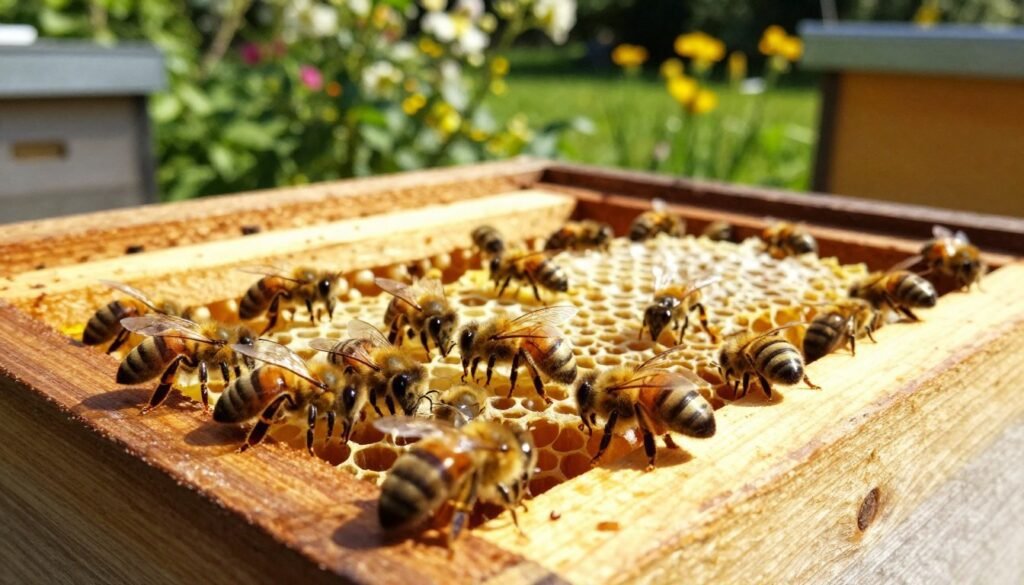
| Season | Common Constraint | Recommended Option |
|---|---|---|
| Spring | Warm days, brood present | Use label-safe treatments during cool mornings |
| Summer | High heat, bearding risk | Avoid heat-sensitive gels and timed strips |
| Winter | Broodless window | Oxalic acid vaporization |
Coordinating Treatments with Honey Flows
Timing treatments around peak nectar flows protects your honey crop and the health of the colony. Plan actions so the brood and workers stay strong while you avoid contaminating frames you plan to harvest.
Some products are approved for use with supers in place. Mite-Away Quick Strips and HopGuard can be used during an active honey flow, giving beekeepers flexibility when pressure is rising.
Always read the product label before you add or remove a super. Labels list restrictions on installation, removal, and harvest timing. Follow those instructions to keep your honey safe for human use.
If a major honey flow is underway, choose a short-residual treatment or delay application until after the peak. Proper planning lets you capture a high-quality honey crop while maintaining healthy bees.
- Coordinate calendar dates so treatments do not overlap peak nectar sources.
- Use approved options when supers remain on the hive to avoid comb removal.
- Monitor results with an alcohol wash after any application to confirm efficacy and plan follow-up.
Working with Professional Beekeeping Standards
Adopting formal standards helps keep colonies healthy and aligns individual apiaries with statewide expectations.
Use extension publications such as Mississippi State University Extension Publication 2826 as a baseline for varroa management and routine inspections. These documents offer step-by-step checklists that many professional beekeepers follow.
Engage local clubs and state inspectors to learn new tools and methods. Training events and inspections help beekeepers refine sampling, record-keeping, and application timing that protect hives and brood.
Professional responsibility matters. Keeping parasite levels low is not only good practice—it limits spread across a neighborhood of hives and supports regional bee health.
- Keep clear records of counts, dates, and actions taken to show consistent care.
- Share results with club mentors and inspectors to get feedback and improve outcomes.
- Pursue continuing education and adopt evidence-based practices used by experienced beekeepers.
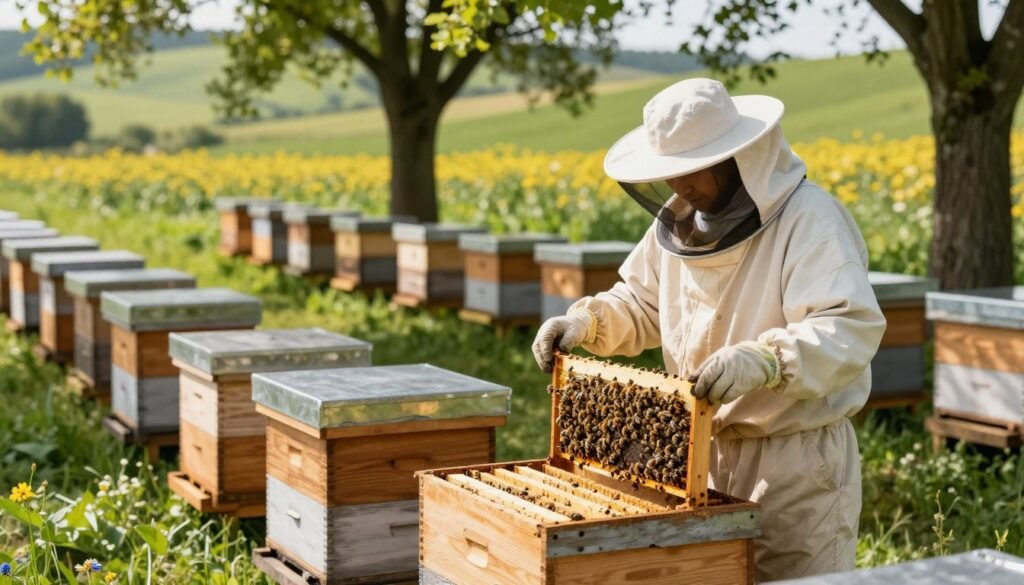
| Standard | Benefit | Who to consult |
|---|---|---|
| Extension guides (e.g., MSU Pub 2826) | Clear, evidence-based protocols | Extension agents, county inspectors |
| Local club training | Hands-on skill building | Experienced beekeepers, master beekeepers |
| Detailed records | Track trends and demonstrate care | State inspectors, apiary neighbors |
Conclusion
Protecting the queen and brood early gives each hive the best chance to thrive.
Effective varroa management is the cornerstone of successful beekeeping and the survival of your honey bee colonies. Time your interventions carefully and keep clear records of counts and actions.
Every nucs and hive in an apiary needs steady attention to keep brood patterns strong and queens productive. Simple habits — regular checks, targeted action at the right window, and neighbor coordination — reduce reinfestation risk.
Implementing these strategies will help maintain productive hives and support regional bee health. Learn one proven approach at simple early treatment and stay proactive each season.
FAQ
What makes varroa mite infestations especially dangerous to small colonies like nucs?
Small colonies have fewer adult workers to groom and remove parasites, so mite populations can rise quickly. Infestations increase stress on brood, reduce overwintering success, and amplify viral transmission such as deformed wing virus. Prompt, targeted control preserves colony strength and honey production.
When should I check a nuc for mite levels to get an accurate reading?
The best time is early spring, just after steady brood rearing begins but before major nectar flows. Monitor again after any treatment and before combining or moving colonies. Regular checks every 2–6 weeks during active season help track population trends.
How do I calculate the optimal treatment window for a small colony?
Estimate brood cycle timing: a full worker brood cycle is 21 days. Plan treatments around brood breaks or use methods that penetrate capped cells. Allow at least one full brood cycle after treatment to assess effectiveness, and time applications to avoid contaminating honey during flows.
Can I use oxalic acid on a nuc with a new queen or lots of brood?
Oxalic acid vapor or dribble works best during broodless periods because it targets phoretic mites. If brood is present, effectiveness falls. For new queens, choose application methods and timing that minimize stress—vapor treatments are often less disruptive than dribbles when used correctly.
What organic acid techniques are recommended for small colonies?
Oxalic acid vaporization, low-volume dribble, and trickle methods are common. Vaporization delivers uniform distribution with minimal contact to bees; dribble is simple but needs precise dosing and warmer conditions. Always follow label rates and use appropriate PPE to protect yourself and bees.
Are synthetic miticides safe to use in nucs, and when are they appropriate?
Synthetic miticides like amitraz or flumethrin can be effective but may leave residues in wax and affect queen performance if misused. Use labeled products at recommended rates, rotate active ingredients to prevent resistance, and avoid treatments during honey flow or close to queen rearing when possible.
Do essential oils help control mite populations in small colonies?
Thymol and other essential-oil blends can reduce mite loads and are an option during warm weather. They often act more slowly and require stable hive temperatures. Effectiveness varies by product and colony conditions, so monitor mite levels and combine approaches when needed.
How should I monitor mite levels after treating a nuc?
Use alcohol or sugar shake tests to count phoretic mites two to three weeks after treatment. For a sugar shake, sample about 300 bees from the brood area; for alcohol wash, follow labelling safety. Record results and compare against action thresholds to decide if retreatment is required.
What is the alcohol wash procedure and why is it preferred by many beekeepers?
An alcohol wash dislodges mites from a known number of bees, giving an accurate mite-per-100-bees metric. Collect about 300 bees from near brood, place them in a jar with alcohol, agitate, then strain and count mites. It’s reliable, repeatable, and useful for assessing treatment success.
How can I prevent reinfestation in an apiary with multiple colonies?
Coordinate monitoring and treatments across apiary neighbors to reduce drift and robbing. Keep weak colonies strong, replace old comb, and avoid overcrowding. Regularly inspect for queenless or collapsing hives and isolate or treat them promptly to limit mite spread.
What steps protect queen health when applying mite controls in a nuc?
Reduce handling stress, avoid high-dose or unapproved treatments near queen cells, and schedule applications when brood rearing is stable. If you suspect queen decline, inspect brood pattern and consider requeening after mite reduction to restore productivity.
How do temperature and season limit treatment choices for small colonies?
Many organic acids and essential oils require warm daytime temperatures to vaporize or distribute effectively. Cold conditions reduce efficacy and can harm bees. Conversely, applying treatments during peak honey flow risks contamination. Choose methods appropriate for local climate and forage calendar.
Should I adjust treatment timing around honey flows or extraction?
Yes. Avoid applying treatments that leave residues when nectar is coming in or while supers are on. Use non-residual options before or after flows, and follow label guidance on withholding periods to protect honey quality and meet food-safety standards.
When is it advisable to consult professional beekeeping services or standards organizations?
Seek professional help if mite counts remain high after repeated treatments, if you face suspected resistance, or when managing large-scale apiaries. Extension services, state apiarists, and organizations like the Apiary Inspectors of America provide protocols, diagnostics, and resistance-management advice.