Published March 31, 2026 · Last Updated August 26, 2026
The queen bee is the heartbeat of any honeybee colony. She lays eggs and shapes the genetic character of the hive. This role keeps brood cycles steady and production reliable.
Queen banking helps beekeepers keep mated queens in reserve. By placing caged queens with a strong, queenless host, managers suspend egg laying without harming colony health. This system lets commercial beekeepers move from reactive fixes to planned management and keeps colonies productive when a queen is lost.
In the United States, nearly three million colonies demand many queens each season. A well-run bank supports feeding, frames, nurse care, and acceptance by the host hive. For local services and resources, check the nearby branch information at Valley Bank Rego Park for community support and scheduling.
Key Takeaways
- Queen health drives colony stability and honey production.
- Queen banking stores mated queens ready for immediate use.
- Strong, queenless host colonies provide essential nurse care.
- Commercial management gains value by preventing brood breaks.
- Proper feeding, cages, and frames aid acceptance and survival.
Understanding the Concept of Queen Banking
A dedicated queen holding system keeps mated specimens healthy and ready for immediate placement.
Defining the queen bank
Queen banking stores mated honey bee queens in cages inside full-sized colonies. Workers care for them without active laying. This preserves condition and speeds replacement when needed.
Nursery vs. bank
A queen nursery raises virgin individuals from queen cells. A bank holds proven, mated queens under suspension. Knowing the distinction improves production and acceptance rates in the apiary.
“The Cloake Board Method lets beekeepers switch between queenless and queen-right states for flexible management.”
- Fact: A developing queen larva gets about 1,600 nurse feeding visits, far more than a worker.
- Practice: Caged mated queens in a strong colony remain viable and ready for use.
- Resource: Consult a detailed queen bank management guide for setup and care.
Why Beekeepers Maintain a Queen Reservoir
A ready reserve of mated queen bees gives beekeepers fast options when a hive shows weakness.
Keeping a queen reservoir shortens delays when splitting or requeening. This avoids the typical 24-day wait that comes with raising and mating a new queen.
Not every cell or virgin will succeed. Some queen cells fail and some virgins never mate. A stored queen works as insurance for these losses.
For small operations with five to fifty colonies, a five-frame nucleus box is an effective storage system. It provides nurse care, frames, and easy feeding without stressing the main apiary.

Proactive queen supply prevents brood gaps and keeps honey production steady across the season.
- Immediate requeening: Save hives that would otherwise lose productivity.
- Planned management: Move from reactive fixes to scheduled maintenance.
- Reduced risk: Compensate for failed cells and mating losses.
| Benefit | Impact | Suggested Setup |
|---|---|---|
| Rapid replacement | Prevents brood breaks | 5-frame nucleus box with frames and feeding |
| Consistent production | Higher honey yield | Strong host with nurse population |
| Operational reliability | Less colony loss | Regular queen supply and acceptance checks |
Learn practical storage and handling tips in this queen bee storage and management tips guide.
How to Bank Queens for a Short Period
Short-term queen storage relies on careful host selection and daily checks to keep stock healthy. Start by placing each mated queen in a small cage and spacing cages at least six inches apart inside the host colony. This reduces pheromone stress and worker agitation.
Ensure the host is completely queenless. Workers will otherwise attack caged queens. Provide syrup and pollen patties at the entrance to guarantee steady feeding and nurse attendance.
Expect that caged queens remain viable for up to three weeks in banking frames. Beyond that, move them into a five-frame nucleus box for longer care. A queen bank is not a set-and-forget system; monitor weight, food, and brood patterns daily.
Good management prevents brood gaps and preserves production. Keep records of each queen’s source, date placed, and any acceptance notes. Regular checks keep the reserve ready when a hive needs immediate replacement.
“Consistent monitoring and proper spacing are the simplest ways to keep reserve queens healthy.”
- Short storage: up to three weeks in banking frames.
- Longer storage: five-frame nucleus box preferred.
- Daily food and acceptance checks are essential.
For setup details and troubleshooting, review the queen bank management guide.
Selecting and Preparing the Host Colony
Careful selection and simple preparation set the stage for reliable reserve management.
Colony strength and composition
Pick a populous colony of 40,000–60,000 bees. This workforce supports multiple caged queen placements and steady feeding. Never use hives showing disease, heavy Varroa loads, or nutritional stress.

Colony Strength
Young nurse bees and strong brood patterns improve acceptance. Place one or two frames of open brood near the center. These frames stimulate workers to feed and groom the caged individuals.
Inducing Queenlessness
Remove the resident queen and wait at least 24 hours before introducing banked queens. That interval shifts worker behavior into a caregiving state and lowers aggression.
- Do not use diseased or mite-infested colonies as hosts.
- Use clean frames brood to encourage nurse activity and feeding.
- Select a populous colony; young nurse bees prefer brood care tasks.
“Proper preparation ensures the reserve stays stable and productive through the season.”
For setup and hive placement guidance, see this beehive installation resource.
Essential Frame Arrangement and Cage Positioning
Strategic positioning inside the hive keeps mated queen stock warm and well fed. Place queen cages within the brood area, typically between the central frames where temperature stays steady. This reduces stress and supports steady feeding from nurse bees.
Avoid the entrance and outer frames. Temperature swings and drafts near the front harm caged queens and lower survival. Use a specialized banking frame or remove two frames to make a gap for suspending cages.
Space matters. Keep at least six inches between cages to cut pheromone overlap and reduce fighting. The mesh screen on queen cages allows worker bees to feed and groom without direct contact between queens.
- Position cages in the heart of the cluster for warmth and protection.
- Arrange frames so nurse bees have clear access for feeding.
- Suspend groups of cages from a banking frame or a modified frame gap.
“Careful positioning is a fundamental aspect of successful queen banking, directly influencing survival rates.”
Good frame layout improves production and reduces brood disturbance. For signs your hive may be preparing to swarm, review this guide: preparing to swarm.
Maintaining Nurse Bee Populations for Success
Maintaining a steady stream of young workers is the single best investment in a healthy queen reserve. Young nurse bees provide the constant feeding and grooming that keep caged queens alive and vigorous.
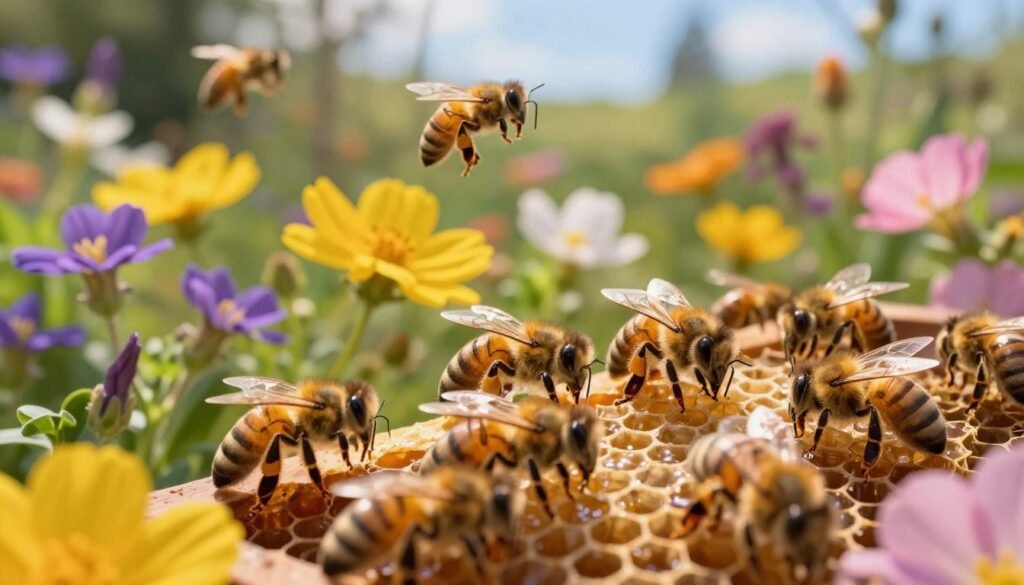
Weekly attention to brood frames prevents the caregiving pool from thinning. Add new frames of capped brood every seven days so newly emerged bees replace older nurses as they shift into foraging roles.
The Role of Emerging Brood
As nurse bees age, they stop caring for brood and queens. Without regular influx of new workers, queen care drops and mortality rises in the bank.
- New frames of brood must be added weekly to keep caregivers available.
- Use capped brood frames to produce reliable young nurse bees.
- Rotate frames, monitor nurse counts, and replace weak frames promptly.
“The most vital component of a queen bank is the presence of young nurse bees responsible for feeding and grooming the queens.”
Consistent frame rotation is fundamental management. For detailed setup and scheduling, consult the queen bank management guide.
Nutritional Requirements for the Banked Colony
A well-fed host hive gives nurse bees the resources needed for steady queen care.
Regular feeding is not optional. The host colony needs sugar syrup and a quality pollen supplement on a schedule. This keeps nurse bees strong and able to produce royal jelly for each queen.
Remove capped honey from frames and replace with open nectar and foundation. That swap encourages natural feeding and keeps brood patterns healthy. Queen cages may include bee candy or sugar-fondant plugs during nectar dearths.
- Feed syrup and pollen so nurse bees remain productive.
- Replace capped honey with open stores and fresh foundation.
- Provision queen cages with bee candy when needed.
Continuous feeding sustains brood rearing and supports young nurse bees. A queen bank cannot forage for its own resources; active management of food and frames is essential. Regular checks of stores and timely feeding are simple steps that raise acceptance rates and keep colonies stable.
| Need | Action | Outcome |
|---|---|---|
| Sustained nectar | Continuous sugar syrup | Stable royal jelly production |
| Pollen protein | Pollen supplement | Stronger nurse bees |
| Accessible food | Remove capped honey, add open foundation | Natural feeding behavior |
“Proper nutrition for the host colony is the single best investment in long-term queen health.”
Monitoring and Suppressing Natural Queen Cells
Regular inspection catches early queen cell construction before the colony shifts priorities.
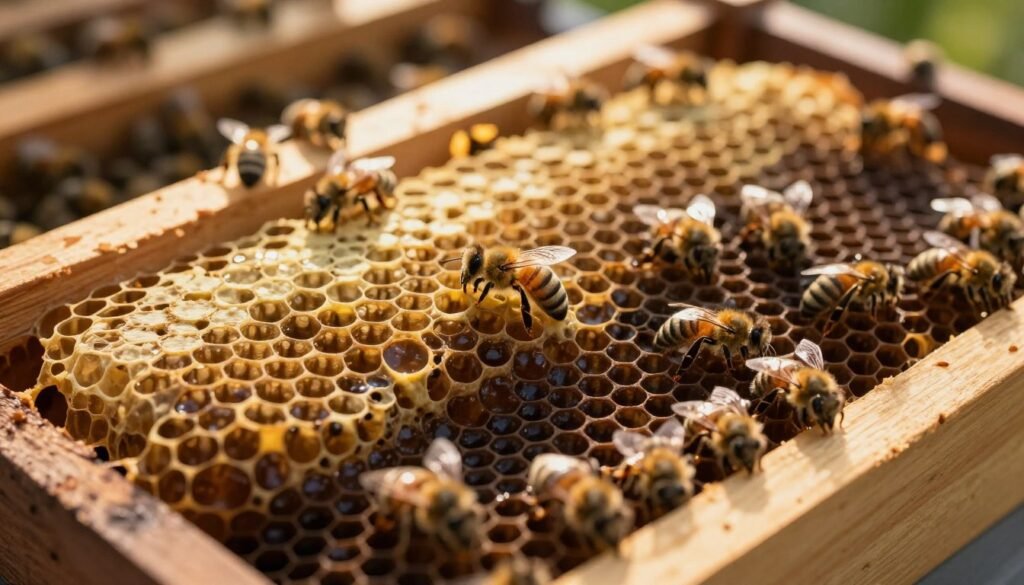
Check the hive every 7–10 days and remove any natural queen cells you find. Missed cells change the chemical signal of the host and can ruin a reserve in one cycle.
If workers raise a virgin queen, they will ignore or attack caged stock and focus care on her. That behavior undermines the bank and increases rejection risk.
Failing to add an open brood frame on schedule can trigger laying workers. Once laying workers develop, the bank colony often becomes unsalvageable.
“Incomplete inspections are the single largest operational risk; one missed cell can shift the colony’s focus.”
- Inspect every 7–10 days and destroy rogue queen cells.
- Keep young brood frames coming so nurse bees remain available.
- Note: refrigerated indoor systems showed 78% survival at six weeks (Washington State University).
Consistent monitoring is the only reliable way to preserve care for caged queens and prevent failure of the reserve. For guidance on preventing swarming, see preventing swarming.
Best Practices for Removing and Introducing Queens
Careful timing and staged exposure give a new queen the best chance of acceptance. Use clear protocols and patient release methods so the target colony can learn the new pheromone profile.

Standard Introduction Protocols
Prepare the target hive by removing competing queen cells and ensuring nurse bees are present. Introduce the queen while brood is present so workers focus on feeding and brood care rather than aggression.
Use a cage for the first contact. Place the queen cage between central frames and leave the protective screen intact while workers inspect her through the mesh. Check acceptance after 3–7 days before full release.
Using Candy Plugs
A candy-plug provides a slow-release path that lets workers acclimate to the queen’s scent. Slow release reduces immediate attacks and raises acceptance rates.
- Place the candy-plug cage in the brood nest near nurse populations.
- Allow gradual access so worker bees can feed and sense pheromones through mesh.
- After the plug dissolves, observe for egg laying and calm behavior.
“Patient introductions and staged exposure are the simplest ways to protect new queens and steady colony function.”
After removal, the reserve can remain active as long as the host colony stays queenless, strong, and well supplied. Restock the bank with mated queens through the season and consult this guide on queen rejection if problems arise: why bees reject a queen.
Conclusion
A reliable queen reserve gives beekeepers an operational edge when colonies need swift replacement.
Establishing a reserve is a powerful management tool that keeps mated queen stock ready and reduces brood gaps. Follow careful host selection, nurse bee maintenance, and regular inspections to raise survival rates and curb rogue cells.
Use methods such as the Cloake Board and staged introductions with candy plugs to improve acceptance. Consistent feeding and timely removal of natural queen cells keep the host colony productive and steady.
Whether running a small apiary or a larger operation, planning and records matter. For sourcing stock and arrival checks, consult this guide on buying packaged bees and nucs to verify frames, brood status, and health assurances before adding new material.
FAQ
What is short-term queen banking and why do beekeepers in Queens, NY use it?
Short-term queen banking is a method of keeping mated queens confined and cared for in a host colony or cage until needed. Beekeepers use it to manage queen supply, replace failing queens quickly, coordinate requeening schedules, and support hive production during peak nectar flows. Properly managed, it preserves queen fertility and worker support without disrupting apiary operations.
Q: What defines a queen bank versus a nursery?
A queen bank holds already mated queens temporarily in cages or a queenless host with nurse bees. A nursery focuses on raising new queens from larvae or grafted cells. Banks prioritize maintenance and short-term storage; nurseries focus on queen rearing and development. Each requires different frames, brood presence, and feeding strategies.
Q: How long can a mated queen be held safely in a cage or host colony?
Properly caged and fed queens can be held for several days to a few weeks. Key factors are nurse bee access, fresh syrup or queen candy, and a calm colony environment. Regular checks reduce stress and mortality. Avoid extended storage beyond a month without rotation or a strong nurse population.
Q: What type of host colony is best for temporary queen storage?
Choose a colony with abundant nurse bees, emerging brood, and stable food stores. Medium-strength colonies that are not preparing supers or swarming work well. Ensure low mite loads and adequate pollen or pollen substitute. A queenless host with plenty of young workers accepts caged queens more readily than a strong queenright hive.
Q: How do I induce temporary queenlessness for banking queens?
Create temporary queenlessness by removing the resident queen and any ripe queen cells, then wait 24–48 hours before introducing caged queens. This reduces rejection and aggression. Maintain brood frames and nurse bees to sustain care for the banked queens without triggering emergency queen rearing.
Q: What frame arrangement and cage positioning improve queen survival?
Place a caged queen between frames with emerging brood and nurse bees nearby, ideally near the brood nest center. Use a frame with drawn comb and position the cage so workers can tend the queen. Avoid placing cages in the outermost frames or directly above honey supers to keep temperature and nursing consistent.
Q: How important are emerging brood and nurse bees in queen banking?
Emerging brood and young nurse bees are vital. They produce royal jelly and attend to the queen’s needs. A steady supply of nurse bees reduces queen stress and improves survival. Rotate frames with capped brood if nurse numbers drop to sustain care over several weeks.
Q: What feeding regimen supports a banked colony?
Provide thin syrup (1:1) during nectar dearths and ensure pollen or pollen substitute availability. Feed at night or during calm weather to reduce robbing. Avoid overfeeding that stimulates brood rearing beyond the colony’s capacity. Maintain clean feeders and monitor consumption to gauge colony health.
Q: How do I prevent the host colony from making queen cells while banking queens?
Remove any young larvae or grafted cells that could become emergency queens and keep a small amount of sealed brood to satisfy the colony’s need. Maintaining one or two frames of emerging brood and ensuring a mated queen is visible in a cage helps suppress natural queen cell construction.
Q: When removing a banked queen, what best practices ensure acceptance in the new colony?
Use the standard introduction protocol: present the queen in a cage with a candy plug and allow workers 24–72 hours to chew through. Place the cage between brood frames near nurse bees. Reduce colony stress by ensuring adequate food and removing the old queen only after the new queen is well attended, if possible.
Q: How do candy plugs help with queen introduction and banking?
Candy plugs allow gradual contact between the queen and host workers, easing aggression. During banking, candy provides a food source and delays immediate escape, helping attendants regulate interactions. Use fondant or specialized queen candy that won’t ferment in warm conditions.
Q: Can queens be banked in smaller boxes or dedicated queen cages outside a host colony?
Yes. Dedicated queen cages in ventilated containers with nurse bee attendants can work for short durations. Ensure adequate food, humidity, and temperature. Small banker colonies with frames of brood and nurse bees in nuc boxes also provide better long-term care than isolated cages.
Q: What signs indicate a banked queen is stressed or failing?
Look for reduced egg laying, lethargy, physical injury, nectar or food scarcity, and neglect by attendants. Increased aggression, spotty brood patterns after introduction, or worker mortality around the cage are warning signs. Replace or refresh the queen and nurse bees promptly.
Q: Are there seasonal considerations when maintaining a queen reservoir?
Yes. Avoid long-term banking during peak winter cold or extreme summer heat. Spring and late summer offer better nurse bee availability and reduced mortality. Align banking with nectar flows and brood cycles to minimize disruption to colony productivity.
Q: What equipment and supplies should be on hand for effective short-term queen management?
Keep assorted queen cages, candy, nuc boxes or supers for banking, frames with emerging brood, feeders, a screened bottom board, and basic inspection tools. Maintain Varroa control products and pollen substitutes to support nurse populations and overall colony health.