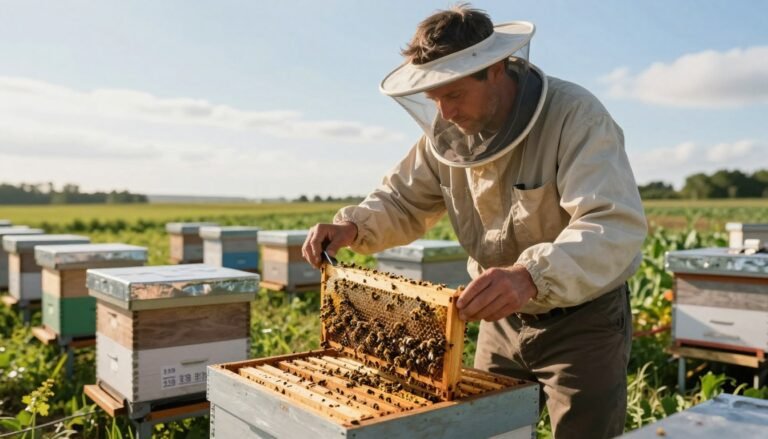
Beekeeping faces one persistent threat that shapes how hives are managed across the United States.
The pest arrived to U.S. apiaries early in the 1990s and was first detected in North Carolina in 1990. It needs a honey bee host to survive and reproduce, and female parasites prefer drone brood much more often than worker cells.
The life cycle moves through stages such as the protonymph and deutonymph before adults emerge. Adult female parasites can live up to five days without food but usually feed on the haemolymph of bees, harming pupae and adult bees.
Understanding the process of how populations grow inside sealed cells is essential for effective monitoring and timely treatment. This guide also links to a practical comparison of treatments for situations with active brood development: treatment options when brood is present.
Key Takeaways
- Early detection and regular monitoring keep mite levels from escalating.
- Life stages like protonymph and deutonymph are key targets for control timing.
- Female parasites favor drone development, so drone brood affects population growth.
- Adult females survive several days without food but usually feed on bee haemolymph.
- Management choices depend on brood presence, season, and accurate counts.
Understanding the Varroa Mite Life Cycle
A close look at the life cycle shows how quickly a mite population can grow within a hive.
Reproduction in brood cells
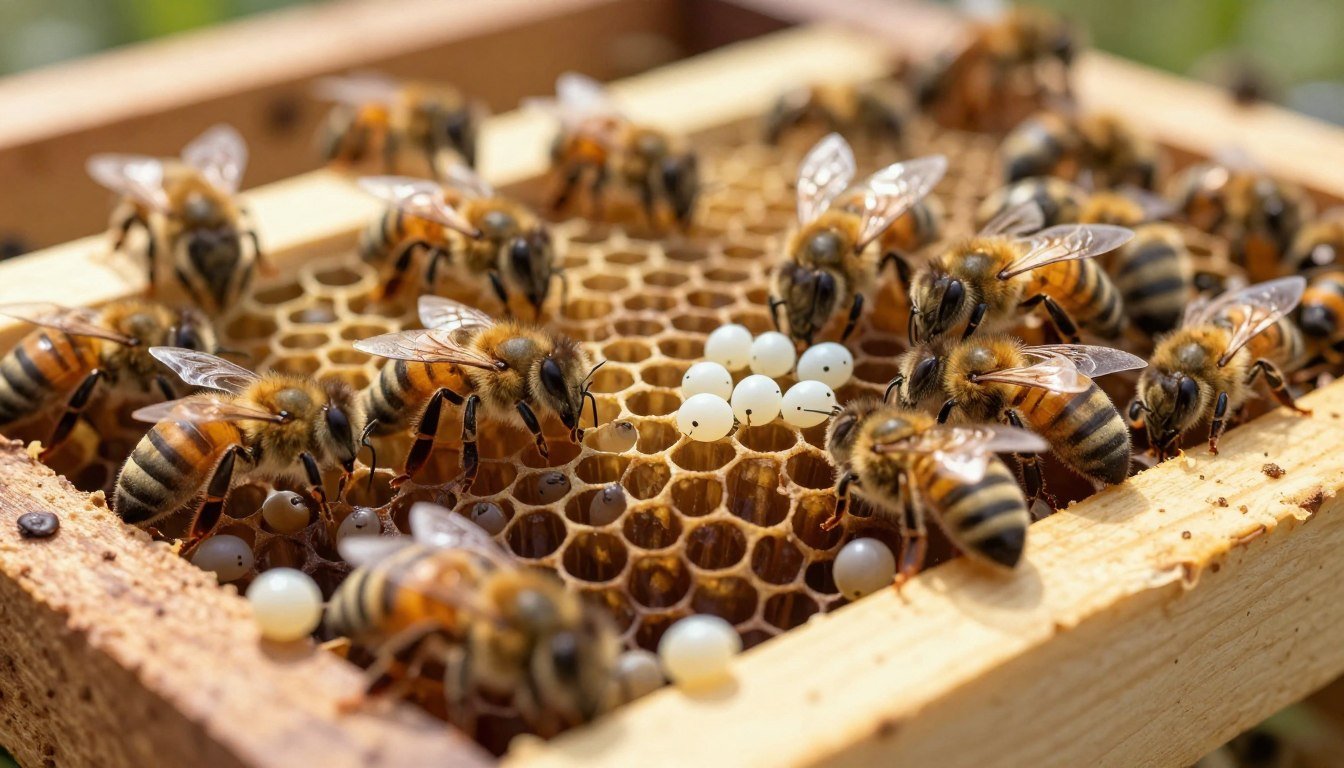
The reproductive cycle begins when a female enters a cell just before it is sealed. She lays two to five eggs, with the first egg developing as a male. Male development takes about 5–6 days, while females need 7–8 days to mature.
Drone cells are capped longer than worker cells, so drone brood offers a better environment for population growth. That extended rearing time lets more females reach adulthood before the young bee emerges.
Phoretic Phase and Spread
During the phoretic phase, adult females attach to adult bees and feed while waiting for new cells to become available. Adult bees act as the main transport, moving parasites between colonies during swarming or robbing events.
Adult females can live 2–3 months in summer and survive on adult hosts through winter. Where brood rearing occurs year-round, populations may increase dramatically—research shows up to an 800-fold rise.
- Key timings: male 5–6 days, female 7–8 days.
- Summer survival on adult bees: 2–3 months.
- Year-round brood fosters rapid population growth.
| Stage | Duration (days) | Impact on Colony | Control Note |
|---|---|---|---|
| Male development | 5–6 | Enables mating inside the cell | Target timing for interruption |
| Female development | 7–8 | More females increase population | Drone removal reduces growth |
| Phoretic phase | Variable (days to months) | Spread between colonies via adult bees | Monitor adult bee counts and behavior |
For practical approaches that fit situations with active rearing, see recommended control methods.
Varroa Mites in Capped Brood Explained
Damage inside sealed cells often signals a heavy infestation long before adult bees show clear symptoms. Feeding by a single parasite during development can cut a worker’s body weight by about 7 percent and reduce drone mass by up to 19 percent.
Infested pupae may die and remain in the cell until removed by other bees. That retained dead brood and deformity often herald a larger problem across the colony.
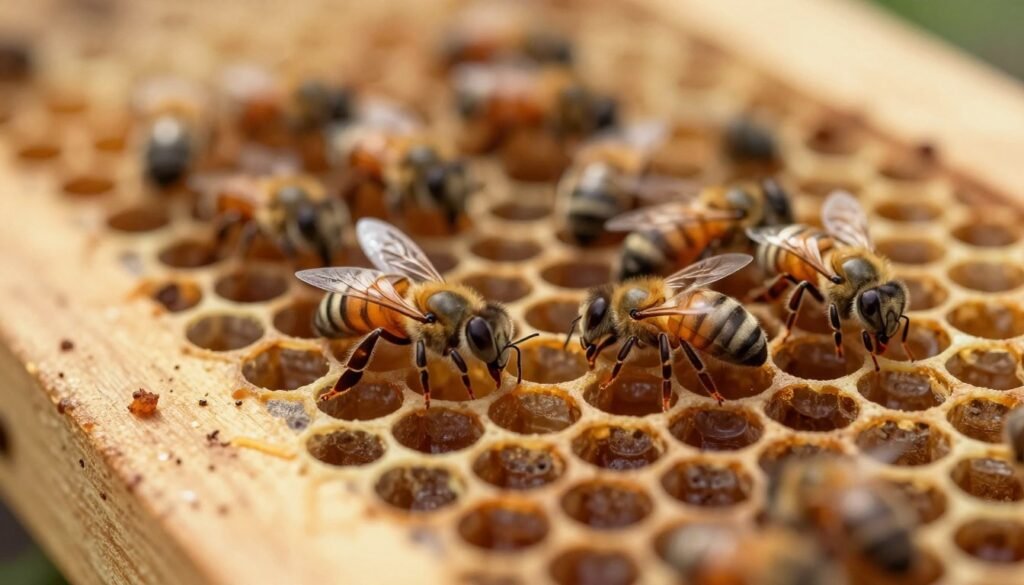
“Detection of parasites within sealed cells is frequently the clearest indicator of a high population.”
Why this matters: these parasites act as vectors for viruses that weaken immune responses and can trigger Parasitic Mite Syndrome, which mimics other brood diseases.
- Cell feeding harms flight ability and survival of emerging honey bees.
- Presence in sealed cells often equals a rising mite population.
- Consistent inspection helps beekeepers decide on timely treatment and management.
For hands-on guidance, review a proven alcohol wash method and consider strain selection options at resistant stock overview.
How Mite Infestations Impact Honey Bee Health
When parasitic numbers rise, viruses find easy access to developing pupae and adult hosts. This dual attack weakens defenses across the hive and raises the risk of colony loss.
Viral transmission and immune suppression are the core problems. By feeding on haemolymph, a mite lowers a bee’s ability to fight infection. That immune suppression lets common viruses reproduce faster and cause visible harm.
Viral Transmission and Immune Suppression
Deformed Wing Virus (DWV) is the classic outcome: workers emerge with mangled wings and reduced flight ability. Infected queens can pass viruses to offspring, spreading problems vertically.
Viruses also spread horizontally through food sharing and contact. The result is often multiple infections that, together with parasitic feeding, drive a colony toward collapse.
“Protecting colonies requires treating both the parasite population and the viruses they carry.”
- Infestations act as vectors for lethal viruses.
- Feeding creates entry points for infections in pupae and workers.
- Address both the parasite load and secondary viral threats to preserve hive health.
For regional guidance on monitoring and seasonal control, review the pest archive overview and a practical late-summer management plan.
Recognizing Parasitic Mite Syndrome
Parasitic Mite Syndrome (PMS) produces distinct brood and adult symptoms that signal a colony is under severe stress.
Look for a scattered brood pattern and patches of bald brood where cells hold dead or neglected pupae. Larvae may slump at the bottom of the cell and show off-colored, yellowish or brown tints.
Adults with deformities or crippled wings often fail to emerge or cannot fly. The presence of these crippled bees is a hallmark of a high mite population and heavy hive pressure.
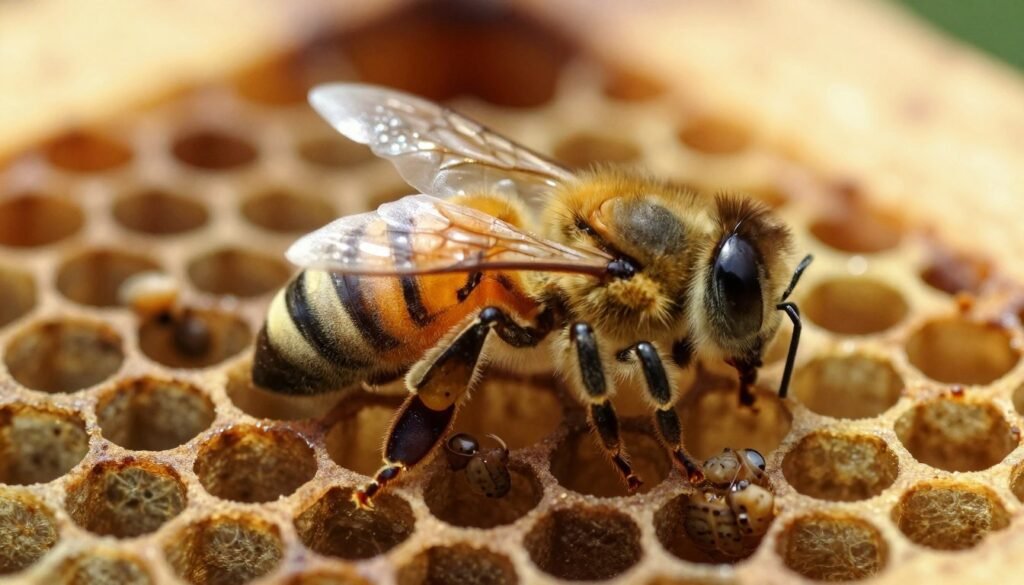
Unlike American foulbrood, PMS-affected larvae do not smell and do not rope out when tested. Colonies may attempt to replace a failing queen by supersedure as overall bee health declines.
“Early identification is the only way to prevent total colony collapse.”
- Scattered or bald brood is a key red flag.
- Slumped, discolored larvae suggest poor brood care.
- Crippled adult bees often indicate severe infestation.
- Queen supersedure is common when PMS progresses.
Essential Monitoring and Detection Methods
Simple detection methods let beekeepers track parasite pressure across the summer. Regular checks show trends that visual inspections can miss and guide timely treatment decisions.
Sugar Shake Method
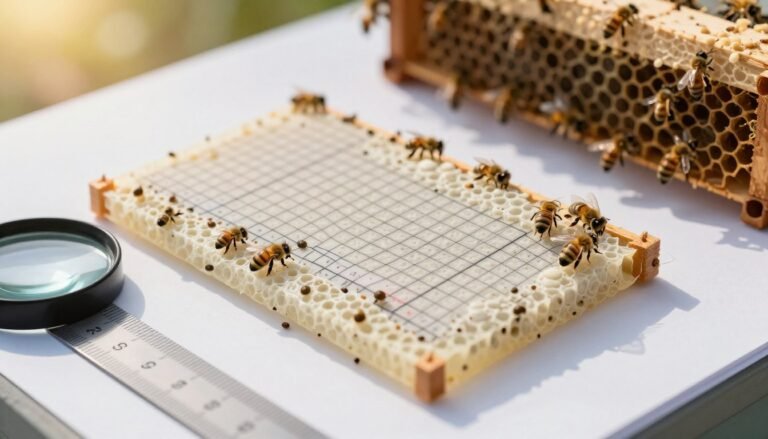
The sugar shake uses about 300 adult bees shaken in a jar with powdered sugar to dislodge mites. Count the fallers and multiply to get a rate per 300 bees.
This method is non-lethal and useful for frequent checks during warm months.
Alcohol Wash Technique
The alcohol wash gives a more precise count. Place 300 bees in a jar with rubbing alcohol and shake for at least 30 seconds. Dead parasites settle and are counted.
If you find 9 or more per 300 bees, apply control measures immediately.
Sticky Board Analysis
Sticky boards rest under the hive for about 24 hours to collect falling parasites. This shows total pressure over a day and complements direct sampling.
Drone brood inspection can act as an early warning because parasites prefer drone cells due to longer development time.
Regular monitoring is the most effective way to decide when to treat and protect honey bees.
| Method | Sample | Pros | Cons |
|---|---|---|---|
| Sugar Shake | ~300 adult bees | Non-lethal, repeatable | Less precise than alcohol |
| Alcohol Wash | ~300 adult bees | Accurate count | Lethal to sampled bees |
| Sticky Board | Hive debris (24 hrs) | Shows colony-wide fall rate | Needs timed placement and interpretation |
| Drone Brood Inspection | Drone cells | Early signal of pressure | Variable reliability between colonies |
For a practical monitoring protocol and step-by-step guidance, consult this monitoring guide. Use these methods repeatedly through summer to keep mite levels low and protect your colonies.
Mechanical Control Strategies for Beekeepers
Simple hardware swaps and targeted traps let hive managers cut parasite pressure while harvesting honey.
Screened bottom boards offer a passive way to reduce fall-back. They let fallen pests exit the hive and lower the chance they return to the colony.
Drone-brood trapping uses special combs to attract drone rearing. Remove the comb before emergence and you take many parasites out of the population at once.
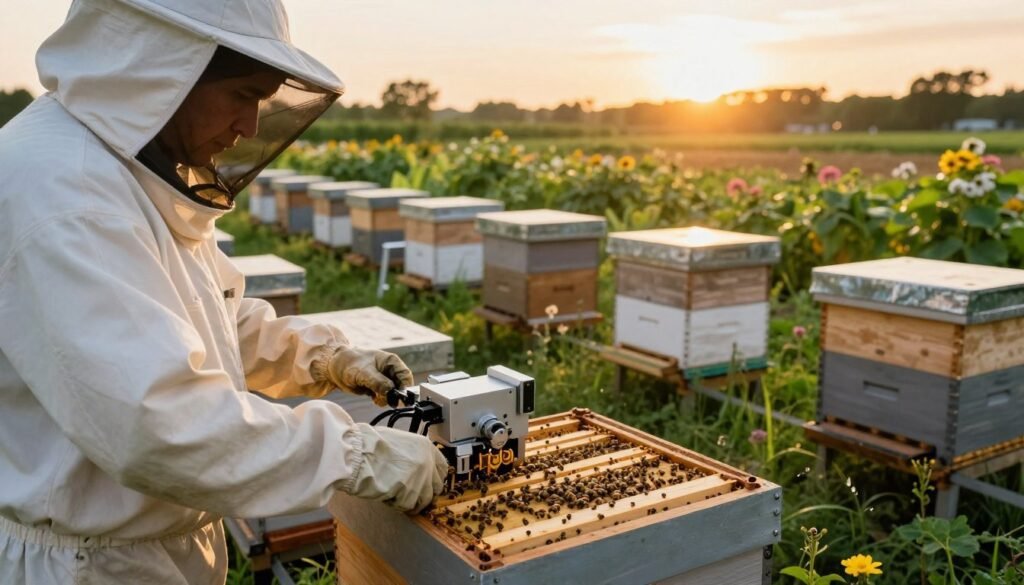
These mechanical methods are chemical-free, so you can use them during nectar flow and honey production without contaminating frames.
“Mechanical approaches are best used alongside other tactics for steady control.”
- Low-to-no chemical risk for honey and brood.
- Requires extra equipment and regular labor.
- Less effective alone than treatments, but valuable in integrated plans.
| Method | How it works | Benefit | Trade-off |
|---|---|---|---|
| Screened bottom board | Mites fall through screen to outside | Reduces return rate | Needs seasonal management |
| Drone-brood trap | Install drone combs, remove before emergence | Removes many parasites at once | Labor and comb cost |
| Combined use | Both tactics together | Better population suppression | Requires monitoring and timing |
For practical tips on integrating these methods with broader management, learn more about management and review natural remedies that pair well with mechanical tactics.
Utilizing Mite-Resistant Bee Stocks
Genetic resistance in honey bees reduces reliance on frequent treatments and supports sustainable beekeeping. Breeding for hygienic traits gives colonies tools to remove parasitized pupae before a new generation of pests can reproduce.
Varroa Sensitive Hygiene Traits
Varroa Sensitive Hygiene (VSH) is a clear example: worker bees detect and uncap cells with infested pupae, then remove them. This interrupts reproduction and lowers overall population growth.
The Russian strain, from the Primorsky region, shows more than twice the resistance of many commercial stocks. Minnesota Hygienic lines also demonstrate strong brood-clearing behavior.
“Breeding resistant queens is a proactive step that reduces chemical use and strengthens colony resilience.”
| Stock | Key Trait | Benefit |
|---|---|---|
| Russian | High natural resistance | Lower parasite buildup; fewer emergency treatments |
| VSH-selected | Detects and removes infested cells | Interrupts reproduction cycle |
| Minnesota Hygienic | General hygienic behavior | Removes diseased or parasitized brood |
Note: resistant stocks are not immune. They were developed through classical breeding and instrumental insemination backed by USDA and university research. The queen passes traits to the next generation, so investing in genetics is a long-term control strategy for healthier hives.
Implementing Bio-Pesticides and Chemical Treatments
Choosing the right treatment depends on monitoring data, season, and whether brood is present. Always confirm current mite levels before applying a product.
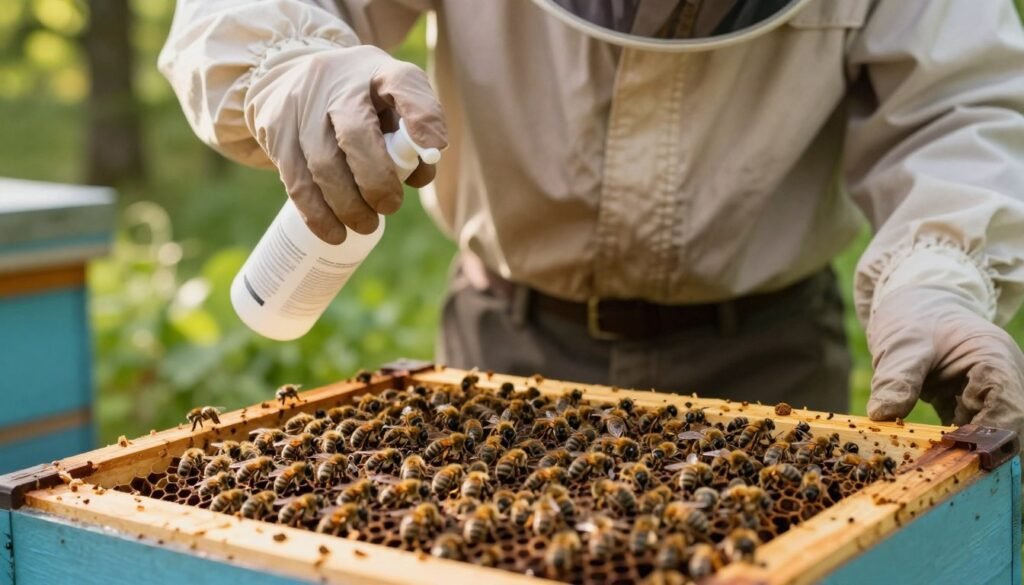
Botanical blends such as Apilife VAR (thymol, eucalyptol, menthol) can deliver 65–97% control while keeping honey fit for sale. Apiguard is a slow‑release thymol gel and must be applied twice to cover a full rearing cycle.
Formic acid is useful and is the only chemical allowed for certified organic honey production in the United States. Api‑Bioxal (oxalic acid) works best during a broodless winter period for maximum impact on the mite population.
“Rotate products and follow label directions to avoid resistance and protect bees.”
- Avoid heavy reliance on synthetic acaricides such as Apistan and Checkmite+, due to resistance.
- Watch temperature limits: some treatments harm brood when too warm.
- Always follow label instructions and rotate methods to slow resistance buildup.
| Treatment | Active Ingredient | Best Timing | Notes |
|---|---|---|---|
| Apilife VAR | Thymol / Eucalyptol / Menthol | Active season (follow label) | High efficacy; safe for honey when used correctly |
| Apiguard | Thymol gel | Two applications over a brood cycle | Slow release; repeat to cover rearing period |
| Api‑Bioxal | Oxalic acid | Broodless winter | Most effective during no-rearing periods |
| Formic acid | Formic acid | Variable (label dependent) | Approved for organic honey; follow strict temp ranges |
For post-treatment assessment, check counts and follow a reliable protocol such as a post‑treatment count guide. For deeper research, review extension materials at university treatment studies.
Conclusion
Protecting a honey bee colony begins with regular checks and choices based on clear counts. Use monitoring such as the alcohol wash to track population trends and guide timely control or treatment.
Combine mechanical steps, resistant stock selection, and targeted chemical use to lower pressure on your hive. These measures reduce reliance on synthetic options and support a healthier queen and worker force.
Record keeping and community collaboration magnify results — shared data and local experience improve outcomes for every beekeeper.
Learn how breeders and keepers detect resistance traits at this practical guide to signs of resistance. Consistent effort keeps bees strong and colonies productive.