This short guide gives practical steps to reduce risk when buying second-hand gear for your apiary.
Saving 30–50% on setup costs is tempting, but pathogen transfer can undo that benefit fast. Every beekeeper should register gear with local authorities and follow simple biosecurity practices to protect healthy colonies.
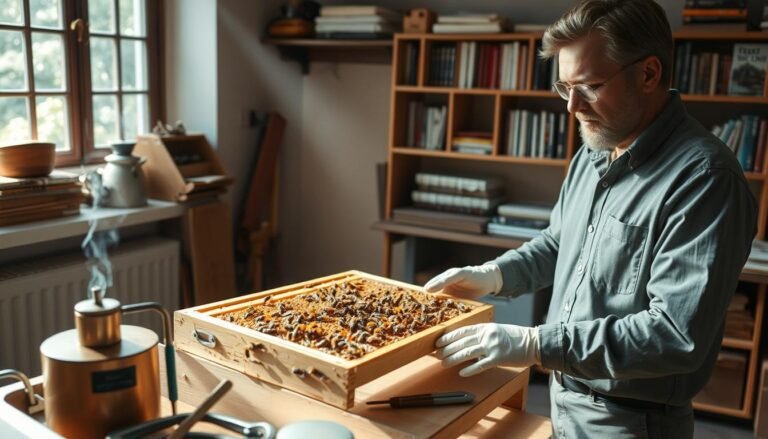
During an inspection, use a smoker to calm bees and keep a spare hive tool and an extra suit on hand. Clean and inspect the bottom boards, hive sides, and all tools before introducing gear to your hives.
We link to a practical biosecurity resource and a buying guide so you can vet sources and sanitize incoming items: see the MSU planning guide and a buying primer at biosecurity planning and choosing gear.
Key Takeaways
- Balance savings and risk: second-hand gear can cut costs but may carry disease.
- Register all gear with authorities, even if you do not yet keep colonies.
- Carry spare hive tools, an extra suit, and a working smoker for safe inspections.
- Sanitize bottoms, hive sides, and tool surfaces before use to limit spread.
- Follow a written biosecurity plan and vet sources to protect your apiary.
Understanding the Risks of Used Beekeeping Equipment
Secondhand hive parts can hide long-lived pathogens that wreck whole apiaries. American Foulbrood (AFB) spores survive in wood and wax for years and resist simple cleaning.
The Dangers of Pathogens
Pathogens and parasites persist in comb, honey, and pollen. Introducing old frames or comb brings a real risk to your colony.
Extracting honey from brood areas raises that risk since brood comb often holds disease. Plastic foundation can be safer than old wax, but it still needs inspection.
Why History Matters
Experienced beekeepers learn that honey bees react to the past of a hive. Dark or woolly material can alarm a hive and change behavior.
A smoker calms bees by prompting honey bees to gorge, which lowers defense—but never leave it near dry wood or grass because of fire danger.
Check the background of every box and frame. When uncertain, follow a recognized protocol such as the honey bee biosecurity guide or consult advice on repairing hive boxes.
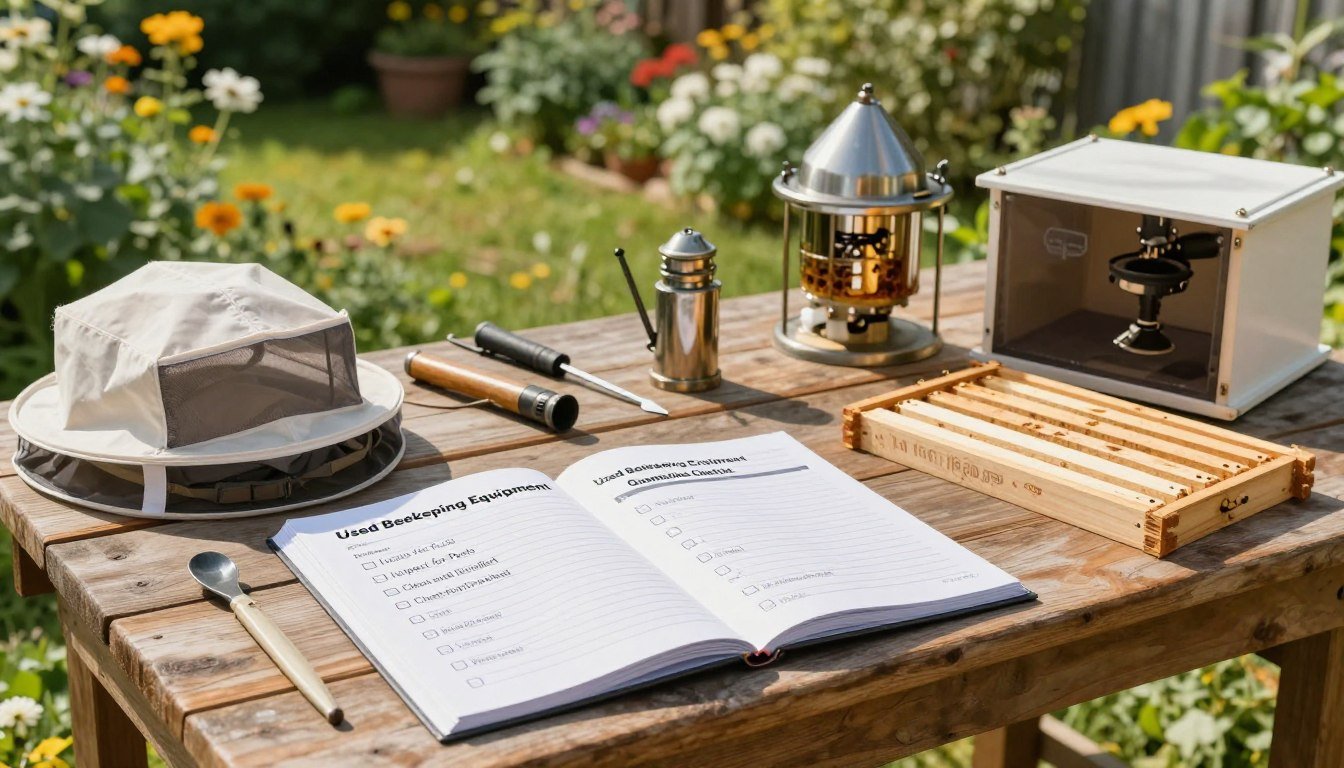
Essential Used Beekeeping Equipment Quarantine Checklist
Before any hive parts enter your yard, a short, methodical inspection saves time and protects colonies.
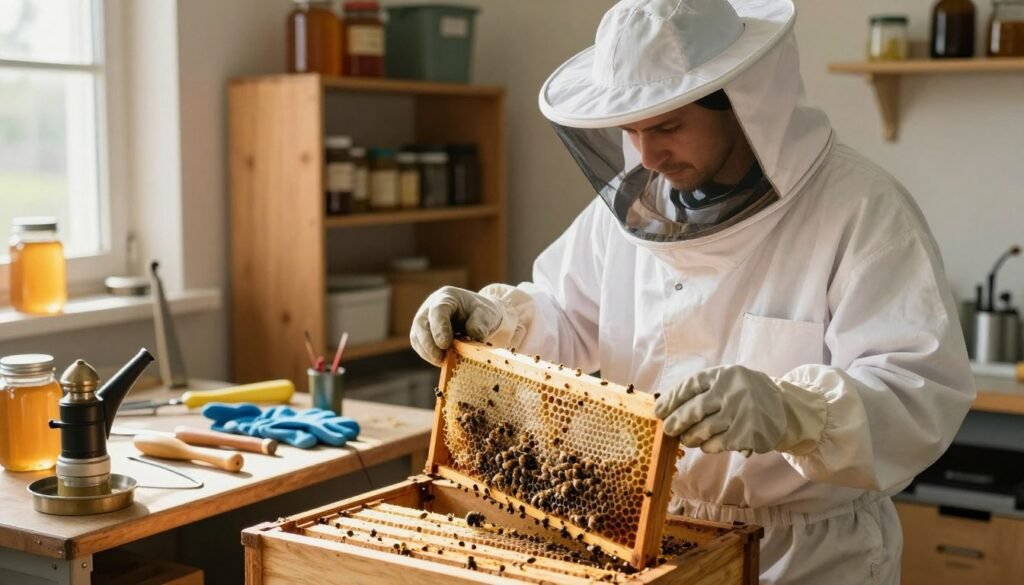
Begin with a visual inspection of frames, boxes, and the outer sides of every hive. Look for sunken brood, foul odors, or darkened comb that may signal disease. If anything seems off, do not bring the lot home.
Sanitize thoroughly: apply a 9:1 bleach solution for deep cleaning, then rinse all surfaces with plenty of clean water to remove residue. Pay special attention to wooden frames and plastic feeders.
Allow adequate time to dry and store sanitized items in an enclosed area where bees cannot access honey or wax residues. This prevents robbing and limits risk to existing colonies.
- Inspect before buying: a careful look at frames and frame sides reduces future problems.
- Use proper cleaning: bleach then water rinse for boxes, combs, and plastic parts.
- Store securely: keep sanitized gear where bees and people cannot reach it.
For a step-by-step planning resource, consult biosecurity planning. New beekeepers can also review community topics at the beekeepers’ forum to learn common inspection tips and handling time estimates.
Identifying High-Risk Items to Avoid
Not all components carry equal danger; a few items are the primary vectors for disease.
Frames and Comb
Frames with old wax or dark comb are the top risk. AFB spores cling to wax and can survive years.
Avoid bringing in old frames and comb unless they are irradiated or brand new. Plastic foundation is easier to clean and safer than wax.
Unpainted Woodenware
Unpainted boxes and raw wood absorb spores. Scorching the interior of a wooden box for 10–15 seconds per side is a proven method to kill pathogens.
Severely infected boxes frames should be destroyed rather than reused to protect your apiary and colony.
Contaminated Hive Tools
Scrape wax and propolis from every tool, then scorch or place briefly in a smoker to sterilize. For plastics or places you cannot scorch, scrub with a bleach and water solution.
- If American Foulbrood is suspected, replace your suit and sanitize all items.
- Commercial pollen or contaminated supplies should be irradiated when possible.
For guidance on sourcing safe gear, consult our beekeeping gear guide.
Proven Methods for Sanitizing and Decontaminating Gear
Effective decontamination starts with heat for wood, and hot water for plastics and tools.
Scorching wooden boxes and frames with a propane torch for 10–15 seconds per side produces a sterile, charred surface that dramatically lowers spore survival. Work outdoors and keep a fire extinguisher nearby to avoid a fire hazard.
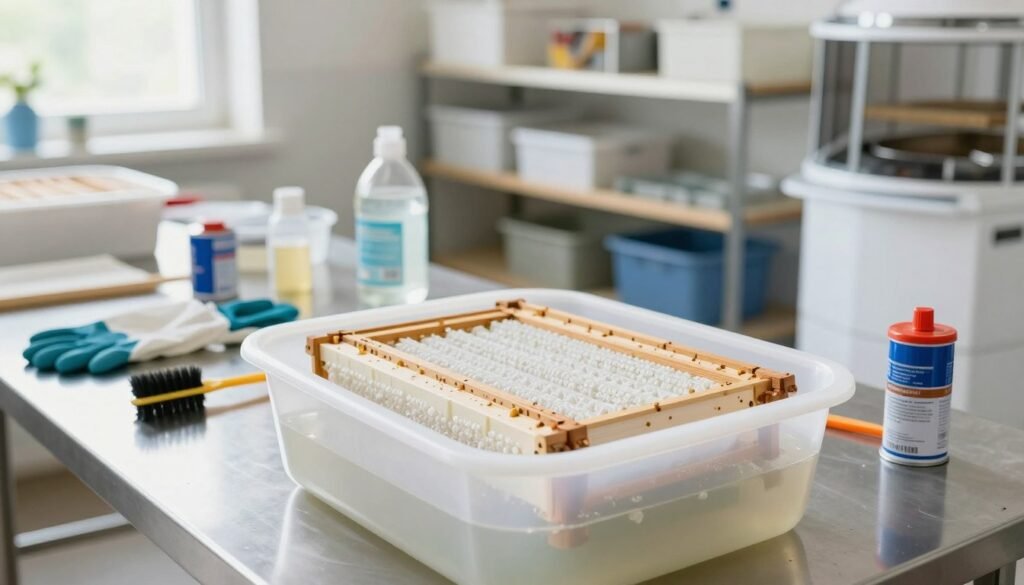
Non-porous surfaces respond well to a 10% bleach and water scrub. Rinse thoroughly and then let items dry fully for at least 24 hours to stop mold and preserve wood integrity.
Plastic feeders, hive tools, and foundation clean best with hot water and soap. Using a smoker briefly on metal tools can help, but never create sparks near dry material.
- Record purchase and sanitization dates to track the age of frames and comb over the years.
- Clean regularly to reduce long-term disease risk to your colony and honey stores.
For operational guidance on decontamination standards, review the AUSVETPLAN manual and tips for reducing plastic in apiaries: decontamination manual and reducing plastic use.
Negotiation Strategies for Acquiring Secondhand Supplies
Clear negotiating starts with a careful on-site review of each box and frame before money changes hands.
Inspect first. Lift a few frames and peer at the comb, bottom boards, and joints. Ask if the previous colony showed signs of disease or unusual mortality. The Canadian Honey Council’s Practical Handbook to Bee Biosecurity is a useful reference for questions to ask.
Evaluating Equipment Condition
Document what you see. Note sunken brood, foul odors, or heavy propolis. If items need deep cleaning or scorch treatment, use that as leverage to lower the lot price.
Many sellers accept cash for a quicker sale — a 5–10% discount is common on local marketplaces. Bundling boxes, frames, and a smoker often secures a better amount for the buyer.
- Carry a spare suit and hive tool for an on-site inspection.
- Ask directly about the health of the prior colony; it reduces your long-term risk.
- When in doubt, pass on gear with unclear history to protect your apiary.
For climate-specific sourcing and gear advice, consult our U.S. climates gear guide.
Conclusion
Every hive item you introduce should earn its place through inspection and cleaning. Smart buying can save 30–50% when you follow a strict quarantine and sanitization plan.
Prioritize new frames and foundation to lower the risk of American Foulbrood and other disease. Proper sanitization of boxes and other supplies takes time, but it protects your colony and preserves honey quality.
Inspect each smoker, tool, and frame before use. Careful selection and cleaning keep your bees healthy and let your hive produce better honey. In short, protect the bee now and your apiary will reward you later.