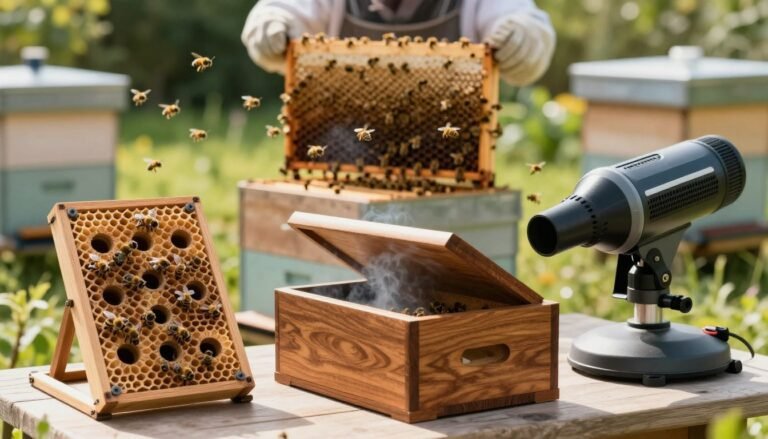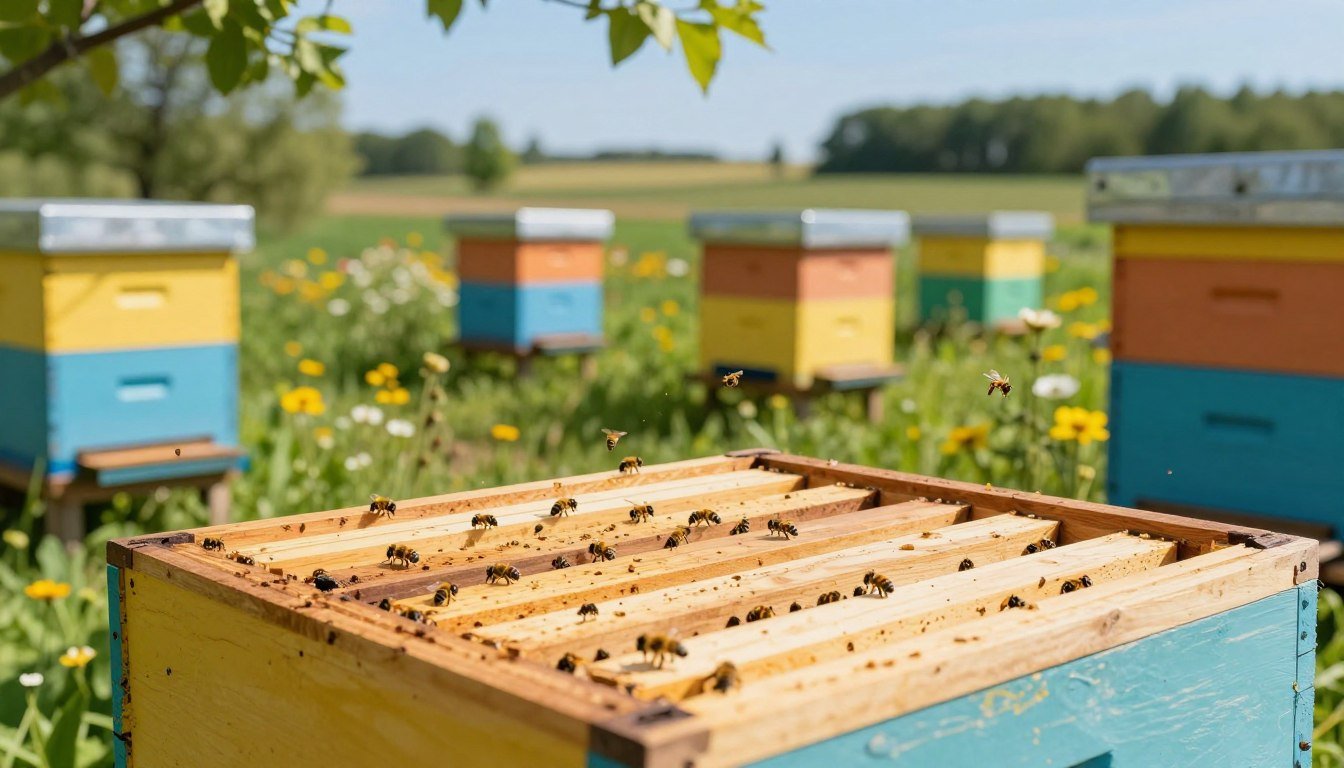
Understanding the slatted rack benefits for summer hives helps any beekeeper protect colony health during peak heat. This introduction explains why a well-designed hive base and internal spacing matter.
Keeping a stable internal climate keeps bees active and productive. A smart hive setup improves ventilation and cut down on heat stress. Many U.S. apiaries adopt a simple rack to aid passive cooling and moisture control.
The right equipment reduces colony disruption during inspections. It also supports ongoing honey flow and brood development without complex intervention. Small changes in hive layout deliver measurable gains.
Use these practical adjustments to keep colonies healthy and to make summer work easier. Start with a clear plan, fit the unit properly, and monitor temperatures regularly.
Key Takeaways
- Proper internal spacing improves ventilation and bee activity.
- A simple rack can reduce heat stress without added tools.
- Monitor hive temps after installation to confirm impact.
- Small layout changes yield better brood and honey outcomes.
- These steps fit well into typical U.S. apiary routines.
Understanding the Role of Slatted Racks in Beekeeping
Placing a simple spacer between the bottom board and brood box helps steady internal temperatures. This passive device sits under the lowest brood chamber and creates a buffered layer across the hive floor.
Defining the device
A slatted rack is a passive climate control device installed between the bottom board and the first brood box. It encourages a stable brood nest by limiting direct drafts and by imitating a narrow dead air pocket.
Historical context
Honey bee colonies evolved inside hollow trees where natural insulation helped regulate temperature. Modern slatted racks and similar racks replicate that refuge. By adding this layer, beekeepers provide a steadier environment that supports brood and reduces stress on bees.
| Feature | Location | Primary effect |
|---|---|---|
| Slatted rack insert | Between bottom board and brood box | Thermal buffering and reduced drafts |
| Dead air gap | Under brood chamber | Insulation similar to hollow trees |
| Overall impact | Entire hive | More consistent brood development |
In professional beekeeping, this simple change supports healthy colonies and fits standard hive setups in the United States.
Core Slatted Rack Benefits for Summer Hives
Adding a shallow insert changes how a hive breathes and where the colony gathers. This encourages a bees cluster in the lower cavity and reduces overcrowding in the brood area.
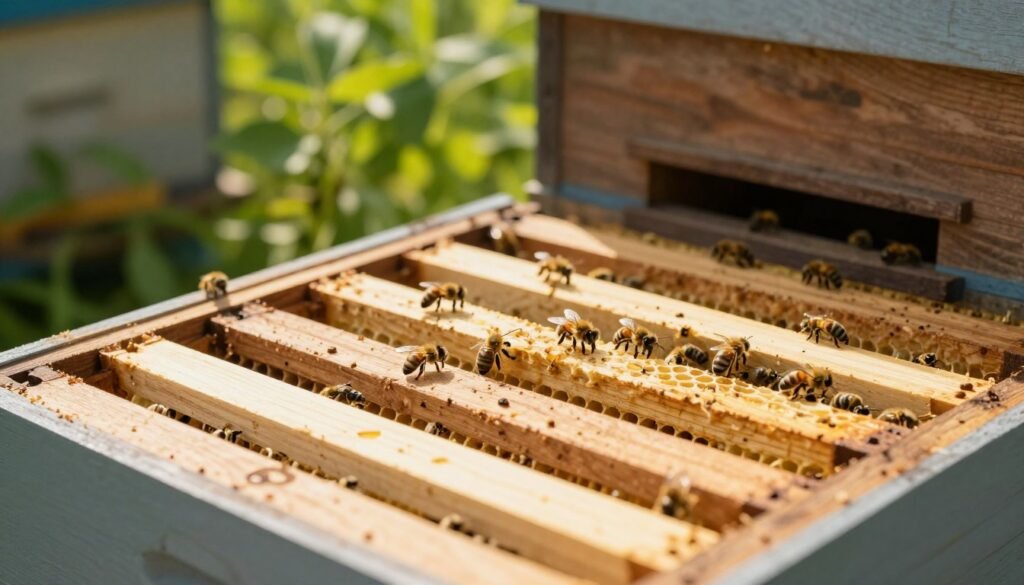
These slatted racks create a clear zone where bees can spread out during the hottest hours. The extra space gives individual bees room to move and lowers transit congestion inside the brood box.
Improved airflow follows naturally. Every hive fitted with the right rack experiences steadier circulation, which helps regulate temperature and humidity without active cooling.
- Dedicated congregation area: bees use the insert as a retreat during peak heat.
- Reduced density: colonies show less clustering pressure in the brood chamber.
- Enhanced comfort: better air exchange supports long-term productivity in hives.
Creating a Thermal Buffer Zone
A shallow air gap under the brood box acts like a thermal blanket for developing young bees. This dead air layer sits above the bottom board and buffers sudden swings in outside temperature.
Stabilizing the Brood Nest
Installing slatted racks creates a protected air space beneath the brood chamber. That dead air reduces cold drafts that enter through the hive entrance and chills the lowest brood frames.
With this buffer, the queen can lay eggs on the bottom frames without those cells becoming chilled by the board below. The colony keeps a steadier temperature across brood areas.
- Thermal buffering: air space slows rapid heat loss or gain.
- Frame protection: brood frames stay warmer, aiding steady development.
- Colony resilience: the hive copes better with unpredictable weather.
| Function | Location | Effect on Brood |
|---|---|---|
| Dead air layer | Between bottom board and brood box | Thermal buffer; reduces draft exposure |
| Raised bottom | Over hive entrance | Keeps lower frames warmer; supports queen laying |
| Air space management | Under brood chamber | Stabilizes temperature and humidity for brood nest |
Every hive benefits when air and temperature are steady. For winter planning and seasonal care, see practical tips on winterizing at winter hive management.
Shielding the Colony from External Drafts
A thin baffle under the brood chamber keeps turbulent wind from striking the nest directly. This simple measure changes how air moves after it enters the hive entrance.
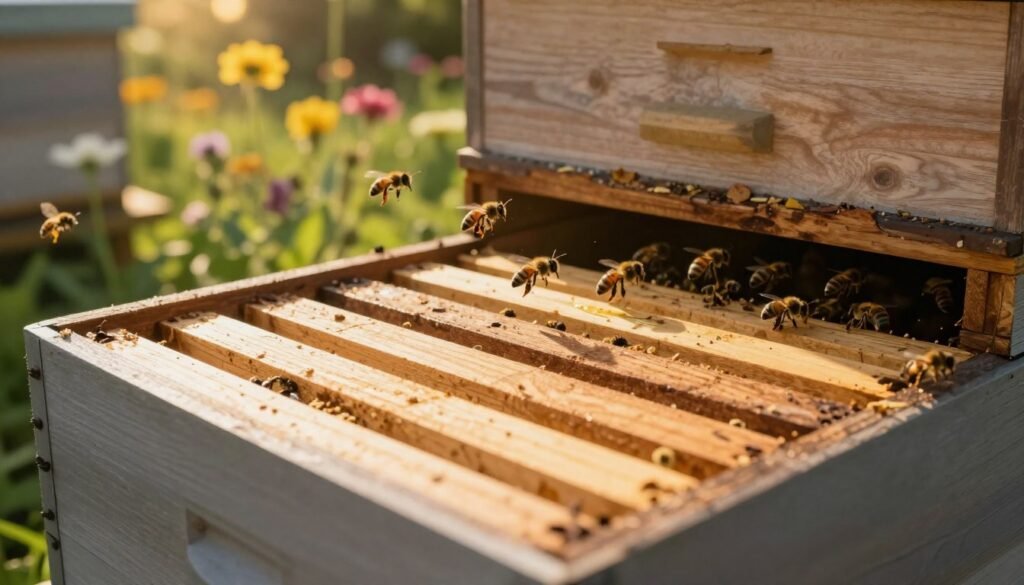
When a slatted rack sits above the bottom board it acts as a barrier. Cold gusts no longer hit frames and the cluster in early spring stays calmer.
Practical effects:
- It breaks fast airflow so bees avoid sudden chills.
- The bottom is not the only defense; the rack adds a second line of protection.
- Even in late winter, the extra layer helps the colony maintain steady warmth.
“A protected interior reduces stress on the brood and supports steady activity during changeable weather.”
Use this baffle as a low-effort step to shield hives from turbulent wind and to give the colony a more stable microclimate through winter and into spring.
Facilitating Passive Summer Ventilation
Creating a shallow air corridor under the brood box lets the hive breathe without harsh drafts. This subtle change encourages steady exchange while the colony maintains its cluster and brood temperature.
Air Exchange Mechanics
Air moves in through the hive entrance and rises through the created air space, carrying heat and stale moisture out of the lower chambers. A properly fitted slatted rack guides that flow so bees avoid direct gusts.
That gentle circulation reduces congestion around frames and helps maintain a consistent temperature near the brood. Every hive fitted with these racks shows clearer airflow paths and less turbulence at the bottom board.
Humidity Control
Moisture drains away when warm air exits above cooler lanes. The dead air pocket under the box acts as a buffer and prevents condensation on comb faces.
Result: lower relative humidity, drier comb, and fewer stress responses from bees. This simple system helps colonies stay comfortable while preserving brood health.
Expanding the Queen Laying Pattern
A slight lift under the brood chamber encourages the queen to use lower frames more consistently.

The added gap separates the bottom board from the brood box and cuts cold drafts from the hive entrance. That change makes the lower area more inviting to the queen.
When the queen moves to bottom frames, the brood nest expands across more comb. This wider laying pattern helps the colony raise more young bees and strengthens seasonal growth.
Beekeepers notice faster population gains when the microclimate at the base stays steady. A more uniform brood chamber also reduces compression of workers and eases traffic on frames.
- Encourages laying in bottom frames: queen uses space more evenly.
- Separates board and box: reduces draft impact from the entrance.
- Supports colony growth: fuller brood nest and higher brood production.
“Creating a calmer lower cavity gives the queen the confidence to spread egg laying across the brood box.”
Reducing Colony Congestion and Swarming
Creating a calm interior space gives bees an alternate place to gather and eases pressure near the hive entrance.
This simple change helps colonies manage high populations and lowers the chance of swarm preparation.
Managing Bearding Behavior
A well-placed slatted rack provides a nearby hanging-out zone inside hive where workers can congregate without crowding frames.
That relocation eases movement in brood boxes and reduces bearding at the doorway.
- Dedicated space inside hive: lets bees cluster away from the hive entrance.
- Less congestion in brood boxes: lowers stress that triggers swarming behavior.
- Acts as a relief valve: the rack guides traffic to a less crowded area near the bottom board and slats.
- Supports population surges: every hive with these racks handles peak numbers more smoothly.
- Keeps the colony focused: bees spend more time on honey and brood care instead of preparing to leave.
The result is calmer colonies, steadier brood patterns, and fewer disruptive swarm events across hives and colonies.
Minimizing Unwanted Burr Comb
When bees build ladder comb near the bottom, frame removal becomes messy and slow. A simple, measured spacer keeps the gap clear and discourages extra comb between wall and floor.
The slatted rack preserves correct bee space so bees do not glue brood frames to the board. That controlled gap makes inspections faster and lowers the chance of damaging comb on removal.

Good design aligns the slats with frame bays. When slats sit directly under frames, bees are less likely to build bridging comb on bottom frames. The result is cleaner comb and simpler hive management.
- Maintains uniform bee space to prevent ladder comb.
- Keeps brood frames tidy and easier to check.
- Reduces time spent scraping and repairing comb at the board.
“A well-placed spacer saves hours each season by keeping the lower cavity clear.”
For new keepers choosing gear that reduces maintenance, see guidance on how to choose a beehive at how to choose a beehive.
Evaluating Equipment Complexity and Weight
When you add extra components under the brood box, you should reassess lifting and storage plans. This helps protect your back and keeps inspections efficient.
Yes, the insert adds weight, but the load increase is modest compared to a full box of honey. Most beekeepers find the trade-off acceptable when the hive runs smoother.
The system integrates easily across multiple brood boxes. Teams managing several hives can stack and move units with minimal change to workflow.
Durability matters: well-built racks last seasons and reduce replacement costs. Consider sturdy materials and simple joints to lower long-term effort.

| Factor | Effect on apiary | Action |
|---|---|---|
| Added weight | Minor increase per hive; affects lifting | Use two-person lifts or mechanical aids |
| Integration | Fits standard brood boxes and boards | Install during routine inspections |
| Durability | Long service life; low maintenance | Choose quality materials and check annually |
For guidance on handling heavier equipment, review equipment weight guidelines. To monitor how added load affects colonies, consider remote hive monitoring.
“Every hive requires careful consideration of the equipment used.”
Ensuring Proper Hive Standardization
Standardizing box dimensions prevents misalignment and keeps lower ventilation channels working as designed.
Measure before you buy. The slatted rack must match your brood box and bottom board so the slats align directly under each frame bay. Accurate alignment preserves correct bee space and stops bees from building bridging comb between the box and the bottom.
Manufacturers offer slatted racks in several sizes to fit common hive systems. Choose the size that matches your frames and box type to avoid trimming or makeshift shims.
The rack must sit flat on the board and center under the brood box. Improper placement changes airflow patterns and can negate the intended thermal and humidity benefits.
Standardized gear simplifies inspections and improves colony stability. When each hive uses matching parts, teams move faster and colonies experience steadier internal climates.
| Standard Element | Why it matters | Recommended check |
|---|---|---|
| Box dimension | Ensures slats align with frame bays | Measure internal width and depth before ordering |
| Board compatibility | Prevents gaps that invite burr comb | Fit rack flush to bottom board and test frame clearance |
| Slat placement | Maintains bee space and airflow | Confirm slats sit under frame centers and adjust if needed |
For details on product sizing and recommended designs, see this slatted rack guide.
Selecting the Right Rack for Your Management Goals
Your choice of insert should reflect whether you aim to boost winter survival or honey yield. Match the item to the work you do most often in the yard.

Evaluate intent first. If winter hardiness matters, pick a design that provides steady thermal buffering and preserves brood near the bottom of the box.
If honey production is the priority, choose a model that encourages even laying and helps control congestion during peak nectar flow.
Versatility counts. Some slatted racks adapt to swarm control and inspection routines. They give bees a nearby space to cluster and make frame access easier during checks.
- Prioritize fit: match slats to frame bays and board dimensions.
- Think long term: select durable materials to lower replacement cycles.
- Balance weight and function so inspections stay practical.
| Goal | Recommended Feature | Effect in the hive |
|---|---|---|
| Winter survival | Deeper dead-air gap; snug fit to board | Stabilizes brood temperature at the bottom |
| Honey production | Open airflow lanes; aligned slats under frames | Reduces congestion; supports laying and nectar handling |
| Swarm management | Accessible congregation zone; lightweight design | Gives bees relief space and eases inspections |
“Choose gear that matches your goals; the right choice simplifies care and helps colonies thrive.”
Installation Best Practices for Optimal Performance
Set the insert square and level before seating the brood box to keep airflow predictable. Start by placing the slatted rack evenly on the bottom board so the created air space sits uniform under the brood box.
Align the slats with the centers of the bottom frames. This preserves correct bee space and reduces the chance of ladder comb between box and board.

Secure the unit at the hive entrance to prevent gaps that let cold air into the colony. Check that the hive entrance remains clear so bees can move freely in and out.
Before closing the hive, confirm the rack is level and the frames move without obstruction. Simple checks save time during inspections and support steady brood care.
- Placement: center the insert and align slats with frames.
- Sealing: close any gaps at the entrance and board junctions.
- Access: ensure bees can reach the full width of the brood chamber.
| Check | Why it matters | Quick fix |
|---|---|---|
| Level on bottom board | Even air flow under brood box | Shim or re-seat until flat |
| Slats under bottom frames | Maintains bee space; stops burr comb | Shift rack laterally to align |
| Secure at hive entrance | Prevents cold drafts into colony | Use spacer clips or tight fit |
“A careful install prevents problems later and helps bees keep brood and honey stores steady.”
Maintaining Your Equipment Throughout the Season
Treat the insert like any other piece of apiary equipment: inspect it often and clean as needed.
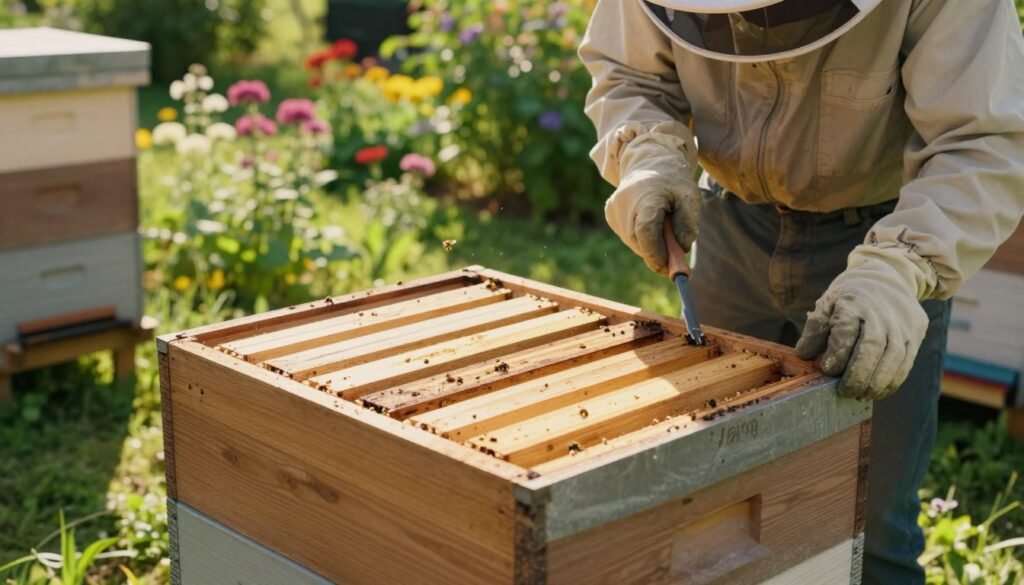
Regular checks keep the space under the brood box free of wax, propolis, and debris. Remove the insert from the bottom board and scrape away build-up during routine inspections.
Do this gently to avoid damaging comb or disturbing the colony. Look for broken slats, warped board edges, or material that could trap moisture near the brood.
- Inspect racks at every few inspections and after heavy nectar flows.
- Clean by hand scraping, then brush or rinse if the material allows.
- Replace worn pieces to keep the hive stable and easy to manage.
Durability matters: well-maintained racks last years and save time. Consistent upkeep supports healthy bees, steadier brood patterns, and better honey handling.
“Simple maintenance prevents small issues from becoming colony problems.”
For more detail on mechanical advantages and proper care, read the technical advantages guide.
Comparing Different Rack Designs and Materials
Not all inserts are equal — material choice, size, and fit shape colony outcomes and handling.
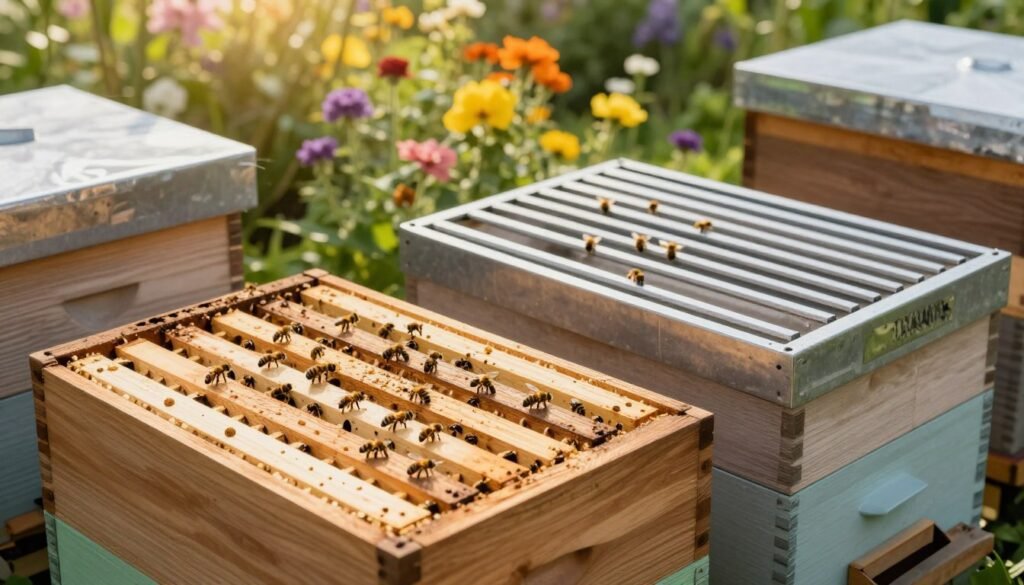
Commercial models come sized for 8, 9, and 10 frame Langstroth hive systems. Choose a match that lines up with your frames and box to preserve correct bee space and stop extra comb.
Material matters: many beekeepers favor high-quality wood. It resists wear, holds up to propolis, and blends with standard board finishes. Other options use durable plastic or composite panels that resist rot.
- Fit: verify slats align under frame centers and the unit seats flush on the bottom board.
- Durability: pick materials that withstand seasonal wet-dry cycles in your region.
- Function: consider whether the design eases inspections and supports brood and honey flow.
| Feature | Common material | Best use |
|---|---|---|
| Wood model | Cedar or pine | Traditional feel; good for longevity in temperate yards |
| Plastic/composite | UV-stable polymer | Low maintenance; resists moisture and rot |
| Custom metal | Aluminum | Durable but heavier; suited to heavy-use operations |
Every hive has unique needs. Take time to research configurations and match equipment to your apiary practices. For a practical primer, see this short FAQ on installation and choices at what is a slatted rack.
Integrating Slatted Racks into Your Apiary Workflow
Adopting a consistent insert across your yard simplifies workflows and reduces surprises during checks. This small change standardizes how frames, box edges, and the bottom board interact during inspections.
HONESTBEE supplies wholesale equipment options that make adding this component easy for commercial and hobby operations. Many beekeepers and professional teams use these products to keep a steady brood environment and steady honey production.
Once installed, the system needs little attention. Routine checks focus on frames and colony health rather than fiddly gaps or unexpected comb. That saves time and keeps colonies calmer during handling.
- Streamlines inspections: consistent placement speeds frame removal and return.
- Scales across yards: every hive benefits from the same setup, easing team training.
- Supports growth: steady internal conditions help bees expand brood and process nectar.
For guidance on matching gear to regional conditions, see recommendations on gear for U.S. climates and consider pairing inserts with noise-reducing stands to lower colony disturbance.
Conclusion
Small gear changes at the bottom of a hive yield measurable improvements in colony comfort and management.
Creating the right air space beneath the brood box steadies internal flow and protects the board and lower frames. That gentle guidance helps the queen expand her brood pattern and gives bees room to move near the entrance.
Beekeeping teams report cleaner frames and less unwanted comb when the slats sit aligned under each frame bay. Workers handle honey and brood with less congestion, and the overall colony shows fewer swarm signals.
Investing in quality components is a simple, effective upgrade that pays back in easier inspections and steadier colony performance.
Fit, monitor, and adjust the insert during routine checks to keep colonies strong and productive.