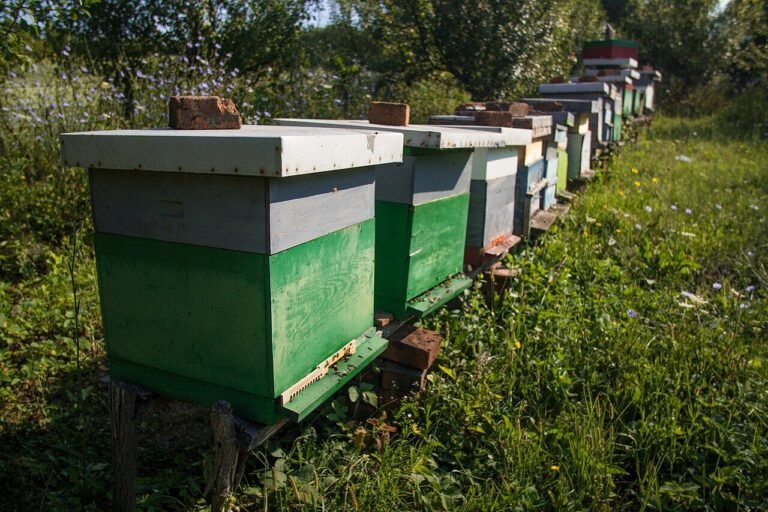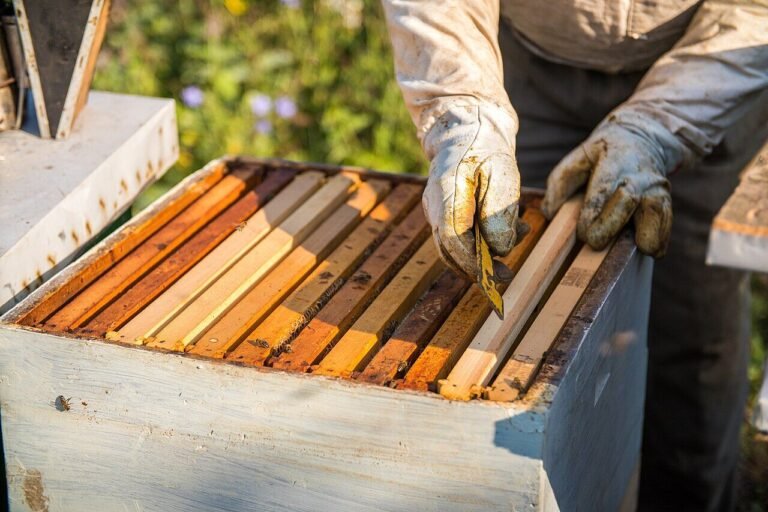
A corporate “beekeeping experience” day typically means employees suiting up in protective gear to observe or assist a professional beekeeper opening a hive on-site, followed by a facilitated discussion connecting what they just watched — worker roles, colony communication, collective response to stress — to team dynamics back at the office. Bee Downtown, the Durham, North Carolina company that pioneered this specific model for clients including Delta, AT&T, and Chick-fil-A, has built an entire leadership-development curriculum around it. Here’s what these programs actually involve and what evidence exists that they work.
Key Takeaways
- Bee Downtown, founded in 2015 by Leigh-Kathryn Bonner, a fourth-generation beekeeper, provides year-round employee engagement and leadership-development programming built around corporate hives — not just hive maintenance — for clients including Delta, AT&T, Chick-fil-A, Burt’s Bees, SAS, Invesco, and Georgia Power.
- The company’s programming is formalized into what it calls the BDT Leadership Institute, using hive-inspection activities as direct, structured object lessons for team communication and trust.
- A commonly cited lesson from this format: honeybee colonies adapt within minutes to environmental pressure changes, used as a live metaphor for organizational adaptability under stress.
- During the COVID-19 pandemic, Bee Downtown pivoted its programming to virtual formats and, according to its founder, did not lose a single client contract despite widespread corporate event shutdowns — a real signal that the leadership-development content, not just the in-person hive visit, is what clients value.
- A typical experience day is paired with tangible takeaways — corporate gifting items like beeswax candles and lip balm, or an end-of-season honey harvest event — which is a distinct but complementary track from the leadership-training content itself.
Table of Contents
- What a Beekeeping Experience Day Actually Involves
- Bee Downtown and the Leadership Institute Model
- The Specific Lessons Companies Say They Learn
- Seeing the Format in Practice
- Is This Actually a Wellness Benefit, or Just a Gimmick?
- Frequently Asked Questions
What a Beekeeping Experience Day Actually Involves
Structurally, most corporate beekeeping experience programs follow a similar pattern: a professional, insured beekeeper leads a small group of employees (suited in provided protective gear) through an actual hive inspection, explaining what’s happening at each step — checking the queen’s laying pattern, assessing colony strength, spotting signs of pests or disease. That part alone is closer to an educational nature program than a corporate-training exercise. What distinguishes the leadership-development version of this format, pioneered specifically by Bee Downtown, is a facilitated debrief immediately after, where a trained facilitator connects specific things the group just observed — division of labor, collective response to a perceived threat, communication through the colony’s dance language — directly to team dynamics and communication patterns back at the office.
Bee Downtown and the Leadership Institute Model
Bee Downtown was founded in 2015 by Leigh-Kathryn Bonner, a fourth-generation beekeeper and North Carolina State University graduate, and has grown into what Forbes and Inc. Magazine have both recognized as a 30-under-30 startup. The company installs and maintains hives on corporate campuses across the southeastern U.S. and beyond, with a client list that includes Delta, AT&T, Chick-fil-A, Burt’s Bees, SAS, Invesco, and Georgia Power — more than 100 hives across Durham, Raleigh, and Chapel Hill alone. What sets the company apart from data-and-maintenance-focused vendors is its explicit framing: Bonner has described the company’s approach as evaluating success on three criteria — people, planet, and profit — with the leadership-development programming, formalized as the BDT Leadership Institute, positioned as a core product rather than an add-on extra.
“Bee Downtown isn’t a tech company. We are bees, agriculture, and old-fashioned in-person relationship building.” — Leigh-Kathryn Bonner, founder and CEO of Bee Downtown, quoted by Lenovo StoryHub
The Specific Lessons Companies Say They Learn
Bonner has publicly described specific biomimicry-derived principles the company uses in its programming, developed and tested directly through the disruption of the COVID-19 pandemic: adapt quickly to an ever-changing environment; move toward stressors as a team unit, never away from them individually; and deliberately cultivate unexpected joy even during difficult periods. She has cited honeybee colonies’ ability to adjust their internal behavior within minutes of even a small environmental pressure change as a specific, concrete example used to illustrate organizational adaptability to corporate teams.
Notably, Bonner has stated that Bee Downtown did not lose a single client contract despite every corporate campus it served simultaneously shutting down in-person operations during the pandemic — evidence, at least for that one company, that clients valued the leadership content enough to continue paying for a reformatted virtual version rather than canceling outright.
Seeing the Format in Practice
This short profile from Climate Stories NC features Bee Downtown founder Leigh-Kathryn Bonner discussing her path into corporate beekeeping and the reasoning behind building a company around it — useful context for what the person behind this specific program model is actually trying to accomplish beyond the novelty of having bees at the office.
Is This Actually a Wellness Benefit, or Just a Gimmick?
The honest answer is that rigorous, independent outcome research on corporate beekeeping-as-team-building specifically is thin — most of the evidence available is company-reported (client retention, testimonials) rather than independently measured productivity or wellness outcomes. What can be said with more confidence: hands-on, novel outdoor activities are a well-established category of effective team-building generally, and a hive visit has a distinct advantage over generic options (an escape room, a cooking class) in that it produces an ongoing, visible asset — the hive itself, plus honey at harvest — that keeps the experience present in the workplace year-round rather than ending when the one-off event does. Companies deciding whether this is worth the cost should weigh it against the realistic pricing covered in this site’s separate cost guide, and against simpler alternatives like corporate honey gifting for companies that want a lighter-touch version of the same basic idea.
Frequently Asked Questions
What actually happens during a corporate beekeeping experience day?
A professional beekeeper leads a small group, suited in protective gear, through an actual hive inspection, followed by a facilitated discussion connecting specific things observed in the colony to team communication and dynamics back at work.
Who is Leigh-Kathryn Bonner?
She is the founder and CEO of Bee Downtown, a Durham, North Carolina company she started in 2015 shortly after graduating from North Carolina State University, and a fourth-generation beekeeper who built the company’s leadership-development programming, the BDT Leadership Institute, around lessons drawn from bee behavior.
Is there real research showing corporate beekeeping improves employee wellness?
Independent, rigorously measured research specific to corporate beekeeping team-building is limited; most available evidence is company-reported (client retention and testimonials) rather than peer-reviewed workplace-wellness data.
Which companies have used corporate beekeeping for employee engagement?
Bee Downtown’s publicly listed clients include Delta, AT&T, Chick-fil-A, Burt’s Bees, SAS, Invesco, and Georgia Power, spanning more than 100 hives across its home market in North Carolina.
Do employees need beekeeping experience to participate?
No — these programs are specifically designed for employees with zero beekeeping background; a professional, insured beekeeper manages the hive itself and provides protective gear, with participants observing and assisting under direct supervision.