A corporate beehive program’s real ESG value isn’t the honey — it’s the standardized hive-health and biodiversity data that professional beekeeping vendors collect on every visit and feed into a client-facing reporting dashboard, which companies then cite in sustainability reports and green-building certification filings. Here’s what’s actually measured, who owns that data, and what it can and can’t honestly support in an ESG disclosure.
Key Takeaways
- Professional corporate beekeeping vendors like Alvéole and the Best Bees Company track standardized hive-health metrics at every inspection, contributing to what Best Bees describes as the world’s largest database of standardized bee health data.
- The data typically reported to corporate clients includes colony survival/health status, honey yield, and — through parallel plantings — broader pollinator and biodiversity indicators tied to the property.
- Before signing a contract, Alvéole’s own published guidance recommends companies ask a vendor directly which specific ESG or sustainability-reporting frameworks the data outputs map to, and whether the property or the vendor legally owns that data.
- Beehive data alone is a weak, incomplete proxy for a site’s overall biodiversity — a healthy honeybee colony reflects managed-apiary health, not the health of local wild pollinator populations, which is a distinct and, some entomologists argue, sometimes competing concern.
- Real ESG credibility depends more on how the data is used (verified, longitudinal, tied to a named framework) than on the fact that hives exist at all — a hive program without any actual data reporting is closer to a PR gesture than an ESG asset.
Table of Contents
- What Data a Hive Program Actually Produces
- How It Maps to Real ESG Reporting Frameworks
- Who Actually Owns the Data
- What This Data Can’t Honestly Claim
- Getting a Credible Program, Not Just a PR Gesture
- Frequently Asked Questions
What Data a Hive Program Actually Produces
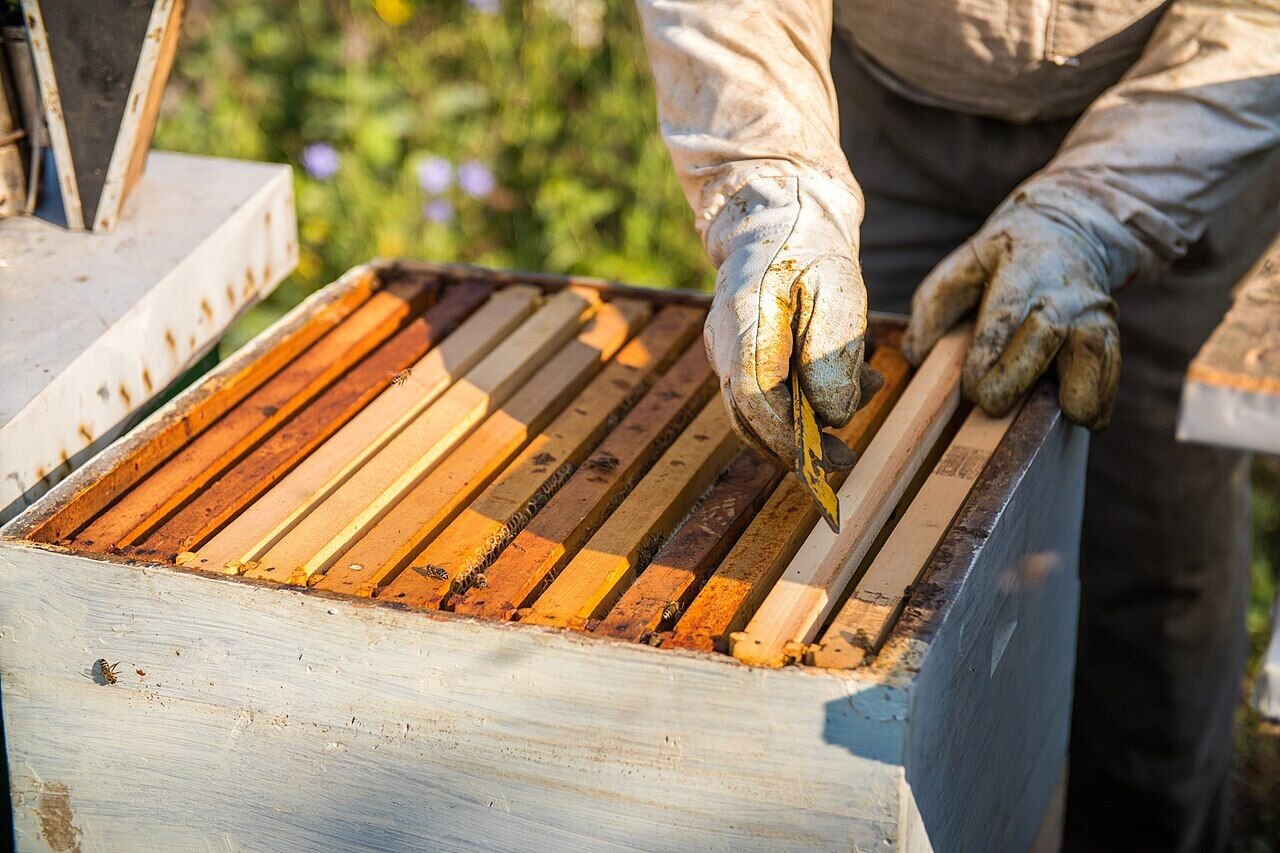
Every professional hive inspection generates a small set of standardized observations: colony population strength, queen status, brood pattern, disease and pest indicators (particularly Varroa mite load), and honey stores. On their own these are basic apiary-management records, not sustainability data — what turns them into something reportable is aggregation and consistency across many client sites over time. The Best Bees Company describes each managed hive as contributing to what it calls the world’s largest database of standardized bee health data, built specifically because the same trained beekeepers use the same observation protocol across every client site, producing genuinely comparable records rather than one-off anecdotal notes.
Beyond the hive itself, a program that includes companion pollinator plantings — native or pollinator-friendly landscaping installed alongside the hives — can generate a second, distinct data layer: plant survival, bloom coverage, and observed pollinator diversity in the immediate area. This is the layer that actually speaks to site-level biodiversity, as distinct from the health of one managed honeybee colony.
How It Maps to Real ESG Reporting Frameworks
Alvéole’s own guidance to prospective clients is direct on this point: the company advises companies to look for “measurable outputs that feed into the reporting frameworks your portfolio already works with” — meaning the raw hive-health numbers are only useful if a vendor can map them to whatever framework a company already reports under (common examples include GRESB for real estate portfolios, or a company’s own GRI- or SASB-aligned sustainability report). A vendor that can’t explain which named framework its dashboard outputs correspond to is providing a nice-sounding program, not usable disclosure material.
The same guidance recommends verifying, before signing, whether a vendor can service every property in a multi-city portfolio under one reporting standard — a real constraint for companies trying to produce one consistent, portfolio-wide ESG figure rather than a patchwork of city-specific vendor reports that don’t roll up cleanly.
Who Actually Owns the Data
This is the single most concrete, practical question a company should resolve in the contract itself, and it’s explicitly one of the questions Alvéole’s own published vendor-selection guidance tells prospective clients to ask directly: does the property/company own the resulting data outright, or does the vendor retain it as proprietary aggregate data (useful for the vendor’s own cross-client benchmarking, but potentially a problem if the company later wants to switch vendors and take its historical hive-health record with it)? A company planning to cite multi-year biodiversity trend data in a sustainability report should confirm in writing that it retains rights to its own site’s historical data before a vendor relationship ends.
“Each hive contributes to the world’s largest database of standardized bee health data, helping companies track biodiversity, report on ESG goals, and lead with purpose.” — The Best Bees Company, in its own published corporate program materials (see the company’s guidance on pollinator programs and green-building credit)
What This Data Can’t Honestly Claim
Managed honeybee (Apis mellifera) colony health is a genuinely limited proxy for overall site biodiversity, and the actual science on honeybee-native bee competition is more mixed than either side of the debate usually admits. A 2025 Oregon State University Extension publication by pollinator specialists Andony Melathopoulos and Ramesh Sagili reviewed the research directly and found real, if uneven, evidence of resource competition — but also found that a broader review of 78 studies on managed-versus-wild-bee competition found only about half showed any negative impact at all, and concluded that urban beekeeping specifically is unlikely to drive any Oregon native bee species toward extinction, since the state’s rare native bees live in remote, non-urban habitat far from where beekeeping actually happens. That nuance cuts both ways for a corporate ESG claim: a company can’t honestly claim its honeybee hives are proof of “supporting biodiversity” (the relationship is genuinely context-dependent, not a settled positive), but it also shouldn’t be alarmed into thinking hives are automatically harmful. The responsible, defensible claim rests on the same conclusion OSU’s researchers reach — habitat, not honeybee hive counts, is the actual lever for native pollinator outcomes — which is exactly why the companion native-plant and wild-pollinator monitoring layer described above, not the honeybee hive count alone, is what a credible ESG claim should be built on.
This is also why citizen-science pollinator monitoring, covered in this site’s separate guide to real citizen-science programs, is a genuinely useful complement: it captures wild pollinator diversity data that a managed honeybee hive-health report cannot.
Getting a Credible Program, Not Just a PR Gesture
A defensible corporate ESG hive program combines three things: standardized, vendor-verified hive-health data reported against a named framework; a companion wild-pollinator or native-plant habitat component that addresses actual biodiversity rather than just honeybee colony count; and clear data-ownership terms that let the reporting continue consistently even if the vendor relationship changes. Companies evaluating vendors on exactly these criteria should see this site’s separate guide to choosing a professional beekeeping vendor, and companies specifically pursuing green-building credit for this work should read the separate breakdown of which LEED credits beehives can and can’t realistically support.
Frequently Asked Questions
What data does a corporate beehive program actually generate?
Standardized hive-health metrics from every inspection — colony strength, queen status, disease/pest indicators, and honey yield — plus, when companion plantings are included, plant survival and observed pollinator diversity data for the site.
Can honeybee hive data be used in an official ESG report?
Yes, but only meaningfully when a vendor can map its data outputs to a named reporting framework the company already uses (such as GRESB for real estate); raw hive-health numbers with no framework mapping are not directly usable disclosure material.
Do more honeybee hives always mean better biodiversity outcomes?
No. Entomologists have raised documented concerns that a high concentration of managed honeybee colonies can compete with wild native bees for limited urban forage, meaning honeybee hive count alone is a weak and potentially misleading biodiversity proxy without accompanying native-pollinator data.
Who owns the hive-health data a vendor collects?
This varies by contract and should be confirmed explicitly before signing — some vendors retain aggregate data as proprietary, which can be a problem for a company wanting to carry historical site data forward if it later switches vendors.
Is a single rooftop beehive enough to claim a real ESG biodiversity benefit?
On its own, no — a credible claim generally requires ongoing standardized reporting plus a native-plant or wild-pollinator component, not just the existence of one or two managed honeybee colonies.