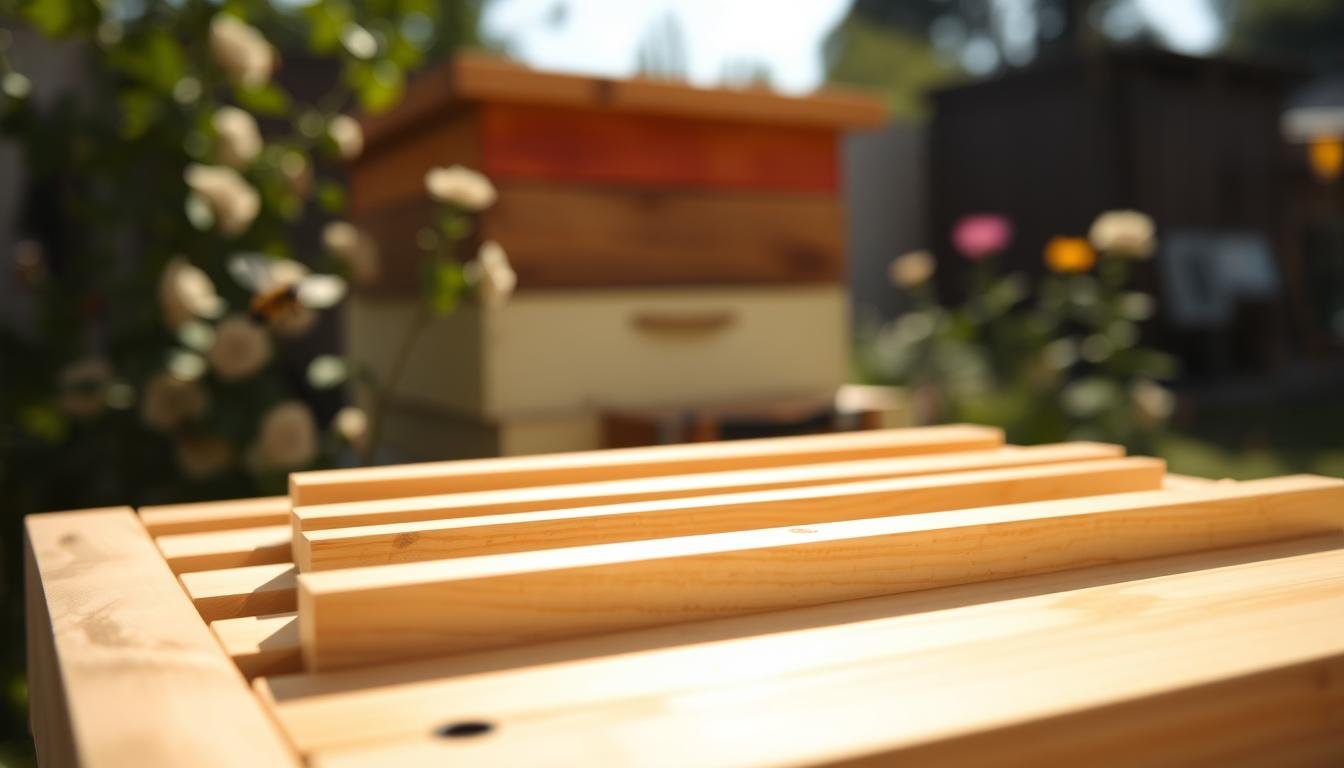
The Foxhound Bee Company offers specialized gear to help beekeepers keep hives orderly and reliable. This short guide on this informative page explains how the right spacers maintain consistent spacing in a 10-frame setup.
Choosing proper tools preserves comb quality and reduces inspections that stress the colony. You can compare price and options on this page to match your budget and needs.
Practical tips include using nine-frame setups when needed and matching rails and stands to avoid tipping. Learn more about 9-frame practice in the community discussion here, and consider hive stand design that lowers vibration here. For beginners, review bee space and hive choices here.
Key Takeaways
- Proper spacers keep combs aligned and reduce colony disturbance.
- Compare price and build quality on the product page before buying.
- Nine-frame options can save resources but need careful spacing.
- Sturdy stands and matched rails improve inspection safety.
- Follow bee-space principles to protect comb integrity.
Why Proper Hive Spacing Matters
Correct spacing keeps comb development uniform and boosts hive productivity.
The right gap between each frame lets bees draw straight comb. This uniform comb supports efficient honey storage and organized brood areas in a 10-frame box.
Consistent spacing reduces repair needs and speeds nectar-to-honey conversion. Inspecting a well-aligned hive takes less time and causes less disturbance to the colony.
Comb Building Efficiency
Uniform comb makes cells predictable and stronger. Bees spend less time correcting irregular growth. That saves energy and improves honey yield across the hive.
Preventing Hive Beetle Infestations
Exact spacing closes small hiding spots where small hive beetles hide. Using a precise tool during setup keeps gaps minimal and makes beetle monitoring easier.
For practical tips on adapting a nine-frame approach in a ten-frame system, see the community discussion on 9-frame conversions. If burr comb removal becomes necessary, consult this guide on proper removal here.
| Aspect | Why It Matters | Practical Tip |
|---|---|---|
| Comb uniformity | Boosts storage efficiency and reduces brood disruption | Check spacing visually during every inspection |
| Pest reduction | Limits beetle hideouts and reduces infestation risk | Use a measuring tool to confirm gaps are even |
| Inspection stress | Less handling cuts bee agitation and colony loss | Keep adjustments minimal and consistent |
| Long-term productivity | Preserves comb integrity and hive organization | Maintain alignment each season |
Selecting the Best Frame Spacer for 10-Frame Boxes
A durable metal spacer can make hive setup faster and keep rows of comb aligned over seasons.
The Foxhound Bee Company offers metal frame spacers that have 13 positive reviews from beekeepers across the United States. At a price of $1.00 USD each, this product is an affordable tool to organize honey and brood frames.
These spacers are made to stay in place and encourage even comb building. Adding items to your cart is quick on the product page, so you can streamline hive prep before inspection season.
“Durable, simple, and effective—keeps our comb straight and inspections faster.”
- Durability: metal design for long-term use
- Value: low price with strong user reviews
- Function: helps maintain consistent spacing

| Feature | Benefit | Typical Use | Notes |
|---|---|---|---|
| Material | Metal construction | Permanent tool in hive racks | Resists wear and weather |
| User feedback | 13 reviews | National customer base | Mostly positive comments |
| Cost | $1.00 each | Stocking multiple boxes | Low barrier to trial |
| Function | Consistent spacing | Honey and brood management | Encourages straight comb |
Installation and Hive Management Tips
Small adjustments to spacer placement let you tailor alignment to your box and comb pattern.
Begin by sliding a spacer up or down so more or less of it sits above the rail. Test by lifting a nearby frame gently; proper placement lets you remove frames without injuring bees or the queen.
Always review the installation instructions on the product page before adding items to your cart. This reduces trial-and-error during your first setup and keeps honey flow steady through the season.
Adjusting for Custom Fit
- Slide each spacer until clearance is smooth.
- Test several frames to confirm consistent spacing.
- Keep adjustments small to avoid shifting comb alignment.
“Follow the guide on the product page and test each adjustment—this makes inspections faster and safer.”
The Foxhound Bee Company supports purchases with a 30-day return policy. If a tool does not suit your hive, you have thirty days to request a return.
| Action | Reason | Result |
|---|---|---|
| Slide spacer height | Adjusts clearance above the rail | Frames lift without sticking |
| Test multiple frames | Confirms uniform spacing | Less comb damage during inspections |
| Read product page | Follow manufacturer guidance | Smoother installation and fewer returns |
| Keep small tweaks | Avoid sudden shifts in comb | Stable honey production |
For a broader look at hive choices and how spacing affects setup, see our guide to beehive types.
Conclusion
Good equipment choices cut inspection time and keep colonies calm during handling. Selecting the right gear is essential to maintain a healthy, productive apiary all year.
High-quality spacers give bees the support they need to build uniform comb and avoid gaps that invite pests. Follow the simple installation tips above to protect the colony and make routine checks faster and safer.
Investing in a reliable product now pays off at harvest and during inspections. Learn more about spacer techniques in the Hoffman spacing details and about hive designs in the Modified Dadant guide.
FAQ
What are the top frame spacers for 10-frame beehives?
Popular options include metal adjustable bars, plastic comb guides, and wooden spacer strips from reputable beekeeping brands such as Mann Lake and Dadant. Each type offers different durability and ease of use. Metal bars last longest and crop-fit most boxes, plastic guides resist moisture, and wood blends with traditional equipment. Choose based on your hive material and maintenance preferences.
Why does proper hive spacing matter?
Consistent spacing keeps combs straight, improves ventilation, and helps bees move freely. Good spacing reduces burr comb and drifting, which lowers stress on colonies and makes inspections faster. It also supports even brood pattern development and efficient honey storage.
How do spacers improve comb building efficiency?
Spacers guide bees to draw comb in the intended gap between frames. That reduces crooked comb and wasted foundation. When comb is uniform, frames lift out cleanly and frames across boxes align for better super stacking and extraction.
Can spacers help prevent hive beetle infestations?
Indirectly, yes. Proper spacing promotes good airflow and cleaner frames, which makes it harder for small hive beetles to hide and breed. Some spacers also create tighter seams that limit pest access between boxes. Still, use spacers alongside sanitation, traps, and regular inspections for best control.
How do I select the right spacer for a 10-frame box?
Match the spacer material to your hive construction and climate. Measure your box internal width first, then choose adjustable or fixed spacers that create the correct brood chamber spacing. Consider durability, price, and whether you prefer reusable or disposable components.
What installation tips help ensure a proper fit?
Clean and level the inner walls before placing spacers. Install with gentle pressure to avoid warping frames. Use a carpenter’s square or a trial frame to check alignment. Tighten adjustable spacers incrementally and re-check between inspections to avoid over-compression.
How do I adjust spacers for a custom fit?
Start with spacers set slightly wider than the target gap, then move them inward in small steps while checking frame centering. For wooden strips, sand thinly to fine-tune width. For metal or plastic adjustable units, use the locking mechanism to make precise changes during a calm inspection.
Are there cost-effective spacer choices that still perform well?
Yes. Simple wooden strips or basic plastic comb guides offer solid performance at low cost. They may need replacement sooner than metal options but often work well for hobbyists and small-scale operations. Compare unit price, longevity, and shipping when evaluating overall value.
Will spacers work with both painted and natural wood boxes?
Spacers function with either finish, but painted interiors can affect fit if paint buildup is uneven. For painted boxes, verify internal dimensions after painting. Natural wood may expand with humidity, so check fit seasonally and adjust as needed.
How often should I inspect or replace spacers?
Inspect spacers each season and during routine hive checks. Replace plastic or wooden pieces when warped, cracked, or worn. Metal spacers rarely need replacement but should be checked for rust or bent sections that could pinch comb or damage frames.