Comb rotation keeps wax young and colonies healthy. Many beekeepers struggle with tracking old wax across years. A simple labeling system gives clear order in the box and helps manage brood frames and honey stores.
Proper management of the brood nest reduces buildup of chemicals and pathogens. By marking a frame and tracking foundation age, a beekeeper preserves worker and drone health. This practice also helps the queen find fresh cells for laying.
In the spring and through the honey flow, routine checks make it easy to rotate one frame out and replace it with new foundation. Over time, this method extends hive life and supports strong colonies across many years.
Key Takeaways
- Label frames so you can track wax age and wear.
- Rotate old brood comb out during spring inspections.
- Fresh foundation helps maintain healthy brood and stores.
- Consistent order in boxes aids colony management.
- Simple records protect hive health and extend comb life.
The Importance of Tracking Frame Age
Keeping clear age records for frames protects hive health. Researchers recommend replacing old comb every five or six years to limit pathogens and chemical buildup.
Beekeepers often use visual checks of wax color as a quick test. Dark, brittle wax usually signals an old brood comb that needs attention.
Simple tracking helps you spot when a queen is laying in fresh cells rather than old brood. This supports worker performance and lowers disease risk in the colony.
- Replace aged comb on a five–six year cycle, per researchers.
- Use visual inspection to judge wax condition and contamination.
- Log time in service for each frame to manage honey and drone production.
For more on typical lifespan and maintenance, see the guide on frame lifespan and care.
How to Number Frames for Comb Rotation
A clear labeling plan makes hive checks faster and reduces mistakes during busy inspections.
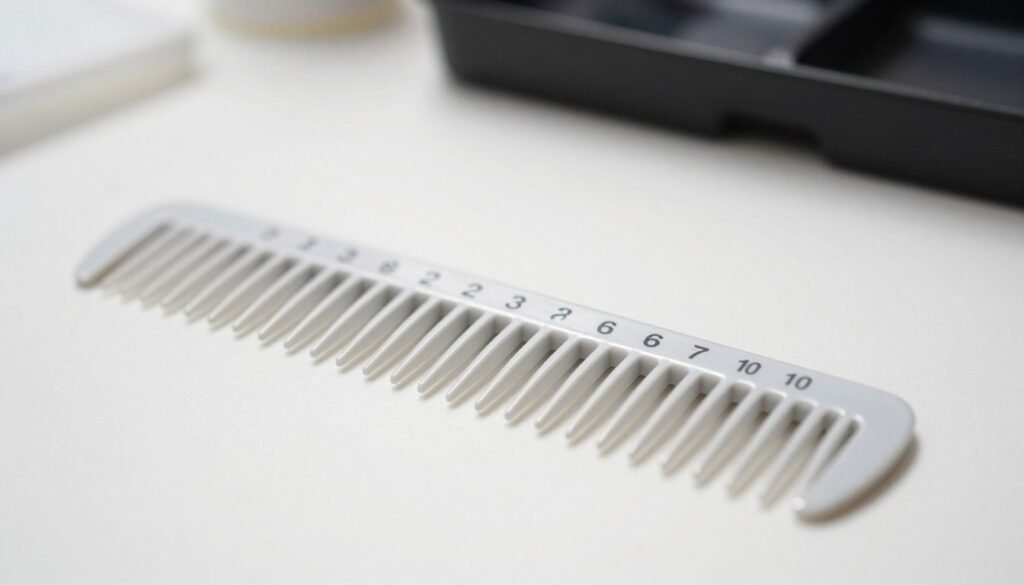
Start simple. Gerald_Nickel favors a 1–10 system, marking the wall bars as #1 and #10. This gives a fast visual map of brood placement and order inside the box.
Physical Marking Techniques
Top-bar tags and pins work well. Use colored drawing pins on the top bar to mark queen cells or the age of foundation. A colored pen on the side of a bar can record the year at a glance.
“A 1 to 10 layout helps beekeepers find brood and honey positions quickly.”
Positioning Frames in the Box
Place older wax near the walls and fresh foundation toward the center. That keeps the queen laying in clean cells and helps worker distribution during spring inspections.
| Marking | Use | Benefit |
|---|---|---|
| 1–10 numeric tags | Map brood and honey positions | Faster inspections, clear order |
| Colored pins on top bar | Flag queen cells or old wax | Quick visual cues in the field |
| Year written with pen | Track foundation age (wax or plastic) | Planned replacement and less chemical buildup |
Marked bars make management easier for beekeepers during busy spring checks. They also guide which wax or plastic foundation needs replacement to protect colony health and reduce pathogens in hives.
Choosing Your Marking System
Pick a single marking method and stick with it across every hive and season.
Valli marks each bar with a blue pen and writes “16” to show the year the foundation was added. This small step makes it easy to spot old wax at a glance.
Using the same color pen for queens and frame tags saves ink and cuts confusion during checks. Many beekeepers adopt this rule and report fewer mistakes.
Keep marks bold and visible. Write the year on the top bar or the side of the foundation so any worker can find age data quickly.
- Blue pen with a clear year mark works well in bright light.
- Consistent marks help you identify which old comb needs removal.
- Simple visible tags beat complex logs when time is short.
| Mark | What it shows | Benefit |
|---|---|---|
| Year on bar | Foundation age | Planned replacement of wax |
| Same color for queen | Queen ID and frame age | Saves ink and time |
| Bold digits | Quick visual cue | Fewer inspection errors |
Managing Hive Records and Documentation
Good record keeping turns fleeting inspection notes into long-term hive intelligence.
Integrating hive logs with clear frame data helps beekeepers follow queen cycles and wax age across years. Busso recommends keeping a diary that notes the position of brood comb and any drone or queen cells found during checks.
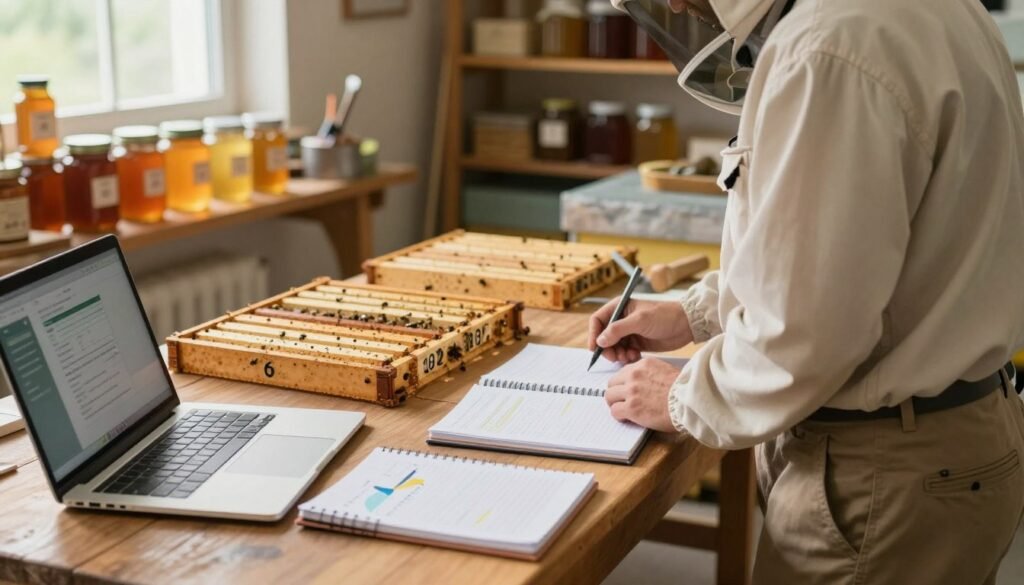
Integrating Hive Logs with Frame Data
Keep entries brief and consistent. Note the year on foundation, the location of any cells, and signs of disease. Over time, these short notes reveal patterns in colony strength and honey stores.
Detailed logs help when multiple hives share an apiary or when a beekeeper manages colonies at different sites. They preserve memory and speed decision-making during inspections.
“A simple diary entry about cell locations can help track queen performance over time.”
- Record foundation year and wax condition each inspection.
- Log the position of brood and any visible cells on specific frame bars.
- Use the same shorthand across all hives so data remains comparable.
| Record Type | What to Note | Benefit |
|---|---|---|
| Foundation year | Year written on top bar | Planned replacement and less wax buildup |
| Cell location | Frame ID and side (left/right) | Track queen activity and brood pattern |
| Health flags | Visible disease signs or unusual brood | Faster treatment and safer colonies |
Maintain digital or paper logs and review them each season. For practical guidance on documentation and long-term pest management, see this piece on long-term documentation. If disease appears, follow best practices about discarding affected wax via this resource on comb disposal.
Benefits of Regular Comb Replacement
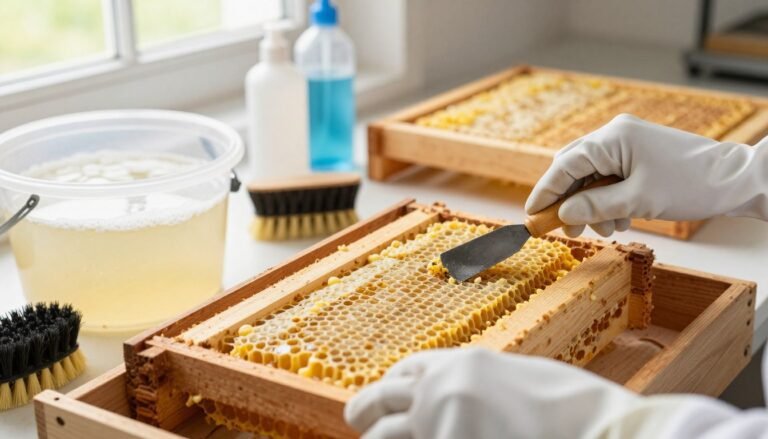
Replacing aged wax on a planned schedule gives clear, measurable gains for colonies. A simple spring swap of two dark top bars in a ten‑frame hive is a common, effective practice.
Improving colony health
Old brood wax often stores pesticides, viruses, and other residues that stress young bees. Removing a couple of tired bars each spring lowers that load and supports stronger worker numbers.
Boosting queen performance
Fresh foundation encourages the queen to lay in clean cells. That leads to a more uniform brood pattern and faster expansion during the honey flow.
Reducing pathogen buildup
Regular replacement cuts the reservoir for pests and disease in brood comb. Over several years, this helps keep honey stores cleaner and reduces the need for chemical treatments.
Practical note: many beekeepers report strong results by replacing two dark wax bars each spring and keeping year marks on the top bar. For guidance on broader comb management, see comb rotation in beehives. If storage is a concern, learn how to store frames to prevent pests.
| Action | Effect | Benefit |
|---|---|---|
| Replace 2 dark bars each spring | Removes aged wax and residues | Cleaner brood, healthier colony |
| Install fresh foundation | Encourages queen laying in new cells | Improved brood pattern and growth |
| Mark year on top bar | Track age of wax and plan | Better long‑term management, fewer surprises |
Utilizing Old Comb for Apiary Success
Old drawn wax often acts as a strong lure for scout bees searching a new home. A single seasoned piece carries colony scent that scouts read instantly.
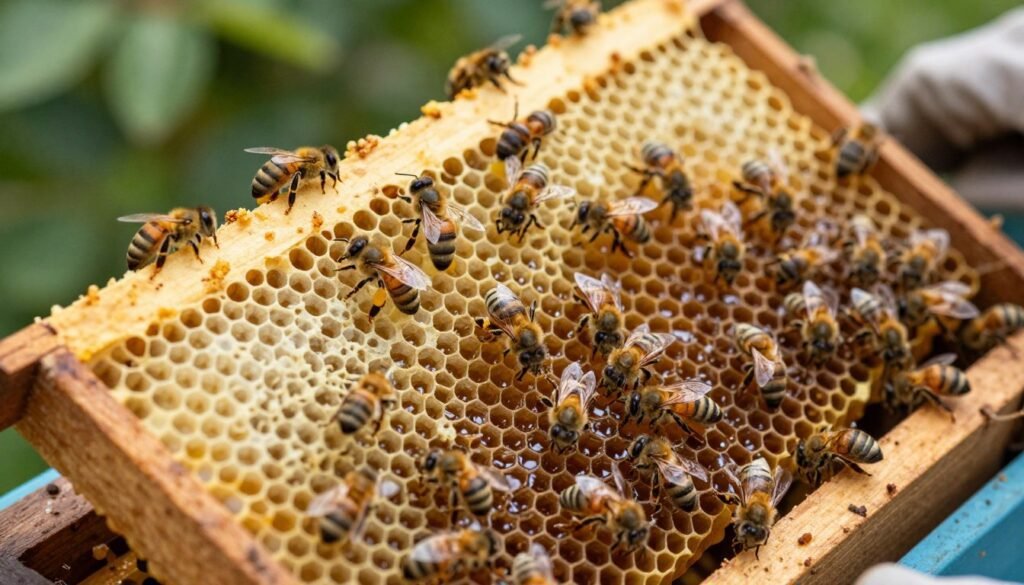
Place one aged frame inside a swarm trap in spring. This simple step raises interest and brings scouts into your apiary sooner than empty bait alone.
While worn brood comb is not ideal for extracting honey, it serves well to catch new colonies. Rotating old frames out of your main hive keeps the brood nest cleaner and gives new colonies a familiar welcome.
- Use a single piece of drawn wax in each trap to boost attraction.
- Store retired frames where you can inspect them often.
- Watch stored wax closely; wax moths will consume abandoned brood quickly in dark spots.
“Repurposing old wax turns a waste product into a practical tool for colony capture and apiary growth.”
| Use | Benefit | Care |
|---|---|---|
| Old drawn wax in traps | Attracts scout bees and speeds colony capture | Replace annually; keep dry |
| Rotated brood frame | Improves hive health and reduces residues | Mark year on top bar and log |
| Stored wax stock | Ready bait and educational sample | Monitor for wax moths often |
For cleaning plastic foundation after colony loss, see this practical guide.
Conclusion
Consistent upkeep and simple marks make a big difference in apiary health. Set a clear plan for labeling and swapping old bars so inspections run smoothly and decisions stay simple.
Rotate aged wax on a schedule to reduce pathogens and chemical buildup. Small annual swaps protect brood and keep queens laying in cleaner cells.
Use easy markers — colored pens or drawing pins — and keep brief notes. For guidance on basic components and foundation choices, see this frames and foundation guide.
Start your plan this spring. If you face buildup or irregular comb links, this short read on how to fix cross‑comb can help.
Take action now and your colony will reward steady care with improved growth and cleaner stores.
FAQ
What is the best way to track the age of brood and honey comb?
Keep a simple, consistent record in each hive log noting the year and box position when a frame is first used. Use visible marks on the frame top bar and a matching entry in your notebook or digital app. This creates a clear history of brood nest and honey stores without complex systems.
Which physical marking methods work well in an apiary?
Use small punched holes, shallow notches in the outer top bar, or durable paint marks on end bars. Avoid anything that harms bees or interferes with foundation. Plastic markers, numbered metal tags, or stamped wooden tags are also effective and weather-resistant.
How should frames be placed inside a box for easy monitoring?
Arrange frames so brood combs stay near the center of the nest and honey frames sit toward the top or outer positions. Keep numbered frames in consistent order across boxes so you can scan a sequence and quickly update health and pollen storage notes.
What marking system should an experienced beekeeper choose?
Pick a system that suits scale: simple marks and a paper log work for a few hives; numbered metal tags and a spreadsheet or Hive Tracks work for larger apiaries. Match the system to your inspection routine to ensure consistent tracking over years.
How do I integrate frame data with hive records?
Include a column in your hive record for frame ID, age, and condition. During inspections, record brood presence, mite signs, and honey flow status against each frame ID. Sync paper notes with a digital backup weekly to preserve long-term colony history.
What frequency of replacement reduces disease and wax buildup?
Replace old brood comb every 3–5 years depending on disease pressure and colony strength. Frequent replacement during heavy mite or foulbrood seasons helps reduce pathogen buildup and pesticide residues in wax, improving overall colony health.
Can regular comb management boost queen performance?
Yes. Fresh foundation and regularly cycled brood comb reduce pathogens and chemical residues, which supports higher brood viability. A healthier brood nest helps the queen lay evenly and maintain strong colony population growth.
How do old frames fit into successful apiary strategies?
Store clean old comb for use as nuc starters, drone rearing, or foundation seasoning. Use capped honey from older combs for fall feeding if uncontaminated. Reuse old comb selectively to conserve wax while managing disease risk.
Are there tools that make tracking and marking easier?
Yes. Digital hive management apps, metal number tags, and stamp kits streamline tracking. Varroa monitoring tools and quick-reference inspection sheets help pair frame IDs with health metrics, speeding up routine checks.
What risks should I avoid when marking and replacing comb?
Avoid deep cuts or toxic paints that harm bees. Don’t mix old, disease-suspect comb into healthy colonies. Keep chemical treatments and contaminated stores out of reused wax. Follow biosecurity practices when moving frames between hives.