Deciding whether to add foundation to a brood box ranks among the first major choices for new beekeepers in the United States. The Langstroth hive dominates national practice, with over 90% of people using that equipment to manage bees year-round.
A standard deep box measures 9 1/8 inches tall; medium boxes come at 6 1/4 inches. The brood box hosts the queen, eggs, and early comb build. That space guides colony growth, frame strength, and long-term hive health.
Many find early beekeeping overwhelming. Time spent learning frame size, comb guides, and top-bar supports pays off. Whether working with drawn comb or limited sheet support, proper handling affects colony success.
For more debate on trade-offs and techniques, see a practical forum discussion at foundation use debate and practical tips for climate and hive setup at humid climate guidance.
Key Takeaways
- Langstroth hives remain the top choice for most US beekeepers.
- Box height affects frame strength and comb handling.
- Brood box care shapes colony health and growth.
- Comb guides and top-bar supports help keep comb straight.
- Learn options early to make informed equipment choices.
Understanding the Role of Foundation in Beekeeping
Frames form the skeleton of a Langstroth hive, guiding comb layout and hive traffic.
Defining hive frames
In a Langstroth hive, a frame is a rectangular support that holds a sheet meant for comb formation. Standard sizes are deep (9 1/8 inches), medium (6 1/4 inches), and shallow (5 3/8 inches). Wood frames from pine offer traditional stiffness. Plastic frames arrive molded, often with pre-attached wax patterns, and weigh less though they can warp under high heat.
The purpose of foundation
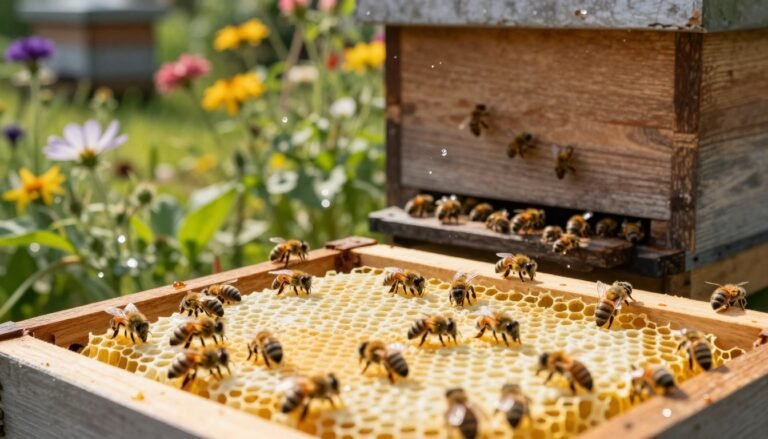
The flat sheet with molded hexagonal cells gives bees a ready template for comb honey and brood cells. Bees build comb faster when given wax-coated plastic or beeswax foundation. Cell size on that sheet influences queen decisions about worker versus drone eggs. Proper alignment keeps comb straight, aiding honey storage and brood management.
| Feature | Wood Frame (Pine) | Plastic Frame | Foundation Type |
|---|---|---|---|
| Weight | Heavier, sturdy | Lightweight | Wax-coated varies |
| Durability | Resists warping in heat | Can warp in high temps | Beeswax needs careful handling |
| Comb start | Requires wiring or starter | Often pre-molded cells | Encourages bees build comb quickly |
| Typical use | Brood nests and long-term use | Honey supers and convenience | Controls cell size for brood and honey |
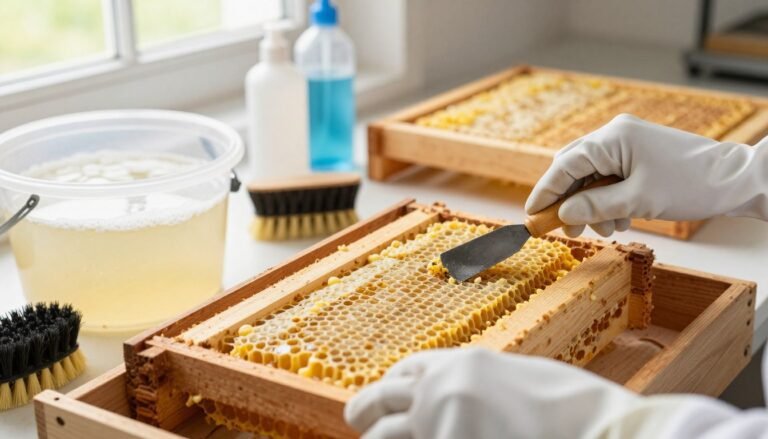
For a detailed primer on frames and sheets, consult the beehive frames guide.
Should You Put Foundation in Brood Boxes or Not
Many beekeepers weigh natural comb growth against guided frames when outfitting a Langstroth hive.
Practical choice: guided sheets give straight comb that speeds inspections and helps honey storage align with frames. New beekeepers often start with guides to avoid cross comb and reduce repair time during the first year.
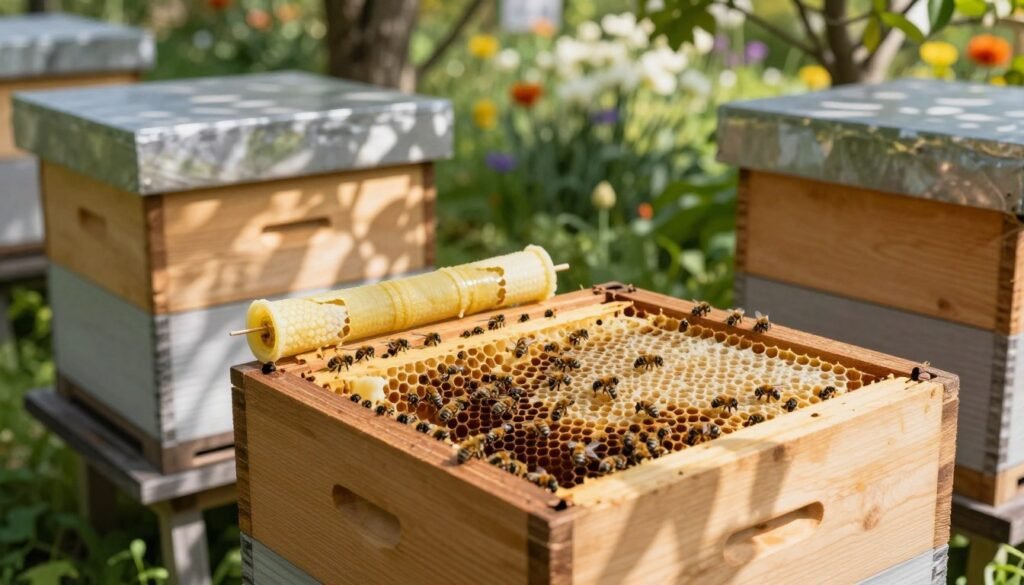
Foundationless beekeeping is growing. It promotes natural cell sizes and can benefit colony health, but it demands more frequent checks as bees build comb. Monitoring matters more when using blank frames.
- The Langstroth design supports stacked boxes so colonies expand during peak honey production.
- Many maintain 2–3 boxes year‑round to give colonies room for stores and winter survival.
- Beginners often prefer guided frames to prevent cross comb and simplify management.
For setup tips and step‑by‑step installation help, consult this beehive installation guidance. Balancing natural methods with practical equipment choices will shape long‑term honey yield and colony health.
The Case for Using Foundation
Molded sheets speed comb formation and make frame handling predictable during inspections. For many beekeepers, that predictability reduces cross comb and eases seasonal work. Guided sheets help keep comb straight across frames and boxes, which supports efficient honey production and routine checks.
Chemical contamination concerns have emerged from research showing that commercial wax often carries residues from pesticides and miticides used by large operations. Plastic frame sheets commonly arrive coated with beeswax to encourage bees to build comb quickly, but residues may persist in that wax.
Some suppliers now sell sheets without a wax coating to reduce contamination risk. Choosing uncoated options or certified clean wax can limit chemical transfer to the hive and the queen’s brood area.
- Pros: straight comb, easier frame removal, lower cross comb risk, better honey extraction.
- Cons: cell size limits bees building choices; chemical residue concerns on wax-coated sheets.
For guidance on frame basics and cleaner options, see a practical primer on frames and foundation, and advice about comb handling after disease at comb discard guidance.
Benefits of Foundationless Beekeeping
Hilary Kearney, a beekeeper in San Diego, advocates letting colonies form comb without molded sheets.
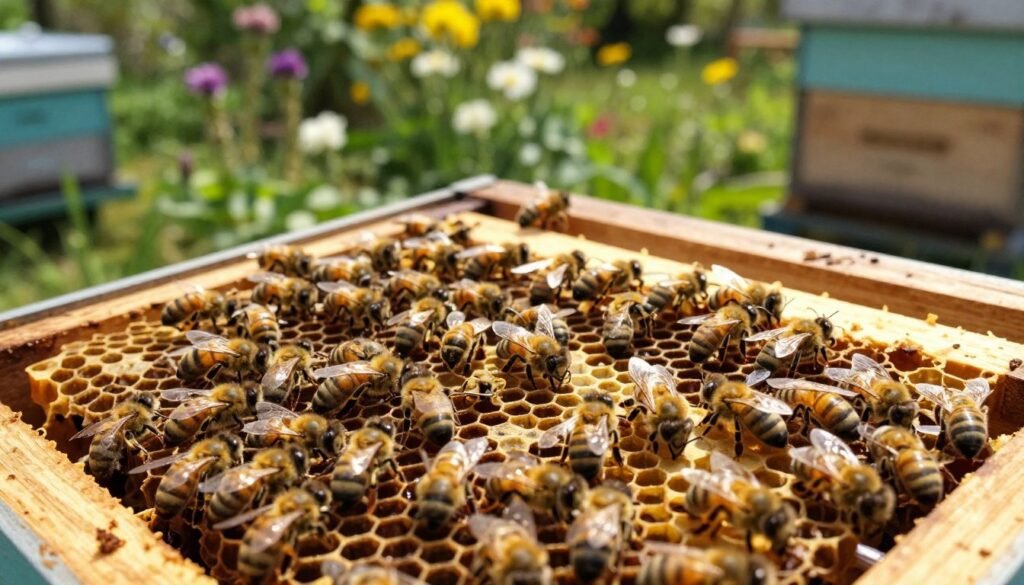
Natural comb often features smaller cell size than commercial wax. Many studies and field observations link those sizes to stronger, healthier bees.
Removing wax sheets cuts risk of introducing pesticide residues tied to recycled beeswax. That reduces chemical exposure across the hive and brood area.
- Natural layout: bees build comb how they prefer, arranging brood and honey to match colony needs.
- Health gains: smaller, natural cell size can support better bee development and mite management.
- Hands-on tradeoff: this way demands more time during inspections and careful handling of frames to avoid breaking comb.
Some critics claim less honey yield, yet many experienced beekeepers report similar production after an adjustment period. For tips when comb fails to start, see reasons bees won’t draw comb.
“Foundationless beekeeping lets colonies behave like wild hives,”
Managing the Challenges of Natural Comb
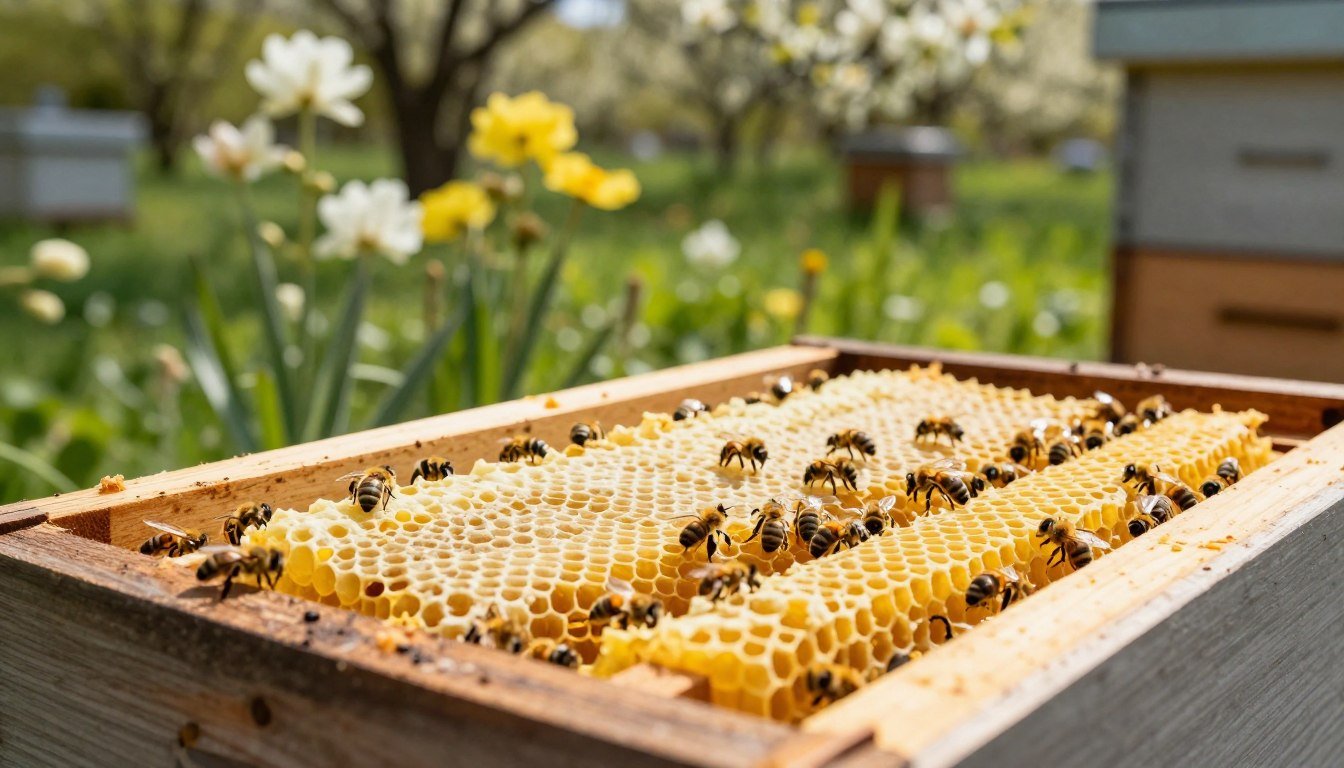
When bees build comb freely, the hive’s internal layout can shift quickly and unpredictably.
Cross comb happens when bees build comb across several frames, often perpendicular to the frame top. This makes it hard to remove a frame from a box without tearing comb and losing honey.
An early-season mistake can leave a mess that is time-consuming to fix. Many students attempting foundationless beekeeping experience severe cross comb during their first year, says a senior contributor at PerfectBee.
Impact on Queen Health
Cross comb can force a beekeeper or beekeeper-team to cut through comb, which risks harming the queen. A damaged queen reduces brood production and weakens the hive.
- Inspect frequently while bees draw comb; frequent checks catch drifting comb early.
- Maintain proper frame spacing to guide bees toward correct comb orientation.
- Start cautiously—many experienced beekeepers recommend guided frames for beginners to avoid collapse of new comb.
Best Practices for Installing Comb Guides
Simple paint-stick guides give bees a clear path to build straight comb along each frame. This small step cuts cross comb and makes inspections faster.
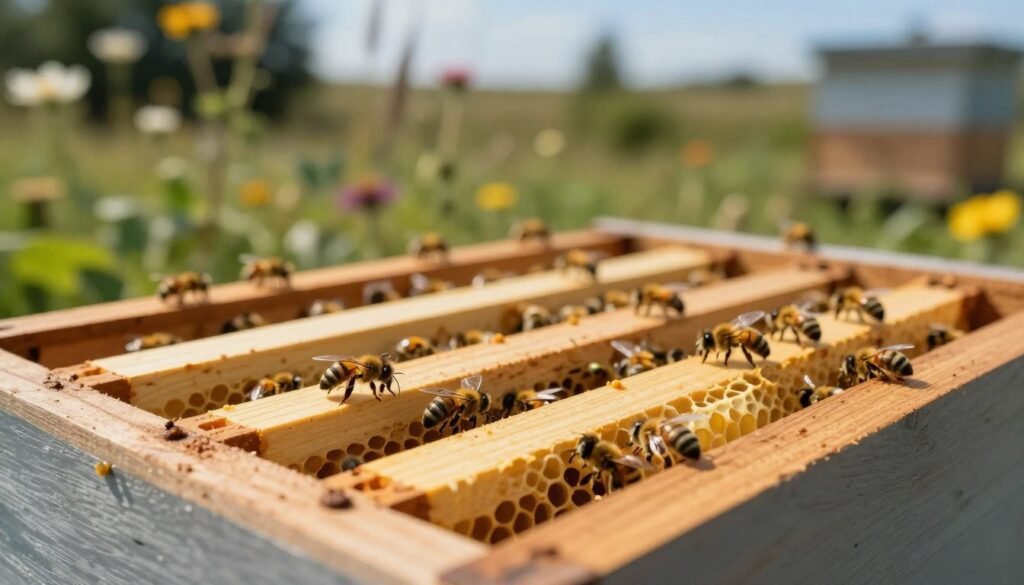
Use 14-inch paint stirrer sticks fitted into the top groove of each frame. Nail the guide securely so it cannot fall during hive handling. A tight fit keeps comb aligned across the box and the hive.
Coating the guide with a thin layer of beeswax encourages bees to start building on the intended line. A light wax rub attracts bees while preserving natural comb habits for brood and honey.
- Install a wooden guide across the top of the frames to ensure straight, manageable comb.
- Make guides from common materials like paint sticks that fit where a sheet would sit.
- Apply a light beeswax coating to signal bees to build along the guide.
- Inspect every two weeks to confirm comb follows the guide and avoid cross comb.
- Use foundationless frames with a guide for a compromise between natural comb and order.
Well-installed guides help the queen place brood correctly and support higher honey yields by keeping frames usable during extraction. For step-by-step photos and community tips, see the comb guide for brood box frames.
Strategies for Fixing Cross Comb Issues
Tackling cross comb early keeps frames usable and limits lost honey.
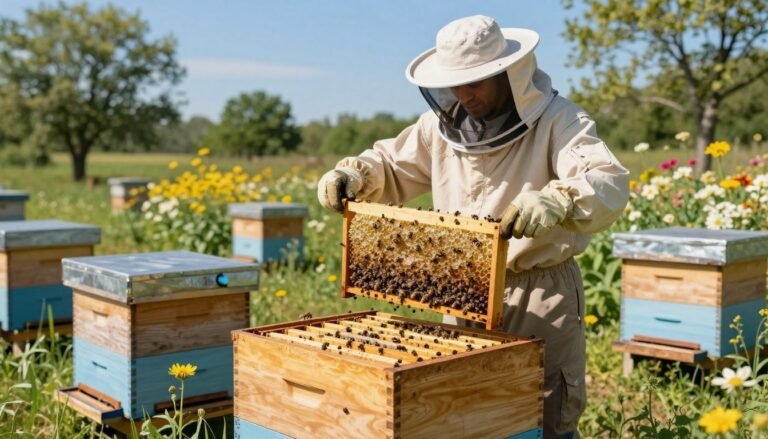
Start slow and calm. Move deliberately to avoid crushing the queen or stressing the bees. Light smoke helps move workers away from the repair zone so clean cuts can be made.
Techniques for Advanced Comb Repair
When comb spans multiple frame tops, first clear space by lifting several frames out. This gives room to work without tearing more comb.
- Cut damaged comb with a sharp knife for neat edges; this helps bees reattach pieces to a frame.
- Secure salvaged comb to a frame using rubber bands; bees will chew bands away in time.
- Use heavy smoke for advanced surgery so the colony stays calm during extended work.
- Rearrange frames after repair to guide future comb growth along the top and maintain proper spacing.
Save as much comb honey as feasible when destruction is necessary. Preserving stores reduces stress on the colony and keeps honey production steady.
Inspect often. Early detection is the easiest way to prevent severe cross comb. Regular checks of the brood box catch drifting comb before repairs become complex.
“Careful, methodical repair preserves frames and restores order with minimal harm to the colony.”
For step-by-step video tips on major repairs see a live demo of swarm inspection and fixing cross comb. Guidance about handling plastic sheets after loss is useful when replacing damaged wax or plastic after repair: clean plastic foundation.
Final Thoughts on Hive Management
A final decision about hive layout comes with experience and honest observation. ,
Observe the bees and log what each frame and box delivers over time.
Keep learning from both success and mistakes. Try different foundation options and compare wax, plastic, and foundationless through local trials; see a useful roundup on foundation options.
Join forums and read practical guides to refine technique and protect queen health and colony growth. For stepwise help and seasonal checklists consult practical guides.
Beekeeping is a long-term pursuit. Stay curious, stay patient, and enjoy the honey the bees produce.
FAQ
What is a hive frame and why does it matter?
A hive frame holds comb inside a Langstroth or top-bar style beehive. Frames create straight, inspectable comb that simplifies colony management, honey extraction, and disease checks. They also guide bees to build comb within predictable spaces, reducing cross comb and easing seasonal inspections.
What does foundation do inside a frame?
Foundation provides a base pattern for bees to draw comb with regular cell size. Wax or plastic foundation speeds comb building, promotes uniform brood and honey storage, and helps maintain straight comb that fits into equipment like honey supers and extraction rigs.
Are frames with wax foundation better for honey production?
Frames with wax foundation often lead to faster comb completion, which can boost honey storage during strong nectar flows. They also yield comb that is ready for extraction with standard equipment. However, natural comb may produce high-quality comb honey preferred by some markets.
Can chemical residues in foundation affect colonies?
Some commercial wax foundation can contain pesticide residues or miticide traces from recycled wax. Those chemicals can harm brood and affect colony health over time. Sourcing tested beeswax or switching to foundationless or plastic options reduces that risk.
What advantages do foundationless frames offer?
Foundationless frames allow bees to build natural comb with their preferred cell size. That method promotes natural brood patterns, reduces dependence on recycled wax, and lowers initial equipment costs. It also supports beekeepers focused on natural comb and brood nest structure.
How does foundationless comb increase cross comb risk?
Without guides, bees may build comb at odd angles between frames or against the hive top, creating cross comb. This makes inspections and honey removal difficult. Proper spacing, starter strips, or comb guides help direct comb growth and limit cross comb formation.
Does natural comb affect queen health or egg laying?
Natural comb built with the colony’s preferred cell sizes can support robust queen laying and proper brood development. However, inconsistent cell sizes may impact varroa dynamics. Monitoring queen performance and colony metrics helps identify any negative trends early.
What are comb guides and how do they work?
Comb guides include starter strips, wax slats, or pre-formed comb foundations fixed to frames to steer comb building. They give bees a small section of comb to expand from, encouraging straight comb between frame top bars and reducing the chance of cross comb.
How should comb guides be installed for best results?
Place a narrow starter strip along the top bar, secure it so bees find it quickly, and maintain proper frame spacing. In early spring, monitor and replace damaged guides. Using starter strips with foundationless frames balances natural comb benefits with hive manageability.
What steps fix existing cross comb problems?
To correct cross comb, open the hive on a calm, warm day, gently separate frames and cut away misbuilt sections back to sound comb, then reposition frames with comb guides. When necessary, relocate frames to different hive boxes to encourage rebuilding in the correct plane.
Are there advanced techniques for repairing complex comb issues?
Advanced repairs include constructing temporary support frames, using queen excluders to confine brood, and re-framing grafts of comb onto new foundations. Apiculture tools like heated knives speed precise cuts. Experienced beekeepers may also perform frame rotation to retrain comb orientation.
How does brood nest placement change with foundationless methods?
Brood nests in foundationless hives can shift as bees build comb naturally, often creating a denser, more compact brood cluster. Regular inspections help maintain optimal brood placement within the hive body and prevent overcrowding or drifting into honey supers.
What equipment choices help balance natural comb and practical hive work?
Combining foundationless frames with selective starter strips, using tested wax foundation when needed, and keeping standard frame sizes creates a hybrid approach. That strategy preserves natural comb advantages while ensuring compatibility with extractors and standardized equipment.
How do colony size and season affect whether to use foundation or not?
Strong colonies and heavy nectar flows favor foundationless comb building, as bees have resources to draw comb. Smaller or nuc colonies may benefit from foundation or starter strips to speed comb formation. Seasonal timing matters—start comb building early in spring for best results.
Can plastic foundation be a middle ground option?
Plastic foundation offers a reusable, washable base that resists warping and may contain fewer contaminants than recycled wax. It still enforces cell pattern and supports extraction. Some beekeepers pair plastic foundation with a light wax coating to encourage acceptance.
How do extraction goals influence the foundation choice?
If producing bulk extracted honey or comb honey for market, using uniform foundation simplifies harvesting and extraction. For beekeepers selling comb honey or prioritizing natural comb products, foundationless frames deliver authentic comb that some consumers value.
What are common starter materials besides wax foundation?
Common starters include shaved beeswax strips, thin wood slats with wax coating, and commercial plastic starters. Each offers a tactile cue for bees to begin building. Properly prepared starters reduce build time and help maintain straight comb lines.
How often should frames be inspected when using natural comb methods?
Inspect frames more frequently during comb construction phases—every one to two weeks early in the season. Regular checks identify cross comb early, monitor queen laying, and track varroa levels. Once comb stabilizes, inspections can return to routine intervals.
What are practical tips to avoid chemical contamination from wax?
Source certified, tested beeswax when purchasing foundation. Render and filter wax carefully before making foundation. Rotate older comb out of brood frames periodically and avoid using brood comb with known residue issues for long-term brood rearing.
How do local regulations or markets influence foundation decisions?
Local honey markets and regulatory standards can favor specific products like comb honey or extracted honey types. Check state food laws and buyer preferences—some consumers prefer organic or natural comb honey, while commercial packers may require standard comb for extraction.