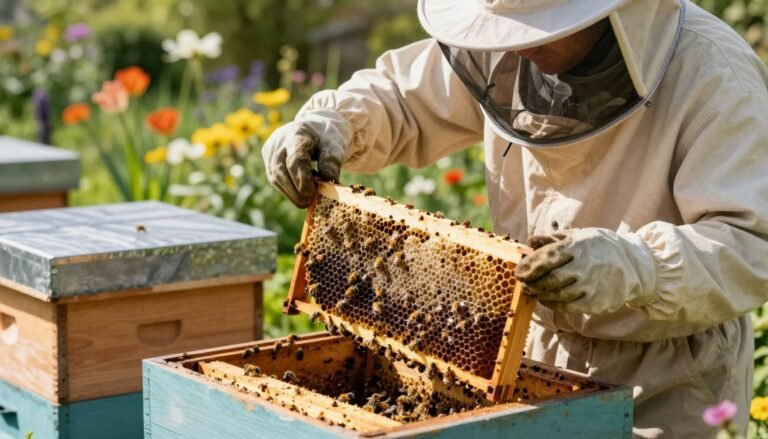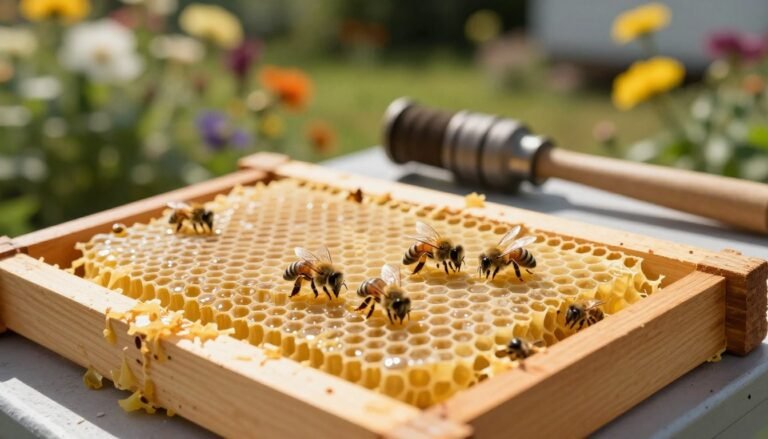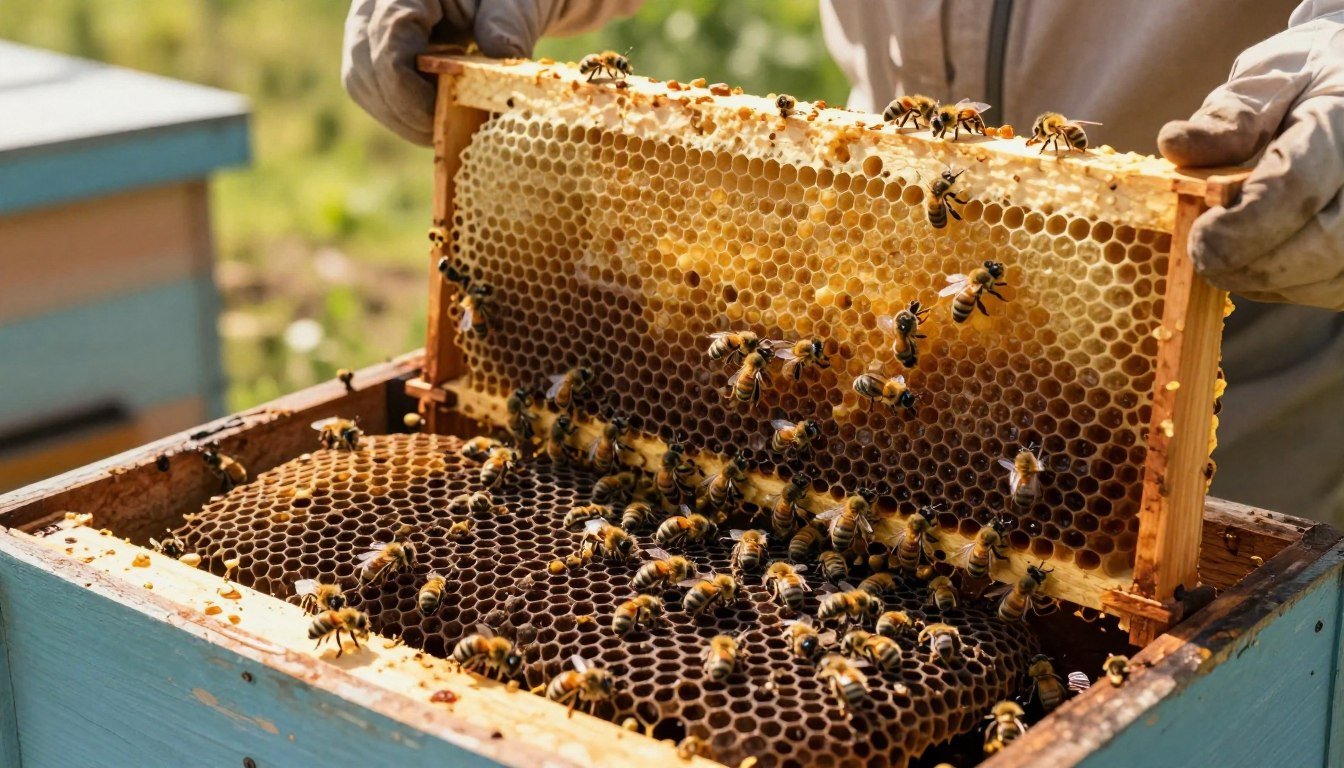
Understanding when to replace old frames is key for healthy colonies. Darkened comb signals years of use and trapped debris. Good beekeeping habits remove old wax before residues harm developing bees.
Track the age of each frame by writing the purchase year on top bars. Many apiary managers plan a 7–10 year replacement cycle to limit chemical buildup from winter mite treatments.
Move older frames outward in the brood nest and add new foundation at the edge. This steady rotation keeps brood cells clean and helps maintain honey quality. For practical guidance see this aging frames guide and advice on discarding comb after disease.
Key Takeaways
- Label frames by year to track age and plan replacements.
- Replace old wax every 7–10 years to reduce residue buildup.
- Shift older frames outward and add new ones at the nest edge.
- Inspect in spring and late summer for best timing.
- Consistent rotation preserves brood health and honey quality.
The Importance of Comb Health in Your Apiary
Healthy wax and well-kept frames form the backbone of a thriving apiary. Regular attention to the brood area keeps larvae safe and helps maintain honey quality. Clean frames reduce stress on the queen and improve colony performance.
Pathogen and pesticide accumulation
Pathogen and Pesticide Accumulation
Old comb can harbor disease agents such as European Foulbrood (EFB). Spores and residues lodge in wax and may persist across seasons. Because wax soaks up chemicals, trace pesticides brought by foraging bees build up over time.
Beekeepers should plan steady frame rotation and consider replacing heavily soiled frames. For practical care and recycling tips, see this comb care guide and guidance on cleaning foundation from colony loss at plastic foundation cleaning.
Impact on bee size and development
Impact on Bee Size and Development
Cells that host many generations develop thin cocoons and debris. Over time this shortens cell depth and can yield smaller bees. Maintaining fresh frames helps young bees reach full size and supports long-term colony health.
- Watch for EFB and remove heavily contaminated frames.
- Limit pesticide buildup by rotating old comb on a regular schedule.
- Keep brood cells clean so developing bees can reach size and strength.
Determining When to Rotate Dark Brood Comb Out of a Hive
A quick light check and age tags help decide when a frame has served its useful life. Inspect frames in spring and late summer for clear signs: heavy staining, blackened cells, or excessive debris that can affect colony health.
Most researchers suggest replacing old wax every 5–6 years, though some beekeepers prefer a shorter 3–4 year cycle based on local pests and forage. Mark two new frames each year with a colored dot to track age and make planning simple.
Use the simple “can you see through it” test by holding a frame toward the sun. If light fails to pass, that frame needs removal. Replacing old brood with new frames containing fresh foundation keeps queen laying steady and supports larger, healthier bees.
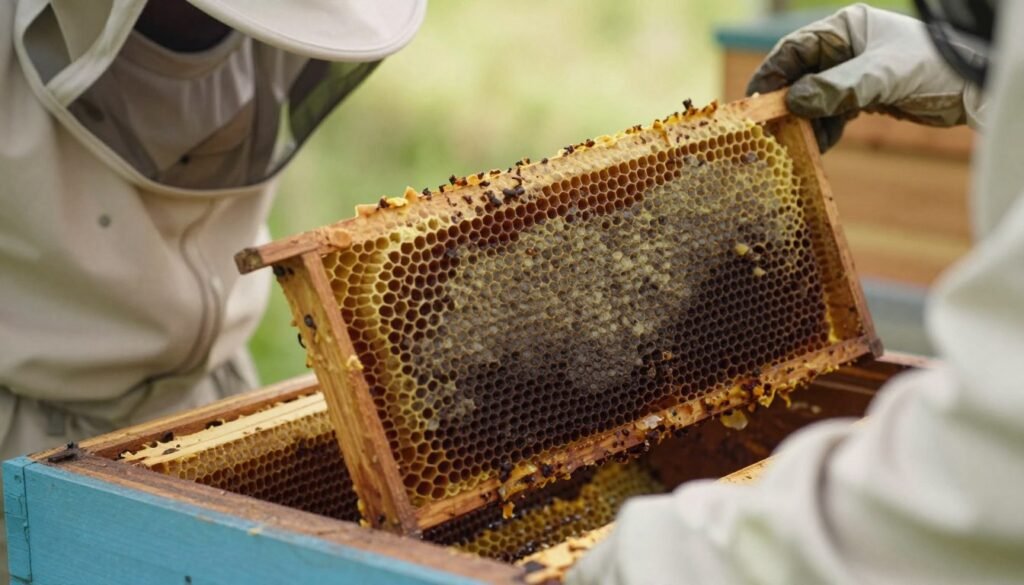
- Practical cycle: 5–6 years is common; adjust by local conditions.
- Quick test: the sun method gives immediate guidance.
- Tracking: colored dots make age management easy.
For step-by-step planning on management and timing consult a detailed comb rotation guide, an aging frames guide, and tips on how to repair damaged hive boxes.
Effective Techniques for Replacing Old Frames
A careful spring inspection helps you choose which frames need replacement before brood rearing peaks. Check each frame for heavy staining, thin cell walls, or packed debris. Mark two frames each year and plan simple swaps with fresh foundation.
Spring Inspection Methods
Open the hive on a warm, calm day. Remove one or two aged frames and replace them with new frames that have fresh foundation. This small step stimulates comb building and supports honey stores.
Managing Frames with Existing Brood
If a frame holds larvae, move that frame to the brood nest edge. Let the young bees emerge before removing the frame. Keeping brood frames together in the center helps the colony maintain temperature and development.
Utilizing Old Comb for Swarm Traps
Repurpose unusable wax as bait. Placing one frame or less in a swarm trap often attracts scout bees and increases capture odds. For more on using old comb as a lure, see this swarm preparation guide and tips on how to encourage bees to clean old comb.
“Replacing two frames each spring will cycle through ten frames in five years and keep wax residues low.”
- Remove two old frames each spring and add new foundation.
- Move frames with brood to the nest edge until brood emerges.
- Use a single old frame as swarm trap bait and harvest honey via crushing and straining.
Conclusion
Good beekeeping practice means scheduling small frame swaps each spring. This steady approach keeps the colony strong, reduces pesticide and wax buildup, and preserves honey quality.
Monitor age and look for clear signs of wear on frames and old comb. Replacing two frames each spring and adding fresh foundation helps brood development and supports healthier bees over the years.
For data on residue and benefits of clean wax see the case for clean comb, and for safe storage methods read these frame storage tips. Prioritize your bees and the long-term health of the colony with a simple, consistent plan.
FAQ
What is the optimal time for replacing very dark brood frames?
Replace aged brood frames during the active spring build-up when colonies expand. Inspect after winter stores dwindle and before peak nectar flow so nurses can draw new wax and rear brood on fresh foundation. This timing minimizes disruption and gives bees the season to repurpose resources.
How does old brood wax affect colony health?
Old wax accumulates pathogens, pesticide residues, and impurities that stress colonies. Long-term use can raise disease and parasite pressure, reduce hygienic behavior, and lower larval survival. Regular frame turnover helps keep the brood nest sanitary and supports healthier brood development.
What signs indicate degraded brood frames need replacing?
Look for heavy staining, persistent foul odor, increased chalkbrood or sacbrood, and reduced emergence of robust workers. Also watch for smaller worker size or sluggish colony growth despite good forage. These signs point to chemical or pathogen load in the comb.
How should I inspect frames in spring for replacement?
Conduct a calm, systematic inspection on a warm, sunny day. Remove one or two suspect frames at a time and check for capped brood pattern, disease symptoms, and comb condition. Replace only a few frames per colony each season to avoid creating gaps in the brood nest.
What is the best method for removing frames that still contain brood?
Move brood frames toward the hive center and replace with drawn comb or foundation at the edges. Use the “frame rotation” approach: swap one old frame for a new one every season so brood is gradually shifted onto fresh comb without chilling brood or breaking queen laying patterns.
Can old comb be reused for non-brood purposes?
Yes. Old frames that are lightly stained or structurally sound work well in honey supers, broodless traps, or as foundation for nucleus colonies. Reallocating aged comb reduces waste while keeping the brood nest on newer wax.
How many seasons should a typical brood frame remain in service?
Most beekeepers replace brood frames every three to five years, depending on disease pressure and pesticide exposure. High-risk sites or frames with repeated disease signs may need removal sooner. Track frame age so turnover stays consistent across your apiary.
Will replacing frames reduce honey yields or harm the colony?
If done gradually and during spring buildup, yields and colony strength remain stable. Avoid removing many frames at once. Allow bees time to draw new comb and move brood; this staged approach prevents brood chilling and supports steady nectar processing.
Should foundation or plastic frames be used when replacing old comb?
Both work, but drawn foundation speeds brood acceptance. Wax foundation and undrawn plastic foundation offer clean starts; however, many pros prefer using a mix of new foundation and a few drawn frames so bees adjust quickly while minimizing contamination risks.
How do pesticides in wax influence frame rotation decisions?
Pesticide residues accumulate in older wax and can impair development and immunity. If your apiary is near agricultural applications or if tests reveal residues, accelerate frame turnover and replace heavily stained comb more often to reduce chemical load in the brood nest.