Published March 31, 2026 · Last Updated August 26, 2026
Understanding why honey ferments is the first step for any beekeeper who wants to protect a hard-earned harvest. When Ed stored three frames of capped honey in an airtight container in mid-August, he unintentionally created the right mix of moisture and air that starts the fermenting process.
Managing moisture levels and room temperature is the best way to keep honey stable over the years. A single day of poor storage can trigger a fermented smell and ruin a whole year of work.
Check jars often and use a refractometer to monitor sugar content after harvest. If you notice crystallization or a change in taste and texture, adjust storage temperature or move frames to a drier room.
Proper storage is ongoing. Small steps—like keeping combs off damp floors and avoiding excess humidity—protect the bottom line of your apiary. Thanks to readers who share tips, we all learn faster.
Key Takeaways
- Moisture control and air exposure determine long-term storage success.
- One poor day in storage can spoil an entire year’s harvest.
- Use a refractometer to check sugar levels after harvest.
- Watch for crystallization as a sign of suboptimal temperature.
- Store frames and combs in a cool, dry room to prevent spoilage.
- Regular checks of jars and containers reduce risk of fermenting.
- Small improvements over years lead to better results.
Understanding Why Honey Ferments
Microbes that live in every hive will start feeding on sugars when moisture climbs above a safe point. Shelf stability depends on water content; most apiary guides mark 18% as the upper limit for long-term storage.
The role of yeast
The Role of Yeast
Yeast lives in every hive and on floral nectar. If water content rises past 18%, yeast will metabolize sugars and produce off aromas and gas.
Impact of high water content
Impact of High Water Content
Harvesting uncapped honey raises risk because bees have not reduced moisture. Warm room temperature speeds the process, and poor air circulation in storage promotes moisture buildup.
- Keep moisture low: target under 18% water content.
- Monitor storage room: steady temperature and dry air reduce risk.
- Know the signs: crystallization looks different from active spoilage—measure water content before you act.
For detailed technical steps on prevention, read understanding honey fermentation.
Identifying Signs of Fermentation
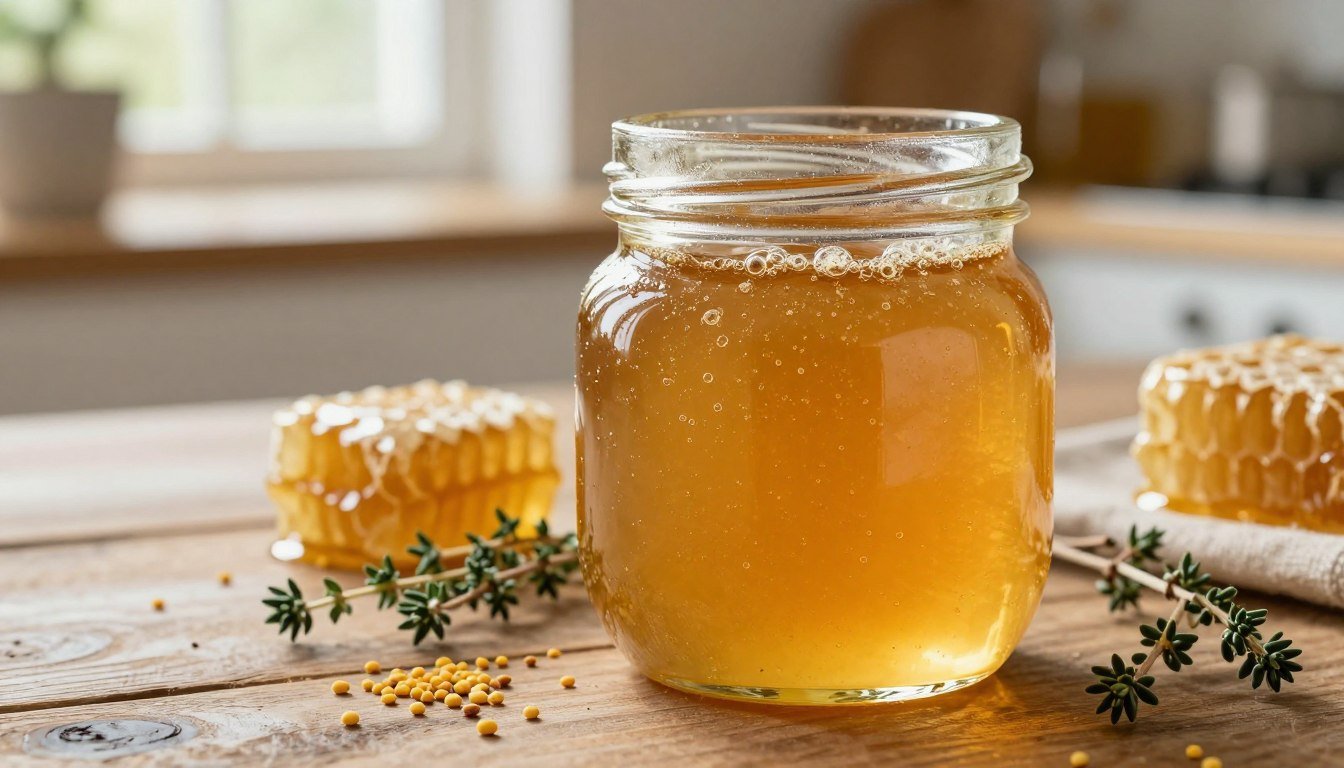
Start with smell and sight. A sharp, alcoholic aroma is the most obvious sign that yeast is active. Check the top of each jar and the surface of frames for a light foam or tiny bubbles.
Inspect the bottom and sides of containers. Early crystallization often appears at the bottom, while true spoilage shows gas pockets or a sour tone.
Look for mold on combs. Any bit of mold on a frame means humidity in the storage room or container was too high. Even a single day of damp air can trigger mold growth and ruin a harvest.
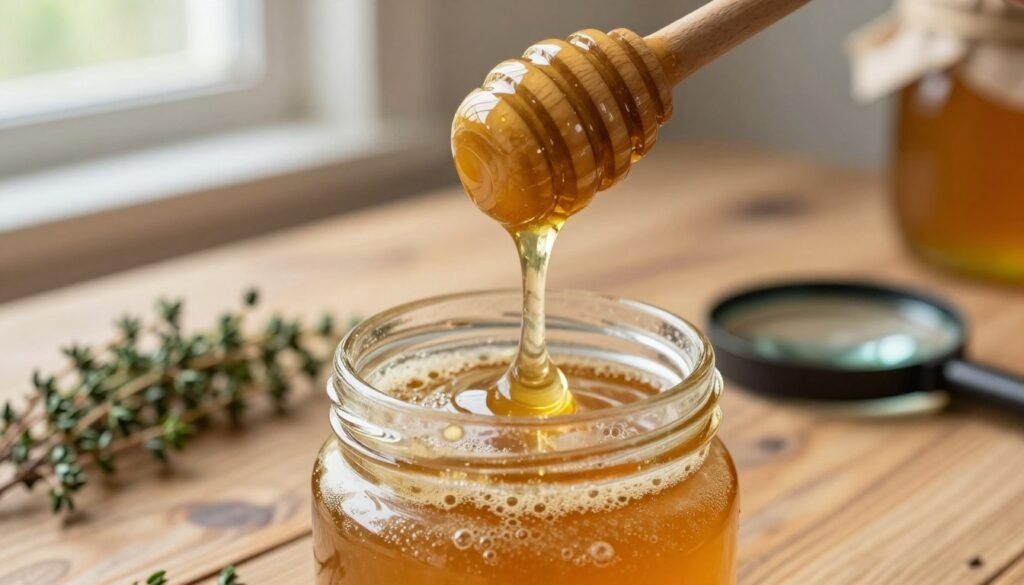
- Use a refractometer to measure water before post-harvest storage.
- Note that honey can crystallize in a fridge; this is not the same as fermenting.
- Regular checks over years build the skill to spot problems early — thanks to those who share photos and notes.
| Sign | Likely cause | Where to look | Quick action |
|---|---|---|---|
| Alcohol smell | Active yeast | Top of jar, open frame | Isolate and test water with refractometer |
| Light foam / bubbles | Gas from fermenting | Surface of honey, lid | Loosen lid, measure moisture, move to dry room |
| Mold on comb | High humidity / moist air exposure | Frame edges, bottom of comb | Remove affected frames, improve ventilation |
| Crystals at bottom | Natural crystallization | Jar bottom | Warm gently if desired; confirm not fermenting |
Can Fermented Honey Be Saved?
Deciding whether to keep or repurpose a jar depends on degree and use. A mild change in aroma or a tiny head of foam does not always mean total loss. Use a refractometer to check water content and judge safety for food use.
If water content stays under safe limits and the taste is acceptable, the batch may suit baking or marinades. Gently warming a jar will help if the honey crystallize, but warming will not halt active fermentation.
When to repurpose:
- Advanced bubbling, strong sour taste, or visible mold: avoid eating.
- Mild fermentation: consider culinary uses or fermentation projects.
- Unsure after testing? Read a short guide on post-harvest checks at how to extract and store raw.
Temperature and moisture control remain the only reliable long-term way to keep product stable. Taste a small amount before deciding; a bit of fermentation alters flavor but is not always toxic. If fermentation has advanced, repurposing is the safer way forward.
Repurposing Honey That Has Started to Ferment
A batch with high water content need not go to waste—there are practical uses on the farm or in the cellar.
Making mead is a common choice for lots with elevated water. Uncapped honey and higher moisture levels suit basic mead recipes. Small-scale batches let you experiment with flavors and turn marginal jars into a valued product.
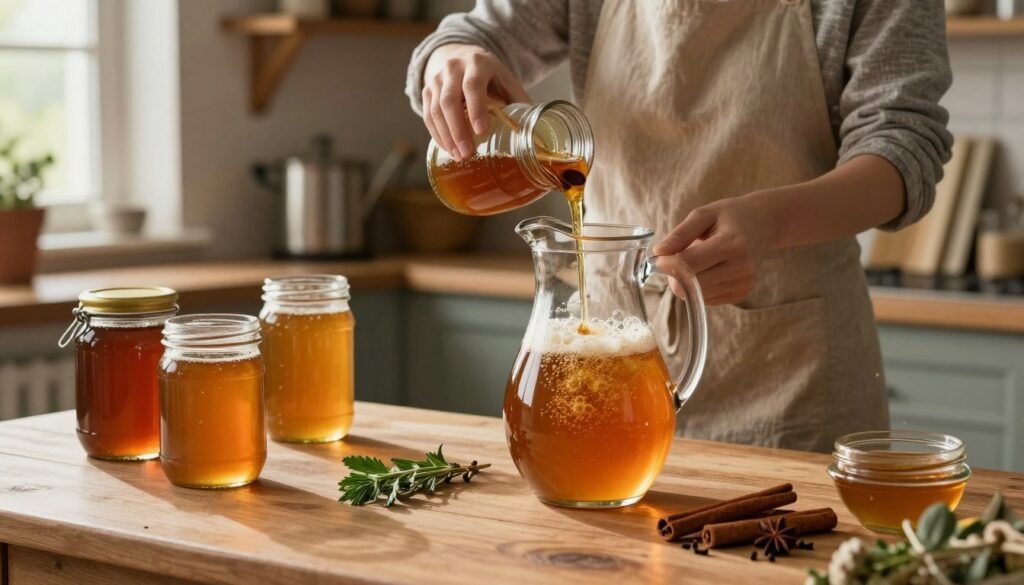
Mead basics
Start simple: dilute, add yeast, and monitor fermentation. Many beekeepers find a lot of uncapped honey late in the season that is perfect for brewing.
Feeding back to the bees
Returning poor-quality syrup to the hive is an option, but only if the jar shows no mold and taste is only mildly off. Frames not fit for people can be cleaned and reused by the colony.
- Freeze comb meant for human use to prevent crystallization and further breakdown.
- Never place a jar with visible mold or suspected pathogens into a hive.
- Keep records of batches and water readings to reduce future risk and manage lots wisely.
| Option | When to use | Quick steps |
|---|---|---|
| Make mead | High water, no mold | Mix with water, pitch yeast, ferment, bottle |
| Feed to bees | Mild change, clean jar | Warm slightly, strain debris, return in small amounts |
| Freeze comb | For human consumption | Wrap frames, place in freezer, thaw only when needed |
| Discard or compost | Visible mold or strong sour odor | Remove from apiary, sanitize equipment |
For guidance on handling raw versus processed product and storage choices, see difference between raw and processed honey.
The Role of Moisture and Capping in Honey Quality
A well-sealed frame is the beekeeper’s first defense against moisture uptake. When the bees cap a cell, they signal that nectar reached a low water content and the post-harvest risk drops markedly.
Why capped honey is safer
Why Capped Frames Matter
Capped honey offers protection because the wax seal keeps outside air and water vapor from entering the cells. Harvesting only frames capped by the colony is the most reliable way to ensure a low water content before extraction.
Moisture control remains critical in the next steps. Store jars and frames in a cool, dry room to slow crystallization and avoid moisture pickup.
- Beeswax can develop a light bloom in cool storage; this is natural, not spoilage.
- If you must handle uncapped honey, use airtight jars and strict temperature control.
- The top of each frame should be fully sealed before extraction to reduce risk.
For technical steps on dealing with excess moisture after harvest, read a short guide on handling high moisture content. For tips on avoiding heat during extraction, see extraction temperature control.
Best Practices for Storing Honey Frames
Good storage starts the moment you lift a frame from the extractor. Move frames to a steady room and aim to act within a day to limit moisture uptake.
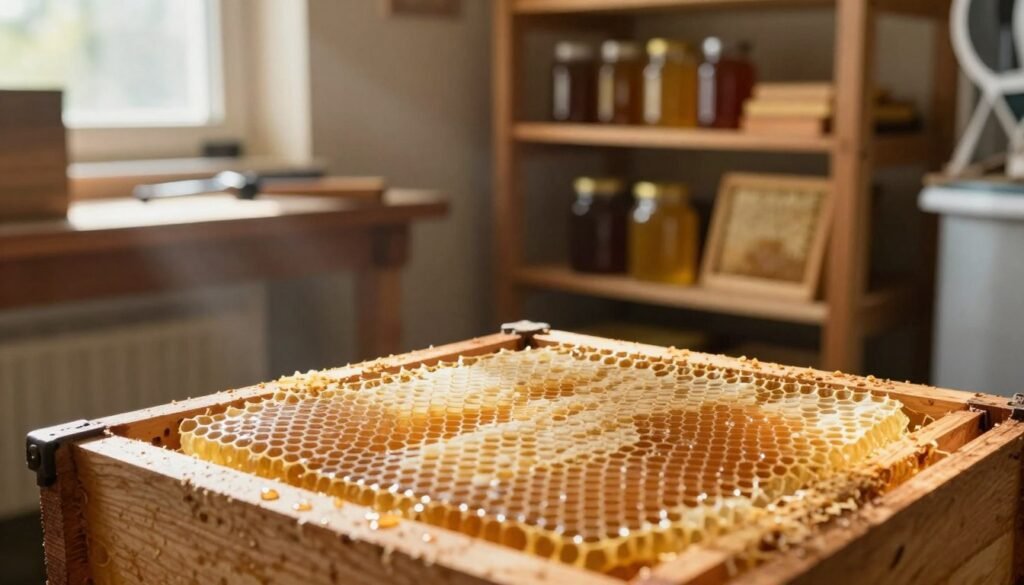
Freeze long-term: For many years, storing frames in a freezer is the most reliable way to prevent fermentation and keep comb and wax in top condition.
Keep frames in an airtight container before freezing to block air and water. If frames capped by the bees are available, prioritize those first. Capped frames are far more stable than uncapped comb.
- Check a bit of comb for mold before sealing — a single bad day in storage can spoil a lot.
- Use a refractometer to test water content before you move honey into a jar or post it to long-term storage.
- Maintain steady temperature and low light to slow crystallization and preserve quality.
Record lessons each year and adjust your process. Our thanks to beekeepers who share tips; collective experience improves every harvest.
For detailed advice, see storing honey tips.
Essential Tools for Monitoring Honey Stability
Accurate tools let a beekeeper spot trouble in a jar long before a whole lot shows change.
A refractometer is the most useful device for measuring water content. It gives a quick readout that helps you decide whether a jar is safe for storage or better for a ferment project. Ssgregory97 bought a refractometer on Amazon for $23 and found it worth the small cost.
- Check jars and the bottom of a sample for early crystallization or gas pockets.
- Use tools on any lot of uncapped honey before you commit to long-term storage.
- Monitor room temperature and humidity; even a bit of air in a container raises moisture risk.
Taste and smell are useful quick checks, but always verify readings with a meter. For details on the instrument’s role, read this honey refractometer guide and review humidity effects on honey curing.
Final Thoughts on Preserving Your Harvest
Caring for your crop after extraction is the surest way to keep it usable for many years. Store jars upright in a cool, dark place and wipe lids clean to limit moisture entry.
Look often for signs of fermentation or crystallization and act fast if water readings climb. If a jar is unsuitable, consider making mead or returning it to the bees as feed.
Follow simple steps and you will protect frames and the quality of each harvest. Our thanks to all beekeepers who share tips—community knowledge makes every season better.
For detailed storage steps, read this guide on how to store honey long-term to keep jars and combs in top condition.
FAQ
What causes honey to ferment in the hive or after harvest?
Fermentation happens when wild yeasts find enough moisture in the nectar or stored product to multiply. High water content—usually above about 18%—creates an environment where yeast convert sugars into alcohol and carbon dioxide. Warm temperatures and exposure to air speed the process, while properly capped frames and quick extraction reduce risk.
How does yeast get into sealed comb or jars?
Yeasts are ubiquitous on flower surfaces and in the hive. They travel with nectar, pollen, or dust on worker bees. When nectar remains uncapped or jars are left unsealed, those microbes can activate if moisture and heat allow growth. Proper handling and storage limit their chance to thrive.
What signs indicate honey has started fermenting?
Look for bubbling, a sour or yeasty aroma, foam on the surface, or a change in taste. In comb, you might see liquid collecting at the bottom of frames or an unusual wet spot. Crystallization patterns also change—granules may form unevenly when spoilage begins.
Is crystallized honey spoiled?
Crystallization itself is a natural physical change and not spoilage. Many raw varietals crystallize but remain edible and safe. Spoilage is indicated by off odors, visible fermentation activity, or a strong sour taste—those are the real concerns.
Can that fermented honey still be used?
Mildly affected product can be repurposed. Use it for mead production, baking, or as an ingredient where fermentation won’t matter. Honey with strong off-odors or visible mold should be discarded or fed to bees under beekeeper guidance.
How do I test moisture in honey before storage?
A handheld refractometer gives a quick, reliable reading of water content. Aim for readings below about 18% to minimize risk. Take samples from several frames or containers to check consistency across the harvest.
What storage methods prevent spoilage after extraction?
Store sealed jars in a cool, dry place away from direct sunlight. Use airtight containers and minimize headspace to reduce exposure to warm air. Refrigeration isn’t necessary and can accelerate crystallization; room temperature storage around 60–70°F works well.
Should I return wet frames to the hive or reprocess them?
If frames show high moisture but no active fermentation, many beekeepers return them to the colony for drying and re-capping. If fermentation is active or extensive, it’s safer to extract and repurpose the product or, in some cases, discard to prevent hive contamination.
How long does it take for fermentation to show after harvest?
On warm, humid days with high moisture content, signs can appear within a few days. Cooler, drier conditions lengthen the window. Prompt extraction and checking with a refractometer right after harvest helps catch problems early.
Can heat or filtering fix infected honey?
Gentle warming to dissolve crystals or reduce viscosity can help processing, but it won’t reliably kill all yeast without degrading quality. Fine filtering removes debris and wild yeast particles but won’t change water content. Dehydration or controlled processing for mead are better options.
Is feeding fermented product back to bees safe?
Lightly affected syrup or honey can be fed to bees when other food sources are scarce, but avoid giving strongly sour or excessively fermented material. Consult local beekeeping best practices to avoid spreading disease and to ensure colony health.
What role does capping play in preventing spoilage?
Fully capped cells signal that bees reduced moisture to a safe level before sealing; this greatly lowers spoilage risk. Uncapped or partially capped frames retain higher water and require extra attention—either drying by the colony or careful processing.
Which tools help monitor and protect harvest quality?
Keep a handheld refractometer, airtight containers, a food-grade thermometer, and clean filtering equipment on hand. Accurate measurements and hygienic handling reduce the chance of alcohol formation and maintain flavor integrity.
How should I store large quantities of comb honey or frames long-term?
For seasonal storage, keep combs in sealed boxes in a cool, dry room with stable temperature and low humidity. If storing extracted product, use food-grade buckets or glass jars, fill to minimize air, and label with harvest date and source hive.
Can small amounts of alcohol in mead-like products be harmful?
Homemade fermented beverages produced from honey can contain alcohol levels comparable to cider or wine. They’re safe for adult consumption when made and stored properly, but keep them away from children and follow local regulations if you plan to sell.
What preventive steps should I take during harvest season?
Harvest on cool, dry days when possible, extract promptly, measure moisture, and store sealed. Avoid leaving combs or jars open, and process wet frames quickly to prevent yeast growth and preserve flavor.