Published December 3, 2025 · Last Updated August 24, 2026
This brief guide gives clear, practical information for inspecting a single frame and diagnosing colony health quickly. Use the FEDSS checklist — Food, Eggs, Disease, Space, Swarm — as your steady workflow. Work in calm, warm midday windows above 59°F (15°C) so most foragers are away and the hive is less defensive.
Prepare protective gear, a cool smoker, a flashlight for spotting eggs, and an inspection notebook or app. Replace frames in the same order to preserve layout and keep brood warm. Move methodically and gently reseat supers, excluders, and covers.
Goal: Learn to diagnose colony status from one or a few frames. You will identify capped brood versus capped honey, spot signs of queenright behavior without seeing the queen, and log findings for better seasonal decisions.
Key Takeaways
- Inspect every 2–3 weeks in spring and summer, adjusting for local climate.
- Use FEDSS to cover food, eggs, disease, space, and swarm cues.
- Work midday when foragers are out and temperatures are above 59°F.
- Keep frame order and minimize time open to protect brood heat.
- Log each inspection to improve decisions across seasons.
Prep and timing for open hive brood inspections in the United States
Pick a calm, warm midday and gather a compact kit so you can work fast and keep disturbance low. Plan checks on days when the mercury is above 59°F (15°C) and most foragers are out.
Bring essentials: zipped protective gear, a hive tool, a well-fueled smoker that makes cool smoke, and a bright flashlight for each frame and cell. Log notes in an app or notebook and take photos for later review.
“Short, focused inspections protect brood heat and reduce colony agitation.”
In spring and summer, aim for inspections every 2-3 weeks and adapt this cadence with advice from local beekeepers. Use a super lifter when lifting a full upper box and always return frames and boxes in the same order.
| When | Essential kit | Minimize disturbance |
|---|---|---|
| Warm mid-day (best time) | Gear, smoker, flashlight, log | Few puffs, brief checks, keep frame order |
| Spring–summer cadence (2–3 weeks) | Super lifter for heavy box | Reseat excluder, inner cover, roof |
| Choose calm days | Cool smoke technique | Close hive promptly |
- Keep inspections short and methodical to calm the bees and protect brood.
- Consult local resources like a seasonal tasks guide: seasonal beekeeping tasks.
30. how to read brood frames USA: step-by-step visual cues and what they mean
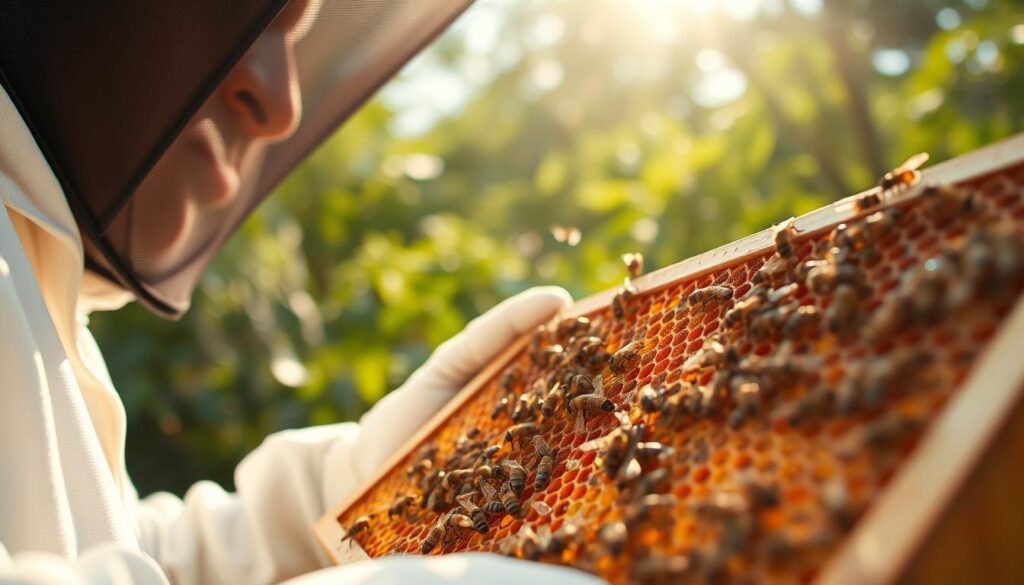
Start each frame check by scanning the layout for a dense, warm sphere of young brood near the center. This pattern shows where the queen recently worked and where the colony keeps heat for development.
Understand layout and stores
Expect the central comb to carry most of the young. Edge frame cells usually hold honey and pollen that act as thermal mass.
Eggs, larvae, pupae — quick ID
Tip the frame so light reaches the cell bottoms. A single egg looks like a grain of rice. Small white larvae rest in royal jelly and grow until capped as pupae under wax.
Capped brood versus capped honey
Capped brood shows flat, even cappings with visible hexagon lines. Capped honey looks bumpy and may bridge across several cells. Nectar appears shiny and watery before capping.
Worker, drone, and queen cell cues
Worker cell size dominates the center. Drone brood uses larger cells and domed caps. Look for peanut-shaped queen cells at the edge or bottom; they signal potential swarm or queen replacement.
Use FEDSS on each frame
FEDSS—Food, Eggs, Disease, Space, Swarm—keeps inspections fast and consistent. Check for stores, fresh eggs, off-color larvae or perforated caps, room for expansion, and charged queen cups.
| Check | Visual clue | Action |
|---|---|---|
| Food | Honey caps or shiny bee bread | Supplement or add box if low |
| Eggs & young | Single egg per cell; small white larva | Confirm queenright status |
| Disease | Off-color larvae, sunken caps | Isolate frames, consult resources |
| Swarm signals | Queen cells at edge | Manage space or requeen |
For deeper reference and seasonal context see a detailed guide on frame inspection signs and the beekeeping resources guide.
Diagnosing queen status and brood health from pattern and ratios
One careful look at egg placement and the surrounding capped cells gives a fast read on queen activity and colony growth. You rarely must find the queen; well-placed, single eggs centered in worker cells mean she was present in the last three days.
Healthy frames show a solid, contiguous field of capped brood with few missed cells. A mantle of adult bees should cover and warm that area, which supports steady development.
Pattern and the 1:2:4 rule
Skilled inspectors use the 1:2:4 guideline across the brood area: one part eggs, two parts larvae, four parts capped brood. This ratio, plus even nurse bee coverage, signals a strong laying pattern and proper timing of development.
Red flags to act on
- Spotty brood or many missed cells — can indicate poor laying or stress.
- Off-color, twisted, or sunken larvae and perforated cappings — possible disease and need for closer tests.
- Unusual odors — a clear cue to isolate frames and investigate further.
Note: assess whether the colony is expanding, stable, or contracting by brood extent and coverage; this should match season and local forage.
Record the egg counts, brood coverage, and any anomalies frame by frame. For more detailed diagnostics and research context, consult this scientific reference on colony patterns: brood pattern research.
Interpreting food, space, and swarming signals on frames
Start with a clear visual check of stores and layout. Look for glistening liquid (nectar), flat capped cells (honey), and multicolored layers (bee bread). These signs show whether protein and carbohydrate stores match the local flow and season.
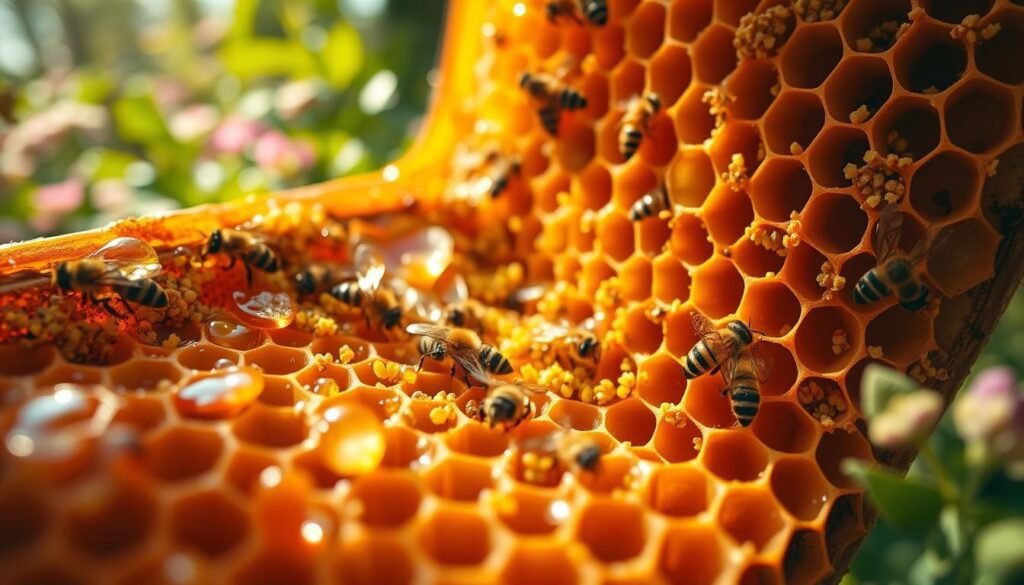
Space cues matter. Brood on end frames or honey filling brood cells signals crowding. Cross-comb on foundationless comb hides cells and makes inspections hard. Straighten comb and create room early.
Scan for swarm readiness: more drone brood, many drones on frames, and peanut-shaped queen cells at the edge or lower margins. These are strong prompts to act.
| Signal | What to look for | Action |
|---|---|---|
| Food | Uncapped nectar, capped honey, multicolor bee bread | Confirm stores for dearths; feed or add boxes if low |
| Space | Brood on end frames, backfilled cells, cross-comb | Add a super or second box; guide comb alignment |
| Swarm signs | Drone increase, many drones, edge queen cells | Manage space, split colony, or requeen |
- Keep worker coverage balanced across frames to support brood.
- Add boxes during flow and redistribute frames to open laying room while preserving the brood sphere.
Conclusion
End each inspection with a brief check for clean cappings, adequate stores, and even bee coverage before closing the hive.
Use FEDSS as your final pass: confirm Food, Eggs, Disease, Space and Swarm signals in one sweep. Rely on fresh eggs in central cells to make confident queen calls and avoid extra disturbance.
A healthy finish shows solid capped brood in a consistent pattern, clear food arcs with pollen nearby, and no odd odors or perforated cappings. If space is tight or you spot queen cells or excess drone brood, act promptly and match the intervention to season and local forage.
Record your observations and keep frames in order when you replace them. For a compact refresher, consult the frame reading guide and plan seasonal work with a beekeeping calendar.
FAQ
What is the best time and weather for an open-hive inspection?
Inspect mid-day on a calm, warm day when most foragers are out. Avoid rainy, cold, or windy conditions. Midday inspections reduce stress and give a clearer view of brood, nectar, and pollen stores.
What essential items should I bring for a brood-frame inspection?
Bring a smoker with fuel, veil and gloves, hive tool, flashlight or headlamp, a spare hand towel, and a notebook or app for notes. Clean tools and a soft brush help limit damage to comb and bees.
How do I lift boxes and frames without harming the colony?
Use slow, steady motions and the hive tool to break propolis. Support boxes evenly to avoid tipping frames. Keep a consistent frame order and work one frame at a time to minimize disruption.
How is a typical frame laid out in the brood nest?
The brood nest usually occupies center frames with eggs, larvae, and capped brood. Edge frames often contain pollen and nectar or capped honey. Recognize the gradient from brood center to food stores.
How can I identify eggs, larvae, and capped brood stages?
Eggs are tiny, white, and upright in the cell for about three days. Larvae appear as translucent, C-shaped grubs fed royal jelly then worker jelly. Capped brood have convex wax caps and show no movement.
What visual cues separate capped brood, capped honey, and nectar?
Capped brood cells have slightly domed, matte caps with uniform spacing. Capped honey looks flatter and more waxy-glossy. Nectar appears liquid in cell bases and may shimmer; uncapped nectar is shiny and wet.
How do I distinguish worker brood from drone brood and queen cells?
Drone brood cells are larger and more rounded; their caps are more domed and darker. Worker brood cells are smaller and neatly packed. Queen cells hang vertically or laterally and have peanut-shaped, elongated cups.
What is the FEDSS method for efficient frame assessments?
FEDSS stands for Food, Eggs, Disease, Space, Swarm. Quickly check for adequate stores, presence of fresh eggs, signs of disease, room for expansion, and swarm indicators like queen cups or crowded frames.
How can I tell if the colony is queenright without spotting the queen?
A queenright colony shows fresh eggs, consistent brood pattern, and progressive brood ages (eggs, larvae, capped). Presence of young brood within a normal layout strongly suggests an active, laying queen.
What defines a healthy brood pattern and typical ratios?
Healthy frames show solid brood coverage with few empty cells. A rough eggs:larvae:capped ratio often falls near 1:2:4, indicating ongoing laying. Adult bee population should cloak the brood and provide good coverage.
What are common red flags in brood frames?
Watch for spotty brood, sunken or perforated caps, off-color or foul-smelling larvae, and an abundance of dead brood. These signs can indicate disease, pests, poor queen performance, or nutritional stress.
How do I assess food stores: nectar, honey, and bee bread?
Nectar appears wet and shiny in cells and later crystallizes. Capped honey shows firm, dry caps. Bee bread (stored pollen) is darker, granular, and located near the brood for nurse access.
What signs on frames indicate swarm readiness or crowding?
Signs include overcrowded brood nest, queen cups or cells at comb edges, increased cross-combing, and reduced space between frames. Strong congestion and multiple queen cells often precede swarming.
When should I add another box or expand the brood area?
Add a super or brood box when stores are ample and frames are half to three-quarters full, or when the colony has consistent brood and limited space. Adding room early reduces swarming pressure.