O’Hare International Airport became the first U.S. airport with an on-site apiary in 2011, and the reason has nothing to do with pollination — it’s that FAA regulations prohibit most economically productive development on the vast tracts of vacant land airports are required to keep clear near runways, and beekeeping is one of the few uses that’s both compatible with that restriction and genuinely productive. Here’s how airport and industrial-park apiaries actually work, and why this land-use logic doesn’t apply to most other institutional settings.
Key Takeaways
- The Chicago Department of Aviation has hosted an apiary at O’Hare since 2011 — now roughly 75 hives and over a million bees on about 2,400 square feet of otherwise-unused airfield land, reportedly the largest airport apiary in the world.
- The hives are maintained by Sweet Beginnings, a workforce-training program operated by the North Lawndale Employment Network, which trains formerly incarcerated people as beekeepers and sells the resulting honey and skincare products under its beelove brand.
- The underlying driver is a specific FAA land-use constraint: vacant buffer land near runways can’t be used for most productive purposes because of wildlife-strike and safety concerns tied to standard economic development — but a low-profile apiary doesn’t create the same aircraft-strike risk that, say, a building or reflective solar array might.
- This same “unused institutional land plus a workforce or land-management partner” logic has extended to industrial parks and corporate campuses with large landscaped buffers, though none has matched O’Hare’s scale or duration.
- Airport apiaries are a genuinely different model from corporate rooftop programs or municipal civic-building apiaries — the land itself, not sustainability branding or employee engagement, is the primary reason the program exists.
Table of Contents
- O’Hare: The Original and Largest Example
- Why Airports Specifically Have This Opportunity
- Who Actually Runs an Airport Apiary
- Industrial Parks and Corporate Campus Buffer Land
- Seeing the Program in Practice
- Frequently Asked Questions
O’Hare: The Original and Largest Example
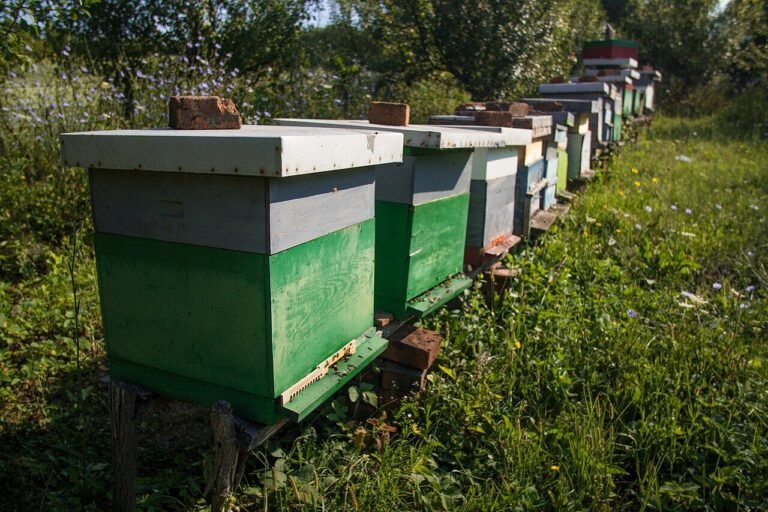
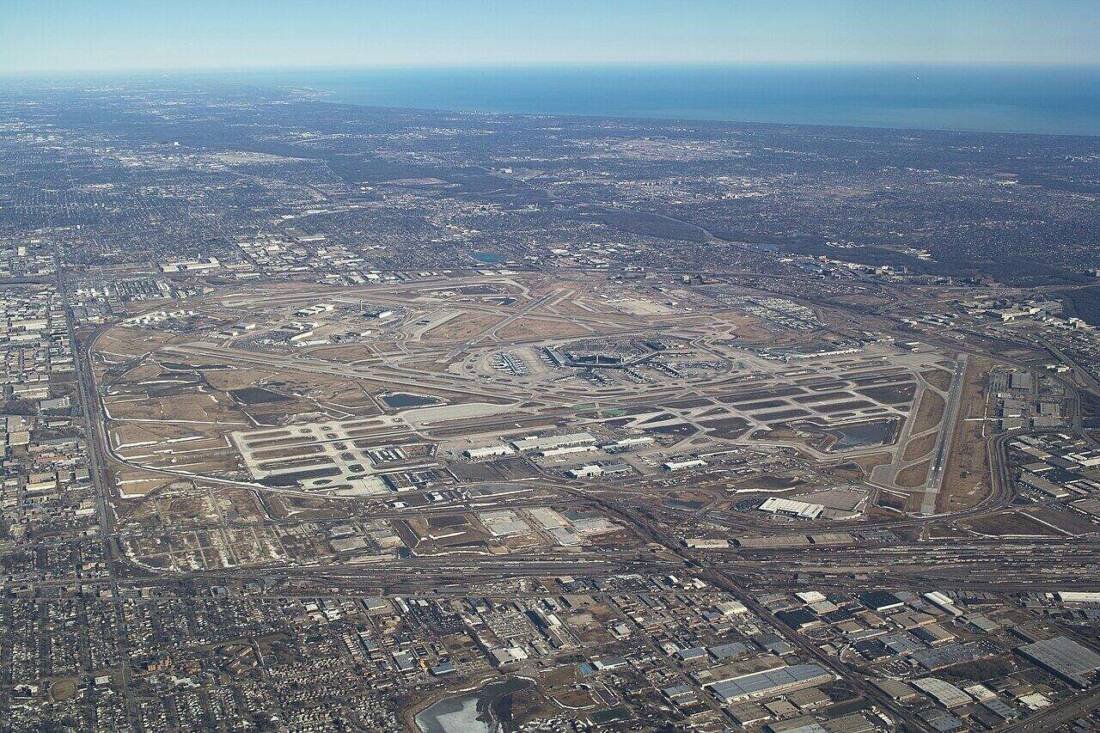
In 2011, O’Hare International Airport became the first airport in the United States to host an on-site apiary, a partnership between the Chicago Department of Aviation and the North Lawndale Employment Network’s Sweet Beginnings program. According to the airport’s own community and environment materials and subsequent reporting from outlets including Grist and Block Club Chicago, the apiary now covers roughly 2,400 square feet, houses about 75 beehives and more than a million bees, and is described as the largest apiary at any airport in the world. The bees forage on the airport’s own extensive grassland buffer zones — land the airport already has to maintain as clear space regardless of whether bees use it.
Why Airports Specifically Have This Opportunity
The specific constraint driving this isn’t unique branding or sustainability ambition — it’s a regulatory fact of how large commercial airports are required to operate. FAA regulations require substantial buffer land around runways and flight paths to remain undeveloped, precisely because most conventional economic uses of that land (buildings, dense vegetation that attracts large wildlife, structures that could interfere with radar or create bird-strike-prone habitat) pose direct aviation-safety risks. That leaves airports holding hundreds or sometimes thousands of acres of land that is legally unusable for almost any conventional development, but not literally forbidden from every use — grassland maintenance, and low-profile land uses like managed apiaries, fit within that gap. A honeybee apiary, kept low to the ground and away from runway approach zones, does not create the kind of large-bird-attracting habitat that airport wildlife-hazard management specifically works to avoid, which is different from, for example, planting large fruiting trees that would draw geese or other large birds into flight paths.
“Vacant land near airports cannot be used for development. FAA regulations prohibit many economically productive uses because having a plane crash-land on an office park is bad.” — reporting on the O’Hare apiary project, Grist
Who Actually Runs an Airport Apiary
Airports themselves generally don’t employ in-house beekeepers — O’Hare’s apiary is staffed entirely through its nonprofit partner, Sweet Beginnings, which trains formerly incarcerated individuals and others facing employment barriers to manage the hives, harvest honey and beeswax, and manufacture and sell the resulting products. This is covered in more depth in this site’s separate guide to nonprofit and community-hosted apiary programs, since the workforce-training model, not the airport setting itself, is really the operational core of the O’Hare partnership. From the airport’s perspective, the arrangement is close to a land-use lease at minimal cost, rather than a program the aviation department itself has to staff or fund directly.
Industrial Parks and Corporate Campus Buffer Land
The same basic land-use logic — an institution holding open buffer land it can’t otherwise develop, and a beekeeping partner able to use it productively at low cost — extends to industrial parks and large corporate campuses with substantial landscaped or undeveloped acreage, particularly in suburban office-park and logistics settings where large green buffers between buildings are common. This is distinct from the more publicized rooftop corporate programs covered in this site’s guide to choosing a corporate beekeeping vendor, since those are typically small, visible rooftop installations chosen for employee engagement and ESG branding, whereas ground-based buffer-land apiaries at industrial sites are usually a much lower-profile, larger-footprint land-management decision, closer in spirit to O’Hare’s model than to a downtown office rooftop program.
Seeing the Program in Practice
This video from the City of Chicago’s own official channel documents the Sweet Beginnings program at O’Hare directly, showing the apiary’s setting on airport land and the workforce-training operation behind it — useful primary-source context beyond the secondary press coverage cited above.
Frequently Asked Questions
Which airport was the first in the U.S. to have its own beehives?
O’Hare International Airport in Chicago, starting in 2011, generally credited as the first American airport to host an on-site apiary.
Why do airports have land available for beekeeping in the first place?
FAA safety regulations require large tracts of undeveloped buffer land near runways and flight paths, which rules out most conventional economic development — but doesn’t prohibit low-profile uses like a managed apiary that doesn’t create bird-strike-prone habitat.
Who takes care of the bees at O’Hare?
Sweet Beginnings, a workforce-training program operated by the North Lawndale Employment Network, manages the apiary and trains formerly incarcerated participants as beekeepers, selling the resulting honey and skincare products under its beelove brand.
How big is the O’Hare apiary?
Reporting describes it as covering roughly 2,400 square feet with about 75 hives and over a million bees, described as the largest airport apiary in the world.
Could a corporate industrial park do something similar?
Yes, in principle — the same logic (unused buffer or landscaped land plus a beekeeping or workforce-training partner) applies to industrial parks and large campuses, though most publicized corporate programs to date have been smaller, rooftop-based installations rather than large ground-based buffer-land apiaries like O’Hare’s.