The published research genuinely supports parts of the “regenerative agriculture helps bees” claim — no-till protects ground-nesting bee habitat and flowering cover crops measurably attract more pollinators than bare or weedy fallow ground — but the broader claim that no-till farming as commonly practiced is automatically regenerative for bees is not settled, and some researchers argue the opposite. This is a review of what the actual published evidence shows, not another how-to guide to running a regenerative farm — a genuinely different angle from this site’s existing operational coverage of climate-resilient practices, cooperative apiary models, and soil-carbon connections.
Key Takeaways
- Roughly 70% of North America’s native bee species nest in the ground, and tillage directly destroys those nests — this part of the “no-till helps bees” claim has solid research backing.
- Flowering cover crops like buckwheat, phacelia, and sunflowers attract substantially more pollinators and beneficial insects than weedy fallow fields, per Xerces Society and University of Minnesota research.
- The no-till-equals-regenerative claim itself is genuinely contested: some research and advocacy groups argue that chemical-dependent no-till systems aren’t truly regenerative, and that carefully managed tillage can outperform them on soil outcomes.
- Soil microbial health research shows real, measurable differences under regenerative practices — but the current published studies establishing this are not all US-based, and the direct causal chain to pollinator outcomes specifically is less established than the habitat and forage findings.
- This is an evidence review, not an operational guide — for the practical side, see this site’s existing coverage of climate-resilient beekeeping practices, cooperative apiary models, and how bees support carbon-rich soil health.
Table of Contents
- What “Regenerative Agriculture” Means for This Review
- The No-Till Debate: Genuinely Settled or Not?
- Ground-Nesting Bees and the Tillage Connection
- Flowering Cover Crops as Real Forage
- Reduced Synthetic Inputs: The Clearest Pesticide-Exposure Link
- Soil Health and the Indirect Bee Connection
- What’s Proven vs. Still Emerging
- A Real-World Example: Heifer Ranch, Arkansas
- What This Means for a Working Apiary or Farm Partnership
- Frequently Asked Questions
What “Regenerative Agriculture” Means for This Review
Regenerative agriculture, as used across the research cited in this review, generally refers to a cluster of practices — reduced or eliminated tillage, cover cropping, diversified crop rotation, reduced synthetic input use, and integration of livestock or grazing — aimed at treating a farm as an ecosystem rather than a system optimized purely for a single season’s yield. It’s a real, if loosely bounded, term in the agricultural research literature, not a marketing invention, but different researchers and organizations weight its component practices differently, which matters directly for how confidently any single claim about “regenerative agriculture and bees” can be made. This review treats “regenerative agriculture and bees” as several separable sub-claims — tillage and ground-nesting habitat, cover crops and forage, and soil health and its downstream effects — rather than one single, uniformly-proven proposition, because the underlying evidence for each is genuinely different in strength.
The No-Till Debate: Genuinely Settled or Not?
The most surprising finding in researching this topic is that “no-till is regenerative” is not the settled consensus it’s often presented as. Friends of the Earth’s own research review on the topic argues that no-till farming as widely practiced today is frequently chemical-dependent — relying on herbicides rather than cultivation to manage weeds — and that this version of no-till doesn’t deliver the ecological benefits the regenerative-agriculture framing implies. Some agronomic research goes further, finding that carefully managed tillage within a holistic, diversified system can outperform chemical-intensive no-till on measured soil outcomes. This doesn’t overturn the ground-nesting-bee habitat argument below, which is specifically about physical soil disturbance rather than chemical inputs, but it’s a genuine complication worth stating plainly: “no-till” and “good for bees” are not automatically the same claim, and a no-till system that substitutes heavy herbicide use for tillage may protect ground-nesting bee tunnels while simultaneously harming bees through a different pathway entirely.
Ground-Nesting Bees and the Tillage Connection
This is the strongest, most directly supported claim in the entire regenerative-agriculture-and-bees space. Roughly 70% of North America’s roughly 20,000 native bee species nest underground rather than in hives or cavities, and tillage physically destroys these nest tunnels along with any developing brood inside them. USDA Natural Resources Conservation Service pollinator-habitat guidance specifically identifies reduced tillage, or leaving field margins and unused areas untilled, as a direct, mechanistic way to protect ground-nesting bee populations — this isn’t a correlational finding requiring further study, it’s a straightforward physical-disturbance relationship. University of Connecticut Extension research on no-till vegetable production reaches a similar practical conclusion from the growing side: reduced tillage systems designed primarily for soil-conservation reasons carry a genuine secondary benefit for ground-nesting pollinators active in and around the field.
Flowering Cover Crops as Real Forage
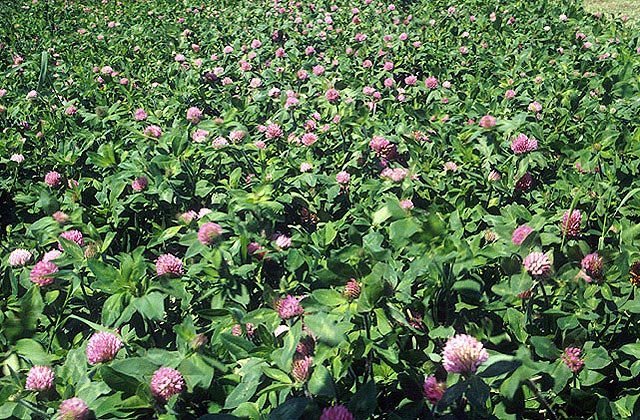
Research from the Xerces Society and the University of Minnesota’s Grossman Lab found that flowering cover crops — buckwheat, phacelia, and sunflowers among the most effective — attract substantially more pollinators and other beneficial insects (including parasitoid wasps and hoverflies useful for natural pest control) than weedy fallow fields left uncovered between cash crops. This is a genuinely actionable, farm-level finding: a cover-crop choice made primarily for soil-conservation reasons (reduced erosion, increased organic matter, weed suppression) can be adjusted with pollinator forage specifically in mind at little extra cost, simply by favoring flowering species within the cover-crop mix. The same research includes an important caveat that often gets dropped in less careful summaries: cover crops need to be terminated before they set excessive seed, and ideally in a way that minimizes disturbance to any ground-nesting bees that have already begun nesting in or near the field — meaning cover-crop timing decisions genuinely interact with the ground-nesting-bee habitat question above, rather than being fully independent management choices.
The SARE (Sustainable Agriculture Research and Education) program’s own published guidance on cover cropping for pollinators and beneficial insects reaches the same conclusion from a different angle, treating flowering cover crops as a legitimate, farm-scale pollinator-support strategy rather than a niche practice limited to dedicated pollinator plantings.
Reduced Synthetic Inputs: The Clearest Pesticide-Exposure Link
Of every regenerative-agriculture component reviewed here, the link between reduced synthetic input use and bee health has the deepest existing research base — this isn’t a new or emerging finding, it’s decades of established pesticide-toxicology and pollinator research. Regenerative systems generally aim to reduce reliance on synthetic herbicides, pesticides, and chemical fertilizers as a matter of core practice, not as an incidental side effect, per the Natural Resources Defense Council’s overview of the approach. Since synthetic pesticide exposure is widely identified in the pollinator-decline literature as one of the primary drivers of honey bee and native bee losses, a farm that genuinely reduces its synthetic pesticide load as part of a regenerative transition is acting on one of the most directly evidence-supported pathways in this entire review — more directly supported, in fact, than some of the soil-microbiome findings discussed below.
The caveat here mirrors the no-till caveat above: reduced-input claims need to be evaluated on the actual input records, not assumed from the regenerative label. A operation that’s reduced tillage and cover-cropped while maintaining a similar synthetic pesticide program hasn’t captured this particular benefit, even if it has captured the habitat and forage benefits covered earlier.
Soil Health and the Indirect Bee Connection
The soil-health side of this claim is real but requires more careful framing than the habitat and forage findings above. A 2023 study published in Frontiers in Agronomy by researchers at India’s Ashoka Trust for Research in Ecology and the Environment and the Indian Institute of Science found regenerative farming practices measurably altered soil bacterial community structure compared to conventional plots — including higher populations of beneficial genera like Pseudomonas and Bacillus, and improved soil organic carbon in longer-running regenerative plots.
“Regenerative agriculture practices were found to be effective in improving bacterial community structure and simultaneously improving soil health.” — Singh et al., Frontiers in Agronomy (2023)
The honest caveat: this study, like much of the strongest soil-microbiome research in this space, isn’t US-specific, and it measures soil bacterial health directly rather than pollinator outcomes — the link from “better soil microbial community” to “more/healthier bees” is a plausible, ecologically reasonable chain (healthier soil supports more diverse plant communities, which supports more forage), but it’s a less directly established causal pathway than the ground-nesting-habitat or cover-crop-forage findings above. Entomologist Jonathan Lundgren of the Ecdysis Foundation and Blue Dasher Farm has made this soil-to-bee connection a central part of his own research and public talks — as Beekeeping Today Podcast summarized his position, solving the bee problem starts with healing the soil — but it’s fair to describe this as a compelling research hypothesis actively being investigated (including through Ecdysis Foundation’s own multi-farm data collection) rather than a fully closed case.
Dr. Lundgren discusses this soil-health-to-bee-health argument directly in the talk below.
The talk, hosted by the Pollinator Friendly Alliance, lays out Lundgren’s case for treating soil biology as the upstream variable that determines a landscape’s real capacity to support healthy bee populations, rather than treating bee health as a problem to solve independently of how the surrounding land is farmed.
What’s Proven vs. Still Emerging
| Claim | Evidence Status | Key Source |
|---|---|---|
| Tillage destroys ground-nesting bee habitat | Well-established, direct physical mechanism | USDA NRCS pollinator-habitat guidance; UConn Extension |
| Flowering cover crops attract more pollinators than fallow ground | Well-supported by field research | Xerces Society / University of Minnesota (Grossman Lab) |
| Reduced synthetic pesticide use benefits bees | Strongly established, decades of prior research | NRDC; broader pollinator-decline/pesticide literature |
| “No-till” as commonly practiced is automatically regenerative | Contested — depends heavily on herbicide reliance | Friends of the Earth research review |
| Regenerative practices improve soil microbial community structure | Supported, but from limited/international studies so far | Singh et al., Frontiers in Agronomy (2023) |
| Better soil health directly causes better regional bee health outcomes | Plausible hypothesis, actively being researched, not yet fully proven | Ecdysis Foundation / Jonathan Lundgren’s ongoing work |
A Real-World Example: Heifer Ranch, Arkansas
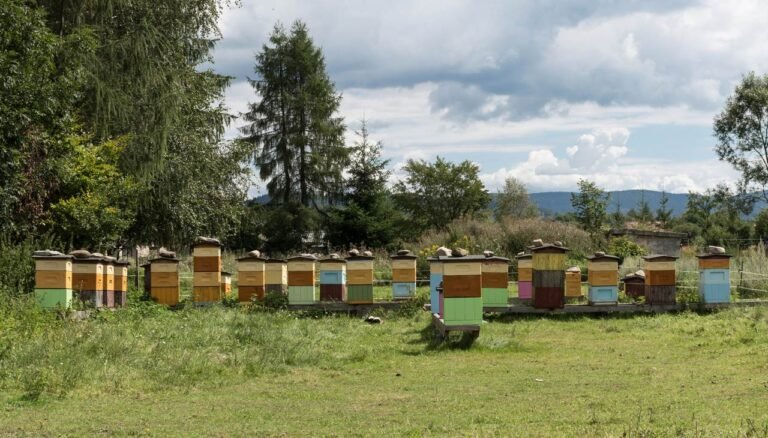
Heifer Ranch, a 1,200-acre working farm and training center run by the international nonprofit Heifer International in Perryville, Arkansas, illustrates several of the findings above operating together on one property rather than in separate studies. The ranch maintains five managed honey bee hives alongside a much larger population of wild, native bee colonies, plants pollinator-oriented cover crops including clover, buckwheat, millet, and sunn hemp, and uses holistic planned grazing that gives forage plants recovery time between grazing passes — combining cover cropping, reduced tillage, and rotational grazing in the way the definition at the top of this review describes. Notably, the ranch treats its bees primarily as an ecosystem-health indicator and training tool for the regenerative farmers it hosts, rather than as a honey-production operation in their own right — as one Heifer Ranch director put it in the organization’s own account of the program, “Honey is a bonus,” a framing that fits this review’s broader point — bees function as one indicator of regenerative practices working, not the sole goal of adopting them.
What This Means for a Working Apiary or Farm Partnership
For a beekeeper placing hives on or near farmland, or a farmer considering regenerative practices partly with pollinators in mind, the practical takeaway from this review is to evaluate specific practices rather than the “regenerative” label as a whole. A farm that’s reduced tillage specifically to protect ground-nesting bee habitat, and planted flowering cover crops rather than a single grass species, is making decisions with real, direct research support. A farm marketed as “regenerative” that’s simply substituted herbicide-dependent no-till for tillage, without cover cropping or reduced synthetic input use more broadly, may not deliver the same pollinator benefit the label implies. This distinction matters directly for the kind of apiary-host relationships covered in this site’s cooperative apiary models guide — the specific practices a host farm actually uses are a better predictor of forage and habitat quality for placed hives than the regenerative label alone.
Frequently Asked Questions
Does no-till farming actually help bees?
It helps ground-nesting bees specifically, by leaving their underground nest tunnels undisturbed — but if a no-till system relies heavily on herbicides in place of tillage, it may not deliver a clear net benefit to bees overall.
What percentage of bees actually nest in the ground?
Roughly 70% of North America’s native bee species are ground-nesters, making tillage a direct habitat-destruction mechanism for the majority of native bee species, separate from honey bees, which nest in cavities or hives.
Which cover crops are actually best for pollinators?
Buckwheat, phacelia, and sunflowers are specifically identified in Xerces Society/University of Minnesota research as attracting substantially more pollinators than weedy fallow ground left uncovered.
Is the soil-health-to-bee-health connection scientifically proven?
It’s a well-supported, actively researched hypothesis rather than a fully closed case — the soil-microbiome research itself is solid, but the direct causal chain from soil health to regional bee population outcomes is less established than the ground-nesting habitat or cover-crop forage findings.
How is this different from the site’s other regenerative/sustainability articles?
This article is an evidence review of what published agricultural and entomological research actually shows, rather than an operational how-to guide — it’s meant to be read alongside, not instead of, this site’s practical coverage of climate-resilient practices and cooperative apiary models.
Should a beekeeper trust a farm’s “regenerative” label when deciding whether to place hives there?
It’s worth asking about specific practices — tillage frequency, herbicide use, and whether cover crops include flowering species — rather than relying on the regenerative label alone, since the label covers a range of practice combinations with genuinely different pollinator benefits.
Which part of “regenerative agriculture” has the strongest research support for bees?
Reduced synthetic pesticide use has the deepest and longest-established research base of any component reviewed here — it draws on decades of prior pollinator-toxicology research, not just newer regenerative-agriculture-specific studies.
Does regenerative agriculture help honey bees specifically, or mainly native/wild bees?
The ground-nesting habitat findings apply specifically to native, wild bees rather than honey bees, which nest in cavities or managed hives — but flowering cover crops and reduced pesticide exposure benefit both honey bees and native bees sharing the same landscape.