For most small producers selling at a farmers market or to friends and neighbors, an 8 oz to 1 lb glass “queenline” or hex jar for retail sale and a 12–32 oz plastic honey bear for a lower-cost, kid-friendly option cover 90% of real-world needs — the actual decision is less about which container looks nicest and more about breakage risk in transport, per-unit cost at your volume, and whether your state’s cottage food or scale rules require specific labeling space. This guide breaks down the real container categories, typical sizes and costs, and the tradeoffs that actually affect a small producer’s bottom line.
Search “honey containers” and you’ll mostly find supplier catalogs, not a comparison. This is written the other way: what glass and plastic options actually exist, what they cost at small-producer volumes, and when each one is the better call.
Key Takeaways
- Glass costs more per unit but is what most buyers associate with “real” or premium honey; plastic bears are cheaper, unbreakable, and better for markets, kids, or shipping.
- Common glass shapes — classic skep, hexagon, queenline, and muth jars — all hold similar volumes; the shape is a branding choice, not a functional one.
- Bulk discounts from major suppliers typically kick in around 50 cases and again around 100 cases — worth planning a full season’s order rather than buying as you go.
- Squeeze-bear bottles range from about 2 oz novelty/wedding-favor sizes up to 32 oz family sizes; the 8 oz and 12 oz sizes are the most common retail sellers.
- Whatever you choose, USDA-compliant net-weight labeling (not volume) is required on the label regardless of container material — see our separate guide on honey label printers and packaging for that side of it.
Glass Jars: What “Premium” Actually Looks Like
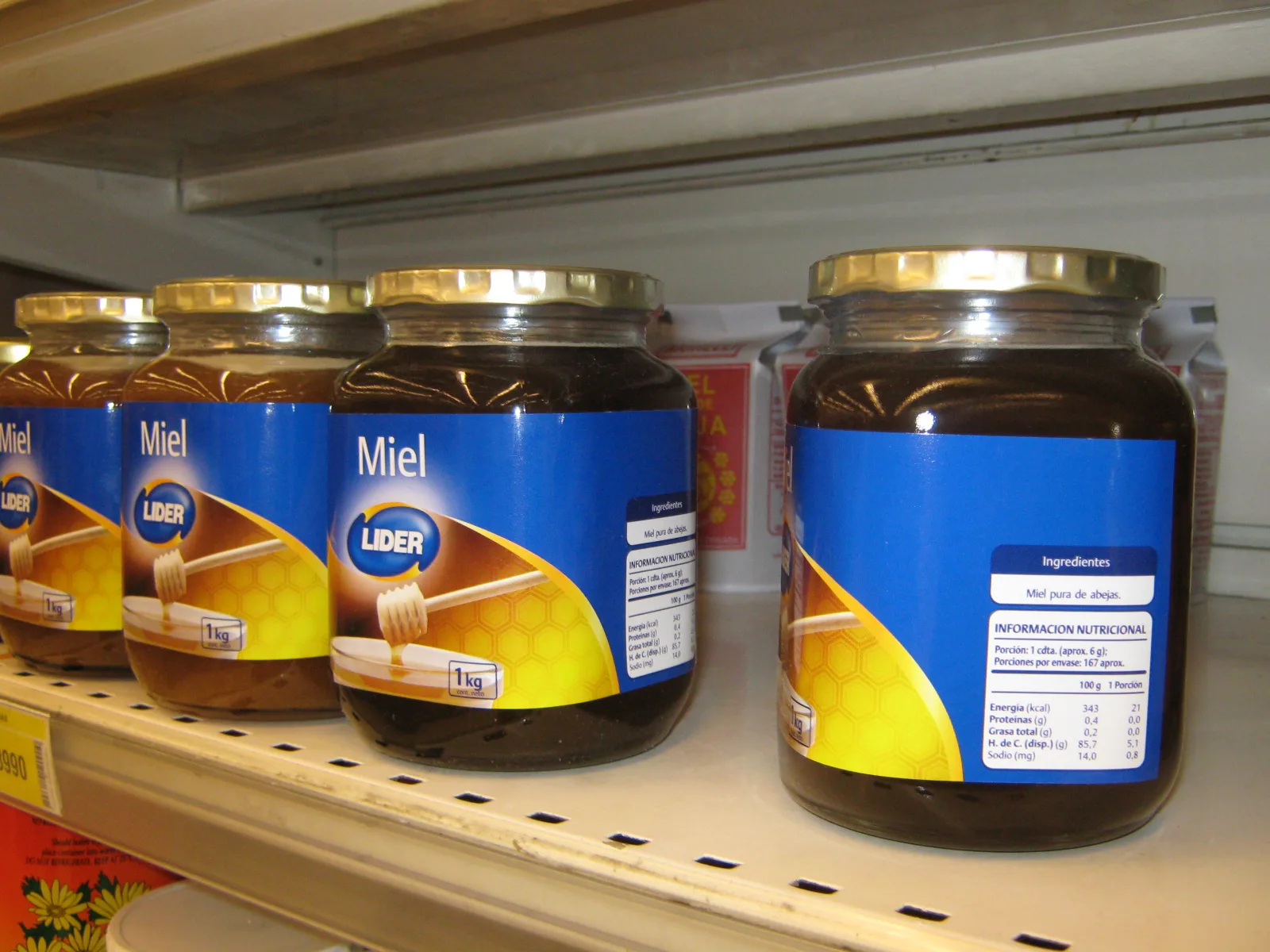
Glass remains the default for anyone selling honey as a specialty or gift product rather than a commodity. The main shapes you’ll see from beekeeping suppliers:
- Classic/skep jars — round, straight-sided, sold in ½ lb, 1 lb, and 2 lb sizes. The least expensive glass option and the easiest to source in bulk.
- Hexagon and queenline jars — faceted or gently curved shapes that read as more “boutique” on a shelf; typically a modest premium over classic round jars at the same volume.
- Glass honey bears — the same iconic bear shape as the plastic version, in glass, usually around 13 oz; a popular middle ground for producers who want the bear’s shelf recognition without plastic.
- Muth jars — a straight-sided jar with a cork closure, associated with old-fashioned or rustic branding; a niche choice but genuinely distinctive on a market table crowded with generic hex jars.
Glass’s real cost isn’t just the per-unit price — it’s breakage in transport and at farmers markets, where a dropped case is a total loss plus a cleanup problem. If you’re shipping honey by mail rather than only selling in person, factor in the added packaging weight and cushioning glass requires; our honey bottling and processing standards guide covers the food-safety side of filling glass at scale.
Plastic Bottles: Not Just a Budget Option
Plastic honey bear bottles run from small 2 oz sizes (popular for wedding favors and sample giveaways) up through 8, 12, 16, 24, and 32 oz family sizes, with 8 oz and 12 oz the most commonly stocked by major suppliers for retail sale. Beyond cost, plastic has real functional advantages a lot of new producers underrate: it’s squeezable (genuinely more convenient at the breakfast table than tipping a jar), it doesn’t shatter if a kid drops it, and it ships far more cheaply since you’re not paying to move glass weight or pay for breakage insurance.
The tradeoff is perception — some buyers read plastic as lower-quality regardless of what’s inside, and PET plastic is technically permeable to moisture over very long storage periods, which matters if you’re holding stock for more than a year (unlikely for most small producers, but worth knowing if you’re building inventory ahead of a big holiday selling season).
Sizing and Pricing Reality at Small-Producer Volume
Both major U.S. beekeeping suppliers (Mann Lake and Betterbee) sell containers in case quantities, and both offer volume discounts that meaningfully change your per-unit cost once you cross roughly 50 cases, with a further discount around 100 cases. For a small producer selling a few hundred pounds a season, this means the math genuinely favors placing one larger order before the season starts rather than reordering small batches as you run low — both to hit the discount tier and to avoid a stockout during your best selling weeks.
A rough sizing guide for planning:
- 2–4 oz: wedding favors, sample giveaways, gift-basket add-ons — not a real retail size on its own.
- 8 oz: the most common “try it” retail size at farmers markets; low price point encourages first-time buyers.
- 12–16 oz: the repeat-customer size once someone has already tried your honey.
- 1–2 lb (glass) or 24–32 oz (plastic): value size for regular customers and bulk/gift buyers.
Matching Container to Sales Channel
If you sell primarily at farmers markets, prioritize breakage-resistance and a size that photographs well for social media — glass hex or queenline jars in 8–12 oz do double duty here. If you sell primarily to returning local customers who buy in bulk, larger plastic bears or 2 lb glass classics reduce your per-oz packaging cost. If you’re building a gift or wedding-favor line, small glass or plastic bears in the 2–4 oz range are purpose-built for that market and priced accordingly. For batch tracking once product is bottled and out the door, see our guide on batch coding honey jars for traceability — it matters more than container choice if you ever need to trace a specific batch back to a harvest date.
Frequently Asked Questions
Do I need different labels for glass versus plastic containers?
No — USDA net-weight labeling requirements are the same regardless of container material. What changes is label shape and adhesive: curved plastic bears often need a label designed to wrap cleanly around the bear’s contours, while flat-sided glass jars accept a standard rectangular label without distortion.
Is glass or plastic better for shipping honey by mail?
Plastic, in almost every case. It’s lighter (lowering shipping cost), unbreakable in transit, and doesn’t require the extra cushioning glass needs to survive a package handling system. Glass is a better choice for in-person sales where you control handling.
What size should a first-time small producer buy?
Start with 8 oz as your primary size — it’s the lowest-risk price point for new customers — and add a 12–16 oz option once you have repeat buyers asking for a bigger size. Avoid ordering more than one or two sizes in your first season; a wide size range mostly adds inventory complexity before you know what actually sells.
Can I reuse commercial jars other companies sold food in?
This is generally discouraged for retail sale — most state cottage food and honey-packing rules expect new, food-grade containers for products sold to the public, and reused jars can carry residual odors or unclear food-safety history. Reusing jars for personal use or informal gifting is a different, lower-stakes case.
Container choice is a real cost lever for a small producer, not just a cosmetic one — running the per-unit math at your actual sales volume before ordering a season’s worth of jars will save more money than any single design decision.