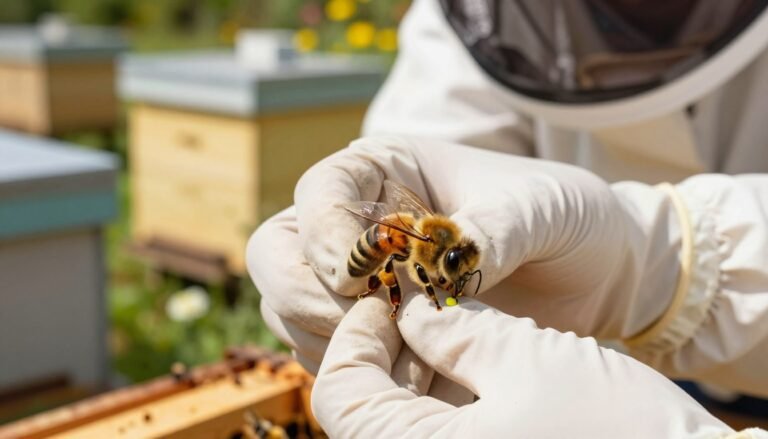
Early detection is vital for beekeepers managing colonies across the United States. When a colony loses its queen, the social structure shifts fast and problems can appear within weeks.
Knowing what to look for helps you act before the population falls and brood patterns break down. This short guide highlights practical, field-tested cues that indicate a colony is struggling.
The biological timeline matters: worker bees may begin abnormal egg-laying and brood care declines. Learn to tell the difference between a healthy, productive colony and one that needs immediate intervention.
For focused methods on identifying brood problems and chilled brood risks, see this helpful resource on identifying chilled brood. Professional steps taken early can save frames, food stores, and hive strength.
Key Takeaways
- Spot unusual egg patterns and reduced worker brood quickly.
- Monitor colony behavior weekly after a queen loss.
- Distinguish normal variation from decline using brood checks.
- Act fast to prevent population collapse and reproductive chaos.
- Use proven inspection routines and reference guides for diagnosis.
Understanding the Biology of Queenless Colonies
When the queen disappears, the colony’s chemistry shifts within minutes. A honey bee community senses the loss quickly—research shows detection can occur in about 15 minutes. That rapid change starts a cascade of behavioral and physiological responses.
Ovary Development
Queen pheromones normally suppress worker ovaries. Once those chemical cues fade, some workers begin physiological development toward egg production.
This process is gradual: worker ovaries enlarge over days to weeks. Without brood pheromones and a mated queen, more individuals may develop reproductive tissue and attempt to lay eggs.
Pheromone Suppression
Pheromones maintain social order by signaling fertility status and guiding brood care. In their absence, the worker hive loses that regulatory signal.
The breakdown affects brood rearing, comb use, and the ratio of drones to workers. Monitoring pheromone-driven changes helps you know when intervention, such as requeening or following queen-rearing guidance, is needed.
For practical guidance on rearing replacement queens, consult this concise guide on queen rearing basics for U.S.
The Timeline of Colony Decline
Colony collapse after queen loss unfolds on a clear timetable beekeepers can follow. Within three days all the queen eggs hatch. That leaves the nest with only larvae and pupae to sustain the workforce.
After another six days most larvae are capped. At this stage you will see no new uncapped young to feed. The worker hive starts to age without replacements.
By the end of three weeks the original brood has emerged. Without new worker brood, the colony cannot replace dying bees. This marks a critical point for intervention.
| Time since queen loss | Key observation | What it means |
|---|---|---|
| 3 days | All queen eggs hatched | Few or no eggs remain; brood present as larvae |
| +6 days | Larvae capped | No fresh larvae; brood cells sealed |
| ~3 weeks | All original brood emerged | Colony lacks new workers; rapid decline follows |
Monitor frames and comb regularly to estimate how long the colony has been without a queen. Quick checks help you decide whether to requeen, combine, or follow resources for a more detailed diagnosis.
For practical requeening steps and further guidance, consult queenless colony guidance.
Signs of Laying Workers in a Queenless Hive
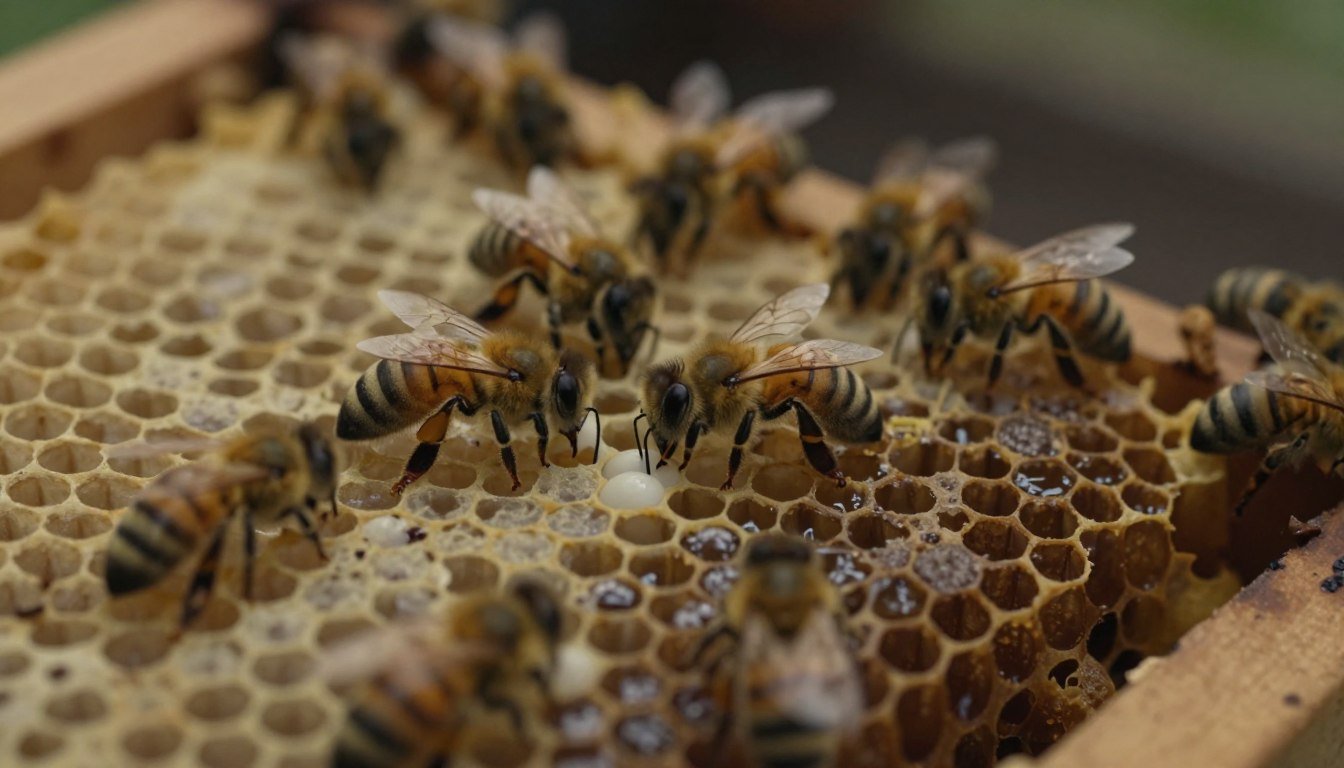
A disrupted brood nest is often the first clue that workers have moved into egg production. Inspect frames for odd egg placement and multiple eggs per cell. These patterns differ from the tidy rows a mated queen makes.
Watch drone counts closely. An increase in drone brood across comb signals that unfertilized eggs are being laid. Worker-laid drone cells are usually scattered and irregular.
“Multiple eggs per cell and patchy brood are the clearest indicators that hive laying workers are established.”
- Look for several eggs inside single cells rather than one centered egg.
- Note erratic brood patches and small, isolated drone cells.
- Check frames over several days to confirm continued worker egg production.
| Observation | What to check | Implication |
|---|---|---|
| Multiple eggs per cell | Inspect several brood frames | Worker egg-laying activity likely |
| Scattered drone brood | Count drone cells and note placement | Unfertilized eggs from workers; requeening needed |
| Persistent chaos over weeks | Re-check frames across days | Colony harder to requeen; consider combine or reset |
Act early. A colony with established laying worker activity is much harder to restore. Quick detection gives you options: requeen when possible, or combine with a strong, queenright colony.
Auditory Clues from the Hive Entrance
Acoustic cues at the landing board can give fast, reliable information about colony health. Listen before you lift frames: sound often changes sooner than brood patterns do.
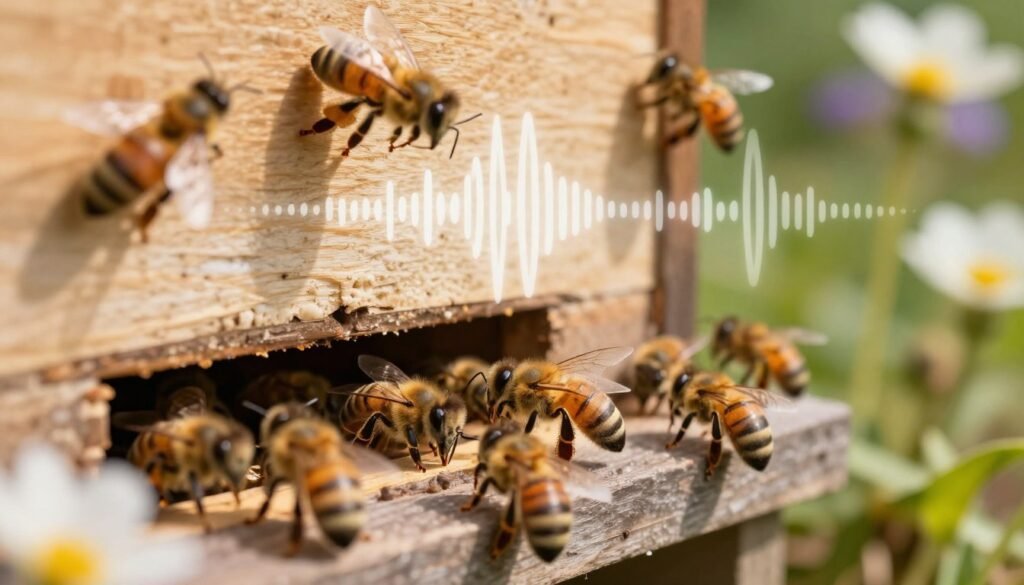
Distress signals show as a louder, higher-pitched roar or whine. A healthy hive usually emits a soft, steady purr. When the queen’s control fades, the tone shifts and volume rises.
Distress Signals
These sounds mean the community is agitated. Nearby beekeepers report hearing the noise from yards away when colonies lack a queen. The roar can also signal increased defensive behavior at the entrance.
“A sudden, sharp increase in entrance noise often precedes visible brood problems.”
- Note changes in pitch and loudness during routine checks.
- Combine listening with quick frame inspections to confirm brood or eggs issues.
- Use sound as an early cue to requeen, combine, or plan intervention.
| Auditory cue | What to check | Likely implication |
|---|---|---|
| Soft purr | Normal entrance activity | Queen present; stable brood care |
| Loud whine/roar | Inspect brood frames and eggs | Possible queen loss; stress in workers |
| Intermittent sharp buzzing | Watch for aggression at entrance | Agitated colony; requeening advised |
Analyzing Foraging Behavior Changes
Noticeable shifts at the landing board often reveal that internal roles inside the colony have changed.
When brood declines, many nurse bees switch tasks and become field workers. This creates higher traffic at the entrance as more worker bees haul pollen and nectar back to the hive.
Look for returning bees with full pollen baskets or swollen abdomens. Those visual cues tell you they are real foragers, not robbers.
Robbing activity usually shows frantic fights, quick in-and-out trips, and little pollen on legs. True foragers glide in with steady loads and head straight for storage frames.
“A sudden rise in orderly pollen returns often signals role change inside the colony and merits a brood check.”
- Watch traffic patterns over several days.
- Compare pollen loads and entry behavior to spot robbers.
- Use observed foraging shifts to decide if requeening or combining is needed.
Internal Inspection Techniques
Start every internal check by calmly removing one frame at a time and scanning the comb for eggs, larvae, and capped brood.
Work steadily and avoid long gaps between frames. Check both sides of each comb and note whether eggs are centered in cells or scattered. Look for empty brood cells that suggest the colony has been without a queen for some time.
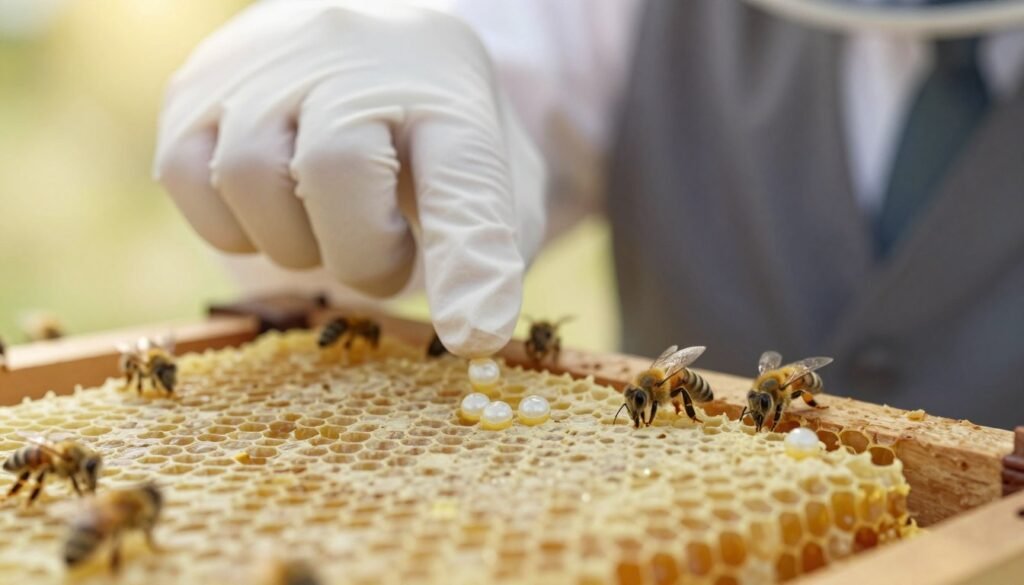
Search the edges and lower boxes for emergency or supersedure cells. Bees often build these soon after they detect queen loss, and such cells can be tucked under cappings or near comb edges.
Inspect for multiple eggs per cell, scattered drone cells, or small, irregular brood patches. Those details point to worker egg production and altered hive dynamics.
- Open the hive in good weather and lift frames one at a time.
- Confirm presence of eggs, larvae, and capped brood in all stages.
- Scan for hidden queen or queen cells on every comb.
Record findings and act quickly. A thorough internal inspection gives the clearest picture of colony health and the next steps for requeening, combining, or intervention.
Identifying Irregular Brood Patterns
Brood layout and capped cell shape reveal more about reproductive status than a brief glance at the entrance. A deliberate frame check gives the clearest clues about whether the queen is still directing egg production.
Spotty Brood
A spotty brood pattern shows empty cells scattered among capped areas. This patchy distribution often means eggs are not being consistently laid or tended.
Watch for multiple eggs per cell across several frames. When worker behavior changes, other bees may remove eggs because they lack the queen’s recognition pheromone.
Capping Irregularities
Inspect cappings closely. Drone brood in worker-sized cells often has bullet-shaped cappings and stands out next to normal worker cells.
Multiple eggs in one cell confirm worker egg production more clearly than a single odd cell. Note these irregular cappings and record which frames show the problem.
“Scan several frames over two or three checks to confirm that irregular brood patterns persist before you decide on requeening or combining.”
- Check both sides of each frame for empty pockets and unusual capping.
- Count eggs per cell and mark frames with multiple eggs.
- Use findings to decide whether to inspect further, requeen, or combine the colony.
The Role of Pheromones in Colony Cohesion
A steady stream of queen scent holds worker roles and behavior in place. Queen pheromones travel through contact and air, giving every bee a clear signal about reproductive status and daily tasks.
When queen pheromones grow weak or vanish, the social order breaks down quickly. Workers lose the chemical guidance that directs nursing, guarding, and foraging. The hive grows restless and chores fall behind.
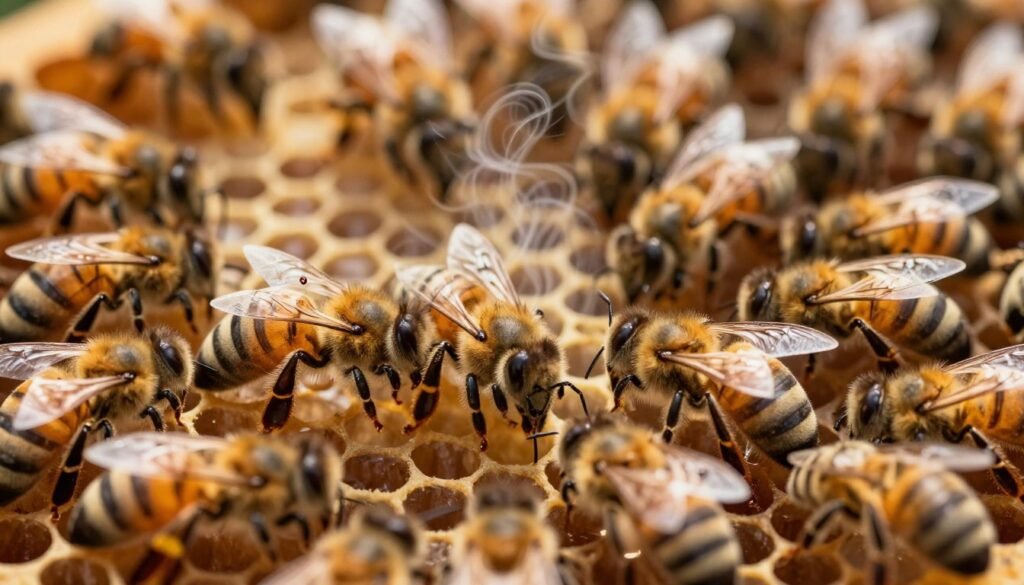
The lack of these signals is the main trigger for reproductive change. Without constant pheromone circulation, some worker ovaries begin development and eggs appear where they should not.
Beekeepers can spot loss of cohesion by watching behavior. Bees may become more aggressive, sluggish, or unfocused. Increased drone brood and odd cell patterns follow within days.
“Constant pheromone flow keeps colonies orderly; its loss lets reproductive roles shift and brood care falter.”
- Monitor tone and activity at the entrance for early warning.
- Inspect brood frames if you suspect reduced pheromone presence.
- Requeen or combine if chemical control cannot be restored quickly.
Distinguishing Between Queen and Worker Eggs
Examining egg position on comb gives a fast, reliable clue about reproductive status.
Egg Placement
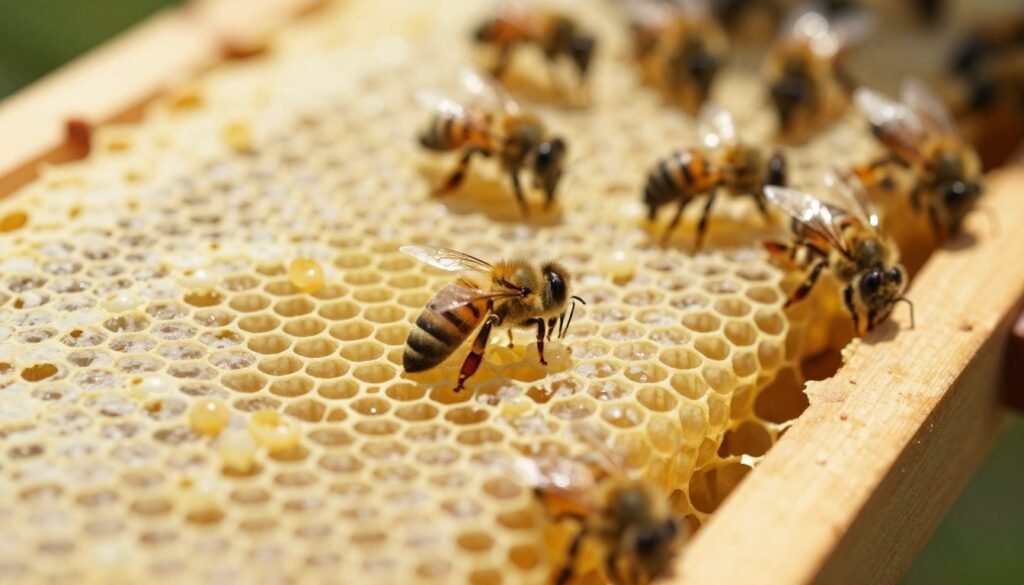
A mated queen usually lays one egg centered at the bottom of each cell. That single placement keeps brood neat and uniform across frames.
By contrast, a laying worker often cannot reach the cell base. Workers have shorter abdomens, so their eggs sit along the sidewall or higher in the cell.
Multiple eggs per cell point strongly to worker egg production. When you find two or more eggs in one cell, inspect nearby frames for similar patterns.
Workers tend to lay eggs randomly across comb. A scattered layout and several cells with multiple eggs per cell show a breakdown in normal brood pattern.
- Look for centered single eggs — this usually means a queen laid the egg.
- Note side-placed or raised eggs — these suggest worker origin.
- Count eggs per cell across several frames to confirm the pattern.
| Feature | Queen-laid | Worker-laid |
|---|---|---|
| Number per cell | One | Often multiple |
| Position inside cell | Centered at base | On sidewall or raised |
| Pattern across comb | Organized rows; uniform | Scattered and random |
| Implication | Queen present; normal brood | Possible laying workers; requeening likely |
“Egg position and count reveal whether the queen or other bees produced the brood.”
Why Worker Bees Develop Ovaries
A drop in queen and brood pheromones frees physiological pathways that let some workers begin egg production. Without those chemical signals, inhibition lifts and ovariole activity can increase.
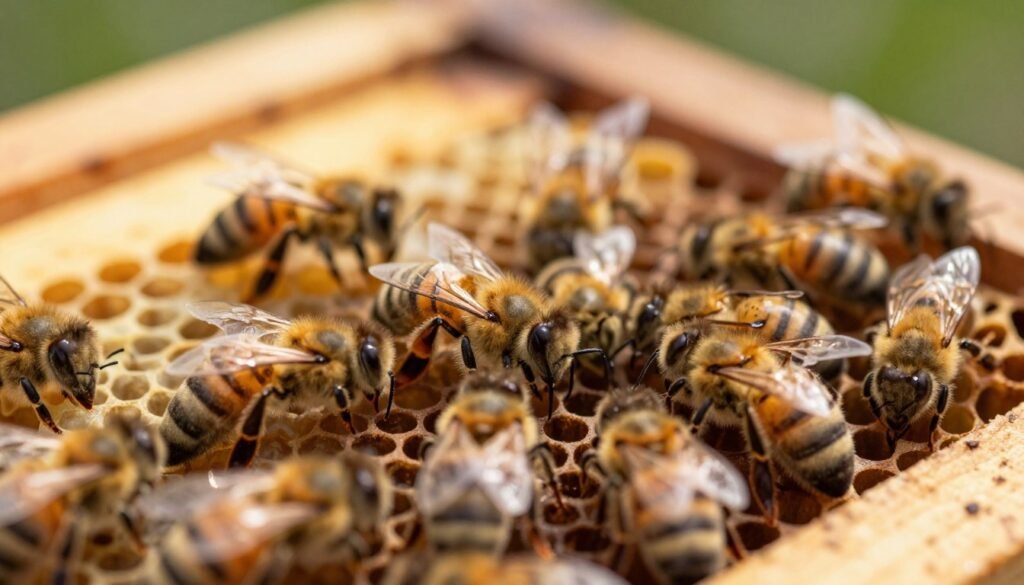
Research by K. Sasaki and T. Nagao links higher dopamine and its metabolites in reproductive individuals to ovary development. Brain chemistry shifts when queen cues vanish, and that change correlates with tissue growth in the abdomen.
As the queen fails, several workers develop active ovarioles and start to lay eggs. These eggs are unfertilized and will only produce drones, so the colony cannot renew its worker population.
Understanding these hormonal and chemical triggers helps beekeepers predict when intervention is needed. Early recognition of altered brain chemistry and worker ovaries gives you options: requeen, combine, or reset frames to prevent long-term collapse.
The Impact of Drone Brood in Worker Cells
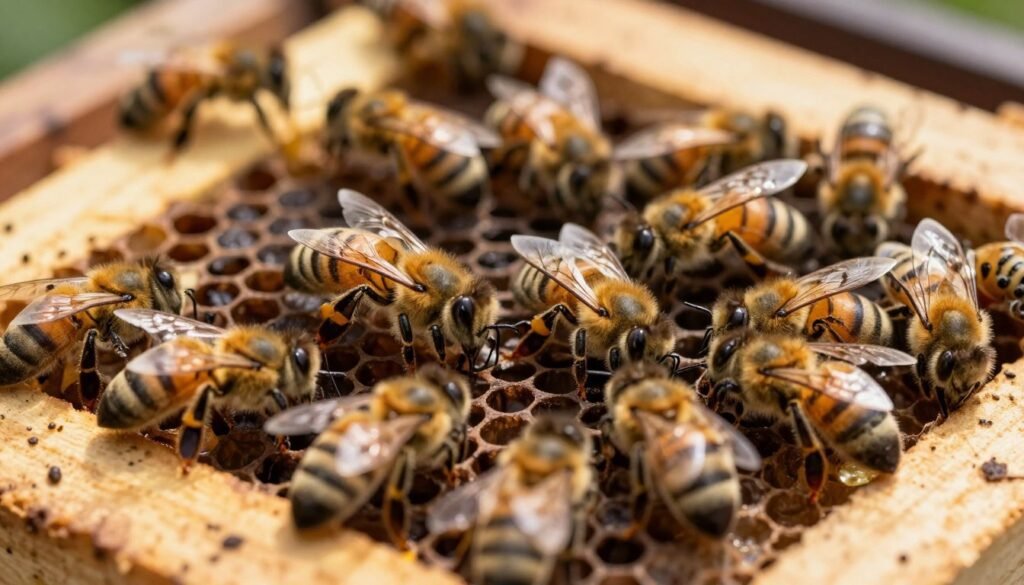
Bullet-shaped cappings in worker-sized cells are a clear diagnostic clue. These cappings show that unfertilized eggs were laid by non-queen bees. Inspect frames carefully to spot the difference.
When workers lay eggs, those eggs only produce males (drones). Over weeks the brood nest shifts toward drone brood, reducing the hive’s ability to renew its worker population.
Patterns help you judge severity. A healthy, mated queen creates tight, uniform patches of worker brood. By contrast, a disturbed colony shows scattered, irregular drone cells across worker comb.
“Drone brood in worker cells usually signals the colony has been without a productive queen for some time.”
- Look for multiple eggs per cell and side-placed eggs that fit worker anatomy limits.
- Note bullet-shaped cappings and scattered drone cells on several frames.
- Act fast: requeen, combine, or reset frames to prevent collapse.
| Observation | What to inspect | Management action |
|---|---|---|
| Bullet-shaped cappings in worker cells | Check multiple frames across brood nest | Consider requeening or combining |
| Scattered drone brood pattern | Count drone cells and map distribution | Intervene quickly; colony weakens fast |
| Multiple eggs per cell | Inspect egg placement and repeat checks | Likely worker egg production; requeen advised |
For requeening steps and options when this pattern appears, see practical guidance on recovering a queenless colony.
Behavioral Changes in Queenless Bees
Colony behavior can shift quickly when the queen’s influence fades. Many bees slow their pace, and traffic at the landing board looks thin and uncoordinated.
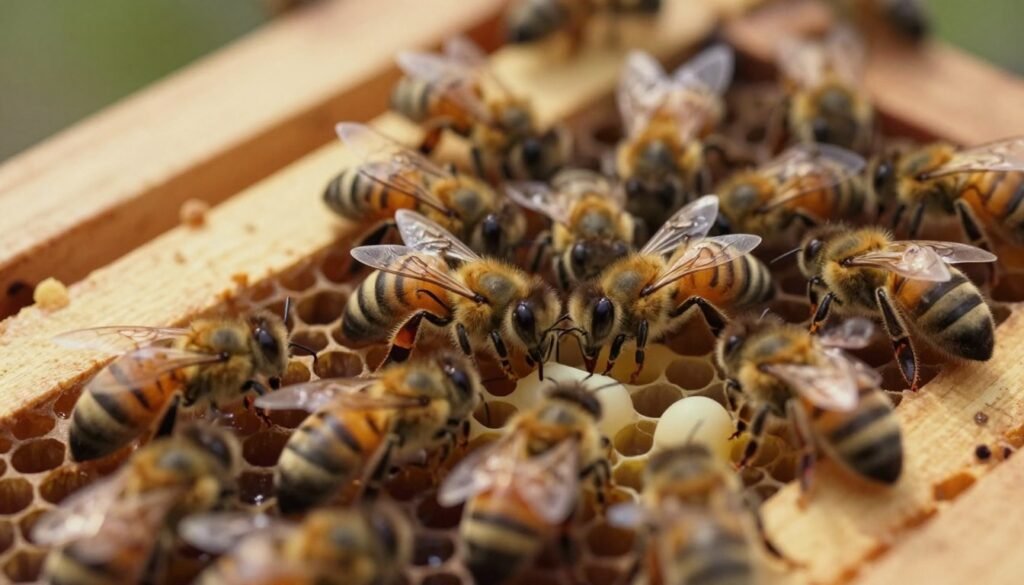
Watch for listless movement. Worker bees may wander or remain idle on the entrance. That drop in activity often precedes visible brood problems.
Loss of cohesion makes the worker hive appear disorganized. Tasks that once ran like clockwork — foraging, nursing, guarding — become haphazard.
Some colonies grow irritable. Bees can show short tempers and increased defensive flights when handled. Note any change in temperament and frequency.
Early monitoring helps you decide next steps. Rechecks over several days confirm whether laying workers are active or if the issue is temporary.
“Timely observation of behavior at the entrance can save a struggling colony from long-term decline.”
For a practical checklist to guide inspections, see this queenless colony checklist.
Challenges in Re-queening Affected Colonies
Replacing a missing queen becomes far more complex when workers have begun to reproduce. Introducing a new queen or queen cell into such colonies often fails quickly. The resident bees may attack or ignore the newcomer.
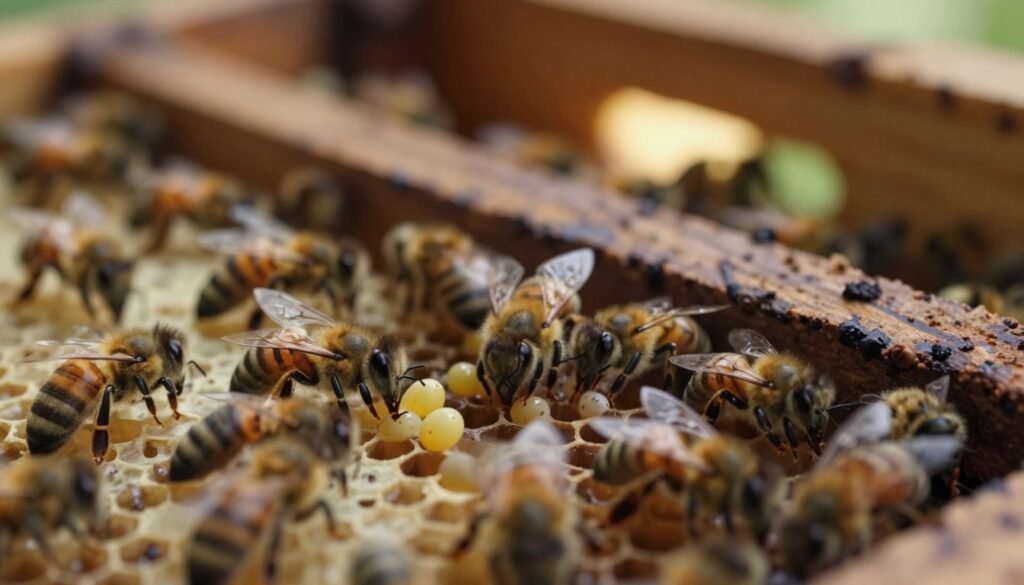
The presence of laying workers creates a hostile environment for the new queen. These worker-led nests have altered social cues and lowered acceptance of introduced queens.
Beekeepers often must remove the egg-laying cohort or let the colony remain queenless for a period to reset pheromone balance. Patience and careful timing improve success.
“Failure to address laying workers before re-queening often results in the new queen being killed by existing bees.”
- Assess brood and egg patterns over several checks before introducing a queen.
- Consider splitting, combining with a strong colony, or removing persistent laying worker frames.
- Plan introductions when foraging is strong and stress is low to increase acceptance.
Traditional Methods for Resetting the Hive
Resetting a troubled colony often begins with hands-on methods that force the bees to re-establish social cues. These traditional techniques aim to remove egg layers, clear irregular brood, and make the nest ready for a new leader.
The Shake Out Method
The shake out is a practical field technique used by many U.S. beekeepers. The hive is moved a short distance and each frame is brushed so most bees fall to the ground away from the stand.
The goal is that non-foraging bees, including errant egg layers, will not return to the original site. This gives the colony time to reset pheromone patterns and reduce established laying worker activity.
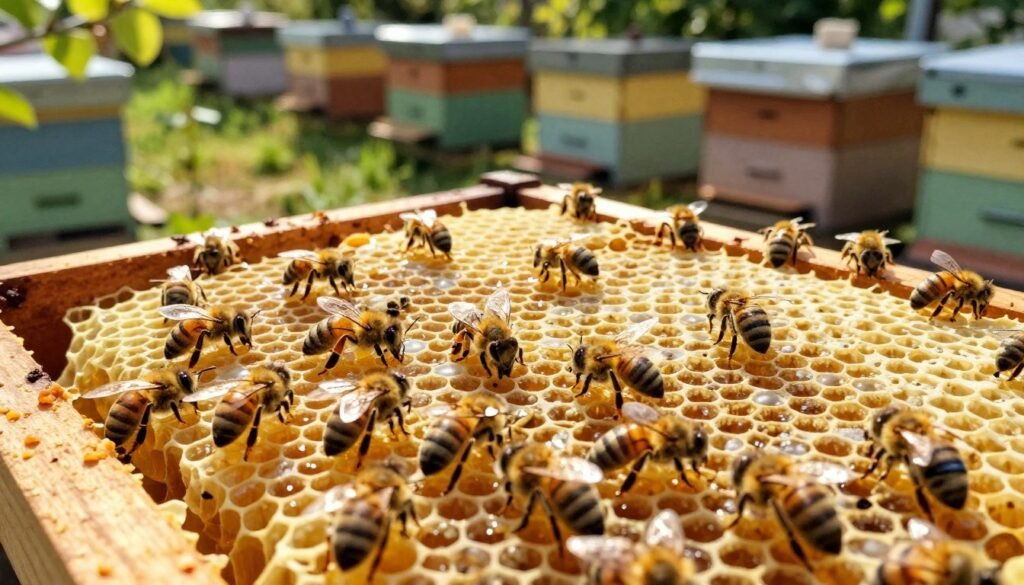
“Shaking out creates a window to reintroduce a productive queen without immediate rejection.”
Re-queening Timing
Timing matters. Wait until you confirm no drone brood or irregular eggs remain before introducing a mated queen.
Introduce the new laying queen only after the colony shows minimal egg-laying and reduced worker reproductive behavior. If some laying worker bees can fly, expect mixed results and consider repeating the reset or combining with a strong, queenright colony.
- Move the hive 10–20 feet and brush frames to the ground to disrupt returning egg layers.
- Recheck frames over several days to confirm removal of drone brood and stray eggs.
- Introduce a mated queen when the nest is clear and pheromone cues are weakening.
For step-by-step procedural guidance, see a short guide on managing queenless colonies and practical tips at Beekeepers Realm.
Monitoring Hive Health to Prevent Future Issues
Consistent checks keep small problems from growing into colony-wide failures. Make inspections short and regular so you spot changes early and act before issues escalate.
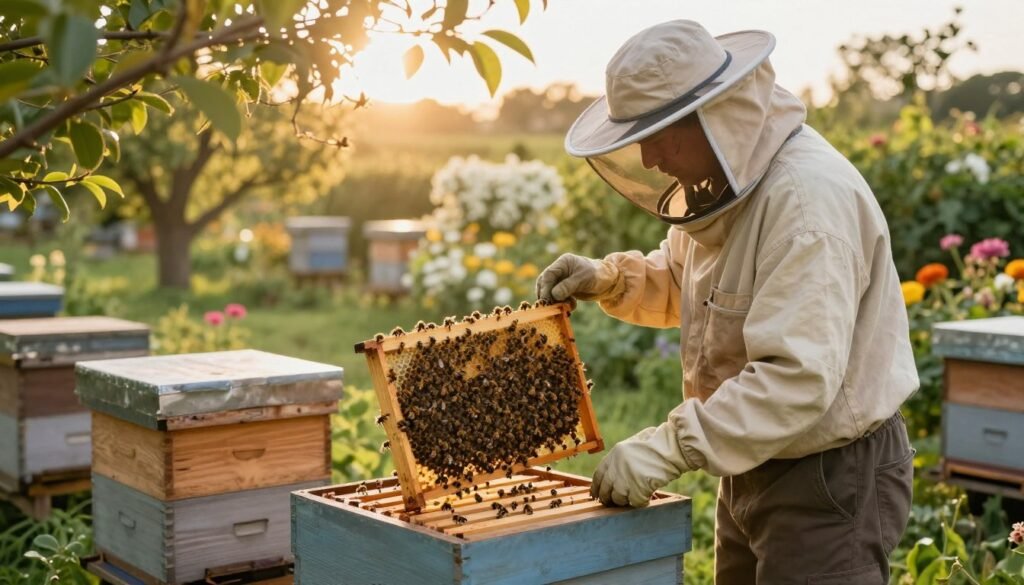
Always confirm a healthy queen and a steady brood pattern during each routine visit. A quick frame scan shows whether the brood looks uniform and whether worker bees perform normal tasks.
Early intervention is easier and more effective. Catching queenlessness lets you fix problems before laying workers take hold in the nest or the worker hive loses cohesion.
- Check brood frames weekly during active season.
- Note egg placement and brood coverage, and mark any irregular areas.
- Keep records so trends are obvious across inspections.
| What to check | How often | Action if abnormal |
|---|---|---|
| Queen presence and brood pattern | Weekly to biweekly | Consider requeening or close monitoring |
| Adult activity at entrance | Each visit | Record changes; inspect frames if reduced |
| Brood irregularities and drones | Weekly | Act fast; avoid long-term decline |
“Routine, short inspections protect colonies and give you time to correct problems before they become permanent.”
Maintaining strong, healthy worker bees and a clear management plan keeps your apiary productive. For practical routines and long-term planning, see how to recognize queen issues and tips for expanding and managing multiple successful hives.
Watch closely for early signals and respond quickly. Early checks reduce the chance that laying workers will become established and protect the honey bee colony for the season.
Conclusion
Preventing long-term decline starts with short, regular inspections and quick intervention. Acting early, gives you the best chance to restore colony balance and protect productivity.
Watch for shifts in behavior, odd brood patterns, and entrance noises. Use practical resets like the shake-out method when needed, and plan requeening carefully to restore pheromone control.
Consistent monitoring and records make decisions easier and improve success. With steady attention and good technique, you can keep colonies healthy and thriving through the season.
FAQ
What are the most reliable indicators that worker bees are laying eggs after the queen is gone?
Look for multiple eggs per cell, irregular brood patterns, and a high proportion of drone brood in worker-sized cells. Workers often produce many eggs clustered on cell walls or off-center in the cell floor. You may also notice spotty brood on frames and capping that appears uneven or perforated. Inspect frames early in the morning for best visibility.
How does ovary development occur in worker bees when the colony lacks a mated queen?
Without a queen’s pheromones, some workers’ ovaries activate over days to weeks. These workers begin laying unfertilized eggs that develop into drones. Development depends on genetics, nutrition, and the absence of queen mandibular pheromone. Multiple workers can lay simultaneously, creating mixed brood patterns.
How soon after queen loss will laying worker behavior appear?
Laying often starts within two to three weeks if no new queen is introduced. Worker ovaries take time to develop, so initial signs may be subtle. By four to six weeks, drone brood in worker cells and multiple eggs per cell usually become obvious, indicating the colony is transitioning to a worker-laying state.
Can auditory cues at the hive entrance indicate colony distress or laying worker activity?
Yes. Increased piping, high-pitched buzzing, and agitated flight patterns at the entrance can signal stress from queen loss or internal conflict. These sounds suggest disrupted pheromone communication and disorganized behavior, common when workers begin laying or when the colony fails to rear a new queen.
What foraging changes suggest a colony has become queenless or hosts laying workers?
Foraging may drop or become erratic. Fewer pollen loads and reduced nectar return often follow queen loss, because foragers receive less brood-care feedback. You might also see younger bees leaving the hive unusually early, reflecting disturbed division of labor when worker brood replaces normal brood patterns.
What is the best way to inspect the hive internally for laying worker signs?
Use a calm, systematic frame-by-frame check. Look for multiple eggs per cell, drone brood in worker cells, and patchy brood. Examine several frames across the brood nest, especially older brood comb. Keep inspections brief to reduce stress and wear gloves and a smoker to minimize defensive behavior.
How can I distinguish worker-laid eggs from queen-laid eggs by placement?
Queen-laid eggs sit neatly at the bottom center of each cell, usually one per cell. Worker-laid eggs often cling to cell walls or appear multiple per cell. Worker eggs may be off-center or on comb surfaces where queens rarely lay, making placement the clearest field clue.
Why do colonies with laying workers show so much drone brood in worker-sized cells?
Worker-laid eggs are unfertilized and develop into drones. Workers do not mate, so their eggs cannot become workers. As more workers lay, drones fill worker cells because the queen is absent or unable to lay fertilized eggs, leading to mis-sized drone production and inefficient use of comb.
What behavioral changes occur inside colonies when workers start laying?
Expect increased aggression, reduced brood care, and disrupted nurse-forager roles. Workers vying to lay may show dominance behaviors and reduced responsiveness to typical colony signals. Overall coordination declines, and the colony’s ability to maintain brood temperature and feed larvae weakens.
What makes re-queening a hive with established laying workers difficult?
Laying workers produce pheromones and create social instability that can cause introduced queens or queen cells to be rejected. Worker-laid brood also results in many drones and altered colony demographics, reducing acceptance of a new mated queen. Successful re-queening often requires aggressive reset methods.
How effective is the shake-out method for eliminating laying workers?
The shake-out method can work if done correctly: transfer bees to an empty hive with fresh foundation and location, then place the old equipment aside. Foragers return and re-establish with the new colony, while many laying workers get left behind. Success rates vary and depend on timing, season, and the presence of mature brood in the original hive.
When is the right time to re-queen a colony that shows laying worker traits?
Re-queen in spring or early summer when forage is abundant and the colony population can accept and support a new mated queen. Avoid late season attempts. If laying workers are well established, pair re-queening with a reset method or combine the colony with a strong queenright hive for best results.
What brood capping irregularities signal worker-laid brood?
Look for perforated, sunken, or uneven cappings over brood cells. Drone brood in worker cells forms convex, loose capping, often darker and more domed than worker brood. Spotty areas without uniform larval development also point to worker-laid eggs and interrupted brood rearing.
How does pheromone suppression prevent workers from activating ovaries in a healthy colony?
Queen mandibular pheromone and brood pheromones maintain social order by inhibiting worker ovary development. When those signals decline—due to queen loss or low brood—the chemical suppression weakens, allowing some workers’ ovaries to develop and produce eggs. Maintaining strong queen signals prevents this shift.
Are there preventative measures to reduce the risk of laying worker development?
Maintain strong colonies with regular queen health checks and timely re-queening. Replace aging queens before performance drops, monitor brood patterns, and avoid extended queenless periods. Combining weak colonies with queenright hives and ensuring adequate nutrition also helps prevent ovary activation among workers.
How does drone brood in worker cells affect overall colony productivity?
Drone production in worker cells wastes resources and reduces the number of worker larvae raised. This lowers workforce numbers for foraging and brood care, weakening honey stores and colony resilience. Over time, the hive’s population and productivity decline, making recovery harder without intervention.