Healthy brood and clear hives are the backbone of modern beekeeping. Distinguishing between brood diseases is vital for timely action. Beekeepers must learn to spot early symptoms so a single affected cell does not signal a collapsing colony.
Varroa-driven problems often transmit viruses to larvae and developing adult bees, making management of varroa levels a top priority. Some conditions respond to treatment once varroa is controlled, while others require reporting and strict measures.
Professional guidance helps: consult the official bee disease brochure for reporting rules and differential diagnosis. For practical control options and timing, review a comparison of Formic Pro and oxalic acid methods at treatment comparison.
Key Takeaways
- Know the signs: early recognition of brood disease saves colonies.
- Varroa control is central to preventing virus spread in the hive.
- Some infections need reporting and severe action; others clear with requeening.
- Use monitoring (sugar rolls, counts) to guide targeted management.
- Choose treatments based on brood status, season, and queen health.
Understanding the Differences Between Parasitic Mite Syndrome vs Foulbrood
Damaged larvae and patchy brood can come from either virus damage carried by varroa or from a true bacterial outbreak. Knowing the difference guides proper action and protects the hive.
American foulbrood is the most serious honey bee brood disease in New Zealand and often requires destruction of the affected hive. European foulbrood also attacks larvae but usually needs different treatment and careful monitoring.
High varroa levels weaken the colony and can create symptoms that mimic these bacterial diseases. Beekeepers must inspect cells and adult bees, watch brood patterns, and act fast when signs appear.
“Strict management and timely diagnosis make the difference between a saved apiary and a lost colony.”
- Check for brood pattern, odour, and larval condition.
- Control varroa mites to reduce viral damage that confuses diagnosis.
- Consult a concise differences brief and a study on hygienic behavior.
Identifying Symptoms of Brood Diseases
Early inspection of the brood area is the fastest way to tell what is harming developing larvae. Check cells methodically and note pattern, odour, and larval condition.
American Foulbrood Characteristics
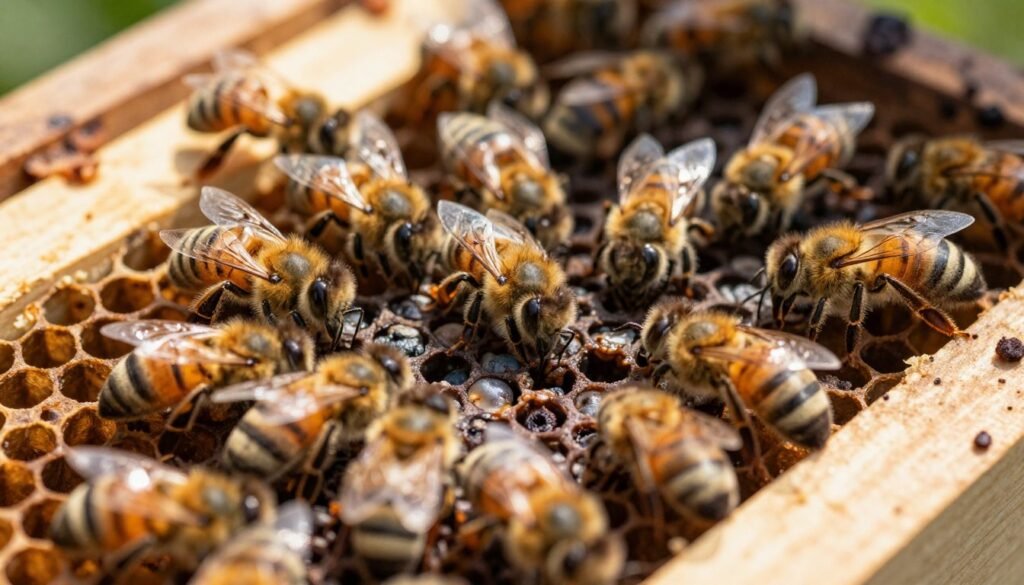
American foulbrood is caused by the bacterium Paenibacillus larvae. Look for a sunken, perforated cell cap and a ropy consistency when a dead larva is probed. Spores can survive in equipment for over 70 years, so detection requires urgent action.
European Foulbrood Indicators
European foulbrood (Melissococcus pluton) usually affects younger larvae. Expect a sour odour and pale, twisted corpses. The tracheal system may be visible in affected larvae, helping confirm the diagnosis.
Recognizing Parasitic Mite Syndrome
High varroa levels often produce spotty brood and chewed-down larvae in cells. Viral infection from varroa can cause deformed wings in adult bees and lead to rapid colony loss.
- Quick checks: ropy test for AFB, sour smell for EFB, spotty pattern and chewed larvae for PMS.
- When in doubt, follow a proven differential guide and review common beginner mistakes.
“Proper diagnosis saves hives; spores demand decisive measures.”
Diagnostic Challenges in the Apiary
Field diagnosis can mislead even experienced beekeepers when several problems overlap. Odor, spotty brood, and damaged cells may point to more than one cause.
The Role of Professional Veterinary Diagnosis
Since January 1, 2017, many regions require a veterinarian consultation before prescribing antibiotics for american foulbrood or european foulbrood.
Dr. Carolina Nyarady, a licensed veterinarian and Master Beekeeper with 25 years’ experience, stresses that professional assessment reduces costly mistakes.
- If you suspect american foulbrood, contact AsureQuality Ltd at 0508 00 11 22 for official assessment.
- Report suspicious cases through the MPI pest-and-disease hotline: 0800 809 966.
“Accurate diagnosis is the first step in preventing the spread of spores, which can persist in the wooden wall of a hive for many years.”
| Issue | Common Confusing Signs | When to Call a Vet |
|---|---|---|
| High varroa levels | Spotty brood, deformed adults, chewed cells | Rapid colony decline despite treatments |
| Bacterial brood disease | Sunken caps, odd odor, ropy or sour larvae | Suspicion of american foulbrood or unclear lab results |
| Mixed problems | Overlap of symptoms, misleading odor | Multiple colonies showing similar signs or persistent spores |
For lab support and diagnostic services, see a directory of diagnostic labs and services for beekeepers. For field checks on varroa counts, review a practical guide on performing an alcohol wash for varroa mites.
Treatment Protocols and Colony Management
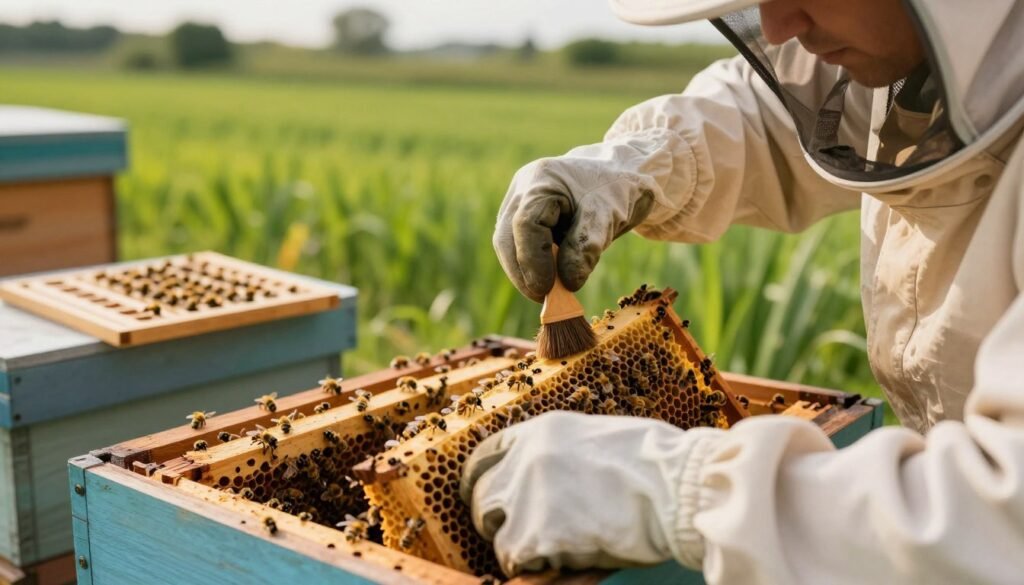
Controlling varroa numbers and hive hygiene stops many downstream problems before they destroy a colony. Start with clear monitoring results and act only when counts exceed thresholds. Regular checks guide both timing and choice of treatment.
Managing Varroa Mite Levels
Varroa destructor feeds on the hemolymph of developing bees and weakens both larvae and adult bees. That damage raises viral risk and can change the brood pattern.
Do this:
- Monitor with an alcohol wash or powdered sugar roll to confirm levels before treatment.
- Follow up treatments with a verified post-treatment varroa count to ensure efficacy.
- Consider requeening if brood pattern stays poor after varroa control.
Eradication and Sanitation Procedures
When a bacterial disease is confirmed, strict sanitation is essential. In some cases, complete destruction of the hive, frames, and honey prevents spore spread for years.
Key steps:
- Remove infected pupae and larvae and isolate affected equipment.
- Clean or destroy contaminated frames and boxes per local rules.
- If odor or secondary bacteria appear, act immediately to protect adult bees and remaining brood.
“Accurate treatment and prompt sanitation preserve neighbouring colonies and reduce long-term spore reservoirs.”
| Issue | Primary Action | Follow-up |
|---|---|---|
| High varroa / viral damage | Apply approved varroa treatment; monitor counts | Reassess with alcohol wash; requeen if brood pattern remains poor |
| Bacterial infection with spores | Quarantine and destroy infected hive material where required | Report to authorities; disinfect tools and replace equipment |
| Secondary bacterial infection | Remove affected larvae, improve hygiene, treat adult bees | Check for foul odor; repeat inspections until colony stabilizes |
For seasonal planning and integrated control, link treatment timing to a late-summer varroa management plan. Good records and swift action protect honey, brood, and long-term apiary health.
Conclusion
Protecting each cell and larva starts with steady observation and prompt action. Regular brood checks and clear note-taking help spot early symptoms before they spread across the hive.
Beekeepers should combine routine monitoring with professional diagnosis when signs are unclear. Use trusted references like the honey bee diseases guide for lab-backed details and follow best practice for gear care, such as methods to sterilize hive tools.
Good management—controlling pests, keeping equipment clean, and acting fast on treatment—protects honey, adult bees, and the wooden wall of the hive from persistent spores.