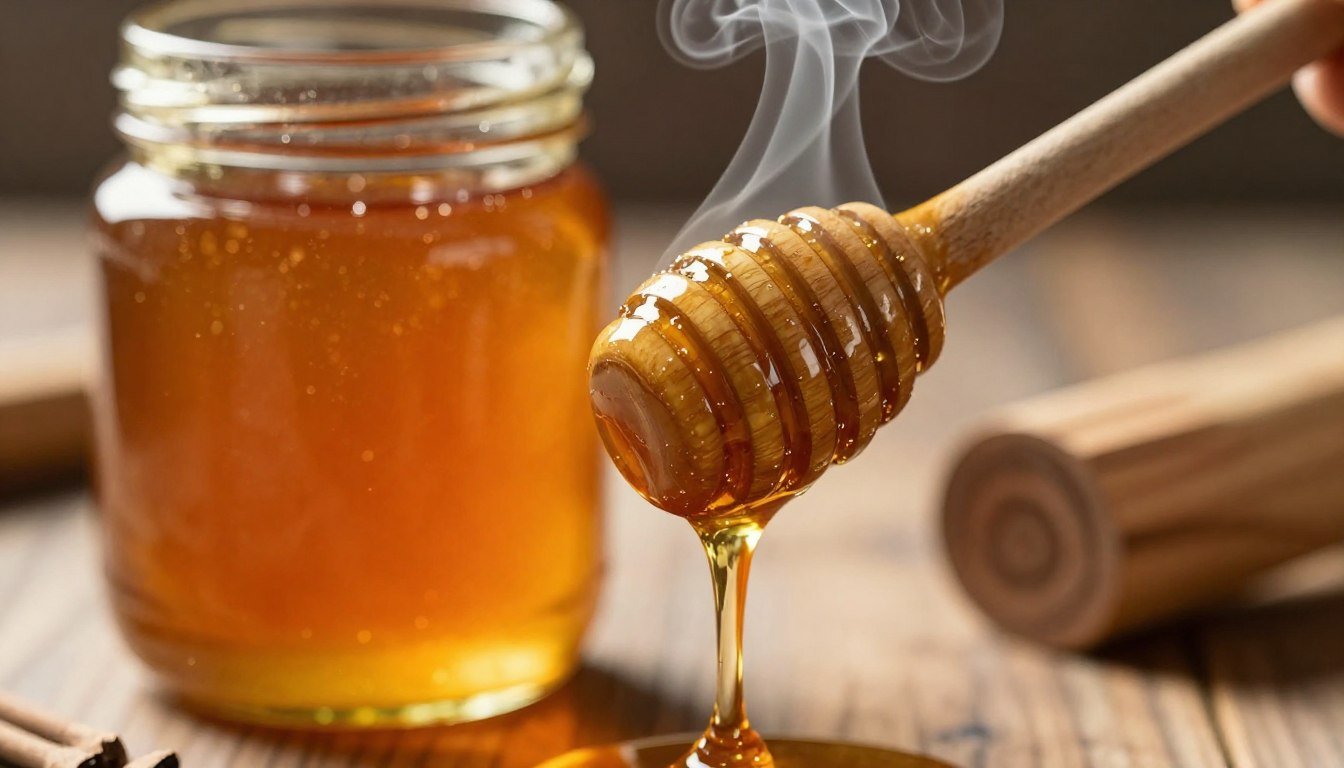
In September 2024, beekeepers in Franklin County, Ohio, reported jars with a savory, smoky profile that prompted questions across local posts. The flavor can reflect the full season around a beehive, from floral sources to weather and foraging patterns.
Our look at this topic focuses on the hive, the bee, and common beekeeping points of care that shape the final jar. A careful use of a smoker matters; too much smoke can change delicate aromatics during harvest.
Field reports and community notes help us learn. We share readers’ thanks for sending samples and notes that reveal how landscape and handling create unique profiles.
For a deeper view of flavors and processing, see a useful gourmet honey guide, and learn about floral chemistry at floral source and pH.
Key Takeaways
- Local environment and season shape flavor from the hive.
- Proper use of a smoker is important to protect aromatics.
- Beekeeping care and foraging patterns influence final notes.
- Community posts and samples help trace unusual profiles.
- Look to floral sources and handling to explain smoky traits.
Understanding the Smoky Flavor Profile
Raw comb captures the hive’s essence, shaped by local blooms and seasonal shifts.
The Flow Hive team notes that honey flavor is subjective and depends heavily on available nectar and the seasonal flow. Small changes in forage can shift aroma and overall flavour.
Raw comb honey often keeps the most delicate aromatics. Many tasters describe comb as superior because it preserves natural notes that blending or heavy processing can mute.
Beekeeping care matters at harvest. Use a smoker sparingly so smoke does not mask subtle floral traits. A cautious approach keeps the comb’s original flavor intact.
- Natural aromatics: comb holds floral signatures from the hive.
- Seasonal flow: timing alters the sugar profile and scent.
- Handling: minimal processing helps maintain pure taste.
Appreciating these nuances means sampling comb honey from different sites and seasons. That comparison reveals how floral sources and harvest choices shape the final jar.
Why honey tastes smoky after extraction
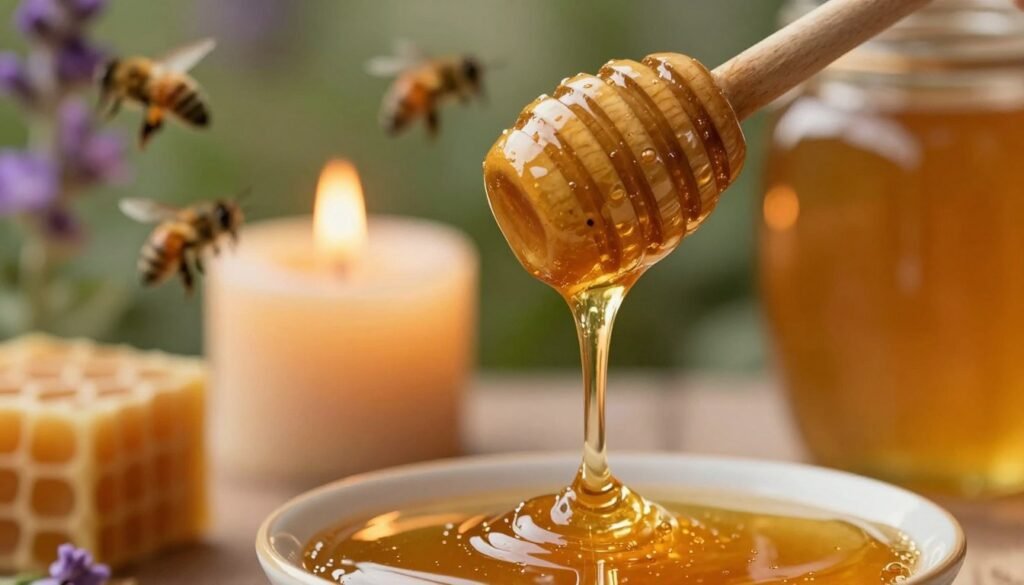
Small shifts in nectar sources and harvest technique can give a jar unexpected savory notes. The brain combines aroma, sweetness, and texture to form a single flavor impression. That makes single-frame samples especially likely to show distinct profiles.
The Science of Flavor Perception
Aroma compounds from certain plants can mimic roasted or toasted notes. Goldenrod and other strong-scented blooms produce volatiles that describe as savory. Fast handling and quick spin-out preserve those compounds in extracted honey.
Common Misconceptions
New beekeepers often assume smoke from a smoker causes all toasted impressions. In many cases, the smoker is not the sole cause.
- Mixed forage in one frame creates layered flavour that changes over time.
- Method and timing during extraction influence how aroma carries into the jar.
- Experienced beekeepers like JeffH note that prompt processing often keeps delicate comb honey notes intact.
We offer our thanks to the community for sharing posts and samples that clarify how the beehive environment shapes final quality.
For more community reports on smoke and jar profiles, see this discussion: bushfire smoke and effect on honey.
The Role of Nectar Sources and Local Flora
The floral map of an area writes itself into each comb and frame.
In Franklin County in 2024, an abundance of goldenrod shifted many jars toward a spicy, savory profile. That plant’s nectar can dominate a season when it blooms in large patches.
Long-term foraging patterns matter. Bees that use the same area for years produce consistent flavor tied to local blooms and cycles.
Goldenrod and Strong-Scented Plants
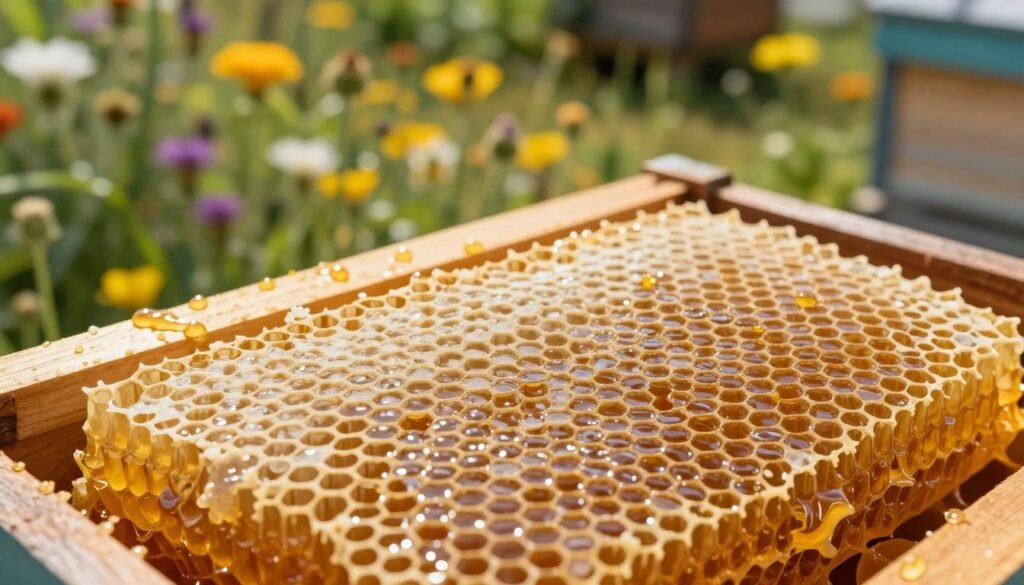
Wax cappings on honey frames signal ripe stores and the labor of the bee team. When mint or other strong-scented plants are present, their fragrance can show up clearly in comb honey.
- Different hives often yield distinct jars even in the same yard.
- Frames honey reflects which plants were in flow during the season.
- A recent post on our forum linked mint bushes to a bright herbal flavour in one apiary.
| Plant | Typical Note | Effect on Wax/Frames |
|---|---|---|
| Goldenrod | Spicy / savory | Darkened cappings, strong aroma |
| Mint | Herbal / bright | Clean cappings, floral overtones |
| Mixed meadow | Layered, complex | Varied cappings, blended flavour |
For readers wanting a broader comparison of regional varieties, see popular U.S. varieties at U.S. honey varieties.
Impact of Hive Management and Extraction Timing
Attentive beekeeping—especially around peak nectar flow—keeps moisture low and flavor true.
Proper management of the super and careful timing at harvest protect jar quality. Ensure the super is truly ready at the end of the season before you pull frames. The bees cap comb honey when it reaches the right amount of ripeness.
Monitor how long stores remain in the hive. Pulling a frame too soon raises moisture and can ferment the jar. Letting stores sit too long risks blends from later flows.
Timing the spin or press with local flow gives the best result. A lot of success in beekeeping comes from matching harvest time to peak nectar. Each frame is part of a larger system and demands attention.
We value posts from our community that share practical notes. Special thanks to beekeepers who report on smoker use and how it affected their annual amount and quality.
“Good timing and steady hive care yield clean jars that reflect the season.” — experienced apiary post
For more on how smoke can change a jar, see this note on smoker impact.
Evaluating Equipment and Storage Materials
Choices in tools and containers can make a clear difference in how a jar presents at tasting. Inspect gear before harvest and plan a clean, dry storage routine for comb and frames.
Plastic vs Stainless Steel
Stainless steel is the industry standard for processing. MartinB notes it is preferred for long runs and quick cleaning.
Food-grade plastic containers are common for storage and can be neutral when BPA-free. Many beekeepers use plastic frames in a super without noting flavor shifts.
Storage Container Integrity
Seal containers well. Honey is hygroscopic and will absorb moisture if a jar or bucket leaks.
Keep brood frames separate from honey frames to avoid off-notes. Long-term use of wax or plastic gear over years often shows no measurable change in comb honey quality.
- Tip: Use high-quality, food-grade containers and check lids.
- Tip: For best practice see guidance on harvesting honey supers.
- Tip: Learn how to avoid overheating during extraction to protect delicate aromatics.
“The idea that plastic imparts flavor is debated; quality materials and clean practice matter far more.” — experienced post
Distinguishing Between Natural Aromatics and Contamination
Good sensory checks help you tell a jar shaped by local blooms from one altered by gear or smoke.
Start with a quick look, smell, and clean-taste. Note color and clarity first. Then inhale gently and take a small sip on the tongue.
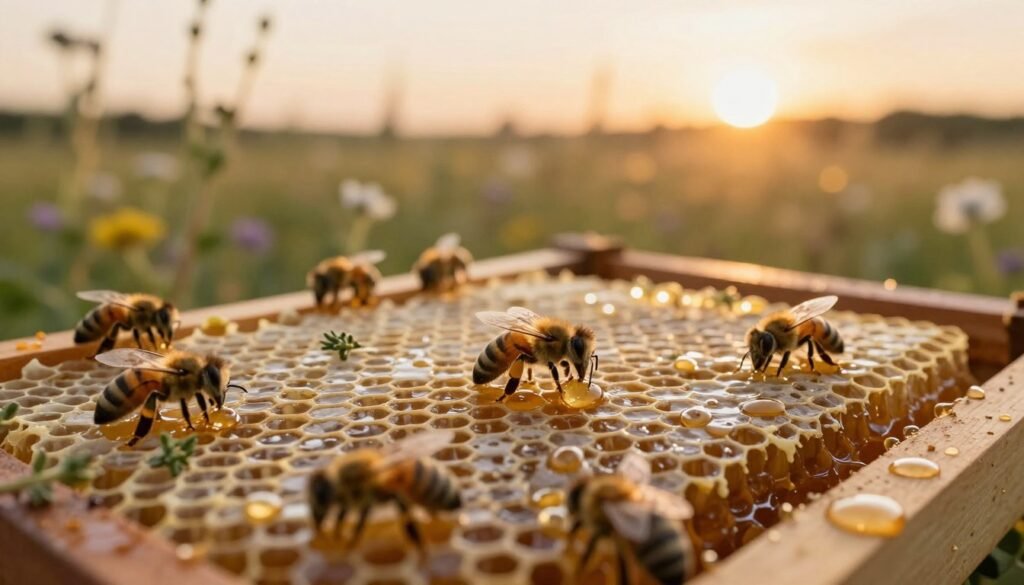
A recent forum post and field note reminds readers that unique flavour often links to specific nectar collected by the bee rather than handling.
“Check for lingering smoke or odd notes from storage before blaming the flow.” — community post
Simple diagnostic cues: floral, bright, and layered notes usually signal natural sources. Harsh, acrid, or chemical-like scents suggest contamination from a smoker, plastic, or poor lids.
| Signal | Likely Source | What to Do |
|---|---|---|
| Floral, complex | Local nectar/flow | Document hive location and season |
| Persistent smoke | Smoker or charred material | Air frames, change fuel, record smoker use |
| Plastic/chemical note | Storage materials | Switch to food-grade stainless or new jars |
Best Practices for Harvesting Ripe Honey
Good harvest practice starts with patient checks of each frame before you lift it. These small steps cut risk and protect flavor in the jar.
Ensuring Frames are Fully Capped
Make sure the wax cappings are solid across the face of a frame before you remove it. JeffH emphasizes that fully capped frames signal proper ripeness and reduce the chance of high moisture in the jar.
Take time to inspect every frame. Look for stray brood cells or debris and gently brush them away. The method of removing frames matters; use steady hands and a clean hive tool to avoid damage.
- Check amount: Ensure a majority of the comb shows capped cells before harvest.
- Avoid brood: Keep brood frames out of the super to prevent contamination.
- Seasonal care: Monitor the hive through the year so bees have enough stores for winter.
When using a smoker, point the nozzle away from open frames. That reduces the chance smoke will settle on comb or jarred product.
“Careful checks and gentle handling during the flow protect natural aromatics and jar quality.” — community post
We offer our thanks to beekeepers who post tips and photos each year. For a practical harvesting reference, see this harvesting honey guide.
Analyzing the Influence of Environmental Conditions
The apiary’s surroundings write a season-long report into every frame and super.
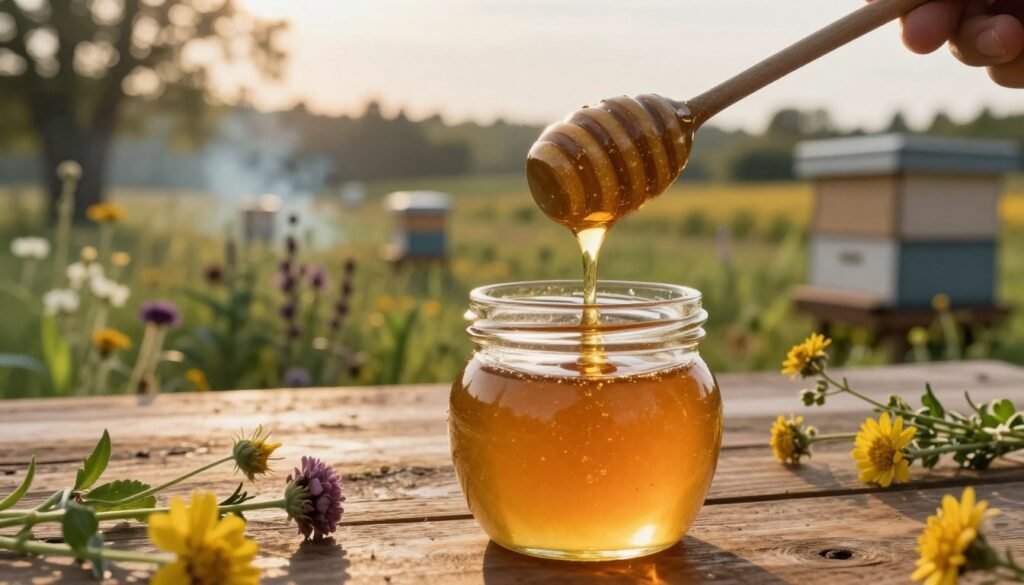
Droughts and heat in 2024 changed nectar maps across parts of Ohio. That shift cut some floral sources and boosted others, so jars from the same yard showed different notes by the end of the year.
The flow into hives depends on weather and bloom timing. A single dry spell will shorten peak foraging time and concentrate nectar from hardier plants in each frame.
Our post on site notes that temperature and air quality inside the beehive affect aroma retention. Keep records of local conditions when you sample frames so you can link an idea about flavor to a specific season or area.
“Each frame reflects the landscape the bees worked during that time.” — community observation
| Condition | Likely Effect | Practical Step |
|---|---|---|
| Drought / heat | Shift to drought-tolerant nectar; darker notes | Record bloom maps; separate frames by crop |
| Late rains | Extended flow; blended floral profile | Stagger harvests; note week of pull |
| Poor air quality / smoke | Lingering aroma on cappings | Air frames; change smoker fuel; document use |
Good beekeeping links observation to practice. Note which frames came from which super and log conditions each year. That habit makes it easier to form a solid idea about what in the area shaped the jar.
For standards on grading and documenting quality, see our guide on honey grading standards.
Troubleshooting Unusual Honey Flavors
When an odd jar appears on the shelf, start with basic checks at the hive and in your storage area.
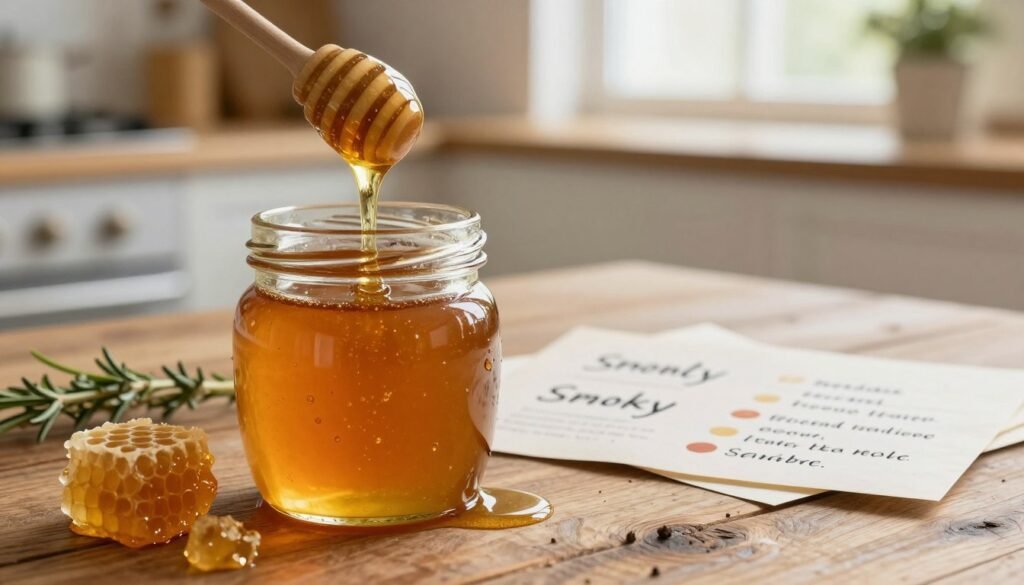
Begin small: pull the same frame and a neighboring frame for a direct comparison. Tasting side-by-side gives a quick idea of whether the note is local to one comb or shared across frames.
Checklist:
- Note if bees foraged goldenrod — that plant can give a BBQ-like profile to some jars.
- Inspect frames for brood, debris, or stray wax that could change aroma.
- Make sure the smoker was used lightly; heavy smoke can impart an unwanted scent.
- Remember the extraction method is not always the main cause; nectar source usually drives flavor.
“Compare multiple frames from the same super before deciding on a course of action.”
| Signal | Likely Cause | Action |
|---|---|---|
| BBQ-like note | Goldenrod or similar forage | Record bloom maps; label frames by date |
| Persistent smoke | Smoker fuel or heavy use | Air frames; change fuel; reduce smoker use |
| Odd chemical/acidic | Storage or damaged lids | Move to food-grade containers; check seals |
Over the years, beekeepers learn that jars reflect the season and flow. If you need step-by-step guidance on handling and storage, see this how to extract and store raw guide.
Conclusion
Documenting where bees forage and when you pull a frame makes flavor easier to trace.
Pay attention to bloom maps, hive records, and simple sensory checks. Good beekeeping and proper handling protect the comb and keep jars true to their source.
Whether you enjoy a spoonful in tea or taste a single frame, noting origin and harvest time deepens appreciation. We give our thanks to the community posts that help troubleshoot odd jars and improve practice.
For a broader look at provenance and regional varieties, see this guide on discovering flavours. Keep logging frames, study the hive, and savor each unique flavor.
FAQ
What makes honey develop a smoky aroma during harvest?
Several factors can create a smoke-like aroma in freshly pulled comb. Bees collect nectar from strong-scented flowers such as goldenrod or willow, and those floral notes can read as smoky. Beekeeping practices—using a smoker at the hive, handling frames near a fire, or working in areas with recent brush burns—can also transfer smoky volatiles into uncapped comb and into extracted product. Lastly, aged comb with high amounts of propolis and brood residue can add deeper, toasted notes.
How can I tell if the scent is from local flora or from handling and equipment?
Smells due to floral sources usually match regional bloom periods and appear consistently across hives during a flow. Notes from equipment or handling tend to be localized to certain supers, frames, or batches processed the same way. Compare aroma across frames, check recent use of a smoker, and note whether stainless steel or plastic tools were used. If only one container or extractor batch is affected, contamination from equipment or storage is likely.
Could using a smoker cause lasting smoky flavor in the product?
Brief, standard use of a hive smoker rarely imparts a lasting flavor if bees and comb are ventilated before extraction. Heavy, direct exposure to dense smoke or using aromatic fuels like treated wood or wet materials can leave residues in comb and extracted product. To reduce risk, use clean, dry fuels such as untreated burlap or pine needles and allow a day between heavy smoking and harvesting when possible.
Do plastic extraction tools contribute off-flavors compared to stainless steel?
Plastic can absorb and later release volatile compounds, especially if it previously held strong-smelling substances or was exposed to heat. Food-grade stainless steel is inert and less likely to transfer flavors. For best flavor integrity, use food-grade stainless steel extractors, buckets, and strainers, and avoid reused plastic containers that may have held other substances.
Can storage containers change the aroma after harvesting?
Yes. Containers with lingering odors—detergents, smoke, or residues from other foods—can impart off-notes. Airtight, food-grade stainless steel or glass keeps aroma stable. If plastic is used, ensure it is food-grade, clean, and dedicated to honey. Store at cool room temperatures away from strong odors and sunlight to preserve natural aromatics.
How important is frame capping when harvesting to avoid off-flavors?
Very important. Fully capped frames indicate moisture content is low and fermentation risk is minimal. Undercapped or unripe frames can ferment or develop atypical aromatics during storage or processing. Wait for full capping where possible; if you must extract early, dehumidify and process quickly to limit flavor changes.
Could environmental conditions like wildfire smoke affect flavor?
Yes. Airborne particulates and volatile compounds from nearby wildfires or controlled burns can settle on flowers and in hives, altering nectar chemistry and comb aroma. If your area has smoke events during a nectar flow, test small batches before wide distribution and consider delaying harvest until air quality improves.
Are toasted or caramel notes always a sign of spoilage or contamination?
Not necessarily. Many floral sources and older wax or propolis produce warm, toasted, or caramel-like characters that are desirable in certain varietals. Spoilage typically shows additional signs—off sourness, bubbling, or fermentation aromas. Use sensory checks and, if concerned, simple moisture and fermentation tests to rule out spoilage.
What steps can be taken during extraction to minimize unwanted flavors?
Work in a clean, odor-free space with dedicated food-grade equipment. Use stainless steel tools and containers, avoid strong cleaners or scented products nearby, and ensure frames are well-aerated before spinning. Filter gently—over-filtration can strip desirable aromatics—then store in airtight, neutral containers at stable temperatures.
When should I suspect hive management issues as the source of an off aroma?
If multiple hives or successive seasons show the same unusual notes, review management: frame turnover frequency, brood comb age, propolis accumulation, and feeding practices. Old brood comb and heavy propolis build-up change comb chemistry over time. Regularly rotate comb, maintain clean supers, and monitor colony health to keep flavors consistent.
Can testing confirm the cause of a smoky or unusual aroma?
Analytical labs can identify volatile compounds and contaminants such as smoke-derived polycyclic aromatic hydrocarbons (PAHs) or fermentation markers. Simple on-farm checks—moisture testing, smelling individual frames, and comparing batches—help diagnose common causes. For commercial concerns, laboratory analysis provides definitive answers.
Any quick tips for beekeepers handling strong-flavored flows like goldenrod?
Accept that some flows produce distinctive profiles and market them as varietal products. If you want a milder product, separate those supers, harvest and process them separately, or delay extraction until mixed with neutral flows. Maintain clean equipment, choose stainless steel where possible, and store varietal honey apart to preserve intended flavors.