Quick overview: This guide gives a clear, step-by-step method for measuring moisture in extracted honey using a refractometer. You will learn why accurate readings matter, how bees reduce nectar water by fanning, and what ranges keep product safe for the market.
Beekeepers aim for a safe range before extraction. Capped cells usually mean the pack is near 18% water. Fermentation rises above 19%, while crystallization risk grows below 16%.
What you’ll see next: tool setup, sampling tips, calibration steps, and a quick workflow so you can decide whether to leave frames in the colony to dry further or move ahead with extraction.
Why this matters: routine checks protect flavor, shelf life, and your standing in the U.S. market. For background on grading and standards, see grading standards.
Key Takeaways
- Follow a simple refractometer workflow: calibrate, sample, read under good light.
- Aim for the 16–18.5% window; capped frames often sit near 18%.
- Test several frames — one reading is not representative.
- Keep frames in the hive if readings show high water to avoid fermentation.
- Consistent checks protect flavor and marketability.
Why moisture content matters for quality, safety, and market readiness
Accurate water readings decide whether frames are ready for extraction or need more time in the hive. Aim for a practical window near 16–18.5% as your standard. This percentage gives a reliable benchmark for stable, saleable product.
Target ranges and risks
Honey with more than 19% water increases yeast activity and raises the risk of fermentation. Fermented jars can develop off-flavors, pressure build-up, and spoilage that hurt sales.
At the other extreme, very low water speeds crystallization. Crystallized jars are safe but may alter texture and buyer perception, which matters for retail.
Bee behavior in lowering water
Bees start with nectar that is mostly water and some sucrose. They convert sucrose to simpler sugars and spread nectar in thin films across open cells. Worker fanning then evaporates water until bees cap the cell.
Practical notes for decisions
- Capped frames usually average about 18% and are often suitable for extraction.
- Readings vary by frame and position, so sample several spots before deciding.
- Use the percentage guidelines as repeatable numbers for consistent lots and better market acceptance.
For a practical primer on colony practices and sampling that supports these numbers, see the beginner beekeeping guide.
How to Test Hive Honey Moisture Content with a Refractometer
Using the right handheld refractometer cuts guesswork and speeds field sampling. Start by selecting a dependable model that lists the correct scale for water readings in jars and frames. Keep the manufacturer’s instructions nearby so you can confirm scales and settings quickly.
Choose and calibrate
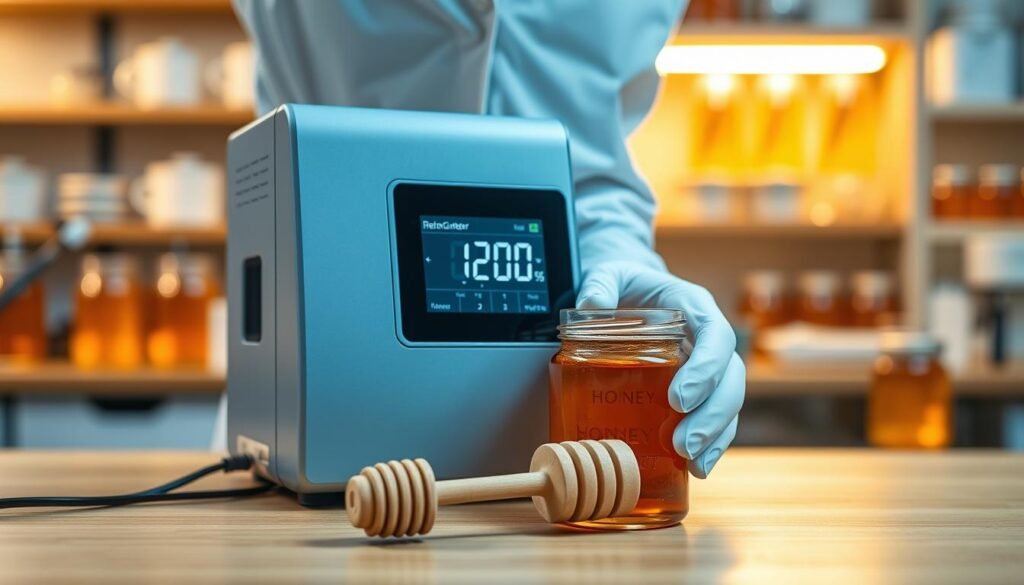
Before samples, calibrate with a thin film of olive oil across the blue plate. Adjust the scale until the device shows 71.5, then verify stability across the scales. Repeat calibration if readings shift.
Prepare and read a clean sample
Wipe the plate clean, then place a small, even drop honey on the blue surface. Avoid bubbles and wax. Move into bright light and look for the fuzzy blue line at the right side.
Record, repeat, and note
Read the percentage at the intersection, write it down, and repeat with fresh drops from the same jar. Confirm results by sampling other frames or jars before extracting.
Procedural notes: scrape samples into a cup rather than pressing the plate into comb. For a sampling primer, see the forum sampling guide and further beekeeping resources.
Testing from frames in or out of the hive: sampling techniques and common issues
A short, deliberate sampling routine at the hive edge prevents costly batch problems. Before committing labor and equipment, check a few representative frames. This step reduces wasted effort and protects product quality.
Uncapped versus capped cells: when to extract and when to wait
Capped cells are your first signal. In many cases, capped frames average near 18% and are safe for extraction.
Uncapped areas often hold higher water. If a frame has many open cells, leave it or return it to the stores so bees can finish drying.
Spot-checking water content from a frame before full extraction
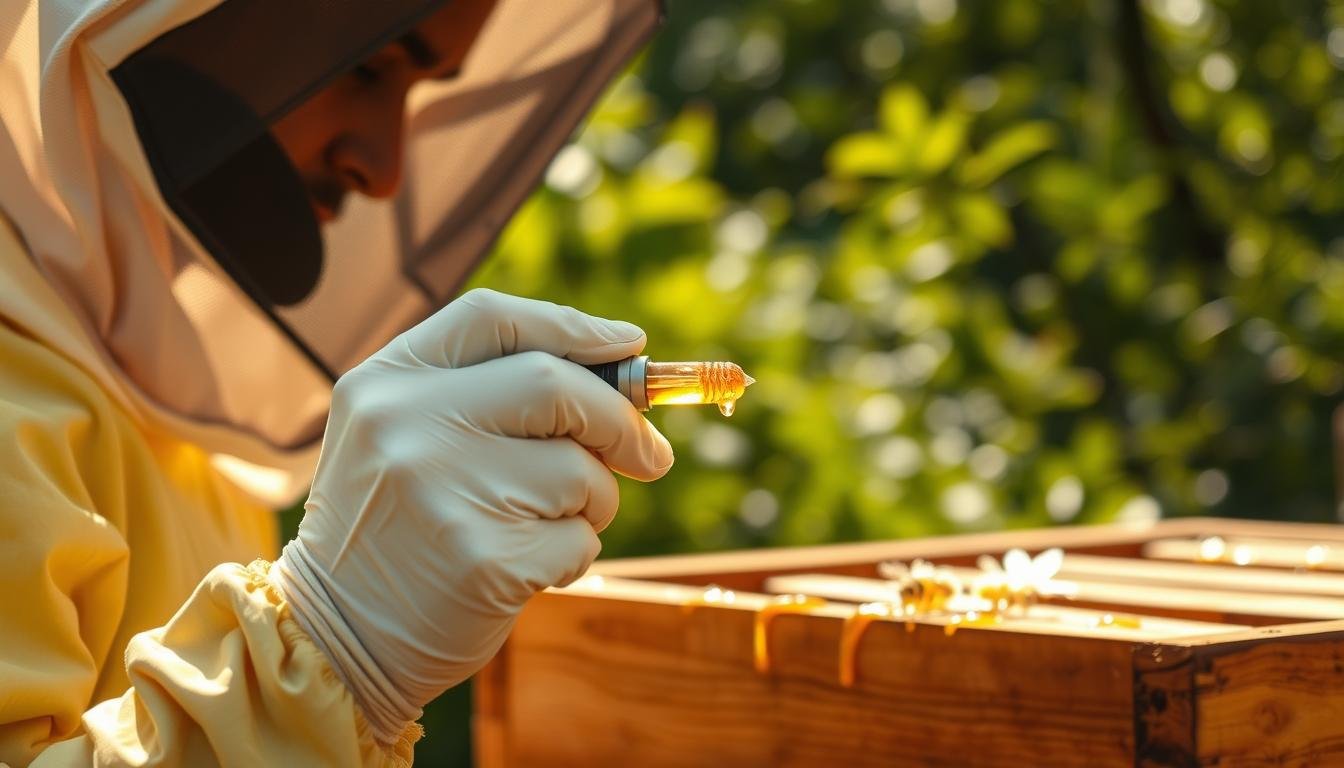
For quick checks, remove a frame briefly and scoop a small sample from both capped and uncapped sections into a clean container.
Step away from the hive, then use a refractometer for a stable reading. Repeat with another frame if results sit near a borderline number.
- Sample representatively: collect from capped and open cell areas for a balanced result.
- Avoid mixing lots: combining high-water and low-water stores can raise the whole batch above safe limits.
- Handle with care: don’t press instruments on comb and work away from heavy bee traffic.
- Keep records: note frame position and date so future checks target faster- or slower-drying areas.
If a spot-check shows high water, return frames and reassess in a few days. For borderline cases, retest to rule out sampling error.
Conclusion
A reliable workflow ties the steps together. Small habits in the field—calibrate the refractometer with a bit of olive oil, use a clean drop on the surface, and read the fuzzy blue line in strong light—give you repeatable percentage readings.
Aim for roughly 16–18.5% water; capped frames often sit near 18%. Above 19% raises fermentation risk; below 16% favors crystallization. Record each reading with the source frame and date so seasonal trends become clear.
Maintain your tool and follow the device instructions. Spot checks save time and spare batches from costly rework. With consistent steps and good logs, you will bring steady, market-ready product from hive to jar.
FAQ
Why does water percentage matter for honey quality and market readiness?
Moisture level determines shelf life, taste, and safety. Honey with low water resists fermentation and stores well, while high values invite yeast growth and off-flavors. Buyers and regulators often expect product within a specific range for labeling and sale.
What target range should be aimed for and what happens if values fall outside it?
Aim for about 16–18.5% water. Above roughly 19% the risk of fermentation rises rapidly; honey can ferment, smell sour, and lose value. Below about 16% the product thickens and may crystallize faster, altering texture but remaining safe.
How do bees naturally reduce water in collected nectar before cells are sealed?
Worker bees fan and repeatedly regurgitate nectar to evaporate excess moisture. They also concentrate sugars by adding enzymes. As the substance thickens, workers cap cells to preserve the stores at optimal humidity and prevent spoilage.
What should I look for when choosing a refractometer for checking honey?
Select a honey-specific refractometer that reads in percent Brix or direct water percentage and offers a honey scale. Look for durable construction, easy calibration, and clear optics. Brands like Atago and Extech are commonly used in apiculture.
How do I calibrate a refractometer properly before taking readings?
Use a calibration fluid recommended by the maker, or a drop of olive oil at room temperature as a quick check for focus and alignment. Adjust the instrument so the reference line matches the known value. Calibration prevents systematic errors in reported percentages.
How do I prepare a clean sample for a refractometer reading?
Use a sterile spatula or spoon to transfer a small amount from a cell or frame. Wipe the prism plate clean, place a single thin drop on the surface, and close the cover plate to spread the sample evenly without air bubbles. Excess should be wiped away before reading.
What lighting and reading technique gives the most accurate result?
Use a strong, diffuse light behind the eyepiece or base. Look for the transition between light and dark—often a fuzzy blue line—and read the value at that boundary. Take several readings from the same sample to confirm consistency.
How many drops or readings should I record for a reliable percentage?
Take at least three readings from different spots on the same sample or multiple cells. Record the percentage for each and use the average. This reduces the chance that a single contaminated or uneven drop skews your result.
Can I test honey directly on frames inside the hive or must I extract it first?
You can spot-check uncapped cells by scooping a small sample for immediate reading. For capped honey, it’s best to extract or use a heated uncapping fork to access the comb. Sampling in-hive is faster but may expose the colony to disturbance.
When should I wait instead of extracting because water levels are too high?
If readings approach or exceed about 19%, delay extraction and allow bees more time to dehydrate the stores. You can also provide ventilation or use a flow-frame dryer. Extracting high-moisture honey often leads to fermentation during storage.
What common issues can skew refractometer readings and how do I avoid them?
Contaminants like wax, pollen, or water droplets warp results. Temperature also affects optics—always measure at or correct for the instrument’s reference temperature. Clean the prism after each use to prevent residue buildup.
Are there alternatives to a refractometer for measuring water percentage?
Yes. Digital moisture meters designed for honey, lab-grade Karl Fischer titration, or sending samples to a testing lab provide valid options. Portable refractometers remain the most practical field tool for beekeepers.
How does sugar composition or floral source affect readings or interpretation?
Different nectars vary in sugar mix and viscosity, which can slightly affect refractive properties. Interpret results relative to expected ranges and repeat tests across frames or supers from the same apiary to detect outliers.