Last Updated September 13, 2026
This guide delivers a professional, beginner-friendly roadmap for turning hobby hives into steady income. Read on to learn practical paths to money through honey, beeswax, candles, and services.
Part-time beekeepers can sell direct to friends, workplaces, and at holiday fairs where gift buyers pay premiums. Wholesale to co-ops or health food stores often uses ~30% markup, while bulk buckets suit restaurants and hotels.
Expect modest profit in your first season and plan to reinvest early gains into equipment. Diversify products — from scented beeswax candles to nucs and classes — to smooth seasonal dips and boost year-round sales.
Follow cottage food rules for honey and low-risk items, label carefully for cosmetics, and build strong genetics and reputation before selling live stock or offering paid lessons. This article maps startup costs, per-hive math, and sales channels so you can grow with confidence.
Key Takeaways
- Diversify products and services to reduce seasonal risk.
- Direct sales and holiday festivals often yield quick returns.
- Wholesale and bulk orders fit different time and labor goals.
- Follow cottage food laws and proper labeling for safe sales.
- Reinvest first-season profits to improve equipment and scale.
- Quality, genetics, and reputation are crucial for long-term success.
- Explore training options like beekeeping courses and training to speed your progress.
Why Beekeeping Makes Sense as a Side Income in the United States
Small apiaries match busy lives. Running a handful of hives fits flexible schedules and lets people keep bees locally without leaving a day job. Quick inspections and seasonal harvests make this model practical for many.
Local honey sells well because customers value origin and freshness. Direct sales to friends, family, and coworkers often start from a single message or post. Festivals and holiday fairs usually bring larger orders and higher prices.
Diversify to raise earnings. Comb honey, infused jars, confections, and scented beeswax candles each reach different buyers and budgets. Classes, tours, or property partnerships with hotels or B Corps add recurring revenue and marketing stories.
“Wholesale to co-ops or small stores can provide steady volume and save time on jar work.”
- Start local: use personal networks, social channels, then step up to festivals.
- Balance channels: wholesale brings volume; direct sales bring margin.
- Plan for seasonality: spring and summer build supply; fall and holidays reward bundles.
Keep operations lean. Focus on high-margin items and proven sales channels in your area. Begin with few hives, learn management, and scale only after sales and skills stabilize.
For market context and an economic overview, see regional impact data and practical benefits in this comprehensive guide.
Beginner’s Quick Start: How to Keep Bees and Prepare for Your First Season
Start smart: assemble core tools, order bees, and learn the basic rhythm of seasonal checks. A compact plan keeps early costs down and builds confidence fast.
Essential equipment and first hives: packages vs. nucs
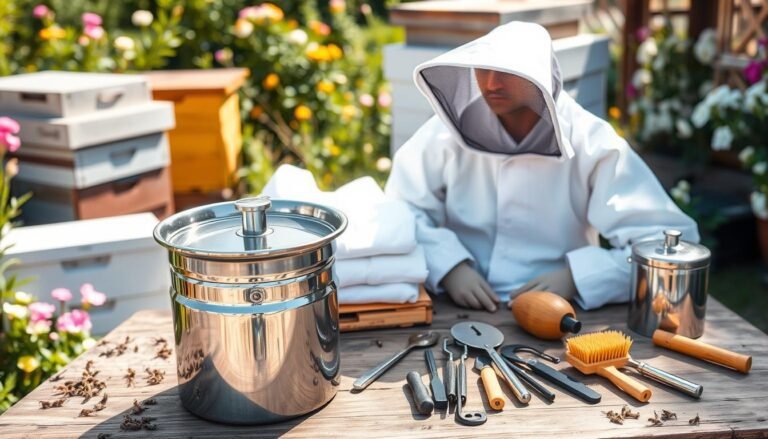
Starter equipment usually includes full hive bodies and frames, a protective suit and gloves, a smoker, a hive tool, and basic feeders for spring. These items let you inspect, feed, and manage brood frames safely.
Package shipments bring a mated queen and loose bees. They cost roughly $100–$200 and require colony build-up time.
Nucs include frames with brood, food stores, and a laying queen for quicker growth and often a higher first-season success rate.
Time commitment per hive across the year
Expect weekly checks in spring, lighter biweekly visits mid-season, and focused harvest or winter-prep days in fall. Typical time per hive ranges from 15–60 minutes depending on tasks.
Before season start: confirm suppliers, assemble equipment, line up a mentor, and stock feeders. Keep records from day one to track queen performance, brood patterns, and treatments.
Safety tip: wear proper clothing, use your smoker calmly, and move deliberately to reduce colony stress.
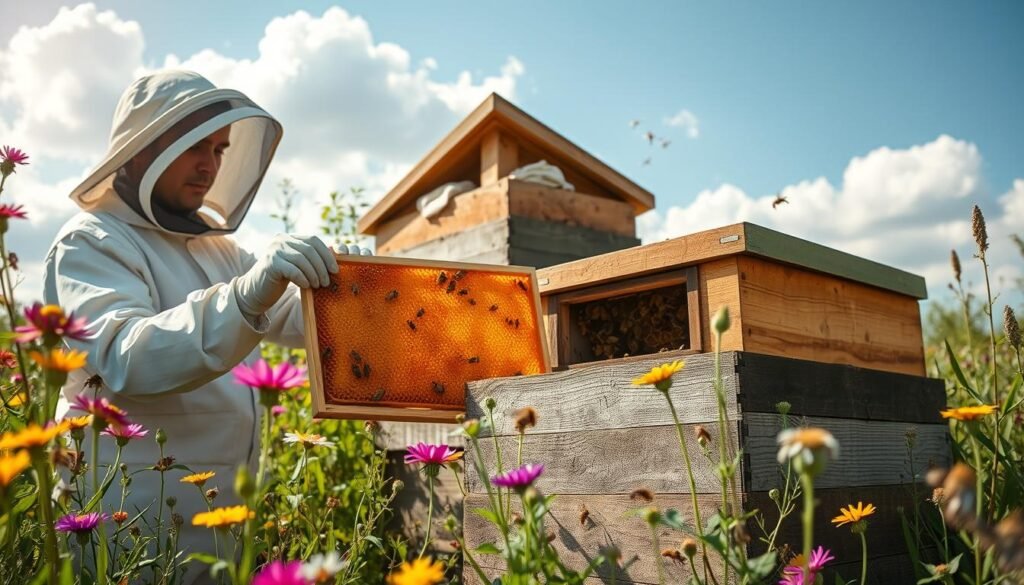
For a practical primer, see getting started planning for bees.
Startup Costs, Ongoing Expenses, and Time Investment
Start by listing fixed and recurring expenses so you can forecast cash flow.
Initial investment covers hive systems, bees, protective gear, and basic tools. Expect hive systems at $200–$600 each. Protective gear runs $100–$200. Tools add $50–$150. Bees (package or nuc) cost about $100–$200. Permits and compliance may add $100–$300.
Annual operating costs
Per hive, plan $200–$400 yearly for feeding, mite treatments, and repairs. Feeding is roughly $50, mite treatments $10–$30, and replacements or spare frames vary by local conditions.
Marketing, labeling, and market fees
Budget $50–$200 for printed materials, $100–$500 for online presence, and $20–$100 per market booth. Good packaging lifts product appeal and helps command better prices.
“Wholesale markup of around 30% changes shelf prices and affects margins — trade margin for volume when it fits your production.”
| Line item | One-time cost | Annual cost | Notes |
|---|---|---|---|
| Hive system | $200–$600 | $20–$80 | Replacement boxes/frames over time |
| Protective gear & tools | $150–$350 | $10–$50 | Suits last multiple seasons; gloves wear faster |
| Bees (package/nuc) | $100–$200 | $0–$100 | Requeening or nucs may add costs |
| Marketing & market fees | $150–$700 | $20–$500 | Depends on booth frequency and online spend |
Risk mitigation: set aside funds for insurance, spare equipment, and emergency feed. This protects your colonies and the money you put in.
Use these figures to model break-even and payback periods. Factor realistic yields, local prices, and hours for harvest and bottling when you calculate returns for the year.
Revenue Streams for Beekeepers: Honey, Wax, Bees, and Services
Selling multiple product lines reduces risk and smooths cash flow across the season. Start with direct outreach to friends, family, and workplaces. A simple email or social post often converts first sales quickly.
Honey sales and premium jars
Structure honey sales by sequencing channels. Begin with direct-to-consumer messages, then launch giftable bundles for holiday fairs. Wholesale to co-ops or small health food stores can provide volume and often supports a ~30% store markup.
Beeswax products and body care
Focus on pillar candles and container candles for best margins. Use a 30% coconut oil blend in container wax to reduce shrinkage and improve finish.
For body care, source clean, untreated wax, keep formulas simple, and price for both materials and labor. Lower margins here require careful cost tracking.
Education, tours, and content
Offer short workshops, yard tours, and recorded content to build brand trust. Classes double as marketing channels for nuc sales and product orders.
Pollination and partnership models
Pollination services pay well but usually fit operations with 50 or more hives due to logistics and risk. Smaller operators can pursue paid placements with hotels, resorts, botanical gardens, or B Corps for custom compensation without full-field pollination work.
“Gift bundles and holiday fairs often raise average order values more than weekly markets.”
| Revenue stream | Best starting scale | Typical margin | Notes |
|---|---|---|---|
| Direct honey sales & gift bundles | 1–10 hives | High | Fast ramp, strong margins at festivals |
| Wholesale & bulk buckets | 5–30 hives | Moderate | Volume, less jar work; 30% store markup common |
| Beeswax candles & body care | 1–10 hives | High for candles, lower for body care | Pillar molds sell steadily; untreated wax needed for cosmetics |
| Nuc and package sales | 10+ hives | Variable | Price by genetics and strength; waxed nuc boxes add ~$10 |
| Pollination or on-site partnerships | 50+ hives | High | Good pay, higher risk and equipment needs |
Sequence offerings by experience and hive number: start with honey sales and candles, add nucs and classes as reputation grows, then consider pollination or paid placements when you reach scale. For more on health impacts and product context, see research overview.
Sales Channels and Marketing Tactics That Drive Profits
Choose sales channels that match your schedule and let product quality do most of the selling. Focus on a few high-value outlets first, then scale where returns justify time and costs.
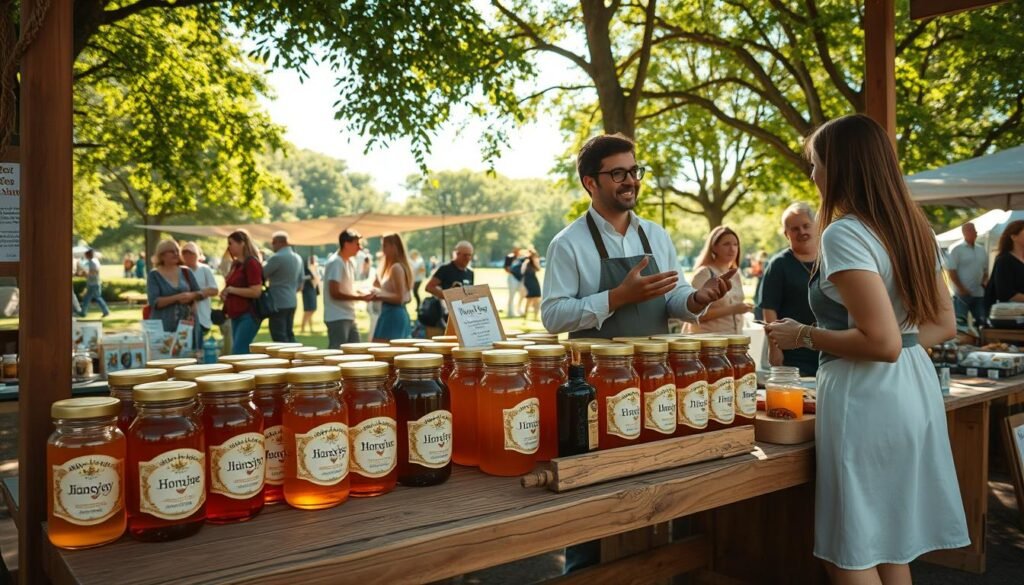
Friends, workplaces, and social outreach
Send a short, professional message to contacts offering a limited-time sample set. Keep it simple: price, jar size, and pickup options. Follow with one reminder and share photos of labels and bundles.
Farmers’ markets vs. festivals and fairs
Weekly markets build regular customers but demand many Saturdays. Festivals and holiday fairs bring higher traffic and larger orders per person.
Rule of thumb: aim for about $800 gross for an all-day market to make booth time worth it. If traffic or prices fall short, reallocate to festivals or online preorders.
Wholesale, bulk buckets, and foodservice
Pitch co-ops and health food stores with consistent supply and clean labels. Price jars so retailers can apply ~30% markup and still sell competitively.
Offer bulk buckets to restaurants and hotels to save handling time. Build relationships with chefs and F&B managers by sampling and agreeing on regular delivery windows.
Branding, packaging, and add-ons
Simple branding—clear labels, origin story, and care tips—lets you justify higher prices. Add small “bee swag” like stickers or patch cards to increase cart value.
“Limited-time sample sets and workplace offers convert friends into repeat customers quickly.”
- Use brief email scripts that state scarcity and pickup details.
- Compare fees, expected orders, and setup time when choosing markets.
- Price wholesale to allow about 30% retail markup and keep margins stable.
- Track channel ROI and move time toward outlets that meet your gross target.
Cross-promotion: list pollination services or on-site hive partnerships on your pitch sheets—these partnerships often lead to cafe and farm retail placements and steady product orders.
Regulations and Food Safety: Selling Honey and Products Legally
Before jars hit shelves, understand how local regulations shape what you can legally sell and how to label it.
Cottage food laws in many states permit selling honey and other low-risk food without a certified kitchen. Typical label elements include producer name and address, net weight, ingredient list, and allergen notes.
Cottage rules and county limits
County health offices add rules about farmers’ markets, delivery, and out-of-state shipment. Check market permits and vendor lists before booking events.
Pollen and storage
Pollen often needs stricter handling. Some jurisdictions require a certified facility for pollen processing. Store pollen cold, date packages, and note short shelf life on labels.
Cosmetics and wax products
For body products, disclose full ingredients and follow good manufacturing practices. Use wax not exposed to chemical treatments to protect product quality and customer safety.
“Keep accurate purchase and source records to avoid mislabeling when reselling bulk honey or wax.”
- Do not misrepresent origin when private-labeling purchased honey or beeswax.
- Keep invoices and test records organized for inspections.
- Check local health departments each year to track rule changes for your business.
Beekeeping as a Side Income in the USA: Profitability, Prices, and Per-Hive Math
Estimate profits by pairing realistic yields with local prices and your chosen sales mix. Use a simple per hive model to turn jars and comb into predictable returns.
Average yields and pricing
A typical hive produces varied honey amounts by region and year. Assume 30–60 pounds per hive for planning, then apply local jar prices.
Quality and niche items—comb, infused jars, and confections—can raise average honey sales per unit and let you charge premiums at fairs.
How many hives to reach your goal
Use this quick model: (target income + annual costs) ÷ net per hive = number needed.
Example ranges: hobbyists (5–50 hives) often net $500–$10,000. Mid-scale (50–200) can reach $20,000–$70,000. Operators with >200 colonies may exceed $100,000.
When to scale
Scale when sales are consistent and you can source jars, labels, and labor. Many beekeepers find ~20 hives can support leaving a day job; one person with systems can run toward 50.
Wholesale shelf prices and bulk contracts with ~30% retailer markup help stabilize cash flow and justify investment in better equipment. Adding modest pollination services further diversifies income once logistics are proven.
“Plan per-hive math before expanding: margins shift by channel, and labor often becomes the true bottleneck.”
| Scenario | Typical hives | Estimated annual net | Notes |
|---|---|---|---|
| Part-time hobby | 5–20 | $500–$6,000 | Direct sales, festivals, candles |
| Small commercial | 20–50 | $8,000–$25,000 | Mix of wholesale and DTC; one person manages with systems |
| Growing operation | 50–200 | $20,000–$70,000 | Needs consistent processing, storage, and occasional help |
| Large commercial | >200 | $100,000+ | Requires staff, contracts, and logistics for pollination services |
Seasonal Strategy: Spring Through Winter Operations and Sales
Align inspections, classes, and sales dates to the natural flow of nectar and customer interest.
Spring buildup and outreach
Map spring priorities: focus on rapid colony buildup, swarm prevention, and booking beginner classes or yard tours when public interest peaks.
Run weekly checks during active nectar flows. Keep records and act fast on queen issues to keep hives strong and ready for early harvest windows.
Harvest timing and holiday planning
Harvest when frames are capped and moisture tests pass. Move honey to cool storage, label promptly, and plan inventory for late-fall gift bundles and festivals.
Holiday fairs often outperform weekly markets for gift buyers. Aim for pre-orders and festival bookings to concentrate sales and reduce jar work.
Off-season tasks and channel balance
Use slower months for gear repair, candle production, labeling, and pitching bulk honey to restaurants and hotels to save time on jarring.
“Build a promotional calendar that coordinates pre-orders, festivals, and hands-on classes to smooth workload across the year.”
| Period | Key tasks | Goal |
|---|---|---|
| Spring | Swarm control, classes, inspections | Strong colonies, early sales leads |
| Summer | Monitor flow, process honey, run tours | Maximize yield and DTC revenue |
| Fall/Winter | Harvest, bundle prep, repairs | Stock for holidays and prep for next season |
Quick tips: set a market threshold (about $800 gross) for full-day booth work, diversify channels across events and bulk orders, and stagger production so labor peaks never overwhelm your time.
For a checklist of seasonal tasks, see seasonal beekeeping tasks for planning details.
Common Challenges and How to Protect Your Income
Protecting revenue starts with spotting early warning signs in hives and acting fast. Annual colony losses can top 30% for some operators due to Varroa and stress. Early detection limits costly replacements and keeps products moving.
Managing mites, disease, and colony loss
Monitor mites proactively. Regular checks and timely treatments reduce collapse risk and protect colony health. Use sugar rolls or alcohol washes and log results.
Triage problems quickly: queen failure, foulbrood signs, or poor nutrition need staged responses—requeen, isolate suspect frames, or feed emergency stores before peak flow.
Weather, forage, and regional market variations
Yields shift by region and season. If forage is scarce, hedge with wax products and classes to stabilize money and time demands.
Adjust prices by local market realities and keep product diversity to soften bad years.
When to avoid pollination and cut-outs as a small operator
Offering pollination services can be risky if farms spray pesticides or if you lack transport gear. Many beekeepers skip cut-outs due to long on-site time and safety concerns.
Use local club lists to refer work or share leads. When you do take managed-hive contracts, include clear guardrails for harvest, labeling, and problem-solving pay.
“Build cash reserves and backup equipment to handle surprises without harming product quality.”
- Set mite monitoring schedules and act on thresholds.
- Have written contracts for managed hives outlining fees for labor and delays.
- Join a local club for referrals, shared tools, and emergency help.
- Consider expansion tips in this growth guide before taking on larger commitments.
Conclusion
Close the year by prioritizing tasks that raise product quality and save time.
Start with focused honey sales and simple selling honey offers to friends and festivals, then layer in candles, comb, and classes as you grow.
Track costs per hive, refine your jar pricing, and pick two or three strong ways to reach people: direct outreach, one reliable event, and a wholesale account.
Keep product quality consistent so customers return. Document the year’s lessons, invest money in tools that save time, and only add pollination services when risks and logistics are clear.
Be the beekeeper who sells with confidence, protects margins, and grows a resilient business around healthy bees and well-managed colonies.
FAQ
How much can I realistically earn per hive each year?
Earnings vary by region, management, and product mix. With good forage and solid hive care, many small-scale beekeepers net $50–$300 per hive from honey alone. Add wax products, live bees, and pollination services and that can rise to $200–$600 per hive annually. Expect lower returns your first season while colonies build strength.
What are the main startup costs to get my first colony going?
Initial expenses include a hive kit or woodenware ($150–$300), bees as a package or nuc ($100–$250), protective gear and tools ($75–$200), and optional items like a smoker or extractor. Add inspection training, local club membership, and liability insurance if you sell directly. Total typical startup ranges $400–$1,000 per colony depending on new vs. used gear.
Packages vs. nucs — which should a beginner buy?
Nucs (nucleus colonies) give a head start with established frames and brood, often yielding faster spring buildup. Packages are less expensive and let you install a queen plus workers, but require more time for comb building. Choose nucs for speed and resilience; packages if you want lower upfront cost and are comfortable with more hands-on management.
How much time does each hive require through the year?
Time varies by season. Expect weekly 15–60 minute checks during spring and summer, less frequent inspections in fall, and minimal winter monitoring unless feeding or treatments are needed. Annual average for a small operator is roughly 2–4 hours per hive per month, concentrated in spring and harvest.
What are the recurring annual costs per hive?
Budget for sugar or pollen substitute feeding ($10–$40), Varroa mite treatments ($5–$25), queen replacement ($20–$40 when needed), and equipment repairs or foundation ($10–$50). Marketing, labeling, and market fees add business expenses. Plan $50–$200 per hive per year depending on intervention level and local prices.
Which products make the most profit besides honey?
Beeswax products (candles, wraps, lip balm), pollen, propolis, and nuc or package sales often have higher margins than raw honey. Educational services—paid classes, yard tours, and online content—can also be lucrative. Pollination services pay well in some areas, though they require healthy, transport-ready colonies.
Can I sell honey without a commercial kitchen or food license?
Many states allow small-scale sellers to use cottage food laws, but rules vary by county. At minimum you’ll need accurate labeling, compliant storage, and possibly registration. Check state Department of Agriculture guidance and your county public health office before selling at markets or online.
How should I price honey and other bee products?
Price based on local market rates, product quality, and packaging. Raw jarred honey often sells $8–$20 per 8–16 oz depending on region and branding. Add-on items like gift bundles, specialty varietal honey, or branded packaging justify higher prices. Track competitor pricing at farmers’ markets and stores to remain competitive.
What marketing channels work best for small sellers?
Direct-to-consumer channels yield the best margins: farmers’ markets, CSA add-ons, workplace sales, and social media outreach. Wholesale to co‑ops or local stores gives volume but lower per-unit income. Use attractive labeling, local storytelling, and seasonal promos to boost sales and repeat customers.
Are there health or safety rules for selling pollen or cosmetics made with wax?
Yes. Pollen and cosmetic products face stricter labeling and safety testing in many jurisdictions. Cosmetics may require ingredient lists and compliance with FDA cosmetic guidance. Work with local regulators and consider third-party testing or cottage food exemptions before selling these items.
How many hives should I keep to make this a meaningful side business?
It depends on your income target. For modest supplemental income ($1,000–3,000/year), 10–20 productive hives can suffice with diversified products. For a reliable part-time business, aim for 25–50 hives and scalable processes. Consider time, storage, and local market demand before expanding.
When is the right time to scale from hobby to small commercial?
Scale when you consistently produce surplus honey, have repeat buyers, and can handle logistics like extraction, storage, and labeling. Also ensure reliable brood health and mite control protocols. Scaling too quickly risks losses; expand after one or two successful seasons and a clear sales plan.
What are the biggest risks to my profits and how do I mitigate them?
Major risks include Varroa mites, queen failure, poor forage, and extreme weather. Mitigate with regular inspections, integrated mite management, timely requeening, strategic feeding, and diversified income streams (wax products, classes, pollination). Maintain emergency funds to replace lost colonies.
Can I offer pollination services as a small operator?
Yes, in regions with crop demand you can rent colonies for pollination. This requires strong, transport-ready hives, appropriate insurance, and contracts outlining responsibilities. Pollination pays well but adds labor, transport costs, and biosecurity considerations.
Where can I learn practical skills and find local buyers?
Join local beekeeping clubs, state apiary offices, and extension services for hands-on training. Farmers’ markets, cooperative grocery stores, and community-supported agriculture programs are great places to find buyers. Online platforms and social media groups also help build customer networks.