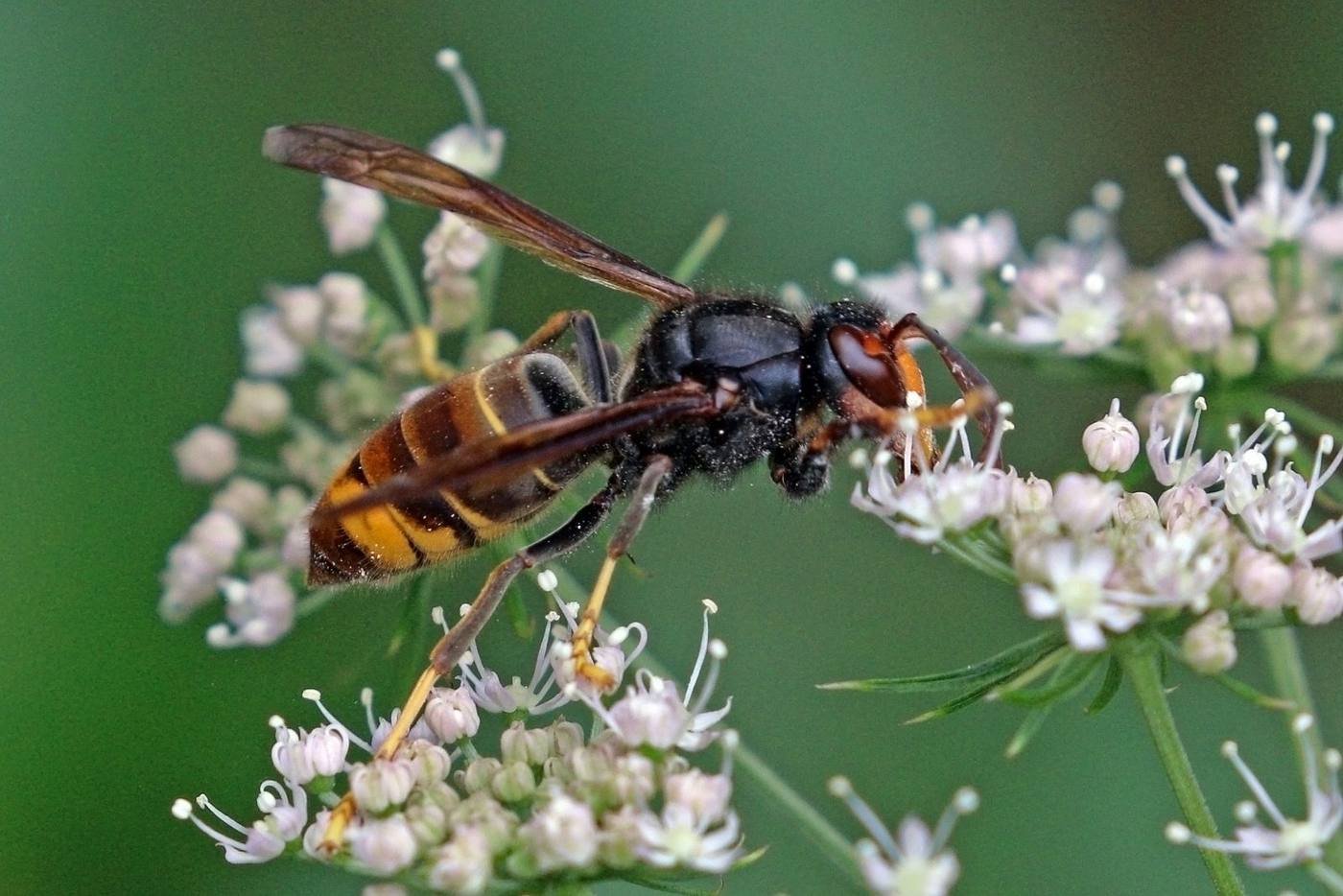
On a Mediterranean island better known for beaches than entomology, a small research group just pulled off something no one else in Europe had managed: eradicating an established population of invasive Asian hornets. The Bee-etal Lab, based at the University of the Balearic Islands and led by María del Mar Leza Salord, cleared Vespa velutina — the yellow-legged hornet, a serious predator of honeybees — from the island of Mallorca, and the achievement earned the team Slovenia’s 2026 Golden Bee Award, presented on World Bee Day by President Nataša Pirc Musar.
A Predator This Site Has Already Flagged as Spreading
The yellow-legged hornet is not a hypothetical threat. This site’s own coverage of the species notes it as actually spreading in the US right now, and in Europe it’s been established and expanding for years, preying on honeybees at hive entrances in a way that can measurably weaken or collapse colonies under sustained pressure. Once a population establishes itself on an island or in a region, eradication is generally considered extremely difficult — nests are often high in trees or otherwise hard to locate, and a single missed queen can restart the whole population the following season.
That’s what makes Mallorca notable: the Bee-etal Lab’s project is described as the first successful eradication of an established Asian hornet population anywhere in Europe, not merely a suppression or containment effort.
An Interdisciplinary Approach, Not a Single Trick
The award citation credits the team’s approach specifically for combining multiple disciplines rather than relying on one method — ecological modeling to predict nest locations and population spread, genetic analysis to track the hornet population’s structure, and direct collaboration with local farmers and public services to coordinate the physical removal effort. Slovenia’s Minister of Agriculture, Forestry and Food, Mateja Čalušić, framed the win in exactly those terms: “Bee-etal Lab demonstrates how interdisciplinary approaches — ranging from ecological modelling to genetic analysis — can serve as a flexible model for pollinator conservation across Europe and around the world.”
The Golden Bee Award, presented annually on World Bee Day, drew 13 proposals from ten countries in 2026 — a reminder that Mallorca’s project won out against a genuinely international field of pollinator-conservation work, not a small local competition. The prize itself, presented at the Third International Forum for Action on Sustainable Beekeeping and Pollination in Maribor on May 20–21, 2026, consists of a Golden Bee sculpture designed by Slovenian artist Urh Wiegele, an official title, and €28,000 directed toward further research — money the Bee-etal Lab can put directly back into refining the eradication method for use elsewhere.
Why a Regional Success Story Matters Beyond Mallorca
An island eradication doesn’t automatically translate to mainland Europe or the U.S., where the hornet’s range is far larger and reintroduction pressure from neighboring, uneradicated populations is a constant risk an island doesn’t face in the same way. But a documented, successful method — one that combined modeling, genetics, and community coordination rather than pesticide-based bulk trapping alone — gives regions currently fighting an active, expanding population, including parts of the U.S. tracking their own early incursions, a genuine template to study rather than starting from scratch.
Frequently Asked Questions
What is the Golden Bee Award?
An international prize presented annually on World Bee Day by the government of Slovenia, recognizing achievements in bee and pollinator conservation.
Has the yellow-legged hornet been eradicated from all of Europe?
No — only from the island of Mallorca. The species remains established and expanding in much of mainland Europe and has had isolated incursions in parts of the United States.
Why is eradicating this hornet so difficult in most places?
Nests are often built high in trees and hard to locate, and even one surviving queen can re-establish a population the following season, which is why most regions manage the species rather than eliminate it outright.